The Bernese Mountain Dog, commonly referred to as Bern or Berner, is a stunning, easygoing dog. They make great family dogs and are best suited for homeowners so they have space to roam.
These large dogs need daily exercise and weekly grooming. They particularly love the outdoors.
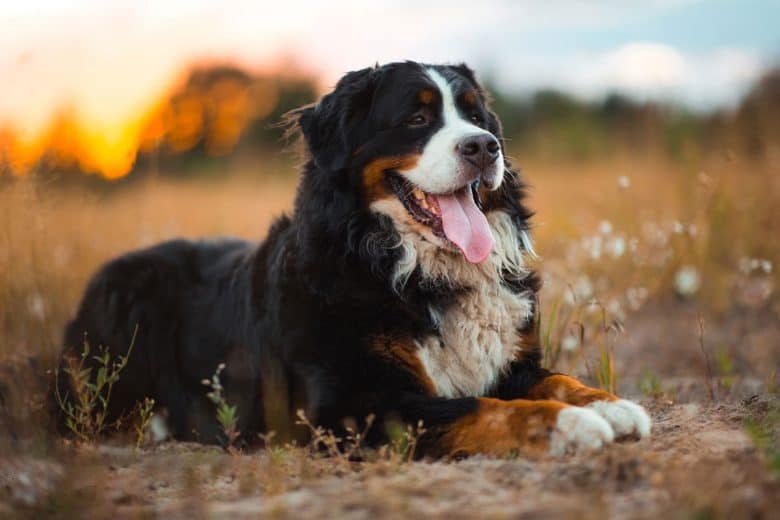
If you have space, Bernese Mountain Dogs make a great, loving addition to any household.
Quick Navigation
- 1 Where did Bernese Mountain Dogs originate?
- 2 Big, fluffy, and tri-colored: here’s how to spot a Bernese Mountain Dog
- 3 Temperament: Are Bernese Mountain Dogs good family pets?
- 4 Caring for your Bernese Mountain Dog
- 5 Health: What do Bernese Mountain Dogs usually die from?
- 6 What will this fluffy companion cost me?
- 7 Bernese Mountain Dog Lookalikes
- 8 A final word on Berners
- 9 Further reading: Bernese Mountain Dog mixes
Where did Bernese Mountain Dogs originate?
Bernese Mountain Dogs originate from Switzerland, specifically the Swiss Alps, and are a cross between farming dogs and the Molosser, a Mastiff-type dog.
This breed was originally bred to be a farmdog and a draft dog. They acted as watchdogs, pulled carts, and herded cattle. They would accompany their handlers on the farm and to the market.
Referred to as Berners or a Bern, this dog breed is one of four ancient Swiss Sennenhund Breeds and is the only one with long fur.
These are working dogs, bred to be friendly and hard-working. They are known for their exuberant personalities and lovely companionship.
Being a purebred, Berners are recognized by many associations:
- ACA = American Canine Association Inc
- AKC = American Kennel Club
- ACR = American Canine Registry
- ANKC = Australian National Kennel Club
- APRI = American Pet Registry, Inc.
- CCR = Canadian Canine Registry
- CKC = Canadian Kennel Club
- CKC = Continental Kennel Club
- DRA = Dog Registry of America, Inc.
- FCI = Fédération Cynologique Internationale
- KCGB = Kennel Club of Great Britain
- NAPR = North American Purebred Registry, Inc
- NKC = National Kennel Club
- NZKC = New Zealand Kennel Club
- UKC = United Kennel Club
Big, fluffy, and tri-colored: here’s how to spot a Bernese Mountain Dog
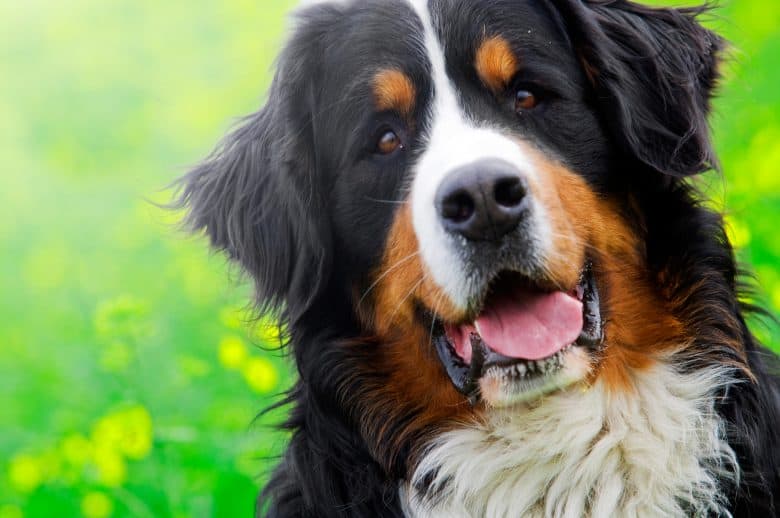
Berns are tri-colored, meaning they have big black bodies, white chests, and brown patches throughout, commonly on their heads and legs.
Their ears are rounded, medium-to-large size, high-set, and triangular, flopping down on the side of the Berner’s face.
Their eyes are brown, large, and sometimes a bit droopy. Their head is flat on top with a moderate stop, and at the end of their snout rests a black nose.
They have large bodies, varying by sex. Males are wider and more muscular, whereas females are a bit slimmer. Their backs are strong and wide, and their tails are just shorter than their body is long.
Their tails are straight, busy, and wavy.
How large will my Berner get?
Bernese Mountain Dogs vary in size based on characteristics and age. Here is a breakdown:
Miniature:
Weight: 11-17lbs
Height: 12.5 inches
Standard/Large:
Male:
Weight: 90-120lbs
Height: 25-28 inches
Female:
Weight: 70-100lbs
Height: 23-26 inches
Puppy (8 weeks):
Weight: 13-22lbs
Height: 11-14 inches
Given their massive size, Bernese Mountain Dogs are not apartment dogs. Houses, ideally with fenced-in yards, will allow your dog to thrive and get the exercise he or she requires.
If you are to crate your Bern, make sure to account for his or her large, and growing size. There is a guide on this page that will help you with that.
Remember, Bernese Mountain Dogs are not full-grown until they are 2-3 years of age and can continue filling out even later than this, so expect to buy multiple crates!
Tri-colored, fluffy, silky coats
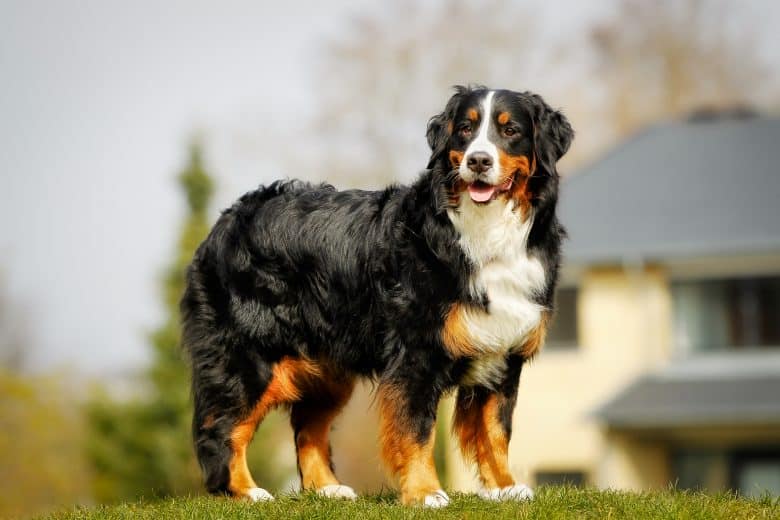
Berners have thick, silky, and moderately long coats. Their tricolor coat is wavy and comes in three distinct colors: jet black, white, and brown (rust).
Although there is no short-haired Bernese Mountain Dog, one of its close relatives, the Greater Swiss Mountain Dog, is short-haired! If the shagginess of the Berner is too much for you, consider this breed instead.
Temperament: Are Bernese Mountain Dogs good family pets?
The first question you might be asking is: male or female Berner? That really depends. The distinctions between the two sexes are small, so you should make your choice based on the personality of the individual dog.
However, you should be aware that female Berners can be a bit more stubborn. If you choose to get a female, it is important to spay her so that she does not suffer hormonal mood swings.
Additionally, consider size differences. Berners are large dogs: male Berners can get at least 20lbs heavier and a couple of inches taller than their female counterparts. If size or space is an issue, consider a female.
Berners and children: what to expect
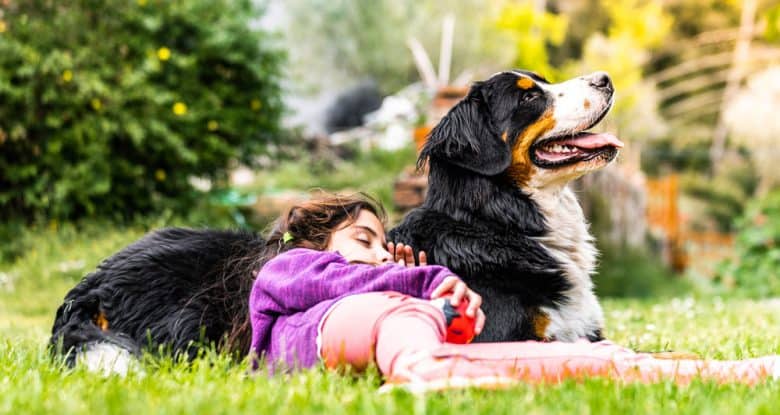
This breed is particularly affectionate and family-oriented. With proper socialization, Berns will welcome children into their homes.
As with any breed, remember the importance of socialization. Expose your Berner to kids from a very young age and get them used to the sound, behavior, and sight of children.
This will ensure that, should you bring your own child into your family, your dog will be on board.
Additionally, given that Berners are so large, it is possible for them to accidentally knock over small children. Monitor interactions and never leave your dog alone with children.
Berners and other pets
Berns tend to get along great with other dogs and animals, including cats. However, as with children, proper socialization from a young age is critical.
Expose your Berner to many different dog breeds and personalities, allowing them to figure out play and interaction on their own. Do the same with cats if you plan to have your Berner cohabitate with a feline friend.
Given this breed’s prey drive, be cautious when introducing them to small dogs or animals. Observe the interaction and be ready to make an intervention if necessary.
Usually, the interaction will go smoothly, and it really varies from dog to dog. Knowing your exact dog’s behaviors will better help you predict how he or she will interact with a small animal.
Any aggressive tendencies I should be aware of?
According to the AKC, Bernese Mountain Dogs should not be aggressive. In fact, they are one of the least aggressive breeds!
Let’s take another moment to stress the importance of socialization. Simply because your Berner is predisposed to be easygoing, aggression can crop up as a result of improper socialization.
Expose your dog to many different people and situations.
Male Berners can get aggressive towards other males on occasion, and they can sometimes be wary of and act out towards strangers if they haven’t had proper and diverse human interaction.
Although biting is uncommon, it can occur. Bernese Mountain Dogs have a strong bite, averaging 150-200 lbs of pressure on average. For reference, German Shepherds can exert 320 lbs of pressure in an average bite.
Presenting your Bernese Mountain Dog puppy with many different dogs and people will help ensure they live up to their reputation of being nonaggressive pooches.
Note that this breed makes great watchdogs and guard dogs. This means it is likely they will bark to alert you of strangers, but this should not be confused with aggression.
Do Berns suffer from separation anxiety?
As mentioned, Berners are extremely social and people-oriented. This means they are prone to developing separation anxiety when left alone for prolonged periods of time.
If you know that your lifestyle lends itself to leaving your dog alone frequently, crate-train your puppy early. Teach him or her how to stay entertained and relaxed while you are away.
You can offer your dog toys to occupy him or her while you are away.
These dogs generally do not bark, however, if they are left alone, it may cause them to bark in frustration.
Are Berners water-dogs?
The short answer is no. Although these dogs can swim, they have no natural inclination towards water. This means that they will not make the best swimmers and will not enjoy doing so.
However, each dog is different. If you notice that your Berner enjoys swimming, this will make a great addition to walks.
Generally, if a Berner does swim, it will be in shallower waters where all he or she has to do is paddle to stay afloat. Deeper water presents an even greater challenge.
Do Bernese Mountain Dogs like their walks?
Given their working-dog nature, Berners enjoy spending time outdoors on walks and hikes. They make great outdoors companions and can even carry backpacks for you!
Going to regular walks will help keep your Berner happy, as they require daily exercise.
Keep in mind that this dog may be active, but their stamina is limited. Longer, more arduous hikes may make for an unhappy Berner.
Check out Samson, a Bernese Mountain Dog, exploring the beautiful outdoors!
How hard is it to train this breed?
As noted in the section above, Berners have limited stamina. So although their trainability is good and although they are not lazy, they don’t like to work for prolonged periods of time.
Capitalize on your dog’s energy while he or she is motivated, but don’t push too hard.
Bernese Mountain Dogs are slow to mature mentally. Training should be done slowly and consistently from a young age. It is important to remain patient, as it can take this breed a while to figure things out.
This breed is gentle and docile, so do not be harsh about your training. Positive enforcement, particularly that of food, tends to work best.
When it comes to potty training, patience is key. Remember that his breed matures slowly. Monitor your dog while he or she is young to prevent accidents and get him or her on a regular pottying schedule.
As the dog matures and his or her bladder expands, potty breaks can become less frequent.
Caring for your Bernese Mountain Dog
As far as maintenance goes, Beners require a good amount of care. Between their exercise and grooming needs, they’ll keep you on your toes!
Although not the most time-intensive breed out there, make sure you know what you’re getting yourself into before bringing one of these pooches home.
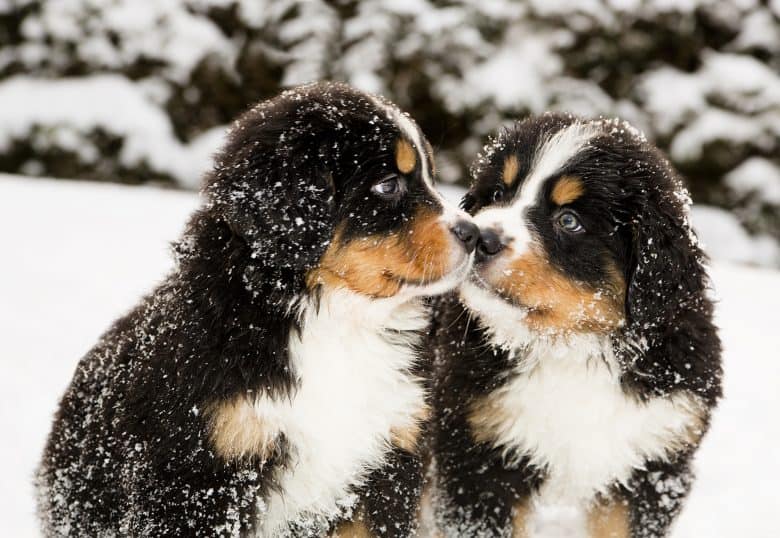
Note that if you live in a warm climate, these may not be the dogs for you. Given their undercoat and thick fur, they are best suited for colder climates similar to that in Switzerland where they originated.
They overheat easily and do not enjoy warmth.
If you bring your Berner to a warm climate, make sure you have lots of fans and an adequate AC system at home to keep your dog comfortable.
Medium-energy dogs who love the outdoors
Bernese Mountain Dogs are medium-energy dogs. They require around an hour of exercise per day and love exploring the outdoors.
Although they have a strong work-drive, Bernes lack stamina. Short, regular outdoor excursions are best.
A Berner puppy is no exception to this rule! Improper exercise can lead to naughty behaviors as a result of excess energy. A cautionary note, however: puppies, by their very nature, are not fully mature.
This means you must keep your Berner puppy from playing on hard surfaces, and do not ask them to lift or pull anything of significant weight.
Once your dog is two years of age, he or she can then begin performing more arduous tasks.
It is at this point that your dog’s joints and bones are fully mature, so any heavy-loaded work will not cause permanent damage to the skeletal structure.
All about grooming your Berner
Given their long, silky coat, Bernese Mountain Dogs require weekly brushing. 2-3 times a week is generally sufficient.
Beware: these dogs shed constantly, and especially seasonally! Frequent grooming will keep this to a minimum, but it’s unavoidable.
When it comes time to groom your Berner, make sure you have a stainless steel pin brush, stainless steel comb, and a slicker brush on hand.
Unless your dog gets particularly filthy, bathing 4-5 times a year is sufficient.
Remember not to neglect other parts of doggie maintenance. These dogs are prone to dental disease, so regular teeth brushing is imperative. Further, make sure to clean out their ears and trim their nails.
What will my Berner eat?
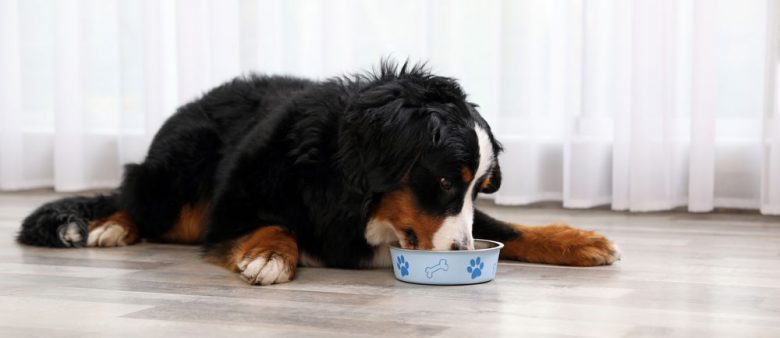
When they are puppies, Bernese Mountain Dogs should be fed 4-5 meals a day at around 1-1.5 cups per meal. Once the pup is 2-6 months old, this can decrease to 3 meals daily.
Finally, once they are 6 months old, you can decrease feeding frequency to twice daily, but these should be larger meals.
When it comes to the exact kind of dog food, it is important to look at the nutrient breakdown. Their food should be broken down like this:
Protein: 25-28%
Fat: 8%
Carbohydrate: no specific requirements, low-to-moderate amounts
Berners are prone to obesity, so it is important to regulate their food. Do not overfeed treats, no matter how tempting! This is particularly true if your dog isn’t getting the daily recommended exercise amount.
You can expect to pay close to $345 per year in food for an adult Berner, and $380 per year for a Berner puppy.
If you want to feed treats, expect to pay around $345 per year for that as well, depending on how spoiled your dog is!
Health: What do Bernese Mountain Dogs usually die from?
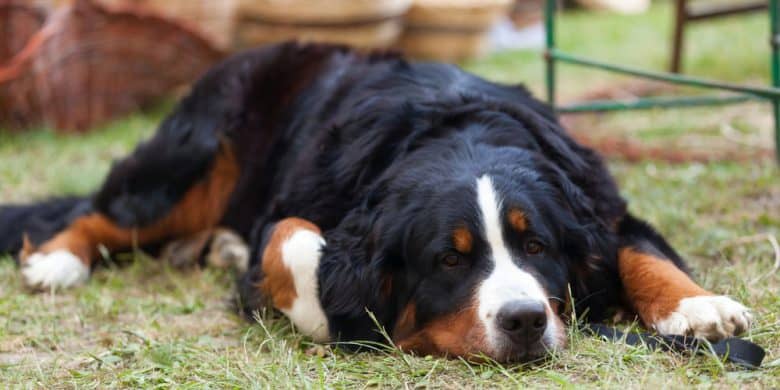
Bernese Mountain Dogs have shorter lifespans, usually 7-10 years. Their life expectancy is so short because around half of all Berners will suffer from cancer, an extremely large number.
For comparison, the rate of cancer in dogs overall is closer to 25%.
Here are some common health issues to look out for:
- Cancer
As mentioned previously, cancer is extremely pervasive in Berners. Signs include difficulty breathing, sores that do not heal, bleeding from body openings, etc.
- Hip Dysplasia
Common in many large dogs, hip dysplasia affects Berners, as well. Hip dysplasia is when the thigh bone does not properly fit into the hip joint, causing pain and lameness.
X-rays will determine if your dog suffers from this condition, as they sometimes do not show pain.
- Elbow Dysplasia
Believed to be a result of malformation, elbow dysplasia is also common in larger dogs. This can lead to arthritis or, in more serious cases, can cause lameness altogether. This can be treated with surgery as well as anti-inflammatory medication.
- Progressive Retinal Atrophy
Referring to the “gradual deterioration of the retina,” this can lead to semi-blindness over time. It typically starts with night-blindness and can slowly progress to daytime-blindness.
If you notice your dog is struggling to notice surroundings or doesn’t react when you walk by, consult your vet.
- Portosystemic Shunt (PSS)
PSS is when blood bypasses the liver, meaning it isn’t properly cleaned. Symptoms include low blood sugar, lack of appetite, urinary tract problems, stunted growth, and more.
These signs will typically appear before the age of two, so be on the lookout.
- Von Willebrand’s Disease
This may sound familiar because humans can also suffer from it! Von Willebrand’s Disease results in the body being unable to properly clot blood.
Like humans, an affected dog will suffer from nosebleeds, prolonged bleeding after surgery, bleeding gums, and bloody stools.
Unfortunately, this cannot be cured, and it will likely require regular surgeries to fix excessive bleeding.
- Panosteitis
Resulting in lameness, this condition typically appears between 5-12 months. If your dog begins limping on one leg, then the other, and suddenly stops, your dog may have panosteitis.
Although not serious, your Berner will require regular rest and limited activity to promote quality of life. Diet may impact your dog’s likelihood of suffering from panosteitis, so consult your vet.
- Gastric Torsion
Commonly referred to as bloat, this occurs when a dog’s stomach is “distended with gas or air and then twists.” Unable to rid their body of excess air, dogs cannot properly get blood to their heart.
This can result in death if not treated immediately. If you notice your dog’s abdomen is distended (swollen, large) and he or she is “salivating excessively and retching without throwing up,” seek medical attention right away.
To help prevent bloat, feed your dog smaller meals and encourage them to eat slowly. If your dog inhales his or her food, buy them a slow-feeder which will force them to consume their food less rapidly.
These health problems are some of the most common, and the vast majority are hereditary. When bringing a Berner into your home, do your best to identify his or her parents and look at their health screenings.
All reputable breeders will do regular health screenings with their breeding dogs to make sure they are not breeding congenital diseases like hip dysplasia, elbow dysplasia, Von Willebrand’s Disease, and so on.
Now that we’ve talked about possible diseases, here’s a ray of sunshine! The oldest ever Bernese Mountain Dog lived to 15 years old.
Although a combination of genetics, care, and luck, it’s nice to know that, with proper care, you can prolong your Berner’s life.
What will this fluffy companion cost me?
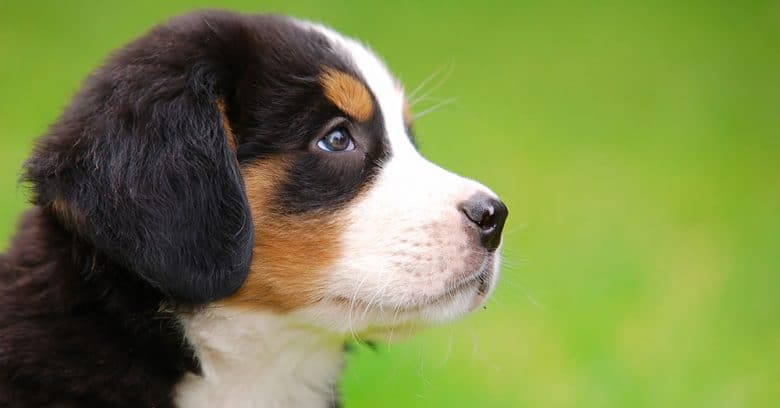
Great question! If you’re looking to get a puppy, they cost anywhere from $675 – $1995, with an average cost of $1200. This will vary as a function of how reputable the breeder is, as well as location.
Litter size ranges from 4-11 pups but is most commonly around 8 pups.
Berner breeders
Since Bernese Mountain Dogs are recognized by the American Kennel Club (AKC), this is a great place to start. The AKC takes reputable breeders seriously, so you can trust any breeders that they’ve pre-approved.
Here’s a list of some puppies for sale listed by the AKC.
For Berners in particular, the AKC suggests contacting the breed parent organization: Bernese Mountain Dog Club of America. They heavily vet breeders and do the screening for you.
However, if you want to set out on your own and find a breeder, look for ones approved by the AKC and other reputable Berner organizations outlined earlier in the article.
Make sure the breeder’s facilities are clean and spacious, that they’re breeding healthy dogs with good bloodlines (remember to check the health screening registry previously mentioned!), and that they properly socialize the puppies from birth.
Here are a few breeders to consider (all from the AKC website):
- Tanzanite Bernese Mountain Dogs in Denver, CO – bernesemtndogsco.com
- Emerald Acres in Walnut Creek, OH – emeraldacresbernese.com
- Rossingham Berners in Deerfield, OH – rossinghamberners.com
How can I rescue a Bernese Mountain Dog?
The Bernese Mountain Dog Club of America, mentioned in the last section, has a list of regional organizations for you to contact regarding rescues in the area.
For now, here are a few rescues for you to consider:
- BFW Rescue, Inc. in McCormick, SC – www.bfwrescue.org
- Norcal Bernese Mountain Dog Rescue – www.bmdrescueca.org
- Bernese Mountain Dogs in the Rockies – www.bmd.org
Bernese Mountain Dog Lookalikes
Greater Swiss Mountain Dog vs Bernese Mountain Dog
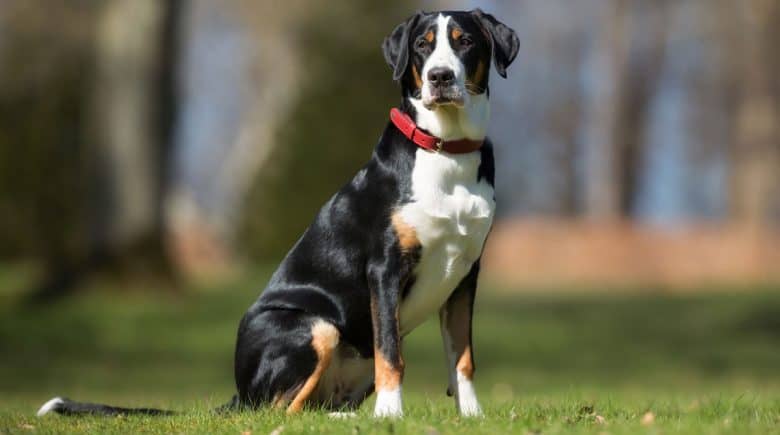
As mentioned a bit earlier, think of the Greater Swiss Mountain Dog as the short-haired version of a Bernese Mountain Dog. These dogs go back as far as Julius Cesar who brought Roman armies over the Alps.
They served the same purpose as the Bernese Mountain Dog, primarily that of carting goods across the mountains; the key difference is that the Berner was localized to Switzerland and was also used for herding.
Saint Bernard vs Bernese Mountain Dog
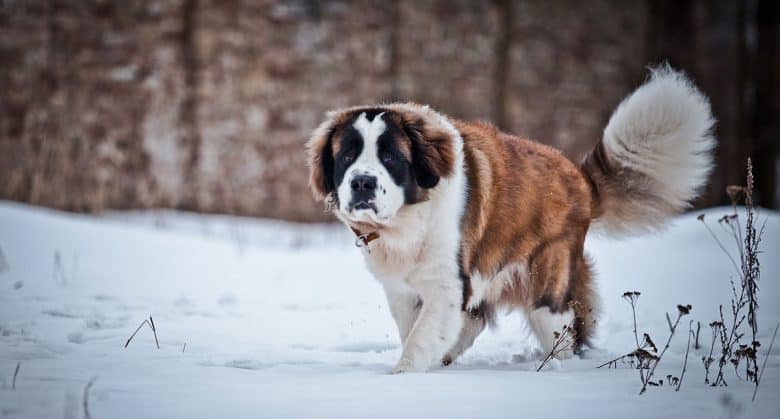
Saint Bernards are a large breed, larger than Bernese Mountain Dogs, and they were originally bred to live with Monks.
They serve as search and rescue dogs, capable of trekking through snowy conditions to rescue those who are lost. It is said that they are able to predict avalanches, keeping people safe when in the mountains.
Entlebucher Mountain Dog vs Bernese Mountain Dog
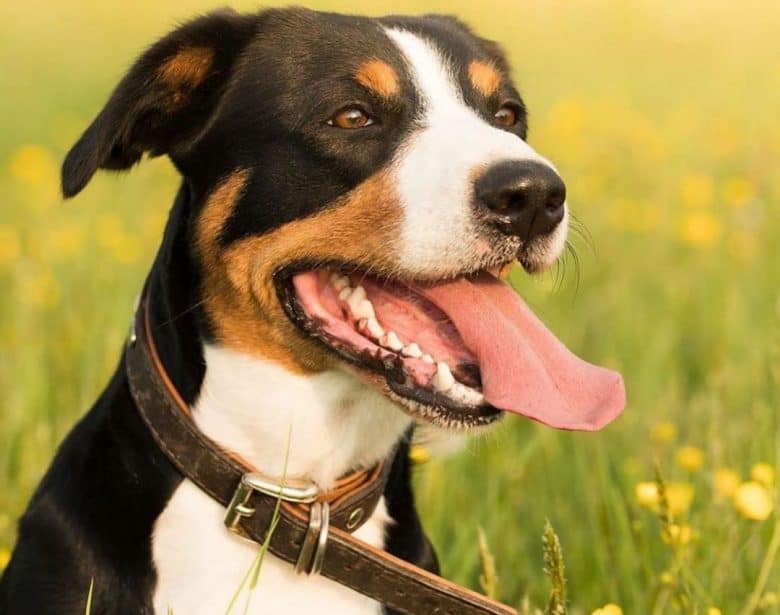
Both dogs are tricolored breeds with thick, double coats who originate from Switzerland.
However, the Entlebucher is significantly smaller than the Bernese Mountain Dog breed, weighing just half as much. They also tend to live longer, closer to 11-13 years.
A final word on Berners
Extremely easy-going without an ounce of aggression in their body, Berners have a lot of love to give.
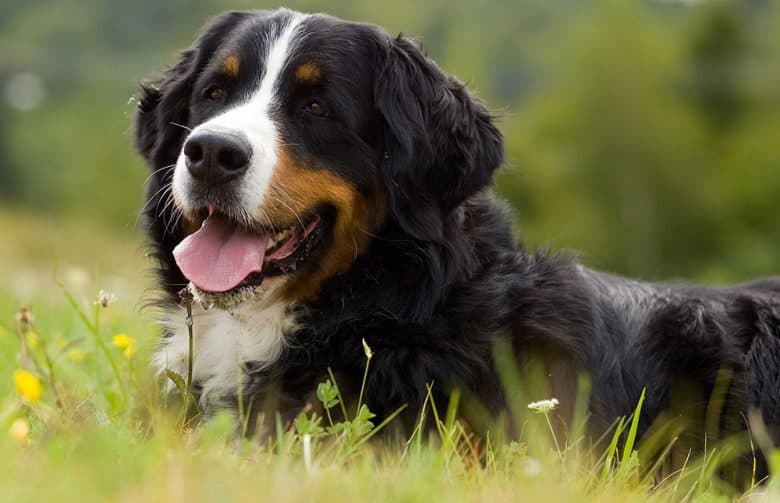
These dogs are not suited for apartment living and need daily exercise. They also shed a lot and need regular grooming.
Although relatively easy to train, Berners require time and patience as they mature.
Interested in this big goofball breed? Let us know!
Further reading: Bernese Mountain Dog mixes
Bernedoodle (Bernese Mountain Dog and Poodle mix)
Mini Bernedoodle (Bernese Mountain Dog and Miniature Poodle mix)
Golden Mountain Dog (Bernese Mountain Dog and Golden Retriever mix)

Cess is the Head of Content Writing at K9 Web and a passionate dog care expert with over 5 years of experience in the Pet Industry. With a background in animal science, dog training, and behavior consulting, her hands-on experience and extensive knowledge make her a trusted source for dog owners.
When not writing or leading the K9 Web content team, Cess can be found volunteering at local shelters and participating in dog-related events.