Also known by different names like Havana Silk Dog, Havana Spaniel, Spanish Silk Poodle, and Bichon Habanero, the Havanese is an energetic and loving pooch that makes a great companion and family member.
They’re little lap dogs with a fascinating history and a charming personality. Curious about the fido that once graced the knees of aristocrats? Keep scrolling!

Where did the Havanese originate?
Just by hearing their other nickname, “little white dog of Havana” or The White Cuban, you would’ve already guessed that this purebred came from Cuba. And you’re right!
Spanish settlers brought over their small companion dogs from Tenerife when they started colonizing Cuba in 1492. The rumor is that they were gifts for Cuban women to establish good relationships with the people of the island.
And since there were no other dog breeds on the isolated island, their ancestors – the Tenerife dogs – interbred. It created the Bichon Family, which the Havanese is a part of.
While they were always a dog of the wealthy, they became particularly aristocratic in the early 1800s. Their popularity began with nobles of Cuba but soon broadened to the rest of the world.
European travelers brought them back to Europe, where they quickly garnered favor, again amongst the wealthy.
They were trendy in the mid-1800s throughout much of Europe. Charles Dickens and Queen Victoria are amongst the most famous of their families.
However, like most trends, the Havana Silk Dog later moved over to obscurity. They almost became extinct, even in their native country.
Luckily, when their owners fled the Cuban Revolution, they brought 11 of these little dogs to the United States.
The Havanese breed became rediscovered and bred in the 1970s. In 1995, fanciers from the American Kennel Club (AKC) recognized the breed, and once again, the Havanese became quite popular.
What does a Havanese dog look like?
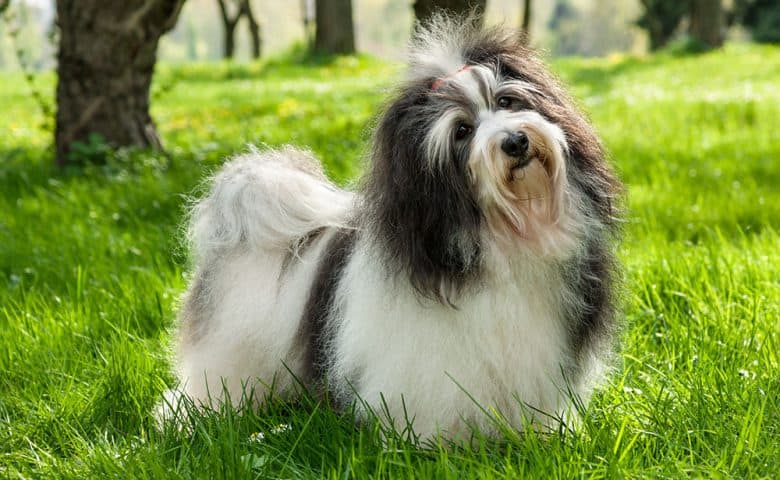
Of course, it may be tricky to know what a Havanese looks like beneath all of that fur. But this short-legged canine is a sturdy and lively pooch that shows in its unique, springy gait.
It has sparkly and expressive almond-shaped eyes that can be light or dark brown and a cute button nose that’s either black or brown. And to complete that cute head are adorable dropped ears.
You’ll notice that their body is longer than tall, and they have a plumed tail that’s carried upward over the back.
Size: How big does a Havanese dog breed get?
Belonging in AKC’s Toy Group, Havana Spaniels are toy dogs that can reach a full-grown height of 8.5 to 11.5 inches (22 to 29 cm) and a weight of 7 to 13 pounds (3 to 6 kg). Generally, females are smaller than males.
And if you’re wondering if the Havanese is a good apartment dog, the answer is YES! In fact, they do well in all types of homes, whether it’s a small unit in the city or a spacious house with a large backyard.
Little dogs don’t require a lot of space, but it’s crucial that they get their daily exercise because this toy breed is highly energetic.
From straight to curly, and a whole lot of color!
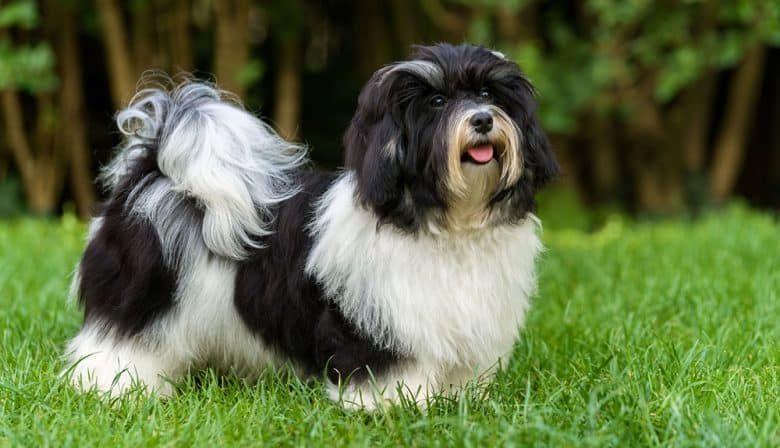
This Bichon is mostly recognized for its long double coat that’s silky to the touch.
Both the outer and undercoat are soft, but an adult Havanese dog’s profuse outer coat can get very long. It can grow between 6 to 8 inches (15 to 20 cm) in length!
They can have straight or curly fur with ringlets, but wavy is more ideal in conformation events based on their breed standard.
Did you know that some Spanish Silk Poodles have different colored skin? But it’s also acceptable in the show ring, just like all the Havanese coat colors that include white, cream, gold, fawn, chocolate, red, silver, and black.
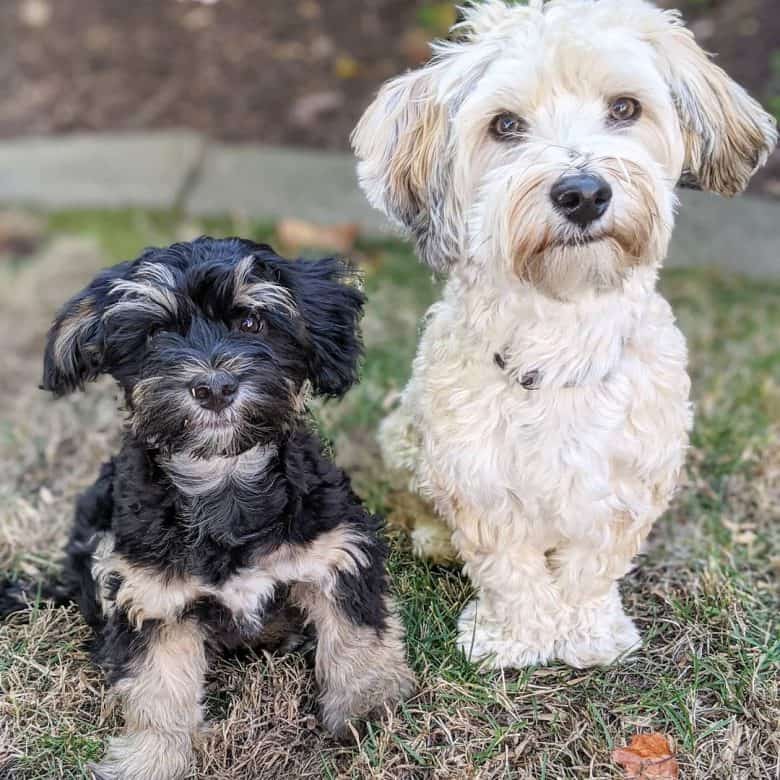
It can also be a combination of two colors like black & tan and black & silver.
They can also have cream, silver, or white markings, as well as different patterns like sable, brindle, Irish-pied, parti-color, and tan or silver points.
Want to see how good-looking Havanese dogs are in action? Watch this video of Bono strutting and winning in the Toy Group at the 2020 Westminster’s Dog Show:
Temperament: Is this Bichon a good family dog?
The Havanese is a loyal and family-orientated pet. They become attached to their owners and are the epitome of companion dogs.
They even bear the nickname of “velcro dog,” as they like to stick as close as possible to their person.
They’re also playful, good-natured, and have a great energy level. These traits make them good with children, as well as other pets. Even cats!
Havanese dogs like to cuddle as long as their socialization starts at an early age. They will make excellent family dogs, but they tend to have one main human that they will get attached to the most.
One of the things that Havanese owners might’ve noticed is that they want to lick you almost all the time. It’s just their way of showing their absolute adoration.
If you want a more easy-going companion, you may want to opt for a male Havanese. Females tend to be a lot more emotional and not as calm.
Are Havanese dogs yappy?
Like other affectionate and people-orientated dogs, Bichon Havanais (another of their many nicknames) do not like to be alone.
Separation anxiety is something you should keep in mind if you’re considering getting this breed, but you aren’t at home much. But your absence won’t make them bark excessively.
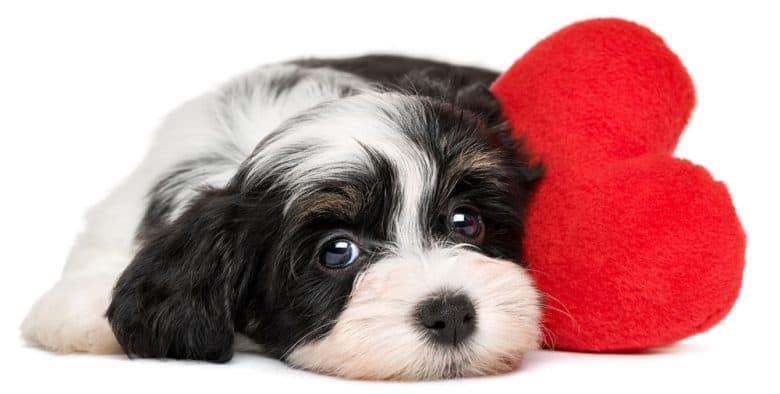
Havanese are very friendly, even with strangers. And as good watchdogs, they’ll alert their owner if someone is approaching. Once you’ve let them know that you hear them, they will stop barking.
Blanquito de la Habana (their last nickname, promise) are smart dogs. Which, along with their energetic and playful personalities, makes them easy to train.
And because they are such loyal and loving pups, they have a strong desire to please their people. They even excel as service dogs.
Just make sure not to spoil your doggo by carrying her around all the time.
While it can be tempting since they are cute and lightweight, they can become overly possessive of you.
You may also find that they are hard to potty train. This characteristic is not specific to Havanese, as most small dogs are difficult to housetrain.
If your pooch needs to go, let her walk outside instead of carrying her to the designated potty spot.
Are Havanese dogs high maintenance?
Overall, this purebred is pretty much a high-maintenance breed. They demand a lot of love, affection, and attention to be happy and satisfied dogs.
So if you’re looking for a no-effort little dog, you can cross this White Cuban out of your list.
Grooming takes the cake! But we’ll discuss more of that in a bit.
Speaking of their hair, you may be wondering if the Havanese is sensitive to heat or the cold. Not many people know this, but that double coat isn’t just for aesthetics.
They also serve as insulation by keeping them cool when the weather is hot, and it keeps them warm during winter.
If you live somewhere hot, your Havanese will be happy, even if their coat reaches the floor. They are the national dog of Cuba, after all!
Keep up with the Bichon Habanero’s energy level
Even as a small dog, the Havanese is highly active and would require 20 to 40 minutes of exercise daily. It can be an active game of fetch in the doggy park or a long walk around the neighborhood.
If their exercise needs aren’t satisfied, not only will your pup get bored and develop destructive behaviors, but it can also lead to obesity.
Want to step it up? Get your energetic Havanese to join canine sports like flyball and agility!
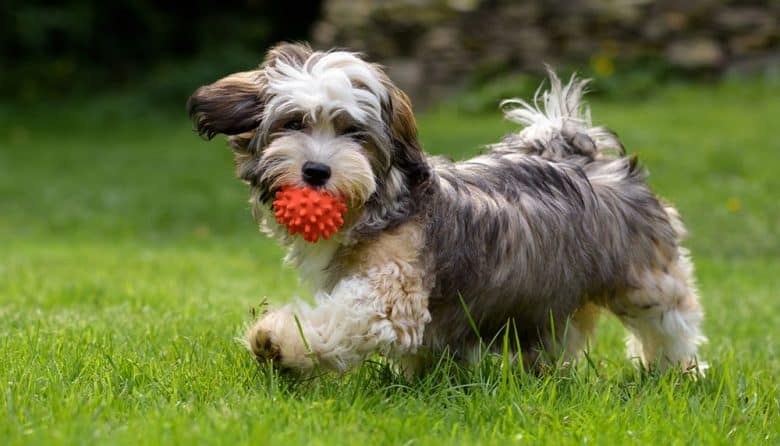
Grooming: Do Havanese shed hair?
Some people consider this breed to be hypoallergenic, but it’s more appropriate saying that the Blanquito de la Habana are low shedders.
They still shed, but not easily, and their loose hair doesn’t fall off because it gets caught in the outer coat.
With that said, those dead hair can cause tangles, so a Havanese dog’s coat has to be brushed daily.
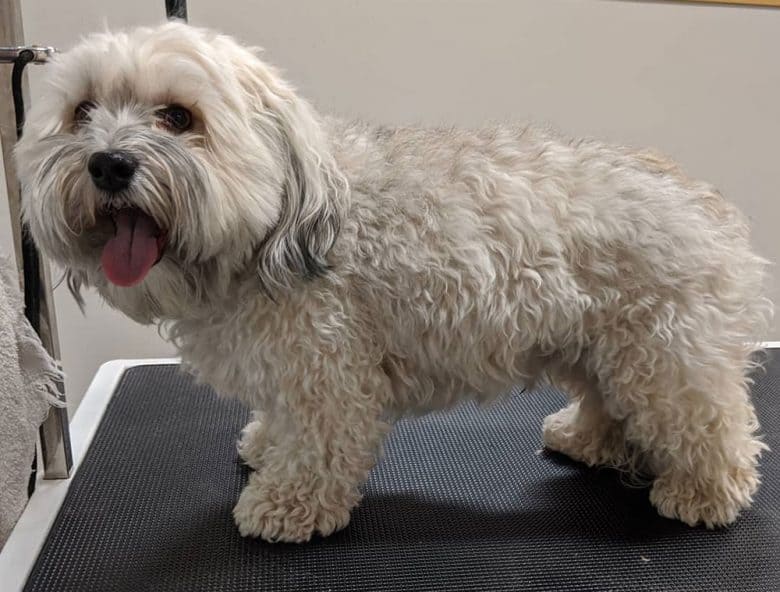
If you want minimal shedding and the weather isn’t too cold, it’s okay to give your fur baby a puppy cut.
But if your intent in getting a Havanese is to have it join a dog show, you should let its fur grow long. That also means you’ll be spending a lot of time grooming or having your pup pampered at the groomer’s salon.
They also need regular baths. Depending on your fido’s amount of hair, you can give her a bath every 1 to 2 weeks.
It’s also a good idea to keep the hair above their eyes short or tied up to keep it out of their sensitive eyes.
One of the fun things about this pooch is that their hair can be styled in many ways. There’s cording, teddy bear cut, or a kennel cut.
Proper nutrition is important, too
The recommended amount of dog food to give most toy breeds is about ½ to 1 cup a day.
But each pet is unique, so the kind of diet and how much you feed your dog should be based on her age, weight, activity level, and even health.
It’s also best to split your dog’s food into two meals instead of serving it to her all at once.
Aside from regulating her consumption, your canine friend will not go hungry for a long time since she can eat once in the morning and once in the evening.
Avoid free-feeding, as well, as it will likely lead to unwanted weight gain.
Choose high-quality dry kibbles that cater to your pet’s specific nutritional needs. Generally, the recipe should have 50% proteins, at least 25% of carbs, and 5% fiber.
Check the label for chicken fat or salmon oil because your pup’s body best absorbs fat from animal sources.
Human food and treats can make up a small portion of their diet but should never take the lion’s share.

What health problems do Havanese dogs have?
Havanese are a typically healthy breed, but they are also prone to certain illnesses.
This doesn’t mean that your pup will develop all these health conditions, but it’s good to be aware of the possibilities before deciding to make a Havanese a part of your family.
When looking to get any dog, it’s always best to look into their history either by meeting your pup’s mother or finding out its entire genetic background.
A responsibly bred dog is sure to be a lot healthier and happier than an irresponsibly bred one.
Havanese are susceptible to the following health issues:
- Cataracts are a slow-moving eye problem that causes opacity on the lens of the eye. This can cause blurry or poor vision and will make their eyes look cloudy. It usually occurs in older dogs and, if you choose to, can generally be surgically removed.
- Hip dysplasia is a degenerative condition found in many dog breeds. The hip joint weakens, and it causes pain and lameness in their back legs. Hip dysplasia gets tested for when dogs breed to lower the risk, as it is a hereditary disease. But the condition can be present in dogs with a clear history too.
- Legg-Calve-Perthes Disease also affects the hip joint. There is a decrease in blood to the femur bone head until it collapses and becomes deformed. The hip joint then becomes inflamed or will have arthritis.
- Patellar Luxation, or “trick knee,” is a common disease among small dog breeds. The knee joint, or patella, slides in and out of place and is not lined up properly. This condition can cause an abnormal gait or cripple your dog. It will depend on the severity.
- Chondrodysplasia is also commonly known as “dwarfism.” Dogs with this disorder have shortened limbs. While some think of this as cute, it can be crippling in severe cases. Dogs with this Chondrodysplasia should not breed.

This Bichon may also suffer from a portosystemic shunt, heart murmurs, Mitral Valve Insufficiency, deafness, and elbow dysplasia.
Havanese dogs who are free from these diseases enjoy a lifespan of 14 to 16 years. Some can even reach the age of 18, and that’s plenty of memories to make with your Bichon pup.
How much should I expect to pay for a Havanese puppy?
You can expect to pay an average price of $1,000 and $1,500. Now, you’re probably asking why Havanese puppies are so expensive, but the thing is, a lot of factors can affect the cost of the Havanese puppy you’re interested in.

Other than being a purebred, there’s also the breeder’s location, the pedigree or bloodline, the kennel’s popularity, the pup’s gender, and how many puppies there are in the litter.
For reference, the average litter size of a Havanese is 4, but it ranges between 1 to 9 puppies.
You should also consider the other expenses involved in owning a Spanish Silk Poodle. You have to make sure that the doggo has her food, dog bed, leash, collars, and bowls.
Then there’s also the annual and emergency visits to the vet, grooming costs, her crate, and toys. All that can total to an extra $1,500 a year.
If that doesn’t seem like an issue to you, congratulations! It’s now time to start looking for the Havana Silk Dog that matches your lifestyle.
Choosing from many Havanese breeders
Before you sign any contract to get your puppy, we highly advise you to do some research about the kennel and the pup.
When talking to a breeder, be prepared with a questionnaire to ensure that you are going to take home a fur baby that’s healthy and has a sound temperament.
Reputable breeders often do interviews or ask their interested buyers to fill out forms to help them find the right puppy.
If possible, request to visit the kennel to meet the little doggo and its parents. This opportunity will let you see the place where they live and if they’re really cared for.
You can also observe the parents or the Havanese mom if she’s not scared of her owner or not growling and frantic when seeing strangers.
That alone will give you an idea of what a puppy will grow up to be in terms of personality and appearance.
If you’re asked to take your pick from a litter, people often say to choose the middle pup. But we prefer that you choose a puppy that’s not bullying its littermates or the one that doesn’t look scared or sickly.
Feel like you’re ready to start your search? The Havanese Club of America has a breeder directory that’s categorized by state.
If you’re interested in buying a Havanese puppy, you probably want one from a responsible breeder.
Fortunately, the Havanese Club of America has a comprehensive list of breeders, where you can find a good breeder in your area.
There’s also the AKC Marketplace, where you can get puppies from their club members.
But if you prefer actual Havanese breeder websites, check out these pages:
- HavaHug Havanese Puppies (Emmett, MI)
- Havanese Angels (Miami, FL)
- Royal Flush Havanese (Charlestown, RI)
Havanese dogs for adoption
If you’d prefer a full-grown Havanese without a home, adopting is a wonderful option. You’ll be giving a fur angel another shot at life and a family.
You can check with your local shelter if they have any Havanese that you can adopt. If not, Havanese Rescue, Inc. is a great starting point, as well as Havaheart Rescue in Springfield, MO.
These rescue organizations not only cater to purebred Havanese dogs but also their crossbreeds.
Curious about Havanese mixes?
If you love the energy and personality of Havanese, but you’re not sold on its appearance, or maybe just want to see what else is out there, a Havanese mix might be a good option.
Designer dogs are lovely in many different ways, and let’s show you how.
Havapoo (Havanese Poodle mix)
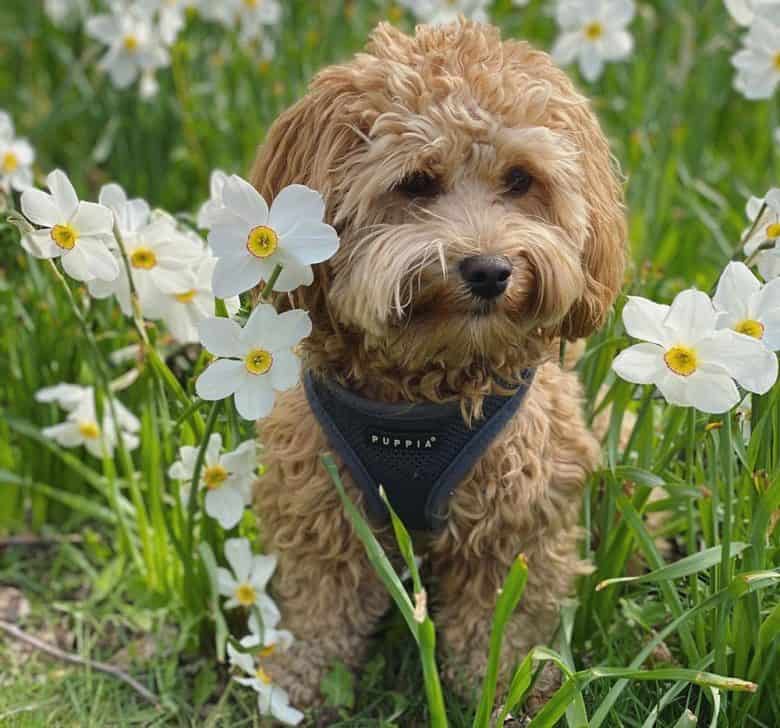
This hybrid offspring of the Havanese and Poodle are sweet-natured canines that are sociable, adaptable, and smart.
Also known as Island Mini Doodle, Poovanese, Havanoodle, or Havadoodle, the Havapoo are fluffy companions that everyone in the family will find to be totally adorbs!
Havachon (Havanese Bichon Frise mix)
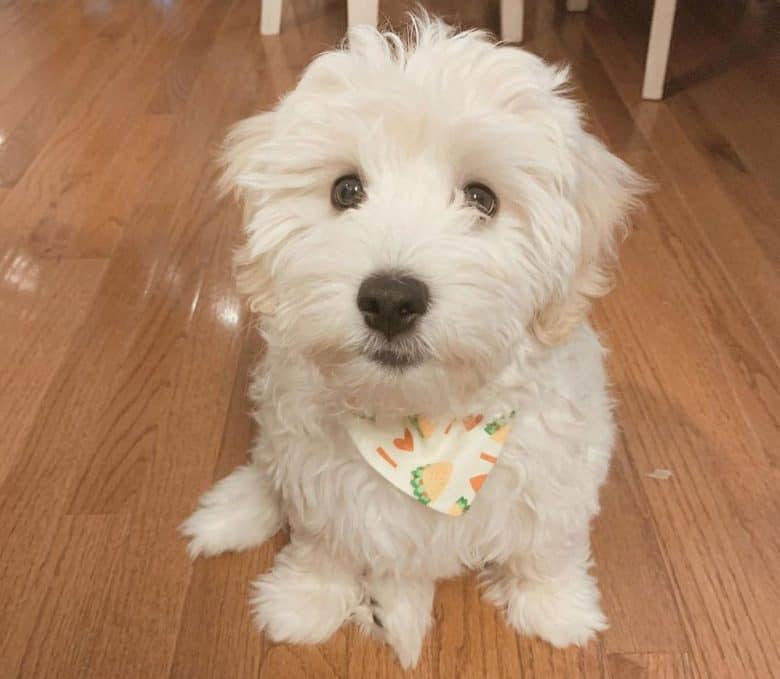
We might consider this mixed breed to be the ultimate Bichon pooch. Having the Bichon Frise and Havanese as parents made affectionate and friendly dogs in a miniature size, and we call them Havachons.
Their coat can come in a broad range of colors and types, making them unique and always cute.
Havamalt (Havanese Maltese mix)

This playful little dog is a mix of Havanese and Maltese. Havamalts are people-loving and devoted to their owners, making them an excellent pet for a novice owner or a family.
However, they don’t like to be alone and need quite a lot of attention.
Havashu (Havanese Shih Tzu mix)
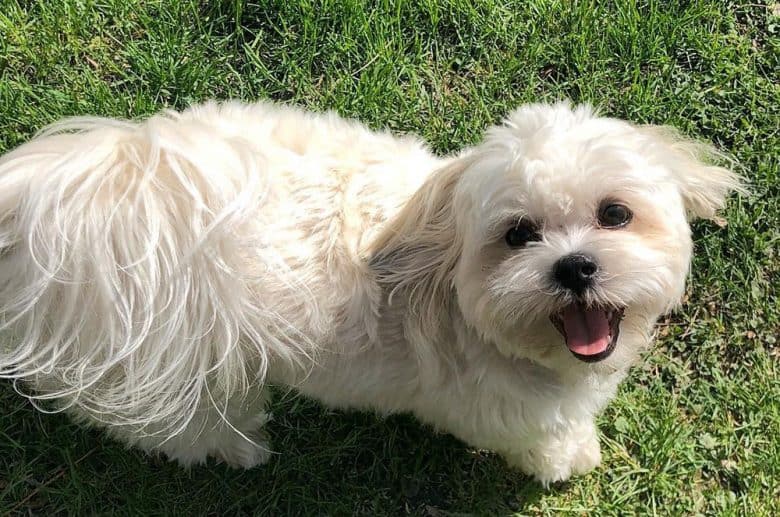
If you mix the Havanese with a Shih Tzu, you’ll get the Havashu. These furballs are obedient, responsive, and cute!
As both breeds have such silky soft fur, this combination is even more touchable. They are great companion dogs, too.
Who should get a Havanese?
If you’re looking for a toy dog that will lavish you with love and loyalty, you might be the perfect companion for a Havanese. But they need a lot of attention and time and will not suit anyone looking for more of a background dog.
You cannot leave them to their own devices in the garden or elsewhere for long periods. They are happiest when with their people and don’t do well with neglect.
As a versatile, intelligent, and fun-loving pooch, you can never go wrong with this breed.
Are you a proud owner of a Havanese pup? Please comment and share your experience with your fellow readers.