The massive Newfoundland is immediately striking due to its massive size. They are always over 100 pounds and may even grow to be larger than 130 pounds.
They are powerful working dogs that are generally described as “big-boned.”
Despite their overwhelming appearance, the Newfoundland dog is nicknamed the “nanny dog” due to their patience and watchful eye. They are sweet-tempered, making them great family dogs in some circumstances.
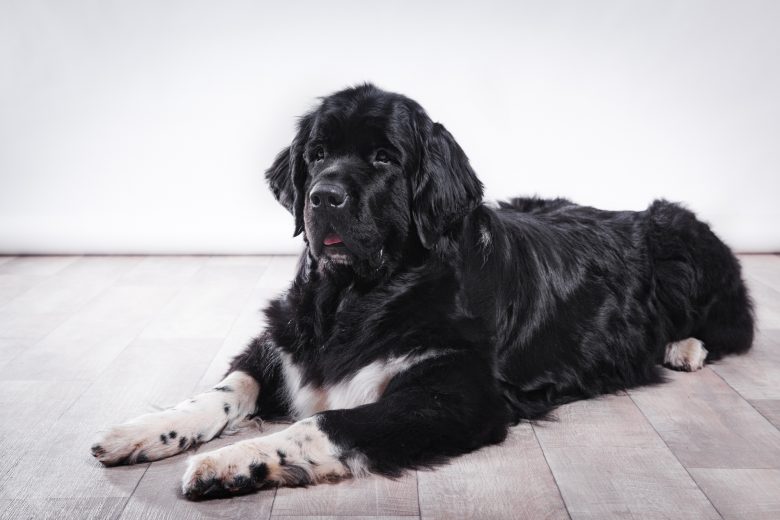
Below, we’ll look at the traits of this massive dog to help you figure out if it is the right canine for you.
Where did the Newfoundland Dog originate?
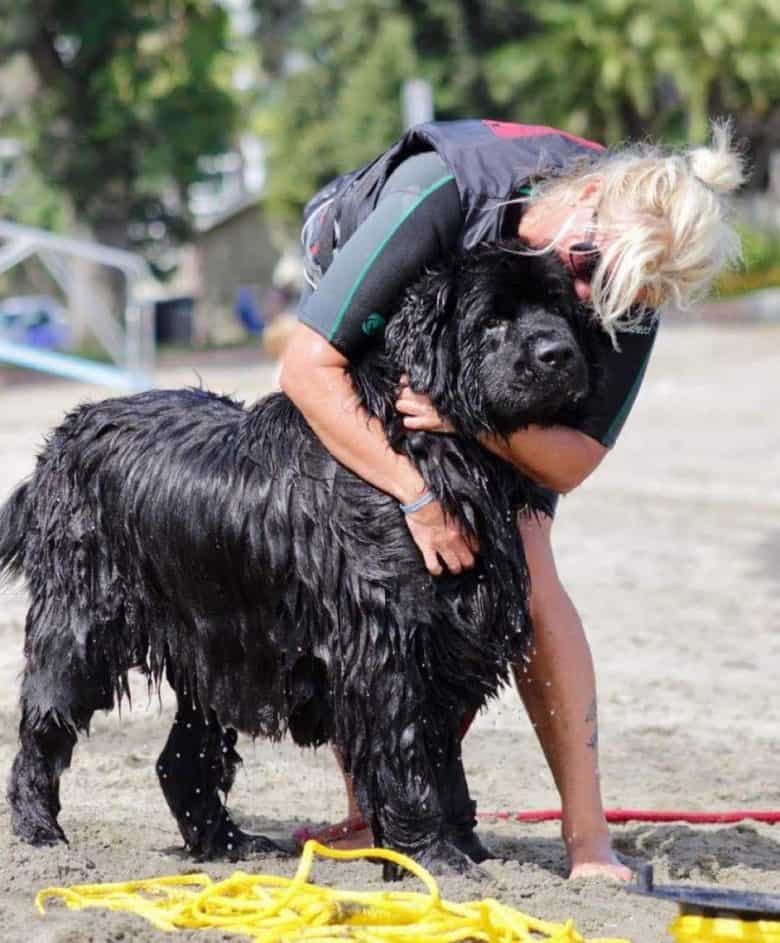
Newfoundlands have helped Canadian fishers for years and likely developed in Canada. These dogs are born swimmers and even have partially webbed feet.
Their large size also means they can pull a drowning man to safety if necessary. They have been used as rescue dogs for hundreds of years because of these traits.
On top of rescuing fishers, these dogs are also powerful enough to haul fishnets through the water and cart fish to the market.
Today, Newfoundlands are rarely used for hauling fishnets. However, they are still considered the premier water rescue dog.
The Newf is a beloved breed, and there are plenty of famous dogs throughout history.
For instance, Lewis and Clark took a Newfoundland named Seaman with them on their expedition. They utilized this dog as a hunting and guard dog. Once, he even saved lives by chasing a rouge buffalo out of the camp.
There is also a monument to Newfoundland in England. The monument was erected by Lord Byron, who was a famous poet, for his cherished Newf Boatswain.
In fact, Boatswain’s tomb at the abbey is bigger than the poet’s.
Newfs have one with Westminster twice and compete in a wide variety of canine sports today. It is recognized by most major kennel clubs today, including the American Kennel Club.
The Newfoundland is considered a working-class dog because of its history. It was originally bred to work alongside fishers, so it is considered a working dog even today.
What does a Newfoundland look like?

Due to their history as a swimming dog, the Newfoundland has webbed feet. They are also huge, with huge bones. These provide extra mass that the dog needed to survive in rough ocean conditions.
They also have a higher-than-average lung capacity, which helped them swim long distances and hold their breath if necessary.
They have droopy lips and jowls, which can make the dog drool. This is especially true in warmer climates and high heat.
Everything about this dog is large. They have broad heads and large tails. Their paws are massive, especially with the webbing.
How big does a Newfoundland dog get?
According to the AKC, a female Newfoundland can reach between 100-120 pounds, while a male can reach between 130-150 pounds.
Males are also taller, standing at about 28 inches at the shoulder, while the females stand 26 inches. This places them securely in the “giant” weight range.
In some cases, these dogs can grow much larger than this, though. Some Newfoundlands have been known to weigh over 200 pounds. The largest on record weighed 260 pounds and was over 6 ft from head to tail.
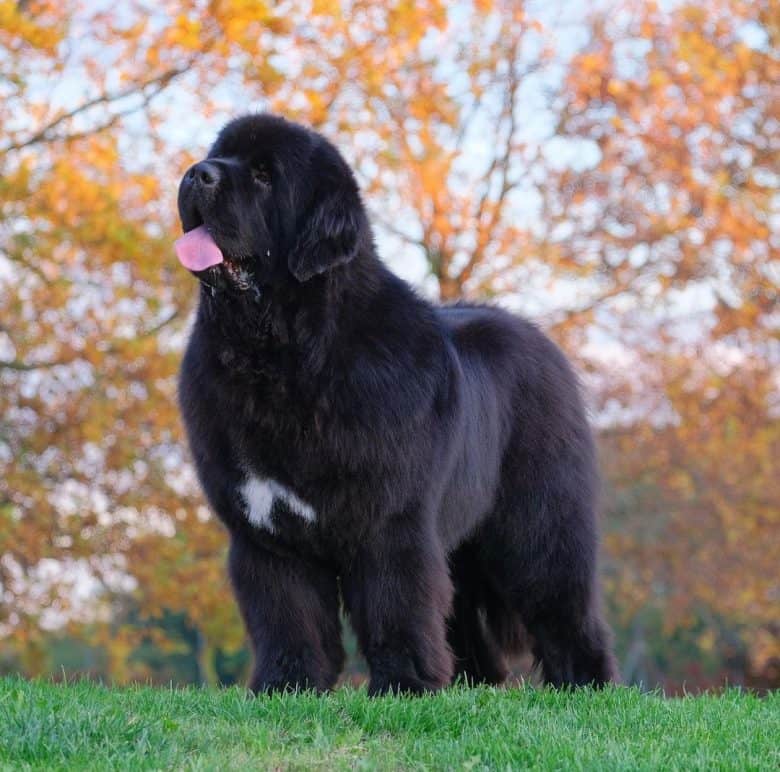
Newfoundlands can easily grow to be bigger than people. This is absolutely something to consider when you think about bringing a Newfoundland into your life.
Newfoundland puppies grow very rapidly, starting at about four to seven months. Because of this swift growth, they need a special diet.
Regular puppy food will not supply all the nutrients a growing puppy needs, so they often need something designed specifically for growing giant puppies.
Because they are so large, Newfoundlands do need quite a bit of space. Just to lay down, they need a lot of room. They may not be suitable for apartments for this reason, especially if your apartment is smaller.
At the same time, Newfoundlands do not need a huge amount of exercise, so they are usually fine as long as they have enough room to navigate the home.
You’ll need to consider whether you have enough room for a huge dog bed, as you will need a giant bed for these dogs.
What colors do Newfoundlands come in?
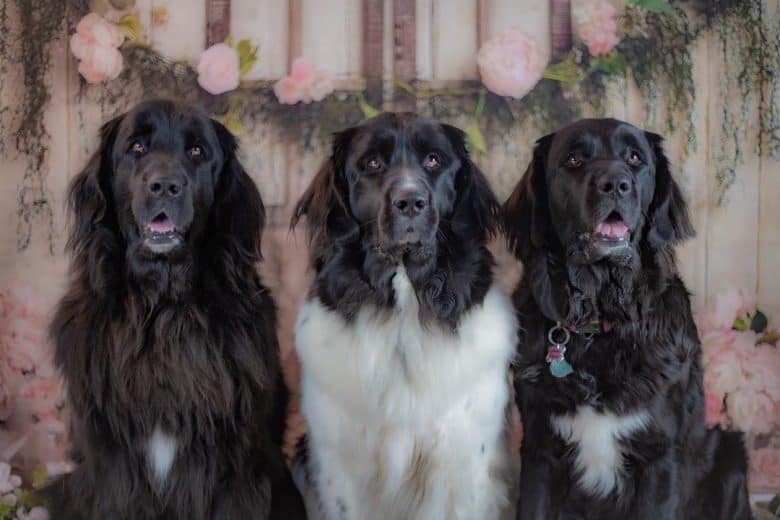
The kennel clubs of the world can’t seem to agree on what colors Newfoundland comes in.
The AKC states that Newfoundland’s standard colors are black, brown, grey, and white-and-black. However, other kennel clubs disagree.
The Canadian Kennel club permits only black and black-and-white. The Kennel Club of the United Kingdom only permits black, brown, and white-and-black.
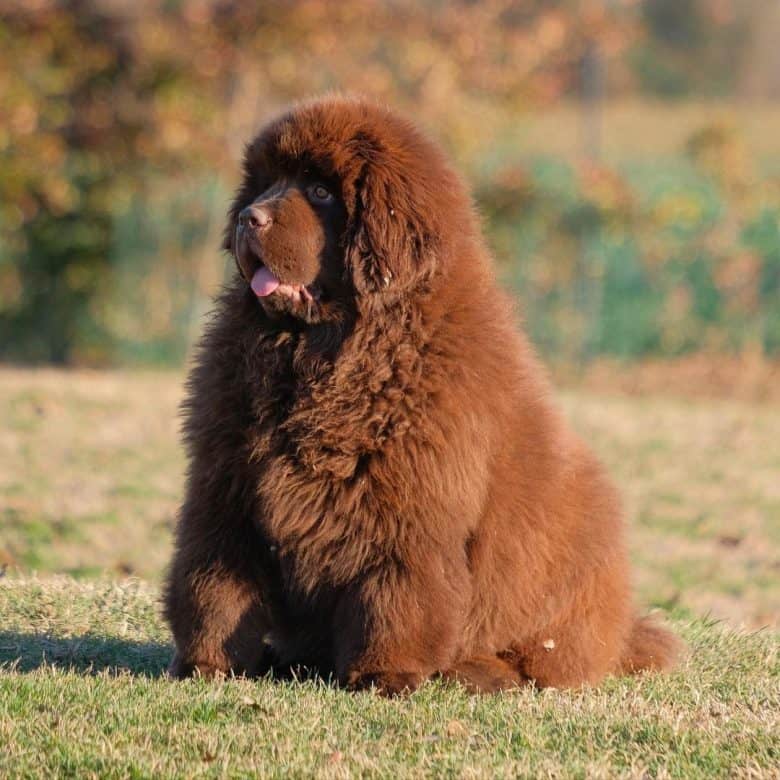
The black-and-white coloration seems to be the most renowned. It is also called the “Landseer” pattern after the artist Sir Edwin Henry Landseer, which featured Newfoundlands in this coloration in his paintings.
However, some people consider the white-and-black Newfoundland to be a completely separate breed – not a true Newfoundland.
The Newfoundland’s coat is weather-resistant and can be quite oily. It is double-layered. The outer coat is coarse and long, while the undercoat is soft and dense.
The undercoat sheds quite a bit, but you will need specialized grooming equipment to reach through the outer coat to reach the loose hairs underneath.
Are Newfoundlands good family dogs?
Newfoundlands are well-known for their stoic personalities. They are calm and docile, preferring to lay around.
They are extremely loyal and can be hardworking, though they aren’t necessarily as energetic as other working dogs. They are known as a “gentle giant.”
Practically all kennel clubs describe this dog as being sweet tempers and laidback.
While Newfoundlands have a deep and loud bark, though they are usually reticent, they can make good watchdogs if trained, but they are likely not to bark at everyone who walks by. This makes them perfect for homes in busy areas.
Usually, these dogs are quite easy to train. They do not go through stubborn streaks much and will typically enjoy listening to their owner. They are especially easy to train if you begin when they are puppies.
They are very patient, which makes them perfect for children. They don’t tend to get very excited, so this reduces the chance of them knocking smaller children over.
However, they don’t always understand their body size. They can accidentally knock children over or try and “cuddle” them.
Generally, this dog is good with other animals. They do not have a very high prey-drive and don’t typically chase things.
They are not territorial towards other dogs and typically are fine with cats as well. Of course, if a dog is around animals at a young age, they will be even more laidback around them.
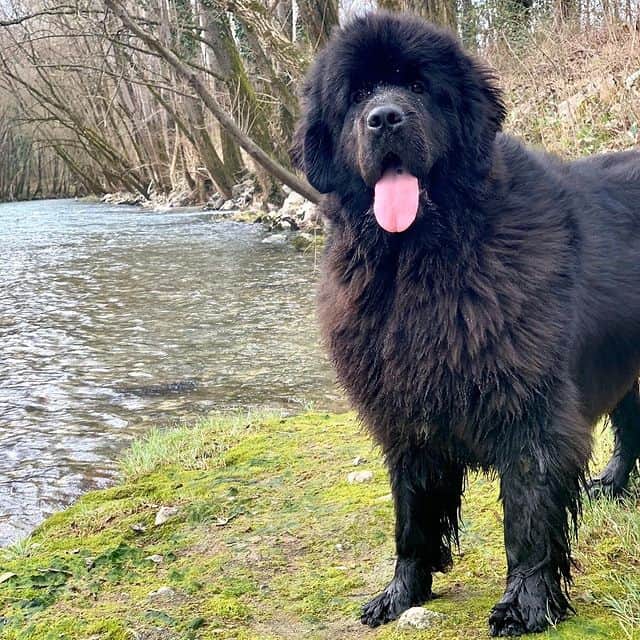
Newfoundlands are typically water-lovers, though this can vary from dog to dog. They have webbed feet and are generally designed for swimming, so many will enjoy days at the beach or the lake.
Is a Newfoundland dog dangerous?
No, the Newfoundland dog has a very gentle temperament and is one of the least aggressive dogs. They are extremely well-mannered and patient, which makes them perfect for many families.
In fact, Newfoundland’s gentle disposition is considered to be their most important trait by many kennel clubs. Dogs who demonstrate aggression are typically not bred, which protects the breed from these traits.
Are Newfoundland dogs a lot of work?
Newfoundland dogs are not particularly high-maintenance. They are large dogs, which generally means you will be spending more time on activities than you might with another dog.
For instance, a Newfoundland requires more grooming time than a smaller dog because they have more hair.
Still, they are not significantly high-maintenance. They do not require more care than your average dog.
Newfoundland dogs are extremely resistant to climate, so they do well in just about any temperature. They can function just fine in hot and cold climates.
Exercising Your Newfoundland
Newfoundlands were made to work. They were bred to swim for much of the day, which takes a lot of stamina.
They love water and have natural rescue abilities. They are also able to pull carts, which they did historically as well.
Because Newfoundlands were bred for rigorous physical activity, like swimming in choppy water, they have a moderate exercise need. However, their exercise needs aren’t quite as large as you might think.
In fact, they are pretty laid back when compared with other hard-working dogs.
These dogs need at least half an hour of exercise a day to stay fit. This can be a walk around the block or playtime outside. They enjoy swimming, so a trip to the beach or a pool might suffice as well.
While their exercise needs are decently low, they can keep up the pace when necessary. They enjoy outdoor activities and will happily accompany you on a hike or long walk.
They can compete in canine sports as well. They can excel at agility, dock jumping, rally, tracking, and even herding.
These versatile canines can fulfill their exercise needs in many different ways, so feel free to mix it up and keep things interesting.
Grooming: Do Newfoundlands shed a lot?
Newfoundlands have a thick coat, which translates to a lot of shedding. Their undercoat sheds quite a bit, and you will need a long-bristled brush to reach the loose hairs.
They require a complete brushing at least once a week, though more often is usually better.
A slicker brush and a long-toothed comb are necessary to remove dead hair and prevent mats from forming.
Twice a year, these dogs will also “blow” their coat, which involves a lot of shedding for a short period of time. They will need to be brushed more often during this period, and a trip to the groomer might be in order.
These dogs should not be shaved, as this will reduce the weather-resistant abilities of their coat. They rely on their upper coat and undercoat working together. If their upper coat is cut short, this won’t happen.
For this reason, you need to keep their fur long and natural.
These dogs do drool, but it is not nearly as bad as some other breeds. You may notice more drooling in the summer months when the dog is hotter, as they tend to pant more during this time.
The drool should not add any extra grooming requirement.
Like all dogs, you will need to keep their teeth cleaned with regular brushing, and their nails should be trimmed regularly. Overgrown nails will be painful and can cause structural problems.
These dogs do not have a particularly doggy odor, especially if you brush them regularly. They will not need regular baths, though they probably won’t dislike playing in water whenever possible.
How much does a Newfoundland dog eat?
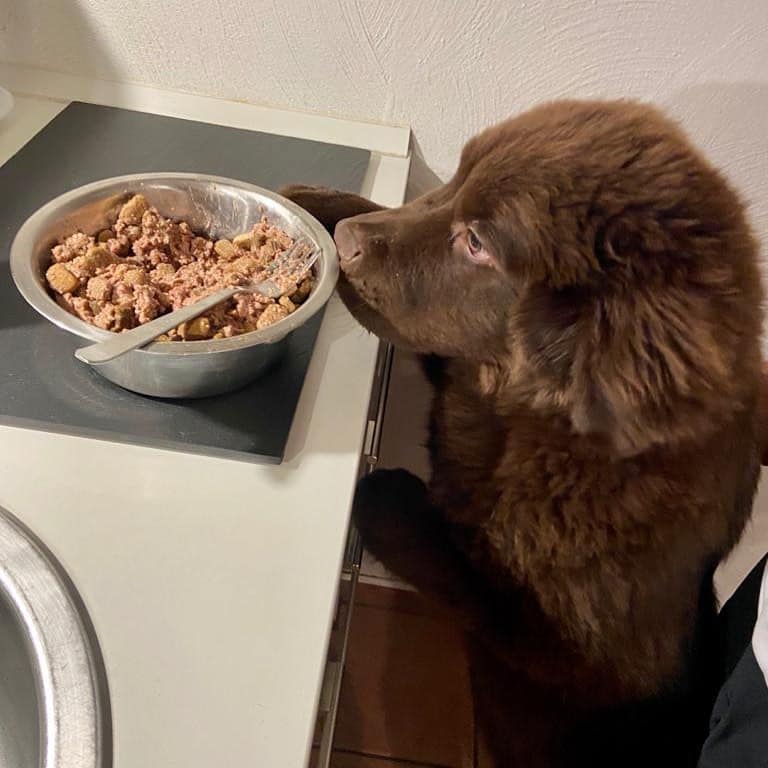
A Newfoundland dog eats a lot. They are large dogs and eat far more than most other breeds.
On average, a Newfoundland puppy consumes about 2 cups of food 3 times a day. An adult Newfoundland will eat 2-3 cups twice a day.
While they are a larger breed, you do not want to overfeed them by any means.
They can have some problems with their weight, which will put unnecessary strain on their joints. For this reason, we highly recommend measuring their food carefully and keeping an eye on their weight.
The exact amount they should eat depends largely on the food they are eating. Some puppy foods designed for giant breeds are more calorie-dense so that dogs will need less of these sorts of foods.
Check the back of the dog food container you purchase for specific feeding instructions.
As always, feel free to adjust the amount of food your dog eats, depending on its current weight.
What health problems do Newfoundlands have?
Newfoundlands are prone to a few different health problems. They are huge dogs, which seems to strain some parts of their body.
For instance, they are known to develop hip dysplasia, where their hip joint does not form properly.
Typically, these dogs live for about 8 to 10 years. This is actually pretty long, considering their huge size. Larger dogs tend to live shorter time frames than their smaller cousins.
What is hip dysplasia?
When a dog has hip dysplasia, the hip’s ball and socket do not line up perfectly. This causes them to grind and wear down as the dog walks instead of sliding smoothly as they should.
Over time, this can create a whole host of problems.
Hip dysplasia is a genetic problem in dogs. It is particularly common in larger dog breeds, where the puppies develop at a speedy rate. It is important to feed your growing puppy properly because of this.
Adopting a qualified breeder can also help you avoid this problem. Because this is a genetic disorder, dogs with major hip dysplasia mustn’t be bred.
Breeders should test their breeding dogs for hip dysplasia before breeding them to avoid passing hip dysplasia on to the produced puppies.
What are other common health problems?
Hip dysplasia is by far the most common health problem experienced by this breed. However, there are a few other health issues that can be prone to as well.
They are prone to both cherry eyes and cataracts. However, these are both typically minor problems in the grand scheme of things. Cherry eyes are completely benign and treatable.
Addison’s disease, subvalvular aortic stenosis, and epilepsy are among the more major conditions these dogs are prone to develop. Hypothyroidism, cystinuria, and gastric torsion can occur as well.
How much is a Newfoundland Dog puppy?
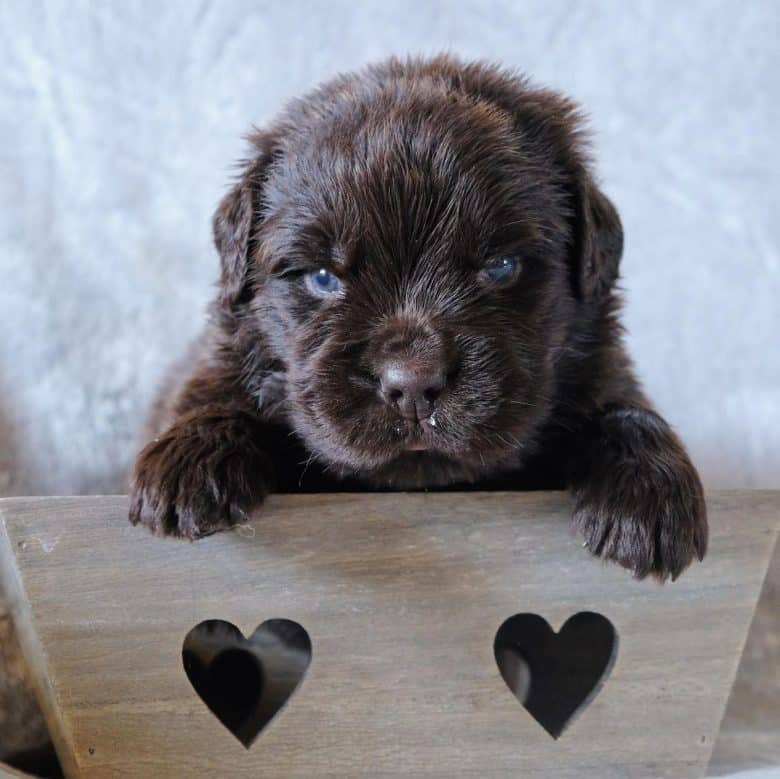
Newfoundlands are larger, which makes them a bit more expensive than other puppies. It simply costs a lot to feed and house a pregnant and lactating female, so those high costs usually get added to the puppy price.
However, these dogs aren’t completely overpriced. You can usually expect to pay around $800 to $1500 per puppy, according to the Newfoundland Club of America.
Dogs that are “pet” quality will usually cost less. These are puppies with slight confirmation problems, such as their eyes being too lightly colored or tail being too high.
These problems do not affect the dog in the slightest, but they make the dog unable to be shown. It is not recommended to use them for breeding, either.
It is important to understand that these dogs usually cost more to take care of than other breeds. They require a lot of food, and their vet bills will likely cost more as well.
When you’re dealing with a dog of this size, medication will be more expensive because you will need more of it.
Newfoundland Dog Breeders
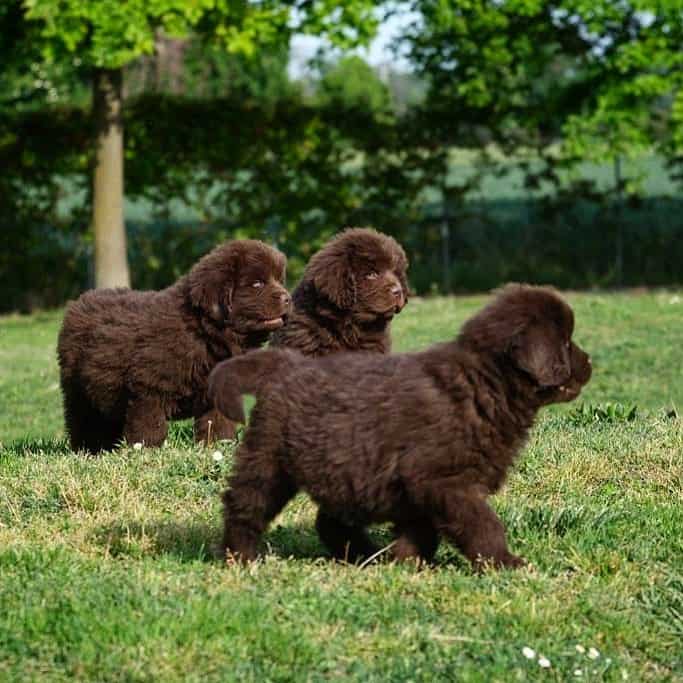
There are many places you can adopt a Newfoundland Dog from. However, we highly recommend choosing a qualified breeder.
Pet stores and similar establishments often get their puppies from puppy mills, which do not always have the dog’s health in mind.
Puppy mills often breed dogs with health problems as well. This can pass health problems on to the puppies. For a healthy dog, choose a breeder.
The best way to find a high-quality breeder is to contact the Newfoundland Club of America via their puppy page.
They can point you to a high-quality breeder in your area. The American Kennel Club marketplace is also a solid option.
If the American Kennel Club qualifies a breeder, they have to uphold certain ideals, like performing health testing on all their dogs.
Where to Rescue Newfoundland Dogs
There are also a few Newfoundland Dog rescues. The Newf Rescue is one of the largest, and the NCA is a good option to try as well.
There may be regional options near you as well.
What breeds are similar to Newfoundland Dogs?
There are a few breeds that are similar to the Newfoundland dog. However, many have significant differences.
Landseer vs. Newfoundland
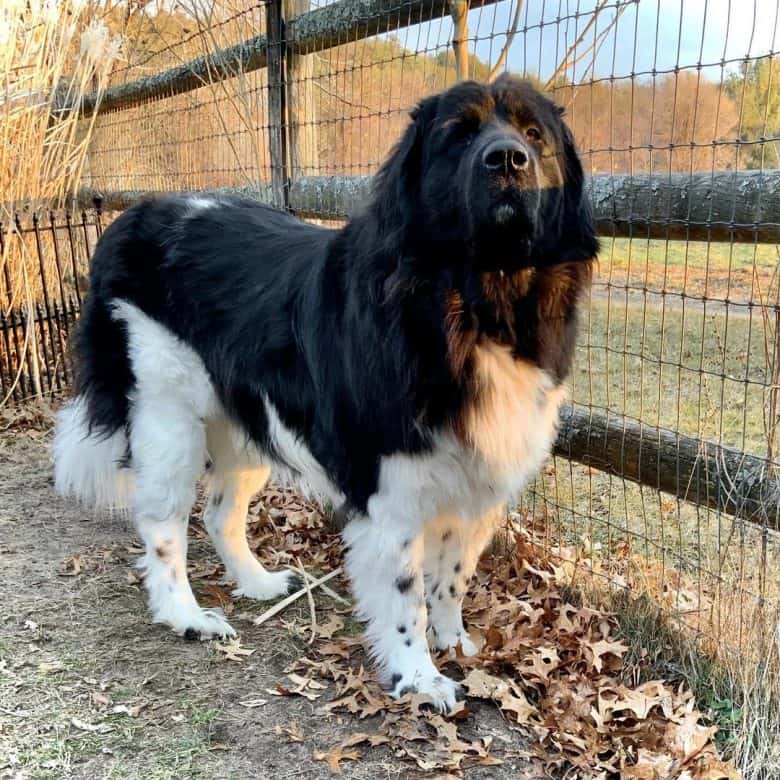
Depending on who you ask, there is no difference between a Newfoundland and Landseer. In many cases, “Landseer” is simply the white-and-black color pattern of Newfoundland.
However, some people consider these separate dogs. It really just depends on who you ask. Either way, they’re very similar.
Bernese Mountain Dog vs. Newfoundland
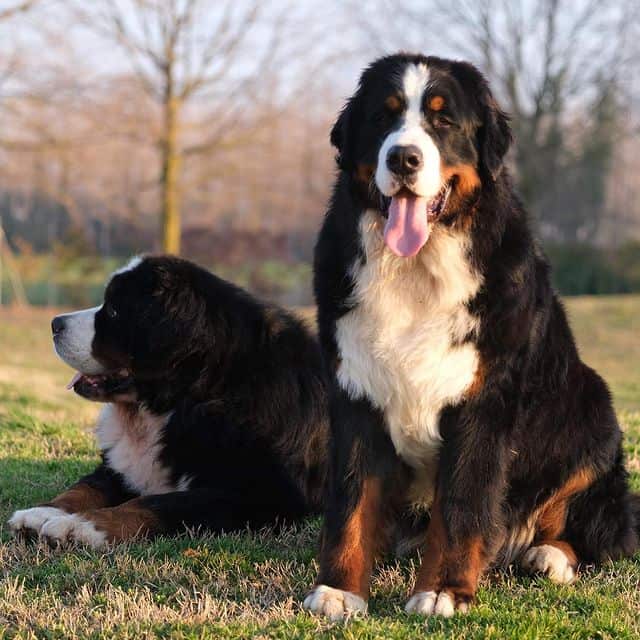
The Newfoundland is bigger than a Bernese Mountain Dog. The Newfoundland is also known as being more laidback, though the Bernese Mountain Dog is arguable easier to train.
These dogs may look similar, but they are very different breeds.
Great Pyrenees vs. Newfoundland
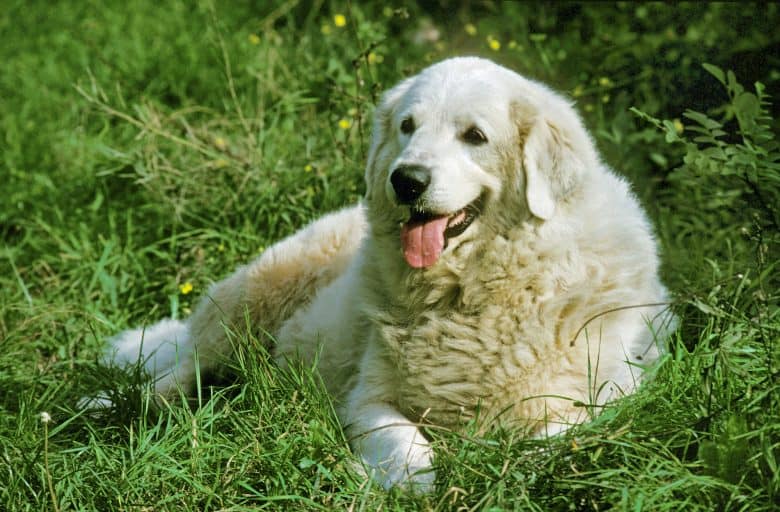
The Great Pyrenees is a herding dog, so they do have set herding instincts. This is not true for Newfoundland.
The great Pyrenees also weigh a bit less, though they are still giant dogs. Females are actually quite a bit smaller and might fall into the large category.
Curious about Newfoundland Mixes?
There are many different Newfoundland mixes out there. The Newfypoo is one of the most popular, though Newfoundland lab mixes and the Golden Newfoundland are also common.
Some Newfoundland German Shepherds are available, though they are sometimes considered too aggressive to be a good family dog.
Newfoundland Husky mixes are also available, though they are rarer than the other mixes we have discussed.
Who should get a Newfoundland dog?
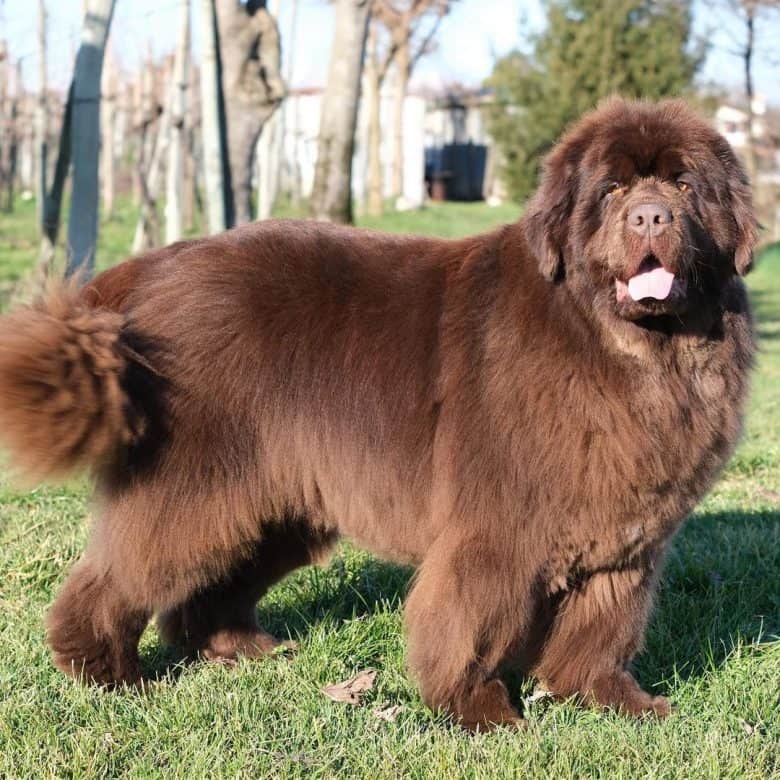
The Newfoundland Dog is considered to be an extremely laid back canine. They are huge but are known as “gentle giants.” In many ways, these giant dogs can be fantastic family dogs in the right family.
You do need enough time and energy to exercise them properly. They also need some moderate exercise, though not nearly as much as some other breeds.