Australian Terriers are smart, spirited, and lionhearted little hunters that were bred to hunt rodents and snakes.
They have all the old-time terrier curiosity and make excellent watchdogs, as well as devoted companions.

Falling in love with an Australian Terrier is easy. However, if you’re looking to buy or maybe adopt one, learning everything you need to know about his needs, personality, and eccentricities are essential.
History: Where did Australian Terriers originate?
In the remote and secluded regions of Australia, early 19th-century Australian settlers brought with them many touches of home, including several working terrier breeds.
And as a result of interbreeding British terriers such as the Cairn, Norwich, Dandie Dinmont Terrier, Skye, Scottie, Yorkshire, and Irish terrier, the Australian Terrier was born.
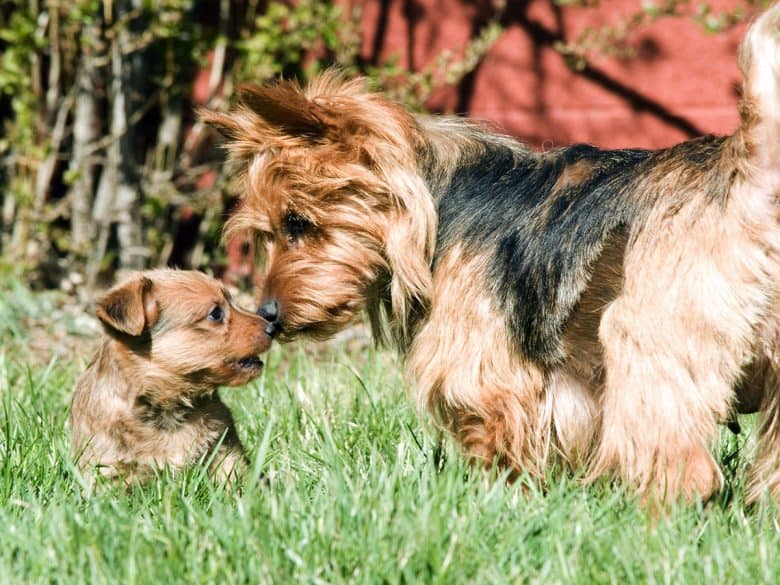
As you can see, they are a far cry from the Australian Shepherd. It’s easy to confuse the two primarily because they’re both referred to as Aussies.
The Australian Terrier is a small dog with a penchant for ratting, whereas the Australian Shepherd is a medium breed used for herding and other farm work.
Like other working dogs, Aussies were bred to be courageous while they track and exterminate vermin.
This fido is one of the smallest working terriers and is also called “Australia’s Dog” because it’s the first Australian breed to recognized worldwide.
The first organization devoted to Australian Terriers was founded in Melbourne in 1887.
Through the British aristocracy and members of the foreign service, Australian Terriers found their way to Great Britain.
In 1933, England’s Kennel Club granted the breed status. Other travelers and servicemen brought this breed to the US in the late 1940s.
In 1957, this purebred debuted at the Kennel Club in Westminster.
The Aussie debuted at the Kennel Club, and in 1960, it became the 114th breed to receive recognition by the AKC (American Kennel Club) under their Terrier Group.
What does an Australian Terrier look like?

As per the AKC breed standard, Aussies are sturdy and small, medium-boned terriers with pricked ears, a long torso, and a docked tail.
Despite their rough appearance, their high ruff gives off a dash of elegance and their eyes give that sense of brilliance.
Their high ruff bestows a dash of elegance on these otherwise rough-looking pups, and their eyes present a keen sense of intelligence.
When they move, you’ll notice their good drive and reach in their easy and free stride. Their manner is spirited and self-assured, and sometimes bossy.
Size: How big is an Australian Terrier?
Considered as toy- to small-sized dogs, Australian Terrier puppies can reach a height of 10 to 11 inches (25 to 28 cm) and weigh between 15 and 20 pounds (7 and 9 kg) once fully grown.
These measurements are accepted by the AKC, but some males and females can be smaller or bigger.
Even though this breed is highly active, its size makes it perfect for active apartment dwellers. So make sure that your Aussie Terrier gets his daily workout.
The Aussies coat and colors
As descendants of rough-coated terriers, this pooch has a double coat where the hair has a soft undercoat and a rough, wiry outer coat.
Aussies have distinct furnishings around their neck and forequarters, with a silky soft topknot that’s in direct contrast with their harsh-textured coat.
They come in three coat colors – sandy, red, or a tan-colored body with a blue saddle.
Temperament: Are Australian Terriers good family pets?
With many terrier bloodlines within him, the Aussie makes a wonderful pet, as well as a working companion for families or individuals looking for a buddy to share their energetic lifestyles with.
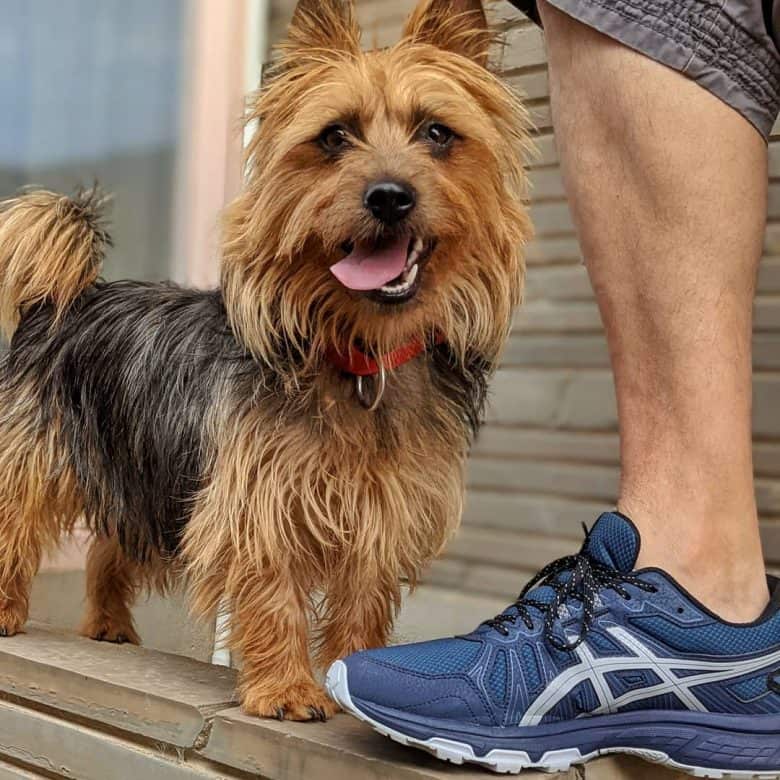
Don’t let their cuteness and size fool you, though. Australian Terriers have a big and mischievous personality. You can be sure that these tenacious, hardworking, independent, and lively canines have a lust for life.
Speaking of children, this doggo makes for an excellent playmate. But as with all pets, supervision is necessary when your pup is interacting with little ones.
Australian Terrier puppies are quite fragile, but it’s best to avoid any accidents for both parties.
And we can’t say the same if you have small critters. This purebred has a high prey drive, so you can expect them to chase small animals like cats, mice, rabbits, or hamsters.
But when it comes to other dogs, they’re not overly snappy or aggressive, but female Aussies can be quite overprotective of their territory and have trouble tolerating other female dogs.
This breed also generally has a limit on the rough handling that they can put up with.
Are Australian Terriers yappy?
Their upbeat and fun-loving little dogs have that devotion for their owners, so they crave to be a part of daily family activities. Whether it’s to play with kids or greet visitors, you’ll see them strutting along.
With that said, any doggo left alone for long periods will be unhappy, often causing them to dig, chew, or bark excessively.
And if it continues that way, your Australian Terrier can get separation anxiety. It’s a good thing that this purebred is easy to train, which helps keep unwanted behaviors at bay or at a minimum.
Now that we’re talking about training, it’s best to know that Australian Terriers have the confidence of large dogs despite being small dogs.
Though they’ll bark enthusiastically at strangers or danger, making them excellent watchdogs, keep Fido safe from bigger canines.
All terriers tend to be bossy, which is why obedience training should start on day one. Don’t worry about the Australian Terrier’s trainability.
They’ll enjoy keeping busy with new commands and tricks, just like Judy in this video:
With their intelligence, they’ll readily learn whatever you’re instructing. Just keep it interesting, or they’ll easily get bored with repetitive tasks.
You also have to convince your pup that schooling is all his idea, so positive reinforcement or a reward-based system works best.
Taking Care of Your Australian Terrier
The Australian Terrier was developed to be a weather-proof dog that is as amenable as he is hardworking. Still, it’s vital to keep your furry best friend happy and healthy.
This can be achieved by sticking to a routine and proper diet, keeping him clean, and ensuring he gets plenty of exercise.
Regular exercise is a must
Though Australian Terriers are highly active, they only require moderate exercise. 20 to 30 minutes a day would keep your pup happy and healthy.
It’s best to mix things up a bit so that your Aussie doesn’t get bored. Aside from the usual stroll around the neighborhood or play at the doggy park, you can also get your pet to hike or join canine sports such as agility or earth dog trials.

We recommend this breed to homes with a safely fenced yard because it will chase every critter it sees, whether it’s a squirrel, rat, or cat. This will also allow him to enjoy himself and run around off-leash.
Are Australian Terriers easy to groom?
Most hypoallergenic dogs are because they don’t shed a lot. A weekly brush is sufficient, but don’t forget to strip your Aussie’s coat bi-annually to remove dead hair.
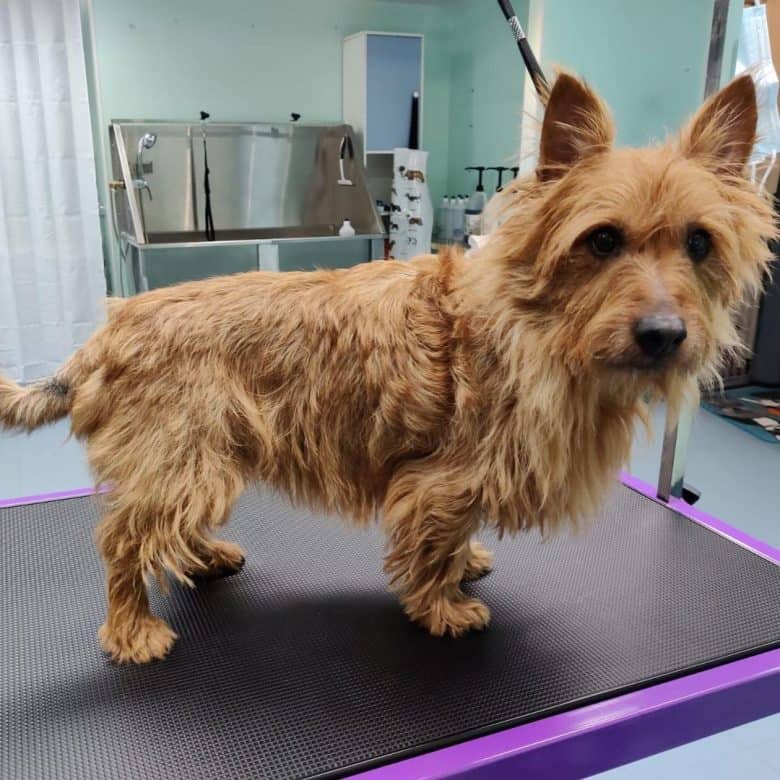
Bathing frequently is a no-no as it will soften this terrier’s coat, depriving them of its natural purpose of protecting the dog from the elements and can lead to itchy, dry skin.
Three to four baths a year is recommended, then brushing out dirt in between every wash will do just fine.
Remember to check his ears for dirt, redness, and foul odors weekly, as it may indicate an infection. All these can be avoided by gently wiping their ears with a dog-specific ear cleaner and cotton ball.
Get those nails trimmed at least once every three months, too.
Food Consumption: How much should I feed my Australian Terrier?
One of the many perks of having an Aussie is that they’re not fussy eaters, nor are they prone to overeating. Generally, ½ to 1 cup of dry dog food per day is ideal to keep them in good shape.
Keep in mind that how much you feed your furry pal needs is dependent on his age, weight, metabolism, and health.
You should also consider high quality dog food for better nourishment and you’ll have to shake less of it into his bowl.
What health problems are associated with this breed?

Aussies are susceptible to specific health concerns, as with all terrier breeds, but they’re generally healthy and they enjoy an average life expectancy of 11 to 15 years.
Although your puppy may never develop any of these ailments, it’s crucial to know what they are. It’ll be able to help you take preventative measures or lead to early detection.
Dental diseases are one of the most common issues with pets, as it affects 80% of all dogs by age two. It starts with the build-up of tartar, which progresses to gum and root infections.
Without treatment, your pup could lose his canines and molars, which may lead to other health conditions.
You should also watch out for viral and bacterial infections, including parvo, rabies, and distemper, many of which are fatal. Fortunately, it’s preventable through vaccination.
Be careful with human food and doggy treats. It can easily lead to obesity, resulting in or worsen digestive and metabolic disorders, joint problems, back pain, and heart disease.
The Australian terrier can also suffer from a condition where they can’t regulate the metabolism of sugar called Diabetes Mellitus. Any dog suffering from this will need insulin injections daily.
Typical symptoms include weight loss and increased drinking, eating, and urination.
Specific dog breeds, such as the Aussie, are vulnerable to developing Pancreatitis. Warning signs include belly pain, dehydration, fever, vomiting, diarrhea, and lethargy.
If left untreated, it can cause extreme pain and lead to long-term health issues or premature death.
Some allergies can come from food, having contact or reactions to topical substances like dog shampoos, bedding, flea powders, or inhalants caused by dust, pollen, and mildew or other airborne allergens.
Allergies in dogs make their skin itchy. The most common symptoms include frequent ear infections, paw-licking, and rubbing the face.
Patellar Luxation or luxating patella is an illness in which a dog’s kneecap slips in and out of place. This causes severe pain, but with treatment, many dogs have ordinary lives..
There’s also Legg-calve-Perthes disease due to a decrease in blood supply to the femur bone head causing it to wither away, which can eventually lead to deformation.
Many dogs with this disease often develop arthritis or inflammation of the hip joint.
Eye problems can also be an issue in your Aussie’s life span. Often causing severe pain, it may also lead to blindness.
These include cataracts, distichiasis, persistent pupillary membrane, and Keratoconjunctivitis Sicca (KCS) or “dry eye.”
How much do Australian Terriers cost?

On average, an Australian Terrier puppy can cost $700. But if you want one from a line of champions and other factors would play in, like the breeder’s location or the pup’s gender, the price can reach $5,500 or more.
Unfortunately, it’s not easy finding this purebred in the United States. And getting one from a reputable breeder may likely have you put on a waiting list, especially since they have notoriously small litters.
They usually have around 2 to 4 puppies per litter only.
Aussie Breeders
The Australian terrier breed is available through the AKC’s Marketplace, but you can also go through the Australian Terrier Club of America breeder directory per state.
Don’t rush into buying your puppy from the first breeder you come across. Shop around and wait until you find a breeder you trust. Here are a few to get you started on your quest:
- Temora Australian Terriers
- Redwing Australian Terriers (Chesapeake, OH)
Australian Terriers for adoption
People often buy a pet without having a clear understanding of its breed, which is one of the reasons why most of these fur angels end up in rescue shelters.
But this option is excellent for those who prefer an adult dog because they require less attention and training than pups.
You may check out your local shelters, but you can also get in touch with Australian Terrier Rescue or visit their Facebook page for available Aussies to adopt.
Curious about Australian Terrier mixes?
If crossbreeds are more your thing, but you want Aussie dog genes in it, then check out these Australian Terrier mixes.
Australian Shepherd Terrier mix

Also known as Mini Australian Shepterrier, this designer dog is a cross between the Australian Shepherd and Australian Terrier.
It’s an affectionate, energetic, and friendly pooch with a height of 18 to 23 inches (46 to 58 cm) and a weight of 35 to 75 pounds (16 to 34 kg).
These magnificent companions to dog lovers of all ages are also exceptionally loyal and clever. However, Male shepterriers are not keen on sharing, so be careful about having two males in one room without barriers.
They’re also wary of strangers, making them outstanding watchdogs. Even though they can be stubborn, their intelligence allows for easy training.
Australian Yorkshire Terrier mix
As the name implies, this is the delightful result of crossbreeding the Australian and Yorkshire Terriers.
These little dogs typically have blue, red, or black and tan coats that are silky, straight, and water-repellent. It can either be medium-length or long and usually don’t shed a lot, so they don’t require extensive grooming.
Even though Australian Terrier Yorkies are energetic and playful, they don’t need much exercise, making them suitable for people who don’t lead active lifestyles.

Australian Terrier Poodle mix
The Terripoo is the mixed-breed offspring of the Aussies with Poodles.
Their stature can vary quite a bit because there are Standard, Miniature, and Toy Poodles. However, they typically don’t grow taller than 15 inches (38 cm) and usually weigh in under 20 pounds (9 kg).

Poodle-Australian Terrier mixes have an inherently suspicious nature, so you can count on them to be excellent watchdogs.
Although they make excellent family companions, supervise playtime between young children and your pup, especially if you have a smaller doggo.
Who should get an Australian Terrier dog?
The Aussie is a compact-sized, spirited breed that is low-maintenance and has minimal shedding coat, making them an excellent choice for apartment living. If you’re looking for the perfect watchdog, this canine might be it.
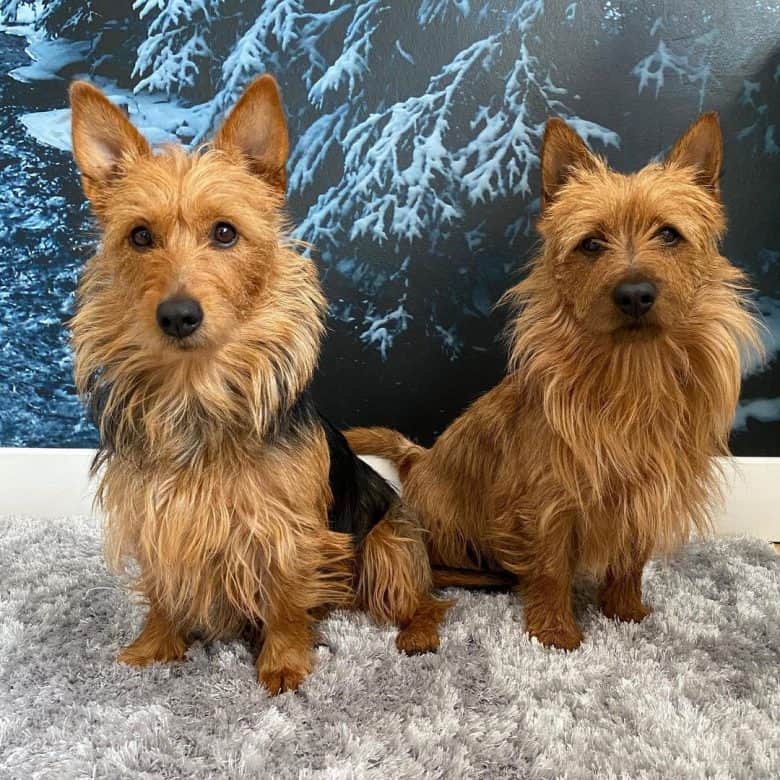
However, if you have other small animals, this breed may not be the right choice for you.
They also aren’t the right dog for owners who care about the appearance of their lawn and can’t keep up with pets who have high energy levels.
What do you think of Australian Terriers? Do you think it’s the right dog breed for you? Share your thoughts with us by commenting below.