If you’re looking for a small dog with plenty of personality, the Cavalier King Charles Spaniel is one of our favorites. They’re the perfect combination of a toy breed and regal elegance.
Nicknames for them include Cav, Cavie, Cavalier, or The Comforter Spaniel. Named after royalty, this breed is gentle and exhibits plenty of athleticism and stamina.
There’s a reason King Charles I and King Charles II kept them around.
Where Did the Cavalier King Charles Spaniel Originate?
The Cavalier King Charles Spaniel has a fascinating history. They originated from England in the 1600s and, as suggested by the name, have Spaniel roots.
These Comforter Spaniels made great hot water bottles and lap warmers. But they also kept fleas away from their owners.
The King Charles Cavalier Spaniel was the chosen breed for European monarchs like King Charles I and King Charles II.
King Charles II was even criticized for placing his dogs above matters of the state. The Cavalier dog transfixed him so much that they became known as King Charles Spaniels.
He wasn’t the last royal to keep this pup, though.
Later the Duke of Marlborough became an advocate for the Cav, especially the Blenheim ones. He even named them after his estate, Blenheim Palace.
And in the 19th Century, this dog became a trusted companion of the wealthy.
Breeders started to breed the flatter-faced English Toy Spaniel in the 19th century, and they rose in popularity. As a result, the King Charles Cavalier Spaniel was almost bred out of existence.
In the 1920s, an American named Roswell Eldridge presented a cash prize to British dog breeders during the Crufts Dog Show.
Offering the award to the breeder who could produce the King Charles Cavalier Spaniels worshipped by King Charles I and II.
This inspired breeders to breed the more traditional dogs that we now know as Cavalier King Charles Spaniels. This led to an increase in popularity, with these dogs becoming one of the most popular breeds in England.
The same trend took longer to catch on in the United States, but in 1996, The American Kennel Club recognized the breed.
Many suspect these toy dogs resulted from the breeding of small Spaniels and Oriental toy dogs like the Tibetan Spaniel or the Japanese Chin.
Bred as a companion dog, this toy lapdog has since become a family favorite.
The American Kennel Club (AKC) recognizes the King Charles Cavalier Spaniel dog breed as part of the Toy Group alongside the Japanese Chin, Pug, and English Toy Spaniel.
If you’re planning on adopting a Cavalier King Charles Spaniel dog in the US, you’ll want to join the American Cavalier King Charles Spaniel Club.
The Cavalier even starred as Charlotte York’s dog in HBO’s Sex and the City.
What Does a Cavalier King Charles Spaniel Dog Look Like?
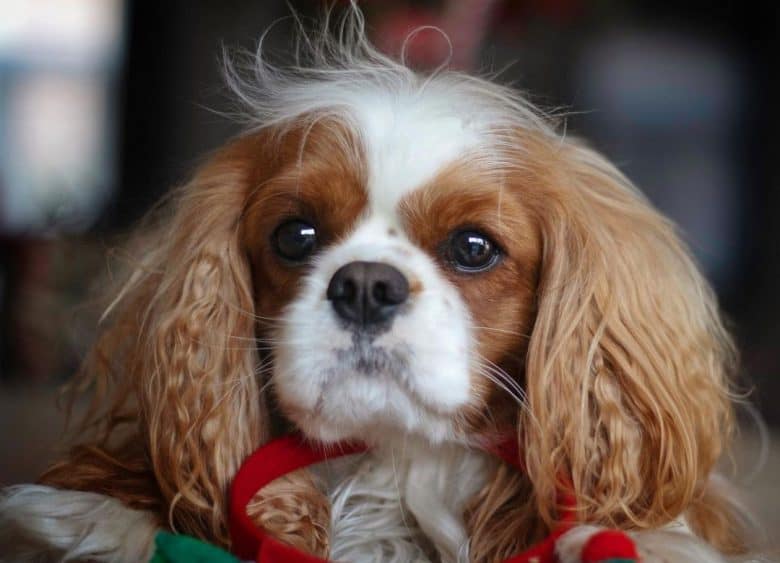
This fido has the same build as the working Spaniel, just in a smaller, well-balanced body. They have a free and elegant gait that has good drive and reach.
Their face features a gentle and sweet expression that will melt your heart. They’re both active and graceful. Elegance and royal appearance are of extreme importance in this dog breed.
You should not trim, sculpt or artificially alter their fur if you want to follow the breed standard.
Their full, mildly tapered muzzle and long neck sits on top of their sloping shoulders, and they have a moderately deep chest.
It has distinctive large, round eyes that are usually a warm, dark brown color. The cushioning underneath the eyes creates a melting and gentle look. Cavaliers can be susceptible to watery eyes but often outgrow this.
This dog breed has long, flopping feathered ears that are set high. They are wide on the crown and, when the dog is alert, they fan to frame their face.
The breed standard demands long ears, but the length varies depending on bloodlines.
King Charles Cavalier Spaniels have a plumy tail. The tail is most appealing when it is in constant motion when the breed is moving.
Size of the King Charles Cavalier Spaniel
These little dogs are a part of the toy group. When fully grown, they’ll reach around 12-13 inches (30-33 cm) in height and weigh approximately 13-18 pounds (5.8-8 kg).
They’ll reach their full size between 18 and 24 months of age. When they are one year old, a Cavalier King Charles should weigh between 11 and 18 pounds (5-8 kg).
But there are even smaller versions. Teacup Cavalier King Charles Spaniels that stand 9-12 inches (22-30 cm) tall aren’t recognized by the AKC and can be achieved by different breeding methods.
They are small, quiet dogs making them ideal for apartments or condos. Their energy levels will likely need a small yard and a daily walk.
King Charles Cavalier Spaniel Coat
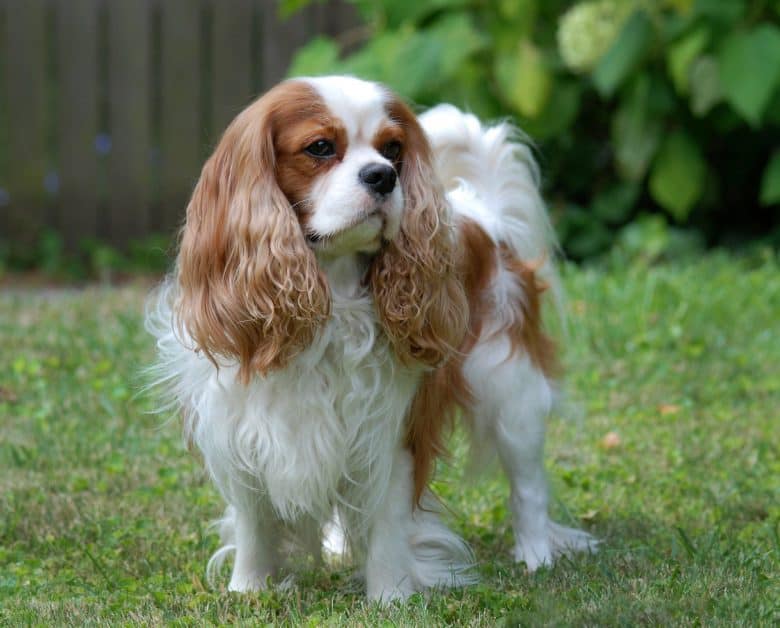
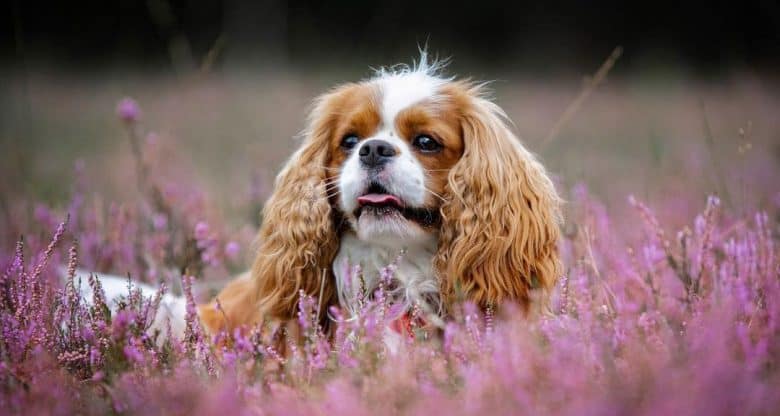
The King Charles Cavalier Spaniel has a medium-length coat that can be wavy. Their fur is silky, and they have feathering on their chest, legs, ears, tail, and feet.
Their fur comes in four different distinct colors:
- Blenheim, named after Blenheim Palace, is a rich chestnut color on pearly white fur. Some of these Cav’s have a lozenge (a thumb-shaped chestnut dot on the top of their forehead).
- Ruby Cavaliers have a solid, rich reddish-brown coat with no white markings or spots on their fur.
- Black and Tan King Charles Cavaliers have a black background with a few tan color markings around their body. You can see these over the eyes, inside the ears, on their chest, and the underside of the tail and legs.
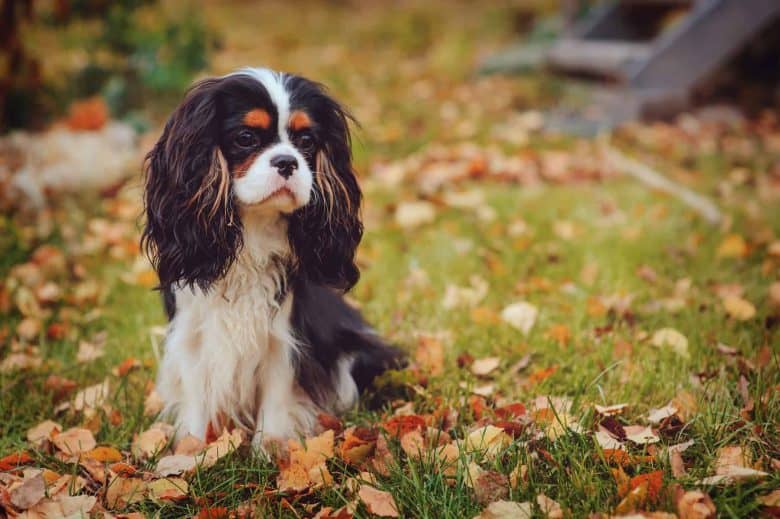
- Tricolor Cavaliers have a white coat with both black and tan markings on a white background. You can find these on the eyes, cheeks, and under the tail.
The most common King Cavalier coat color is Blenheim. In comparison, the rarest color for Cavalier King Charles Spaniels is the Black and Tan coat.
Temperament: Do Cavalier King Charles Spaniels Bark a Lot?
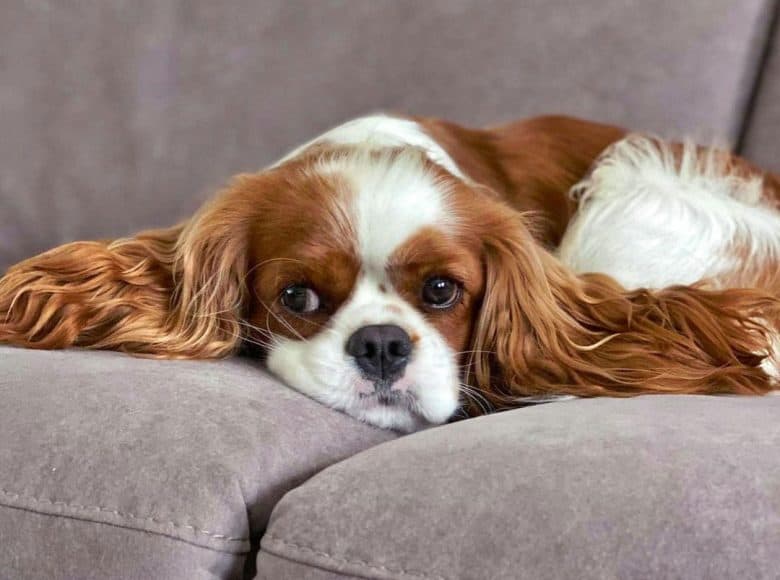
As with any companion dog, this spaniel also makes great family pets. They are gentle, affectionate, and sweet dogs that are eager to please. They also make an incredible therapy dog.
Plus, this small dog loves napping on the couch as much as going for a walk.
Cavalier King Charles Spaniels are not noisy dogs and don’t bark a lot. They might make a noise when someone comes to your door, but they’re too friendly to pose any real threat.
They are far too good-natured to be an effective watchdog.
Cavaliers make excellent shadows; you’ll never be alone. They don’t like being isolated and get major separation anxiety. They prefer having a constant human companion and a dependent personality.
When lonely or ignored, the Cavalier King Charles Spaniel can be destructive and bark a lot. They also won’t do well if you banish them to the backyard.
Find out exactly what it’s like to have a King Charles Cavalier with this video below:
Cavaliers do best in pairs. If you can afford to get two, you should. They develop a strong bond with their pooch companions as well as their human ones. But another Cav won’t replace the human attention they desire.
They love to cuddle as well as give and receive affection. They make great playmates for kids who love teaching them tricks, running around, or throwing a ball. And they make excellent lap dogs.
But because they are such little dogs, always supervise playtime with your kids! They could accidentally get injured during play.
Cavaliers are not aggressive. They are friendly to strangers and get along well with other dogs. They can even learn to play with cats.
But be sure your cat isn’t scared to stand up for itself since Cavalier’s love is an endless game of chase.
If you have smaller animals such as birds, it’s best to keep an eye on any interactions between them. While some Cavaliers might be gentle, others may try to bite them.
They also have a strong hunting instinct from their Spaniel ancestors. They’ll likely chase small animals if they aren’t kept on a leash or in a fenced garden.
If you have children, it’s better to get a Female King Charles Cavalier. They are calmer than their male counterparts. However, if you’re looking for an energetic puppy, you should invest in a male Cavalier.
They are easy to train and have high intelligence. Cavalier King Charles Spaniels dazzle the judges in a dog show, and they excel in plenty of canine sports like obedience, agility, and rally.
As long as you expose them to early socialization and adequate puppy training, your Cavalier will be the perfect companion, even around other dogs, people, and new situations.
They’re willing to do anything to impress their owners. With positive reinforcement and a treat now and then, training your toy dog will be easy.
You should not yell at them, though. They’re sensitive dogs with soft personalities. It will just make them hide or sulk. Rather reward good behavior!
Potty training your Cavalier King Charles Spaniel can be a bit tricky, as with other toy breeds. Housetraining works best if you keep them on a consistent schedule and give them many chances to go outside.
Before long, they’ll learn to go out by themselves.
How to Take Care of Your Cavalier King Charles Spaniel?
Cavalier King Charles Spaniels have high-maintenance coats, and they do demand a lot of attention and constant companionship.
They need daily exercise and weekly grooming. You’ll also need to check and clean their ears every week.
They don’t tolerate extreme hot or cold weather well. They prefer to live in a climate-controlled environment and enjoy exercising indoors.
You won’t be able to take them walking in the middle of the day, nor in the freezing cold. On cold days they might need a coat to keep them warm outdoors.
Exercise needs of the Cavalier King Charles Spaniel
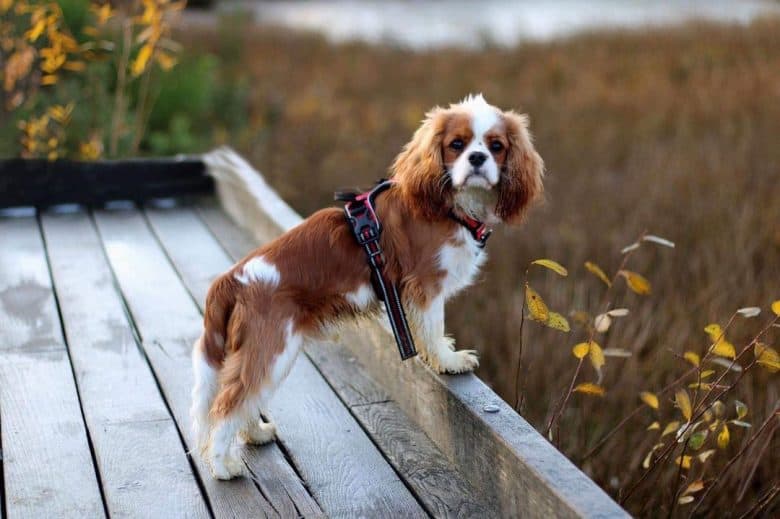
The Cavalier King Charles Spaniel’s ancestors were sporting dogs. This means they have a reasonably high energy level and enjoy moderate exercise, playtime, a romp in the yard, and activities outdoors.
They love going for a walk with their owner or even participating in canine sports. They’re also just as happy to spend their day on the couch with a human companion.
These dogs can either be couch potatoes or high-energy dogs, depending on their owners. But, if possible, you should try and take your canine companion on an hour-long walk every day.
You should keep them on a leash when walking as their instincts are to sniff and chase, and they might not want to return to you.
A Cavalier King Charles puppy will need a similar level of exercise to adult dogs. But instead, take them for shorter walks 2-3 times a day.
An adult Cavalier King Charles Spaniel can walk around four miles, but you shouldn’t do this every day. Keep daily walks at a distance of one mile.
Grooming: Do Cavalier King Charles Spaniels shed?
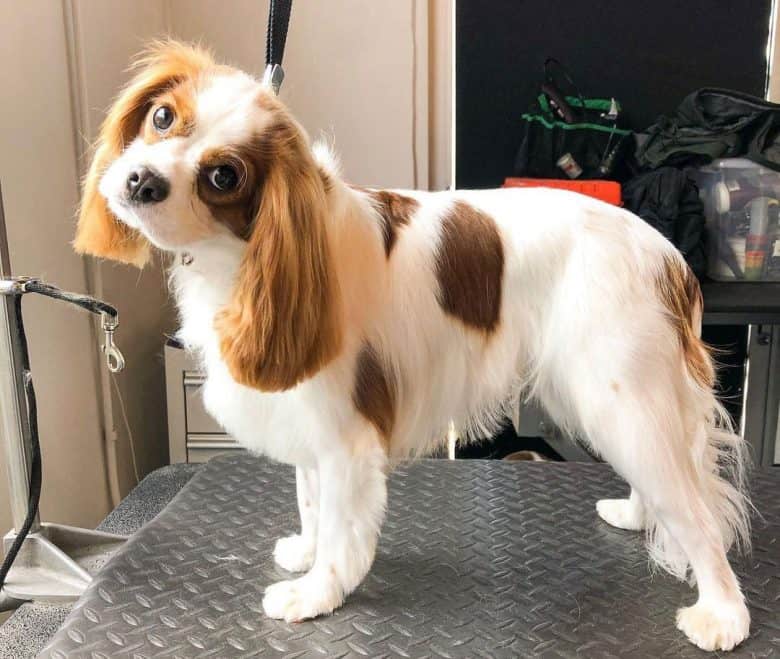
Your King Charles Cavalier Spaniel won’t be hypoallergenic. Cavalier King Charles Spaniel’s shedding happens twice a year during fall and spring.
To keep this to a minimum, you should brush and comb their fur often.
Even when it’s not shedding season, to keep their silky coat healthy, you’ll want to groom your Cavalier King Charles Spaniel regularly.
Running a medium-bristle brush through their fur around three to four times a week will do the trick.
You’ll only need to bathe them as necessary. If they love being outdoors and cuddling up on your furniture, you might want to give them a weekly bath.
The longer, feathered hair on the ears and legs can get tangled, so you’ll need to check these areas and comb them out. You can also trim the hair between the footpads, but this isn’t a necessity.
Cavalier King Charles Spaniels aren’t smelly dogs unless they’ve rolled around in some dirt. They do not have an oily coat, which eliminates some of the dog smell of other breeds.
Feeding your Cavalier King Charles Spaniel dog

Cavaliers are food lovers, but they can become picky eaters, especially when it comes to dry food. Try not to encourage this behavior by making special accommodations for them.
Cavaliers should eat around half to one cup of high-quality dog food each day. However, this amount will vary depending on the dog’s age.
Cavaliers can get greedy, so make sure you watch what they eat. Otherwise, they may become overweight.
They adore treats but don’t feed them too much. If you give them table scraps, do so sparingly if at all, and be wary of what human food isn’t safe for them.
If you feed your King Charles Cavalier Spaniel canned food, you should try and pull its ears back when they eat. If you don’t, they’ll get food in their fur.
Also, try and buy food and water bowls with a narrow diameter, so their ears don’t drag in them.
Cavalier King Charles Spaniel Dog Breed Health Problems
While members of the Cavalier King Charles Spaniel dog breed are generally healthy dogs, there are a couple of health problems that could affect their life expectancy.
Not all Cavaliers are susceptible to these conditions. But it is worth being aware of them if you’re considering adopting a King Charles Cavalier Spaniel.
They can have trouble breathing since their nostrils are small. They can also have a narrow, undersized trachea. These make breathing difficult for them.
Be aware of loud breathing, coughing, fainting, bluish gums, and exercise intolerance.
Various other health issues affect the Cavalier King Charles Spaniel. Cavalier’s can suffer from eye problems. The most common of these are Cataracts and Keratoconjunctivitis Sicca (Dry Eye).
Cataracts can cause blindness in older dogs. The lenses of their eyes can become cloudy, causing them to lose their vision. Some dogs adapt well to this.
But there are possible surgeries available that can remove cataracts and restore their eyesight.
Keratoconjunctivitis Sicca is caused by an autoimmune reaction to the dog’s tear glands. This leads to a reduction of tears.
After your vet diagnosis Dry Eye, you can treat it with daily eye drops. If left untreated, it can cause your dog to go blind.
Cavalier’s can also suffer from joint problems like Hip Dysplasia and Patellar Luxation.
Hip Dysplasia can have a genetic cause, but it can also result from the dog’s environment and diet. This can cause hip joint deformity.
Most Cavaliers can lead an everyday life with this condition, but they might need surgery in rare cases.
Patellar Luxation results from a dislocation of the Patella (knee joint). In dogs, this causes the knee joint to slide in and out of place, which causes pain.
This often occurs in the hind leg, and most dogs can lead an everyday life with this conditioning.
This dog breed can also suffer from heart conditions and heart disease like Mitral Valve Diseases (MVD). Unfortunately, this condition is common in Cavaliers.
It begins as a heart murmur but will worsen, leading to eventual heart failure. It can even develop at a young age, as early as one or two years old.
Another common health condition faced by Cavalier King Charles Spaniels is Syringomyelia (SM). This neurological condition affects both the brain and the spine.
It can either manifest as mild discomfort, severe pain, or even partial paralysis.
The cause for SM is a malformed skull. This reduces space for the brain, and symptoms can occur as early as six months into your dog’s life.
But you should keep an eye out for signs of SM until they are four years of age.
You should check your Cav for sensitivity around the shoulders, neck, and head, as well as whimpering or air scratching (frequent scratching at the neck or shoulder without making contact).
You should take your dog to the vet if you see these symptoms.
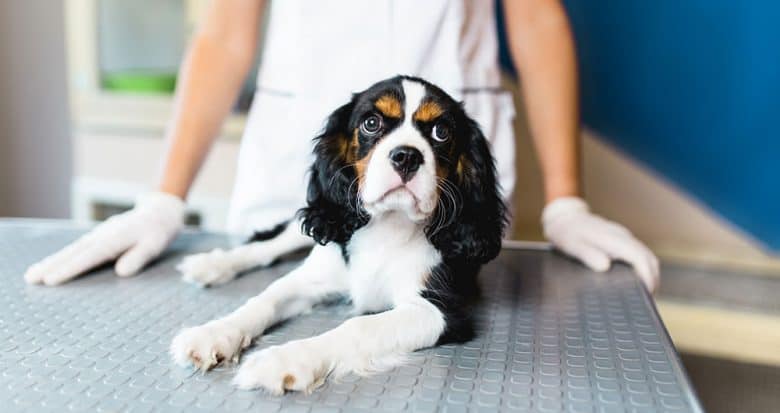
Another condition common in Cav’s is Episodic Falling. This is often confused with canine epilepsy. But there is one major difference; your dog will remain conscious during the seizure or fall.
It happens when the dog is unable to relax their muscles. The symptoms of episodic falling can range from occasional, mild falling episodes to hour-long seizures.
Other health issues that King Charles Cavalier Spaniels suffer from are ear infections, Ichthyosis, kidney stones, allergies, and deafness.
To prevent health issues or identify them early on, you’ll need to ensure your dog has the necessary health screening.
If you’re adopting your dog from a breeder, make sure you get health clearances for both parent dogs.
Tests that the National Breed Club recommends:
- Patella Evaluation
- Hip Evaluation
- Cardiac Exam
- Ophthalmologist Evaluation
The average Cavalier King Charles Spaniel’s lifespan is around 9 to 15 years. They usually die from cancer, Mitral Valve Disease (MVD), or syringomyelia (SM).
The oldest living Cavalier King Charles Spaniel was a dog named Tuppence who lived until 19 years of age.
How Much is a Cavalier King Charles Spaniel Puppy?

Getting your hands on one of these regal puppies will cost you around $1000-$3500 USD. The exact price will depend on the breeder and their color fur.
These puppies are in high demand, which makes them expensive. Their average litter size is five, but first-time moms might only have two or three puppies.
You can find Cavalier King Charles Spaniel puppies for sale from reputable breeders. You could also look into pet stores and puppy farms, but make sure they are ethical. Otherwise, you can adopt a Cav pup from a rescue.
After the initial cost of buying a Cavalier puppy, you should budget around $1500 USD per year for grooming, feeding, and veterinary care.
Before you bring your new puppy home, make sure they’ve had all the proper health screening.
Also read: The Cavalier King Charles Spaniel Price Factors Explained
Cavalier King Charles Spaniel Breeders
You can find Cavalier King Charles Spaniel puppies for sale from the AKC marketplace. There’s also a Cavalier King Charles breeder directory available on the American Cavalier King Charles Spaniel Club’s website.
Otherwise, you can try the following breeders in the US:
- Darlington Cavaliers (AZ)
- Rhapsody Cavaliers (AZ)
- Mayfair Cavaliers (CA)
- Covenant Cavaliers (CA)
- TruElegance Cavaliers (GA)
- Folklore Cavaliers (KY)
- Stuarthome (MI)
- Lucky Charm Cavaliers (MT)
- Karlee Gray Stone Cavaliers (NY)
- Winzer Cavalier King Charles Spaniels (OH)
- Stellar Cavaliers (PA)
Cavalier King Charles Spaniel rescue
Even though Cavaliers are sought-after dogs, they do still end up in rescues or shelters. If you’re looking for the best places to adopt a Cavalier King Charles Spaniel, check out the links below.
- ACKCS Rescue Trust
- Cavalier King Charles Spaniel Club of Greater Atlanta
Cavalier King Charles Spaniel compared to other breeds
If you’re wondering what the difference is between the Cav and other dog breeds, we’ve summed it up below.
King Charles vs. Cavalier King Charles Spaniel

In the 19th century, Cavalier King Charles Spaniels were bred with Asian toy dogs like Pugs and Japanese Chin. The result of this pairing is known as King Charles Spaniel in the United Kingdom.
The King Charles Spaniel also looks different from the Cav. They have a domed skull and a flatter face with a smaller snout than the Cav. They are also a somewhat more square, compact and cobby dog.
English Toy Spaniel VS Cavalier King Charles Spaniel
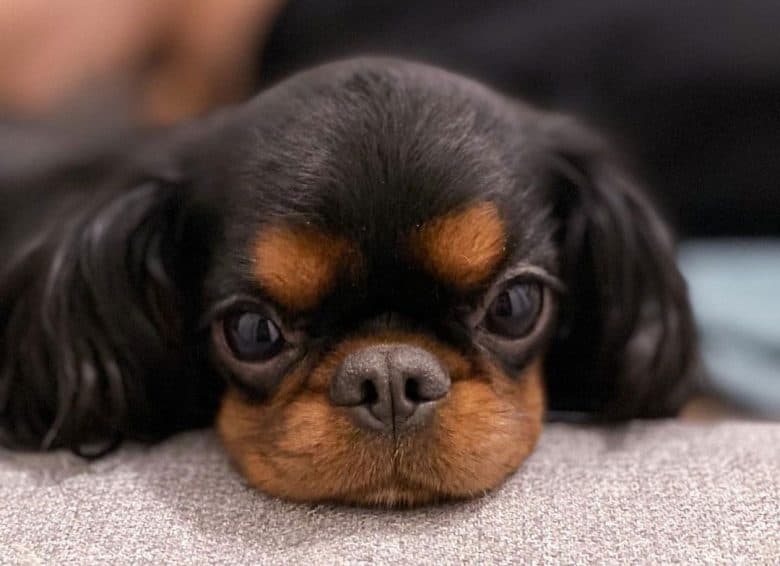
The English Toy Spaniel is the United States name for the King Charles Spaniel mentioned above. They are not the same breed as the Cavalier King Charles Spaniel but do have similar ancestors.
Cocker Spaniel VS Cavalier King Charles Spaniel
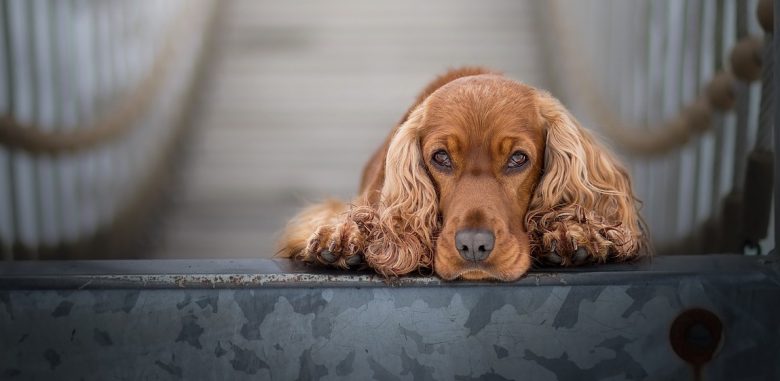
The American Cocker Spaniel is larger than the Cavalier King Charles Spaniel. The Cocker Spaniel is the smallest of the working Spaniel breed.
They both have silky, wavy, medium-length coats, but Cocker Spaniels have a wide range of coat colors compared to the Cavalier’s four. Unlike the Cav, Cocker Spaniels were bred as working dogs as early as the 14th century.
Tibetan Spaniel VS Cavalier King Charles Spaniel
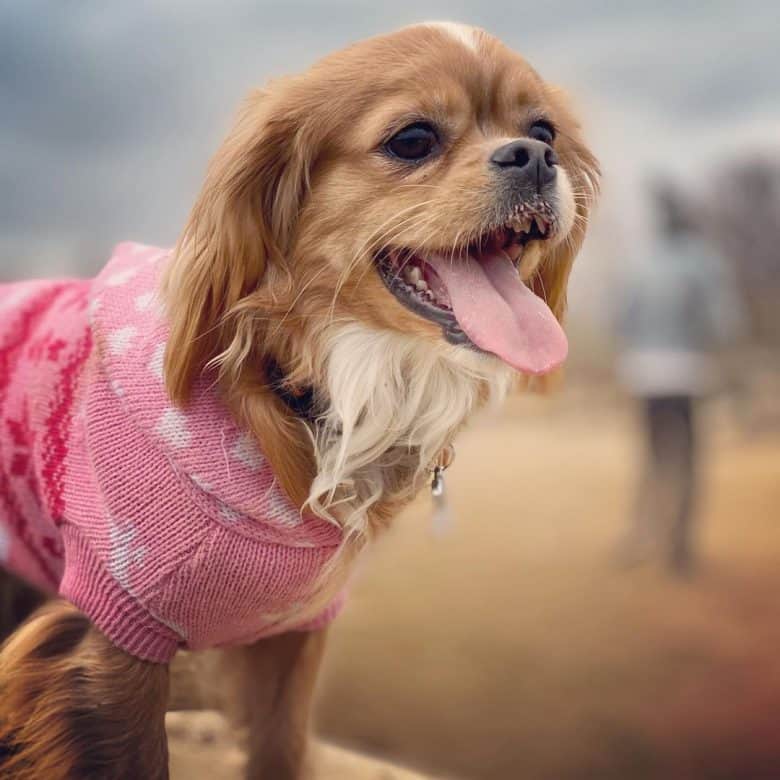
Tibetan Spaniels are sensitive and playful dogs. They are smaller than Cavs and also aren’t as expensive. They were also bred as companion dogs and hate being alone.
They don’t have feathered fur but have a silky coat. They also don’t shed as much as the King Cavalier Charles Spaniel, and their coat comes in a lot more colors as well.
Cavalier King Charles Spaniel Mixes
If you think the Cavalier King Charles Spaniel is cute, wait until you see some of the Cavalier mixes!
The Cavapoo is a cross between the Cavalier King Charles Spaniel and a Poodle dog bred. They’re also known as the Cavadoodle and Cavoodle. They love a good cuddle and make great family dogs.

The cross between a King Charles Cavalier Spaniel and a Bichon Frise is known as the Cavachon. These dogs are playful, adorable, and will give you endless cuddles.
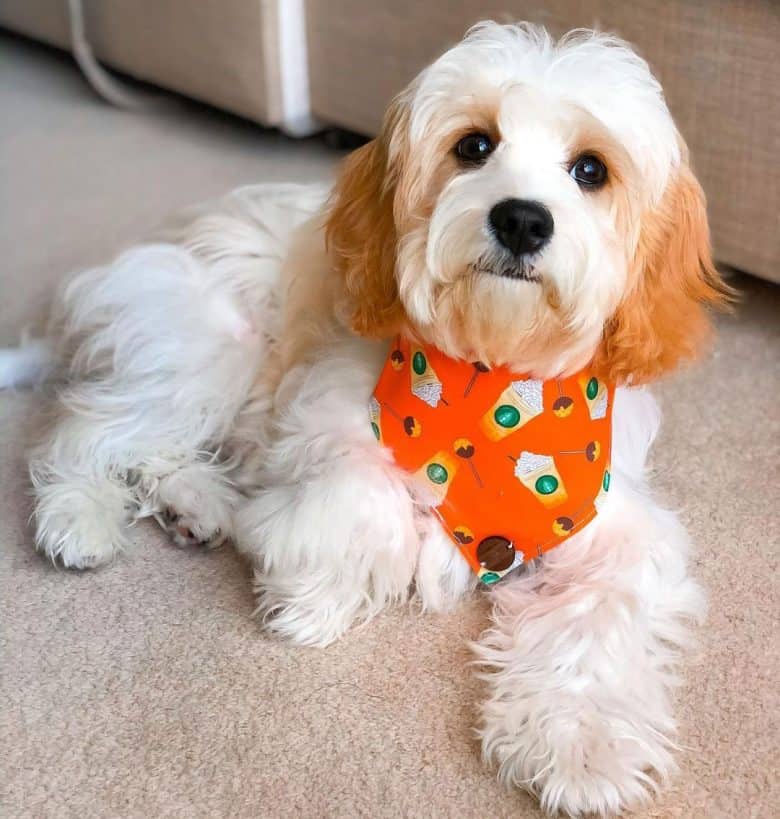
Cockalier is the name given to the mix between a Cocker Spaniel and the Cavalier King Charles Spaniel. If you’re looking for a gentle, intelligent pooch with the charm of both of their parents, this is the mix for you.

The Aussalier is a hybrid between the toy or miniature Australian Shepherd and the Cavalier King Charles Spaniel. They have high energy and plenty of love to give.
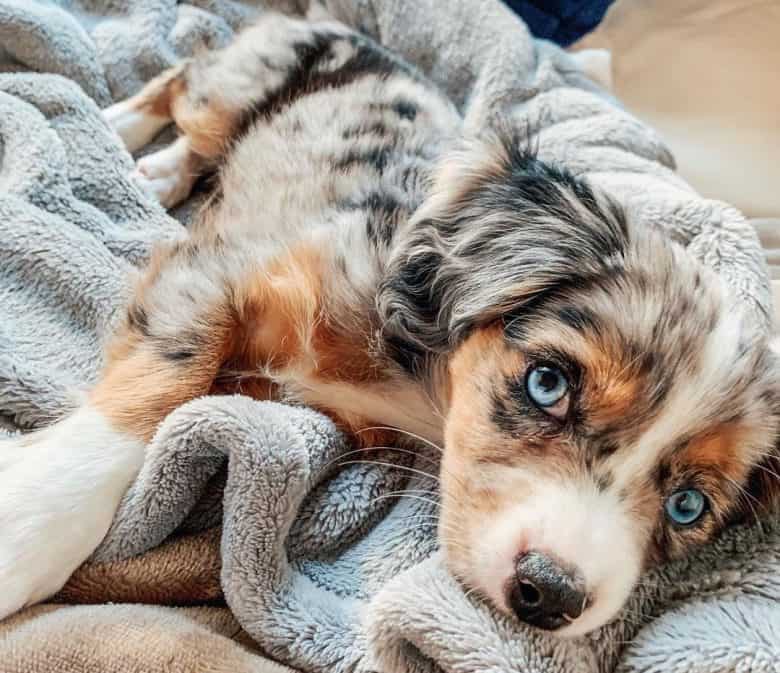
A Cavador is the combination of the Cavalier King Charles Spaniel and a Labrador retriever. Their intelligence, friendliness, and lovable nature are a few of the reasons people adore this mix.

Who Should Get a Cavalier King Charles Spaniel?
The Cavalier King Charles Spaniel is an affectionate and gentle dog that makes an ideal family dog. They get along well with kids, strangers, and other animals.
These toy dogs hate being alone. If they don’t have constant companionship, they can become destructive, loud, and unhappy.
They also need a lot of maintenance and care; there’s a reason why King Charles neglected his country to care for his Cavs.
These toy dogs will melt your heart, keep your lap warm and make sure you never go to the bathroom alone again. We’d love to hear about your thoughts and experiences with the Cavalier King Charles Spaniel!