The Field Spaniel is a great family dog with a combination of beauty and functionality. Floppy ears and glossy fur put them high on the list of attractive pure breeds.
Field Spaniels are also known as Fields and got this name from their work ‘on the field’ or working on farms.

These sweet dogs are medium size and do well in apartments. They are trainable and make good family companions.
The Field Spaniel breed history
In the 1800s, Spaniel dogs were bred in England as hunting dogs and retrievers. In this dog breed’s early history, the only identifiers that distinguished the particular breeds were their size and jobs.
With the popularity of dog shows on the rise in the 19th century, Spaniels’ specific breed types became more important.
The English Field Spaniel was born out of a cross between the Cocker Spaniel, Sussex Spaniel, and English Water Spaniel.
These sporting dogs were also bred for the show ring with performance qualities but used as gun dogs due to their hunting instincts.
Introducing this new breed standard brought health problems with it, which is why the Field Spaniel became a more rare breed during and after the 20th century. They are now the rarest of the Spaniel dogs.
In 1998, The American Kennel Club in the United States officially recognized the Field Spaniel as a distinct breed.
What does a Field Spaniel look like?

The Field Spaniel is indicative of the most common features amongst Spaniels – long, low bodies and shiny coats, to name a few. This medium-sized dog is built for endurance with a strong, symmetrical carriage.
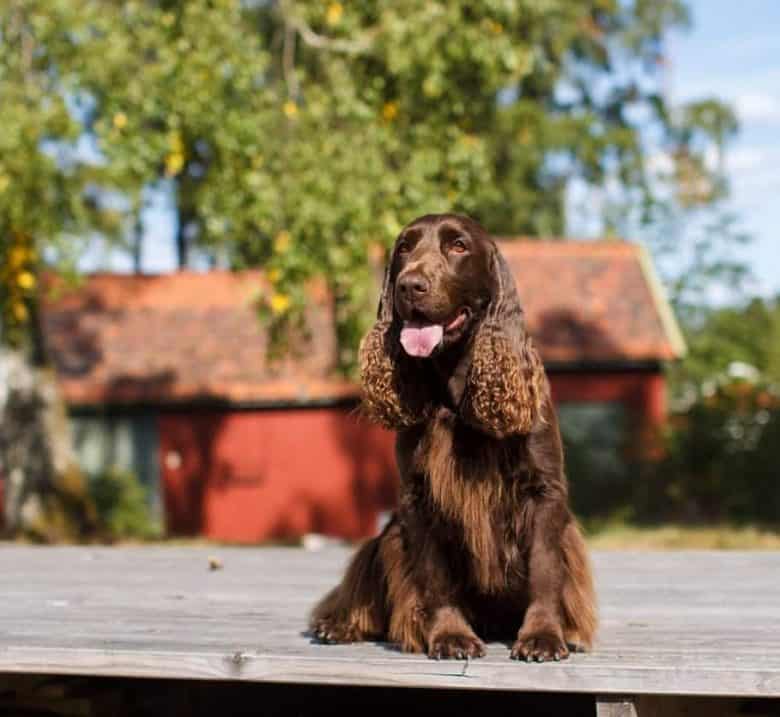
You can recognize the Field Spaniel from his distinguished looks – the noble-looking face with dark hazel, almond-shaped eyes. They also have floppy ears that reach their muzzles.
Field Spaniels have smooth toplines on the body, with strong backs and muscular necks. They also have long chests and low-set tails, some of which are docked.
In the forequarters, the Field Spaniel has sloping shoulders with straight forelegs. The hindquarter legs are strong and straight with bent hocks and defined thigh muscles.
How big does a Field Spaniel dog get?
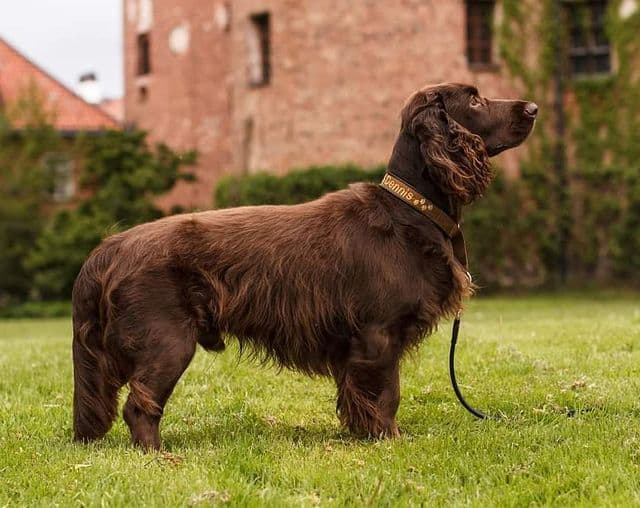
The Field Spaniel stands at 18 inches (45cm) when fully grown or 17 inches (43cm) if female. These dogs weigh 35-50 pounds (15-22kgs) and reach full size at two years old.
Field Spaniels require daily, regular exercise for fitness and mental stimulation, but these are apartment-friendly dogs. You can keep them indoors, and they adapt well to varying living conditions.
What type of coat do Field Spaniels have?
The Field Spaniel has a setter-like straight, single coat that is weather-resilient and water-repellant.
The dense hair is medium-length and comes in a variety of colors. These include black, blue roan, golden liver, golden liver roan, black, black and tan, black and white, liver and tan, and liver and white.
Field Spaniels often have tan points, white markings, and feathering on the underbelly.
Are Field Spaniels good family dogs?

The Field Spaniel is a sensitive, docile breed, with an affectionate and lovable nature. They have a strong affinity for companionship with their owners, and they are even good with strangers.
These kid-friendly dogs are playful but careful enough not to injure a small child. Field Spaniels make great family dogs.
Field Spaniels do not get along well with other pets. You can get around this issue by taking your dog through early socialization with other animals.
This breed possesses low energy levels and will rarely rough-house. They play with their owners, but calmly, in line with the Field Spaniels’ overall temperament.
Field Spaniels will bark to alert you of an intruder but are by no means competent guard dogs or watchdogs. They are friendly, not aggressive, and will only bite if provoked or threatened.
The gentle Field Spaniel is an intelligent breed with excellent trainability, thanks to its history in dog shows.
They are independent creatures who can swim – this is because of the breed’s history near the English water.
Field Spaniel puppies are easy to potty train if you work with them on a consistent schedule. Take them out to relieve themselves at the same time every day.
Take the puppy out at least every two hours or after each time you feed them. Use consistent cues when showing the puppy where you want him to go and reward him for following your instructions.
Taking them out after playtime is also an excellent way to establish a routine.
A good tip is to use the same door every time you take the dog out so that they scratch on it if they need to go outside.
Effective house training is a matter of perseverance with Field Spaniels. If you are strict about the routine and stick to your cues, they will eventually adapt.
It’s best to start when the pup is 8-12 weeks old, though fully-grown Fields are smart enough to learn too.
Fields are protective, kind, and calm, which makes them effective therapy dogs. But they won’t tolerate being alone and shouldn’t be left alone for more than five or six hours.
Field Spaniels suffer from separation anxiety, so it’s best to make sure someone is at home with them if you are out for long periods.
How to take care of your Field Spaniel

Field Spaniels don’t require much in the way of grooming. The water-repellent fur helps keep them clean. You only need to bathe them every 6-8 weeks, or if they ever get particularly dirty after a walk or from swimming.
Field Spaniel puppies don’t smell if you brush them regularly with a comb. You won’t need to bathe them more than once a month.
Thanks to their single coats, Field Spaniels adapt to varying weather conditions.
Exercising your Field Spaniel
Field Spaniels have low activity levels, so you should make sure they get a brisk walk every day to meet their exercise requirements. Thirty minutes is sufficient, and you can up the pace to a moderate jog.
Do Field Spaniels shed a lot?
These low-maintenance Spaniels are easy to groom and don’t shed much.
Brush them once a week and clip the hair behind their ears to ensure they don’t develop any ear infections or ear problems like eczema. Field Spaniels are not hypoallergenic.
Field Spaniel food consumption
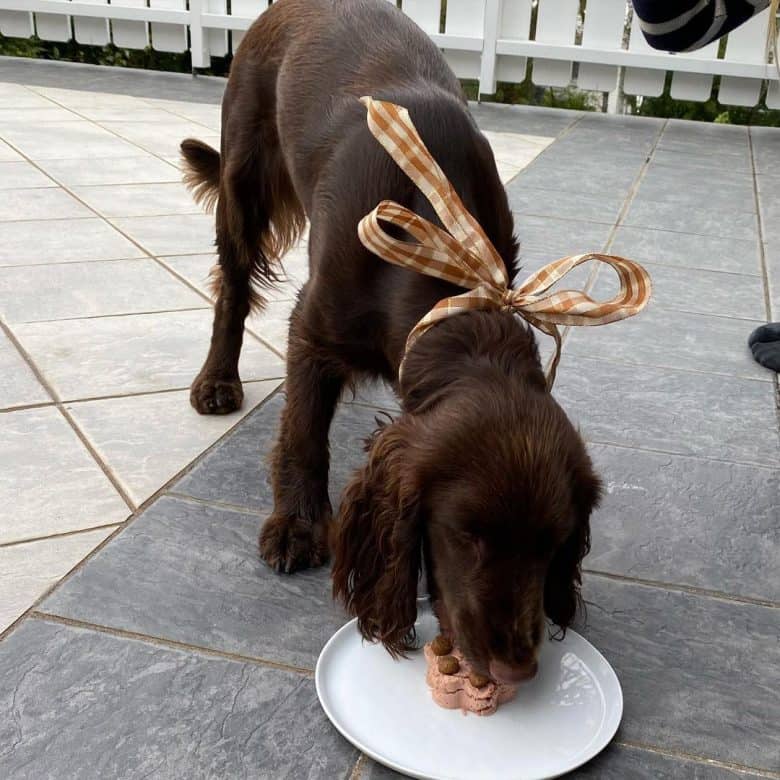
Fully-grown Field Spaniels should eat 1.5-2 cups of high-quality dog food per day, broken up into two meals. On the other hand, Field Spaniel puppies should eat thrice a day, every 3-4 hours.
Stick to species-specific dog food when feeding your pup, and be sure to follow the directions as each kibble type will vary in recommended size.
Field Spaniels can eat wet food like cooked chicken. Just be sure to read up on human foods dogs can’t eat.
What health problems do Field Spaniels have?
If you take careful care of your Field Spaniel’s diet and exercise, you will see a happy and healthy dog. However, there are certain hereditary conditions with Field Spaniels that you should look out for:
- Hip Dysplasia
- Patellar Luxation
- Hypothyroidism and Autoimmune Thyroiditis
- Progressive Retinal Atrophy (PRA)
- Cataracts
- Ectropion
- Heart Murmurs
Other health issues common amongst Field Spaniels include the following:
- Late-onset Seizures and Epilepsy
- Otitis Externa
- Allergies or “Atopy”
- Autoimmune Hemolytic Anemia
- Cancer
- Epilepsy
Health screening on adoption is critical with Field Spaniels, and they should receive occasional testing.
Make sure your vet gives them heart examinations, ophthalmologic exams, and thyroid evaluations or book screenings through the following organizations:
- Orthopedic Foundation for Animals (OFA) for dysplasia, Patellar Luxation, autoimmune thyroiditis, and hypothyroidism
- Canine Eye Registry Foundation (CERF) for cataracts
When you’re adopting a Field Spaniel, you should also check their certification for Von Willebrand disease, a blood clot disorder that occurs in Spaniels.
Field Spaniels have a lifespan of 12-13 years and usually die from preexisting hereditary conditions, or from diseases that came with the onset of old age, such as cancer.
How much is a Field Spaniel puppy?

A Field Spaniel Puppy will set you back $1800 at a minimum and can exceed $2500. You can find pups at puppy farms or at pet stores. Field Spaniel females give birth to litters of about 4-6 puppies.
The annual cost of maintaining a Field Spaniel comes to an average of $2200 USD. This covers the costs of grooming, flea treatments, food, shots, and basic training.
Find Field Spaniel breeders
You can find Field Spaniel puppies for sale at the AKC Marketplace.
When choosing a breeder, you want to ensure you use legitimate organizations like the Field Spaniel Society of America, as they employ trustworthy breeding practices.
Find Field Spaniel rescue
If you‘re looking to give a home to a Field Spaniel in need, you can adopt one of these dogs via rescues and shelters. You can find Field Spaniel rescues through the Field Spaniel Society of America Rescue Portal.
The Field Spaniel vs. its cousins
There are some notable differences between the Field Spaniel and its cousins, the Springer Spaniel and English Cocker Spaniel, mostly in terms of size, temperament, and predominant health concerns.
Cocker Spaniel VS Field Spaniel

The Cocker Spaniel was bred as a working Cocker, meant for farm work, whereas the Field Spaniel was bred for dog shows.
Cocker Spaniels are also smaller than Fields, weighing between 26 and 35 pounds on average, and they are far more adept as watchdogs.
English Springer Spaniel VS Field Spaniel

Compared with Springer Spaniels, Field Spaniels are more docile and not as energetic.
They are also less prone to barking than Springer Spaniels, but they have more prominent hereditary health issues like orthopedic issues.
Who should get a Field Spaniel?
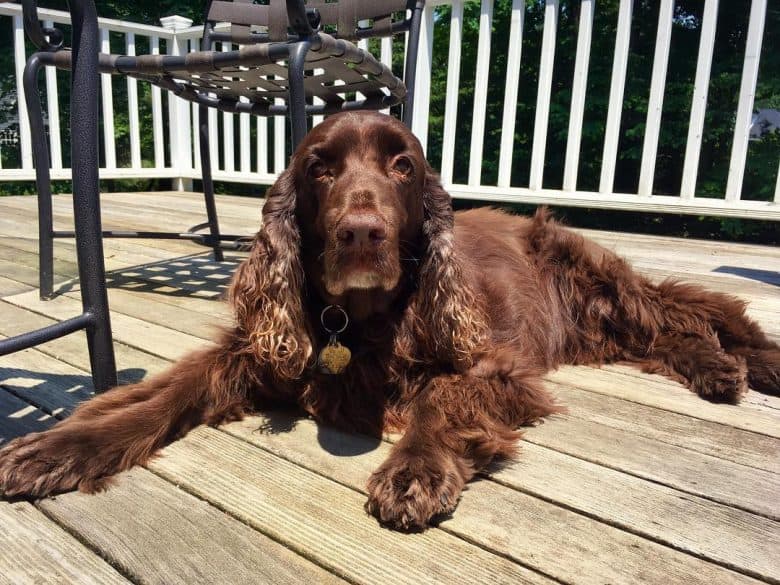
Field Spaniels are wonderful pets if you’ve never owned a dog before, as they are friendly, adaptable, and easy to train.
The fact that they are cute and glossy is just a bonus amongst the Field Spaniel’s many amenable qualities.
With the Field Spaniel’s hereditary conditions, the medical attention they require is a significant con for some owners.
If you can’t afford a dog sitter, this will also pose a problem with owning a Field Spaniel. They need constant attention due to their separation anxiety.
If you have any information about owning a Field Spaniel that we’ve missed, feel free to comment on this post.