The Kerry Blue Terrier is one of the larger terriers to exist and is a purebred dog from Ireland.
Even though this breed is often mistaken for the Irish Wolfhound or the Airedale Terrier, they have distinct qualities and characteristics that make them unique.

Other names given to this breed are Irish Blue Terrier, Kerry Blue, and Kerries (plural).
Continue reading to find out more about this beautiful blue dog breed.
What is the origin of the Kerry Blue Terrier?
Originating from Ireland, the Kerry Blue is said to have connections with leprechauns and other tales of older times. They were given their name after their home county Kerry and their enchanting and famous blue coat.
They were the mascots of the Patriots when they were fighting for independence. The breed was renowned as a working dog with adaptable and versatile nature, making them well-suited for the Patriots.
First bred in the 19th century, the Kerry Blue’s original job was to kill vermin, much like Earthdogs. They were also in charge of hunting small game and herding cattle and sheep.
However, they soon became loyal and beloved pets rather than farm dogs, as they are both animated and family-orientated.
The Irish patriot Michael Collins tried to introduce legislation in the 20th century that would declare the Kerry Blue Terrier as the National dog of Ireland. Collins had a Kerry Blue of his own named Convict 224.
However, before the declaration could pass the legislation, Collins was unfortunately murdered. After his death, people lost interest in furthering this initiative.
Nonetheless, the interest in Kerry Blue Terriers resurfaced. The breed first appeared at the Westminster Kennel Club dog show in 1922 and was recognized by the AKC (American Kennel Club) in 1924.
You can sometimes see the Kerry Blue Terrier at a dog show, but not often.
Despite being farm and hunting dogs in nature, judges named them the top winners in the show ring in the early 20th century. One of the greatest show dogs of the 2000s is a Kerry Blue Terrier named Mick.
Their presence in the show rings of Ireland and England defined this breed type and increased the attention for the compact Irish Blue Terrier.
What does an Irish Blue Terrier look like?
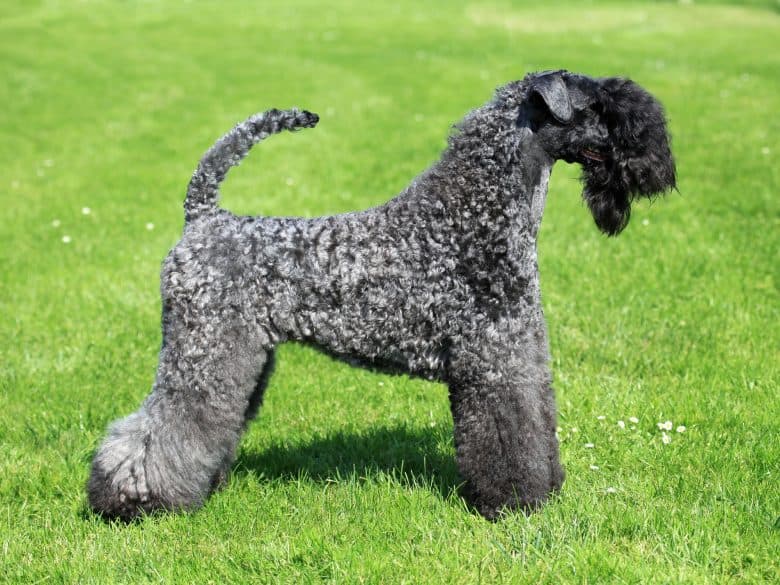
In terms of appearance, Kerry Blue Terriers have proportioned, postured, and firm bodies. They have a muscular body type that is also strong and well-developed.
The head of the dog is long, with V-shaped ears and darker eyes. They have long fur on their heads which is more prominent along the front of the nose like a mop of hair that falls over their eyes.
Their necks are clean and reasonably long, leading into a deep chest with average breadth. This terrier has straight legs that are fairly long but still robust.
Kerry Blues have a muscular body with a short back and a curved tail that is merrily erect.
How big will my Kerry Blue be?
A terrier is generally a small dog breed. However, the Kerry Blue is the exception, with a full-grown height of 17.5-19.5 inches (44.5-49.5 cm).
They reach maturity at the age of 24 months. This makes them slow growers, but they eventually get there.
When they are fully grown, they weigh between 33-40 pounds (14.9-18 kg), making them reasonably lightweight for their size.
There isn’t much of a difference between the male and the female Kerry Blue, although the latter is slightly smaller than the former.
With their build and size, Kerries are more suitable for a home with a huge yard or garden where they can run around freely.
The Coat of the Kerry Blue Terrier
The breed standard describes the coat of the Kerries as soft, dense, and wavy; it is one of the signatures of this purebred dog.
Another trademark is, of course, the color of the coat. Their name isn’t the Kerry Blue Terrier for nothing!
Nevertheless, they do not start off having their famous blue coloring. When the Kerry Blue Terrier puppy is born, their coats are an inky, black color.
By the time they are 18 months old, the blackness will gradually lighten into what many consider to be “progressive gray.”
The coat might range from grays to browns this time but will ultimately fade into the blue-gray they are known for.
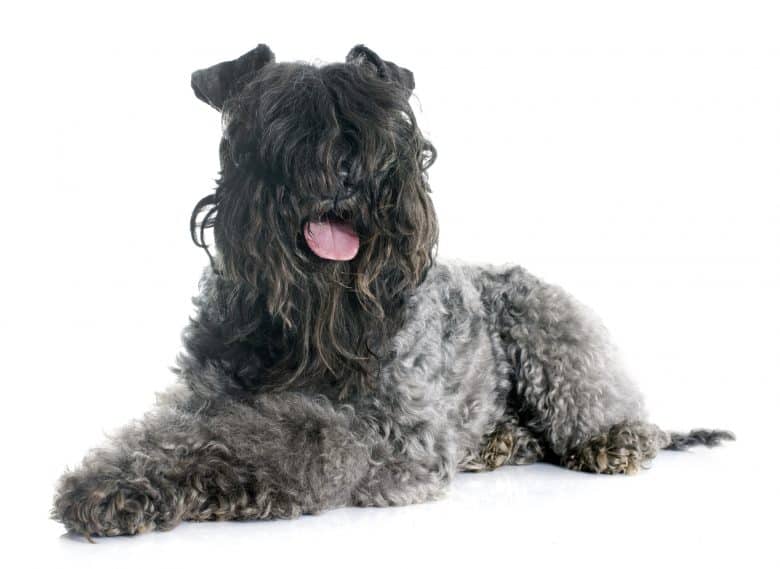
Here are some of the common color variations of the Kerry Blue Terrier coats:
- Blue
- Blue and Black
- Blue and Gray
- Blue and Silver
- Silver
- Silver Blue
- Slate Blue
- Gray
Are Kerries good family dogs?
Their loving and loyal demeanors and sound temperaments make them wonderful pets.
Their affection levels are high, and they are friendly towards people of all ages, especially children, and enjoy being a valued member of the family.

They can be a bit feisty with a bark that can sound very intimidating. They are not considered yappy dogs, but when they do, they can be so scary that people might think they’re dangerous.
Their domineering bark does make them good watchdogs.
As playful as Kerry Blue Terriers are, they have a high prey drive and a tendency to fight with other dogs and small animals. So even with proper socialization, this purebred will do better in a home where they’re the only pet.
Kerries also hate being left alone. They have the tendency to do all kinds of naughty activities like chewing, digging, or scavenging when their owners are not home.
The Kerry Blue is a smart dog with a stubborn streak. Their trainability is strong, but this dog breed requires a strong-willed and loving owner to show them what is expected from them.
They love pleasing their owners. With consistent training, early socialization, and lots of love, they can become the perfect pet.
The best time to start their training is when they are still puppies. They are remarkably intuitive and can learn quickly.
Use positive reinforcement, giving them some treats when they do what you ask for training to progress faster.
Care tips for your Kerry dog
Like any dogs, Kerry Blues need a comfortable place to relax. Buying your pet a doggie bed where you can place a clean blanket or pillow as a cushion is a great way to do this.
It’s also important for your pooch to have access to cool water, especially when it spends more time outdoors.
The only high-maintenance factor about this breed is their soft and dense coats. However, with the proper grooming and care, your Kerry Blue will always be in peak condition.
How to keep your Irish Blue in shape
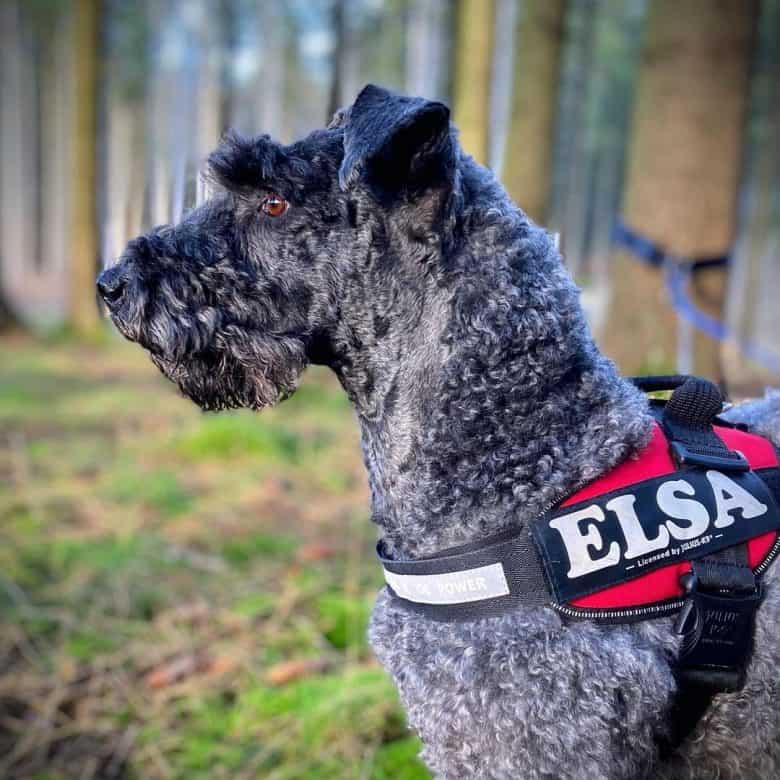
This purebred dog’s energy level is high, and they can be hyperactive. As mentioned, they were bred to be hunters, so it is their nature to be ready for any kind of action.
Make sure to take them out for their exercise needs such as running, going on long walks, playing in parks, or swimming.
Kerries require a daily exercise routine, so if your family is known for being active, this pet would be an excellent fit for you.
However, keep in mind that these dogs are not too adaptable to hot weather. If you live somewhere warm, take him for his daily exercise in the morning or when the sun is no longer out.
The level of exercise does not always have to be intense. Go for lots of walking or running as they enjoy being as active as possible. The walks can be anything from 45 minutes to an hour.
Do Kerry Blue Terriers shed?
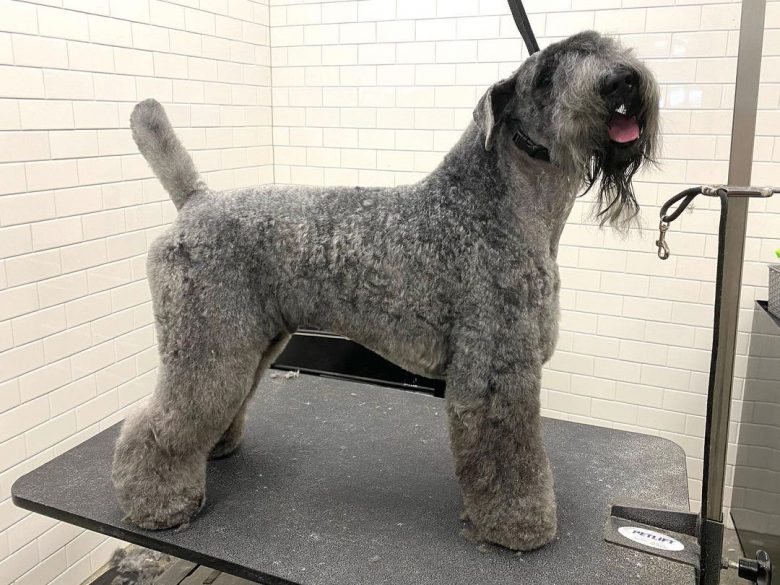
Kerry Blues are considered non-shedding or hypoallergenic dogs. If their wavy coat gets constant care and maintenance, they can make a great pet for individuals with allergies.
As their coats are dense, you will need to brush them daily to prevent matting.
Kerry Blue Terriers need to be trimmed and bathed every four to six weeks, depending on how many adventures they have been on in the woods or your backyard.
As they enjoy digging and chasing, their coats will bear the brunt of their love for the outdoors.
Many owners hire professional groomers for their Kerry Blues, but it is sometimes difficult to find ones that know how to trim the coating of this breed the right way.
Having an inexperienced groomer handle your pooch might have you end up with them looking like a poodle.
Here’s a video of a Kerry Blue Terrier getting a good dog show style grooming sesh from a pro.
Kerry Blue Terrier food consumption
The recommended daily amount you should feed your Kerry Blue daily is around 1.5 to 2 cups of high-quality dry food divided into two meals.
However, dogs are individuals, just like humans. They do not always need that specific amount. It will depend on the dog’s size, age, metabolism, build, and how active they are.
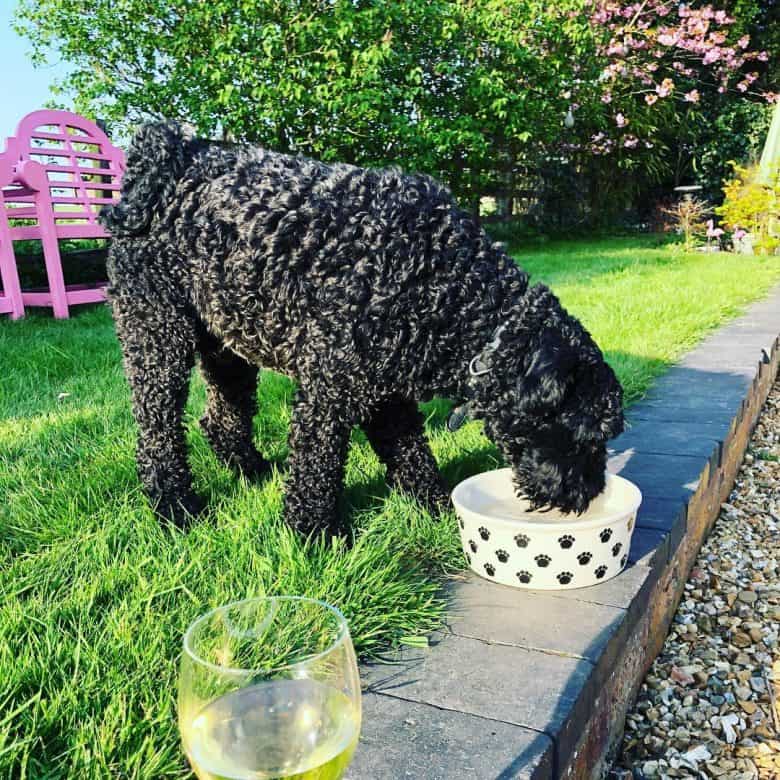
The quality of the dog food you use also plays a factor as certain dog foods do not have the necessary nutrients they need like protein and antioxidants.
When the dog food is high quality, you won’t need to give too much of it to your dog.
It is a good idea to measure your dog’s food intake by giving them set eating schedules instead of leaving food out all the time.
If you are unsure if your dog is overweight or worried about obesity, you can give them the eye test and the hands-on test.
The first step is to look down at them. If you can see the waistline, it is a good sign that your pet is not overweight.
You can then put your hands on their backs, running your thumbs along the spine with the rest of your hands on their ribs. If you can feel their ribs, they are good to go.
Feeding Kerry Blue pup is a little different. When the puppies are between 8 and 12 weeks old, they require around four bowls of food daily.
When they are 3 to 6 months, they need three bowls a day. After that, around 1 to 2 bowls a day should be sufficient.
Getting the right kind of dog food can be tricky as some dog foods are for specific conditions. Fortunately, there are plenty of high-quality dog food brands that you can choose from.
You can even try feeding them with a raw-food diet if you like or maybe whip a nutritious homemade dog food once in a while. Nonetheless, always do your research before anything else.
Kerry Blue Terriers sometimes have food allergies, which is not detrimental to their health, but it is essential to check the ingredients of the dog food that you buy.
Check what kind of nutrients are in the dog food and what they are suitable for before buying them. Some dog food could be energy-enhancing, which is not necessary for this breed.
General foods you should avoid feeding your Kerry Blue Terrier are chocolate, avocado, alcohol, and any kind of citrus. These foods are not ideal for dogs in general.
Your Kerry Blue Terrier can also experience diarrhea, vomiting, flatulence, or a gurgling stomach when eating, which can imply sensitivity to a specific food ingredient.
In that case, it is best to opt for a diet that is formulated with fewer ingredients to limit the triggers your dog is exposed to.
Aging in Kerry Blues and health issues
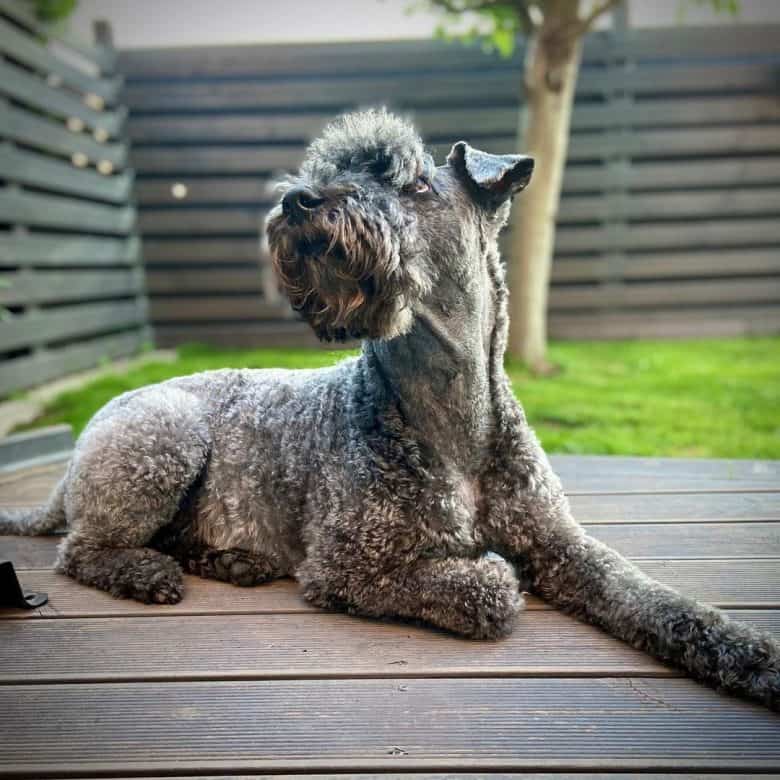
When they are well taken care of, The adult dog has a lifespan of between 12-15 years. However, despite being generally healthy dogs, Kerry Blue Terriers are still prone to certain health problems.
Hence, it’s important for pet owners to know about these issues concerning these dogs.
Screening your dogs for health-related purposes and tests is the best way to see what diseases might be hereditary. The tests also show which conditions you should be looking out for or preventing according to their DNA.
A rare skin condition male Kerry Blues experience is Canine Spiculosis.
They develop abnormally thickened hairs that can lead to a formation of a keratin mass that eventually forms a thick hair spicule. This skin problem can become very itchy to your dog.
Other health issues your dog could be at risk are:
- Eye problems – Kerry Blues will often face eye problems. They are prone to cataracts, entropion, Cerebellar Abiotrophy, and Keratoconjunctivitis Sicca. You can visit an ophthalmologist at the Canine Eye Registry Foundation (CERF) to certify healthy eyes. You can check the health clearances on OFA’s website.
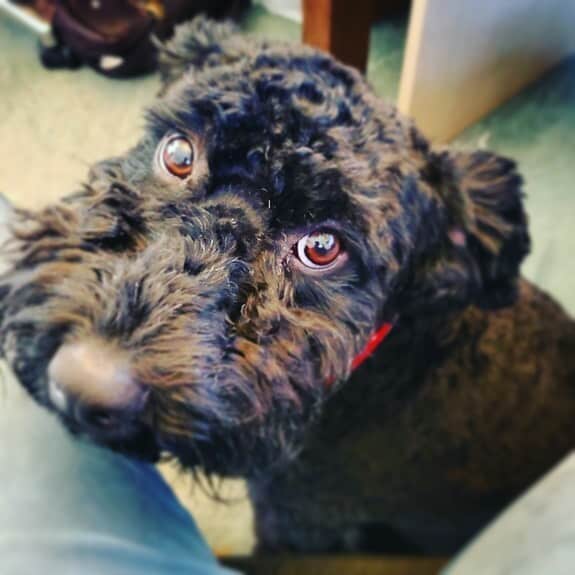
- Cerebellar Abiotrophy – A disease that affects the cerebellum, a part of the brain that controls the body’s movements. The cerebellum cells mature before they were supposed to and die, causing a considerable lack of balance and coordination.
- Keratoconjunctivitis Sicca – Commonly known as “Dry Eye,” it is a condition that affects the cornea of dogs. Inflammation occurs, and the surrounding tissue in the eye dries out.
- PNA (Patent Ductus Arteriosus) – A hereditary disorder that develops when a Kerry Blue Pup is about four months old. The puppy’s head begins to shake when it tries to focus on something, so instead of becoming stronger and more coordinated, they become disorientated.
- Degenerative Myelopathy (DM) – A condition that forms from PNA and affects the spinal cord. It causes the dog to experience a lack of coordination and wobbly walks (goose walks). Some dogs have experienced paralysis from DM.
- Hip Dysplasia – A deformity of the hip can take place during growth. The ball of the hip and the socket of the pelvis should grow at the same pace during this stage. However, during hip dysplasia, that does not occur. Without proper medication, this condition can cause a loss of control in the joints.
You can also check for Factor Xi Deficiency, a condition where the dog’s response to trauma is delayed. This could cause Hemophilia in the long term.
For other tests, you can go to the Orthopedic Foundation for Animals (OFA) for health clearances on Hip and Elbow Dysplasia as well as Von Willebrand Disease and Degenerative Myelopathy (DM).
How much does a Kerry Blue puppy cost?
Since Kerries are purebred dogs and there aren’t many puppies available all the time, they can cost between $1,000 and $5,500, the latter for top quality and superior pedigree puppies.
This amount can depend on the health clearances and the availability of the dogs.
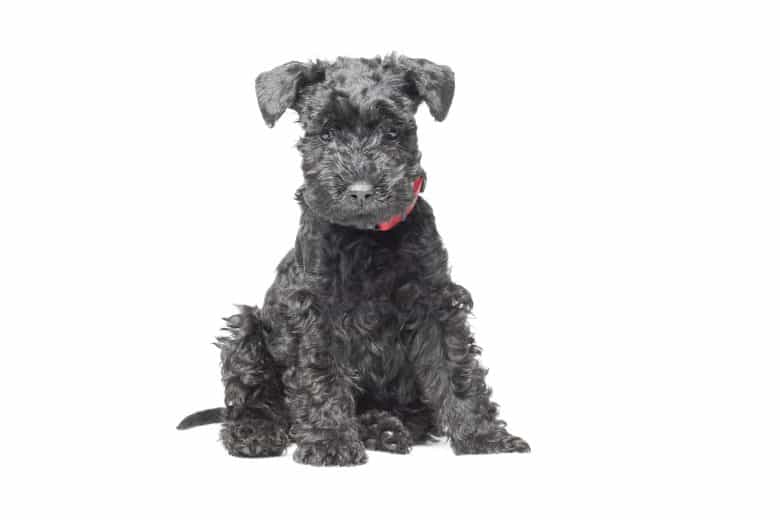
A litter of Kerry Blue Terrier puppies usually consists of 3-5 pups. There aren’t a lot of them to be sold at any given time.
If this is the dog you want, we advise that you try and secure one for yourself from a breeder sooner than later.
Keeping a Kerry Blue Terrier is another story. One thing that can influence your finances is grooming, which ranges between $50-$150 every 4 to 6 weeks.
You also need to factor in the dog food, which ranges from $60-$120 a month.
Kerry Blue Terrier breeders
If you are looking for puppies from AKC-registered litters, you can find them on the AKC Marketplace.
Here, you can find many reputable breeders with experience on Kerry Blue Terriers and are required to follow the rules and regulations set in place by the AKC.
Kerry Blue Terrier rescue and adoption
Even though they are purebred dogs, they still get abandoned often. So, make sure to check your local rescue groups and centers.
The United States Kerry Blue Terrier Club (USKBTC) is an organization that promotes the ethical ownership of the breed. They also provide rescue services for Kerry Blues, where you can search out for possible adoptions.
Another place you could try is Lovin’ the Blues, a nonprofit charity group dedicated to promoting the welfare of the Kerry Blue Terrier through rescue, fostering, and adoption.
SaveaRescue is another organization that provides people with rescued Kerry Blues. You can adopt a dog and also volunteer if you wish to do so.
RescueMe is a non-profit website where you can reach out to thousands of Kerry Blue Terrier dog rescue groups, both local and international for possible adoptions.
Who should get a Kerry Blue Terrier?
The Kerry Blue Terrier is a loyal, loving, and energetic dog. They might tend to get up to mischief, but to their core, they are caring dogs who will feel like a beloved part of the family in no time.
They are great family companions, and they will force the owner to be more active, which is ultimately also beneficial to them. A plus, of course, is how insanely cute they are!
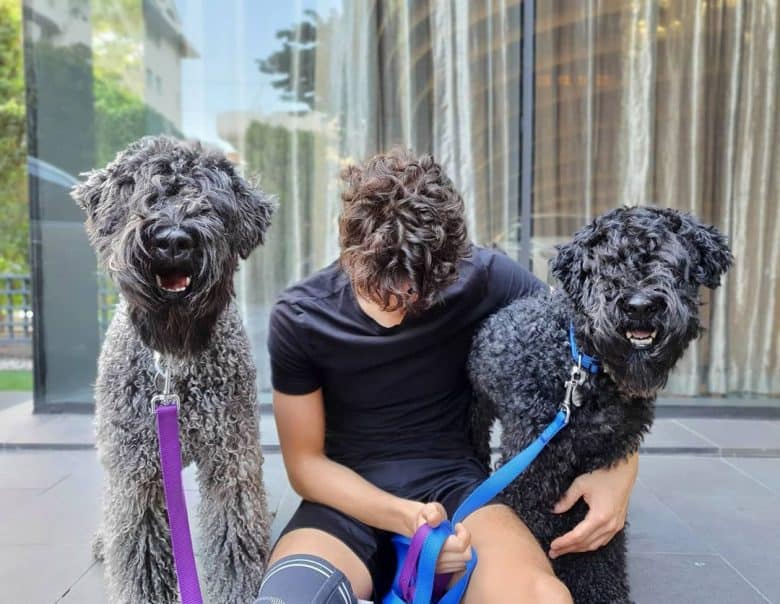
One of the cons of owning a Kerry Blue is that they can be high maintenance and costly because of their coats. However, they make up for it by being intelligent, fast learning, and lovable!
Ultimately, it is up to you to decide whether or not a Kerry Blue Terrier is the right dog for you or your family. Their charismatic and energetic behavior can be endearing to some and unmanageable to others.
If you are up to the task, you will surely see the rewards and will get to experience the fruits of your labor.
Similar terrier breeds to the Kerry Blue Terrier
- Irish Terrier
- Airedale Terrier
- Welsh Terrier
- Soft Coated Wheaten Terrier