Dog training for hunting and den work can be confusing if you’ve never done it before, which is why we’ve written this guide to get you through every detail of the Earthdog sport.
If you want your fido to join these trials, we’ve covered everything from history, training, different Earthdog breeds, and what you need to know about enrolling in an Earthdog test.
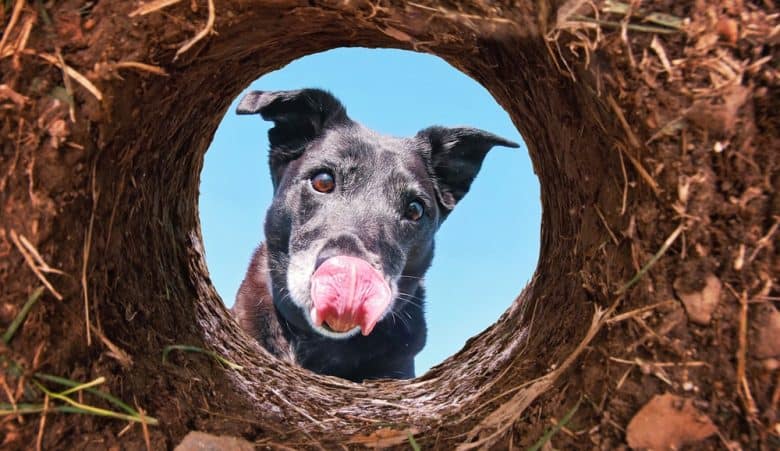
Keep scrolling and find out if Earthdog trials should be you and your dog’s thing.
What is an Earthdog?
Earthdogs are working dogs bred to help humans hunt vermin such as badgers, rabbits, and rats.
The dogs will follow their game underground or in the den and either hold it until their human pulls them or they flush it to the surface.
They have a natural ability to scent in underground tunnels. The Earthdog test offers a standardized gauge to measure these abilities.
History of the Earthdog
Earthdogs have been around as long as human hunters, and the mention of canines used for their burrowing abilities dates back to about 200 B.C.
Dachshunds, for example, originated in northwestern Italy in the 15th century, while the mention of Terriers dates back to around 55 B.C.
The Dachshund Club started den trials for fox and badger hunting in 1935. By 1941, the German Terrier clubs issued “working certificates” to canines that showed a propensity for den work.
And in 1971, the American Working Terrier Association started den trials in the U.S. The American Kennel Club (AKC) began official Earthdog tests in 1994.
Earthdog tests and den trials explained
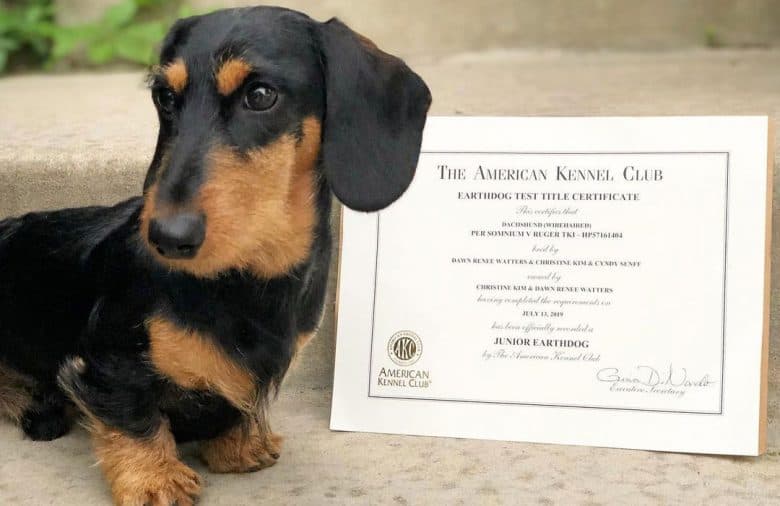
Earthdog tests answer one fundamental question: Can my dog hunt? The Earthdog test measures a dogs’ natural aptitude for den work.
The test is also non-competitive. If your canine succeeds, he will receive a pass certificate.
Earthdog tests involve den trials, which recreate underground hunting situations. Den trials involve scenting and working the “quarry” or prey.
Scenting is the process of picking up and following the prey’s scent, while “working quarry” means barking, scratching, pawing, or staring at the located game.
Dogs must navigate dark tunnels to locate prey by tracking their scent. Test organizers will lay the scent at the tunnel entrance, and the game will be caged somewhere inside.
Once the dog finds and works the quarry, he must return to his owner within a specific time frame.
What breeds are allowed?
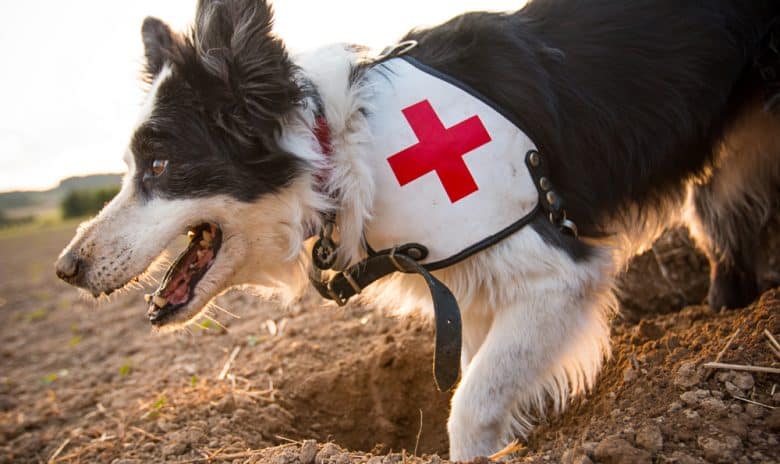
Only purebred dogs can participate in Earthdog events.
When assessing eligible breeds, test organizers look for earth dogs with a small and compact conformation to fit into tunnels, and they should also be tenacious to face their prey.
Other attributes that earth dogs should have are:
- Penchant for digging
- High prey drive
- A keen sense of smell
- Problem-solving abilities
Let’s not forget being obedient in the field. Dogs in heat, deaf, and blind cannot participate.
Earthdog equipment and supplies
Another reason why this is a popular sport is that the tools used are inexpensive. You don’t have to prepare a lot of things for the Earthdog tests. The only pieces of equipment required are:
Rat cage: Wooden or wire boxes with closed wire-front panels keep the quarry trapped.
Rat: You can use a real rat bred for earthdog tests; these have a high tolerance for barking. An alternative is a fake rat with an actual rat odor. You can get this by asking around at pet stores for used rodent beddings.
Tunnels: Wooden boxes can be used to create tunnels. Cardboard boxes will also work to start training. Tunnels should be between 10 and 50 feet, depending on how far along in training your canine is.
Harness, leash, and longline: Trainers use a longline while the dog is working the tunnels; this helps him out of the tunnel if he cannot find his way back.
Use a leash between working sessions. You can use a harness to hold the dog back when training.
Getting started with earthdog training

You can begin playing scenting games with your dog at six months old, as this will help build confidence.
Some trainers recommend hiding treats in grocery bags or dark spaces. It will serve as a good practice for searching tunnels.
But the best age for a dog to start Earthdog training is when his sense of smell has reached full development – between nine and twelve months old.
Once your dog understands the basics, you’ll notice how the sport gauges your canine’s natural working abilities, and his talent will be instinctual.
Getting a trainer can help you avoid critical errors during the Earthdog training process. It can also be beneficial if you wish to undergo an official Earthdog test with the AKC.
1. Introduction to the quarry (the rat)
During the basic introduction to the quarry, you must first incite your dog’s interest in his prey. Place the rat (fake or real) in a cage and encourage your dog to bark at it or display any visual interest.
With your dog on-leash, tap the cage and encourage him by saying, “Get the rat!”
Match the dog’s excitement because it will help build his interest. Entice him by moving the cage slightly out of reach. Keep tapping the cage and using your cue to encourage your dog to run at it.
Reward any interest in the cage, like staring, barking, pawing at, or moving towards it. When your dog barks at it for about 30 seconds, you can let go of the leash and allow him to run at it. Discourage any biting.
One session should last 2-3 minutes, after which you should take a break and get your dog to settle. This will teach him to control himself when not actively working.
2. Introduction to the tunnel
Once your dog expresses interest in the cage, you can introduce him to the tunnel. Take your dog off-leash and hold him at the tunnel’s entry, then say, “Get the rat!”
If you’ve made the cage desirable to your dog thoroughly in the first step, he should enter the tunnel. Don’t force him to enter.
Tips for tunnel training small Terriers
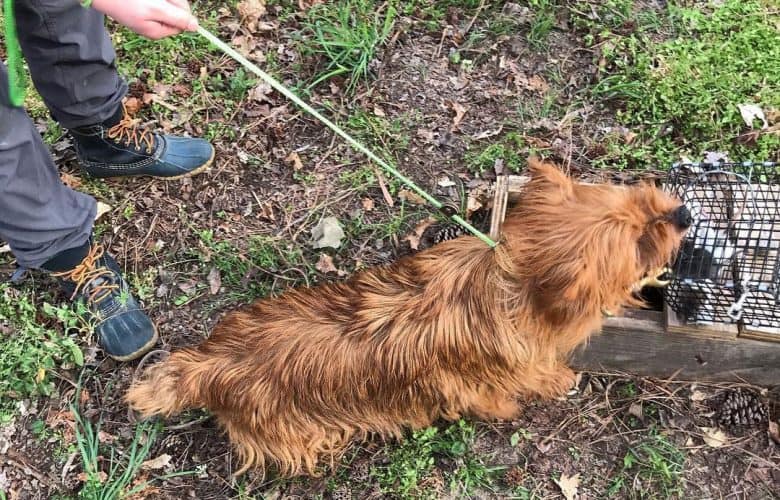
Obedience training plays a significant role in training for Earthdog. To prepare for formal training, your dog needs to follow commands used for Earthdog activities and required tasks.
You’ll need to construct a short tunnel to train in, which you can make out of any sturdy material. Some owners use lumber or plywood. You can use cardboard boxes, but you’ll have to replace them regularly.
Your tunnel should be a maximum of 9×9 inches (23×23 cm) and about 4-6 feet (1-2 m) in length for the first bout of training.
You don’t have to bury your tunnels. Instead, prop them up on some wood to allow light to filter in from underneath.
Once your dog is entering with ease, you can remove the wood to simulate an underground tunnel’s dark conditions.
Use kibble to motivate your dog. Don’t feed him at his usual time, as he will be more motivated to look for kibble if he is hungry. Don’t worry; he will still get his daily amount of food before training is over.
Take out one piece of kibble and, when your dog is looking, throw it about a foot into the tunnel and wait. He should stick his head in to retrieve the food. Repeat this process, slowly increasing how far you throw the kibble.
Once your dog makes it to the end of the tunnel, reward him with a handful of kibble and lots of praise. Repeat this process until he has had all his kibble for the day.

Once your dog has nailed the short tunnel, begin training him in a longer one. Long tunnels have more sections and offshoots with corner pieces involved.
The tunnel must still be 9×9 inches (23x23cm). Make sure the corners are at perfect right angles.
You just have to repeat the setup and training but in a remodeled tunnel to get him used to different situations.
Pups can navigate tunnels, but you’ll want to wait until your canine is one year old before placing the quarry in the tunnel because a dog’s reaction to prey is age-dependent.
When your dog reaches 12 months, make sure you ONLY bring the tunnels out once a month, so he doesn’t get bored of them. You can use a lab rat or a squirrel for quarry.
Critter boxes or cages are used to keep the quarry and your dog safe from each other, so they need to be secure.
You can make the critter box from plywood. It should have a wire-front opening with a top handle. Ensure you sand down any edges on the grates so your dog doesn’t get injured.
Modify one of your tunnel sections by adding tunnel bars where you’ll place the critter box. They can be made from narrow aluminum bars or wooden dowels and anchor them with wood and glue.
You’ll also need to cut a trap door section out above the barred area.
Once your tunnel is assembled, and your dog is motivated (don’t feed him for 24 hours beforehand), you can place the quarry in the critter box.
Leash your dog and stash the critter box somewhere behind the tunnel, but NOT inside it. We’ll explain why in a moment.
Now, let your dog run. He’ll probably run straight to the critter box – let him tire himself out, then snap the leash to bring him back towards the tunnel.
He should remember his previous training, then run through the tunnel. When he goes inside, grab the critter box and place it under the trap door.
This method trains your dog to never run around the tunnel but to run through it. If you’d like to see an example of a Terrier doing tunnel training, check out the video below:
After a few sessions, you’ll find your dog runs through the tunnel. Once he locates it, open the trap door and pet him through the opening. Rattle the cage to encourage him to work the quarry.
Once you’ve got your dog to work the quarry well, you’re ready to train him in pull and recall.
You can pull him out via the trap door, or you can remove the critter box from behind bars. Go over to the tunnel’s entry and wait while your dog figures out what’s going on.
Release a long, loud whistle to grab your dog’s attention, then simply wait. DON’T call him again.
It may take your dog up to 20 minutes to come back out through the tunnel, but he’ll come to you.
3. Increasing the difficulty
As your dog gets more comfortable with one tunnel, add gradual steps by adding different sections to it. You can also increase the distance between your dog and the tunnel’s entry.
Are there Earthdog competitions?

Earthdog is a non-competitive program, but, yes, there are “competitions” you can enter.
You don’t have to be a breed club member to participate, but your dog must have AKC registration and a Purebred Alternative Listing (PAL).
You can find nearby clubs doing Earthdog tests by heading to AKC’s Club Search Directory. Enter “Earthdog” as your club type, enter your location, and the website will show you an appropriate club.
Contact them and ask about when and where the next test is.
American Working Terrier Association (AWTA)
AWTA runs Earthdog den trials. You can read the list of eligible dog breeds below. If your dog’s breed isn’t included here, you can request participation on a probationary basis by contacting AWTA.
(AWTA) Earthdog eligible breeds:
- West Highland White Terrier
- Welsh Terrier
- Skye Terrier
- Sealyham Terrier
- Scottish Terrier
- Patterdale Terrier
- Norfolk Terrier
- Norwich Terrier
- Lakeland Terrier
- Jagdterrier
- Jack Russell Terrier
- Glen of Imaal Terrier
- Smooth Fox Terrier
- Wire Fox Terrier
- Fell Terrier
- Dandie Dinmont Terrier
- Dachshund
- Cesky Terrier
- Cairn Terrier
- Border Terrier
- Bedlington Terrier
- Australian Terrier
Earthdog trial contacts
For Earthdog trial queries, you can contact the AWTA President, Esther C. Krom, the Trial Secretary, Lousie Snyder, or the Membership Coordinator, Cindy Todd. We’ve listed their contact details below:
Esther C. Krom
16 Linwood Terrace, Clifton, NJ 07012
201-472-0957
Louise Snyder
31800 Hwy. 20, Fort Bragg, CA 95437
707-964-4667
Cindy Todd
6861 Greenleaf Dr. N., Richland Hills, TX 76180
AWTA issues three certificates under the Earthdog trials, which we’ve outlined below.
Certificate of Gameness (CG)
This certificate requires a 100% score in an AWTA-certified Earthdog trial. Participating dogs must navigate a 30-foot tunnel and reach the quarry within 30 seconds.
The dog must work the quarry for a full 60 seconds to qualify.
Working Certificate (WC)
This certificate is only applicable to AWTA members. The dog must work natural earth to find either a woodchuck, badger, fox, or raccoon to receive a WC.
The dog must enter the ground without encouragement. The dog must work the quarry until the quarry bolts from the earth.
Hunting Certificate (HC)
The HC is for dogs who help their owners kill game like rabbits, squirrels, possums, rats, or raccoons in real-life hunting situations. Dogs must participate in a full hunting season to qualify.
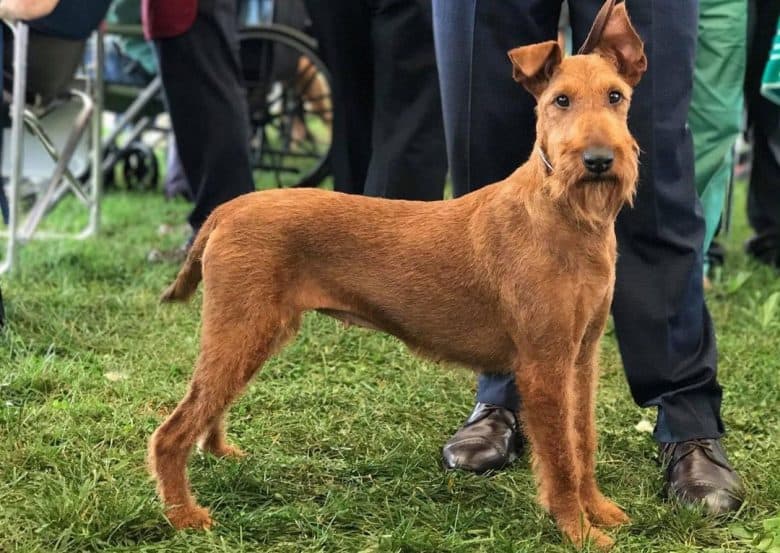
The American Kennel Club (AKC)
AKC organizes Earthdog tests and has its own list of eligible breeds. Like with AWTA, additional breed types will undergo consideration if you appeal to AKC for a probationary period for your dog.
AKC earthdog tests
Only purebred terriers can participate in AKC Earthdog tests unless you have special permission from AKC. Below is a list of the AKC-eligible breeds:
- Cairn Terrier
- Yorkshire Terrier
- Wire Fox Terrier
- Bedlington Terrier
- West Highland White Terrier
- Smooth Fox Terrier
- Welsh Terrier
- Skye Terrier
- Australian Terrier
- Silky Terrier
- Sealyham Terrier
- Scottish Terrier
- Norwich Terrier
- Russell Terrier
- Rat Terrier
- Norfolk Terrier
- Parson Russell Terrier
- Miniature Schnauzer
- Miniature Pinschers
- Miniature Bull Terrier
- Manchester Terrier
- Lakeland Terrier
- Cesky Terrier
- Jagdterrier
- Glen of Imaal Terrier
- Dandie Dinmont Terrier
- Dachshund
- Border Terrier
- American Hairless Terrier
AKC Earthdog trial contacts
If you have queries about your Earthdog trial or want to appeal to AKC for a probationary period, you can email AKC directly. We’ve listed all the contacts you need to find information about the trials below:
Field Rep: Gordon Heldebrant
2406 Watson Street, Sacramento, CA 95864
916-485-5950
Advisory Member: Jo Ann Frier-Murza
131 Bordentown-Crosswicks Rd., Crosswicks, NJ 08515
609-298-3150
[email protected]
AKC approved Earthdog Judges
Below is a list of the American Kennel Club’s approved Earthdog judges:
- Sheila Taylor Allen
- Jean Clark
- Karla Diethorn
- Tim Doyle
- Chris and Pam Dyer
- Gordon Heldebran
- Esther Krom
- Joyce Moore
- Jo Ann Frier-Murza
- Charlene Ownes
- Pat Quinn
- Lynn Niebur
- William R. (Sil) Sanders
- Ron L. Sebastiani
- Larry Sorenson
- Karl and Helene Stearns
- James Tebbett
Earthdog program levels of competition
The Earthdog program has five levels of competition, and each requires a different level of expertise. The Master Earthdog certificate is only applicable to AWTA members. Below is a list of each level:
- Introduction To Quarry (IQ I and IQ II)
- Junior Earthdog (JE)
- Senior Earthdog (SE)
- Master Earthdog (ME)
- Endurance Earthdog (EE)
Frequently Asked Questions (FAQs)
My dog is a great natural hunter that catches mice and chases squirrels all the time. We’ll pass right away, won’t we?
Many owners wonder how easy it is for their dog to pass the Earthdog test. Even if your pup is displaying natural abilities the Earthdog tests are looking for, your dog may not pass right away.
It may be a sign that he’ll become more proficient after an introductory class.
What is nose work?
Nose work is any activity that uses your dog’s sense of smell to locate prey, or a target, by following a scent trail. It’s even considered a dog sport to simulate professional canine detection tasks.
Is the sport Earthdog for you & your dog?
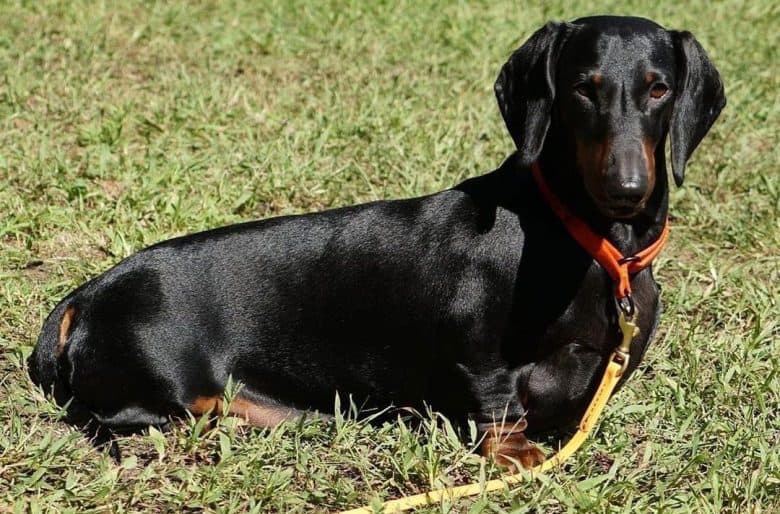
Earthdog trials can be a fun activity for you and your dog to bond with your earthdog who’s born to hunt.
This can make him engage in this activity, making him happy to spend his weekend training with you. However, this sport might not be your style if you don’t like the idea of putting animals in cages.
Have you done an Earthdog test? Leave us a comment about your experience!

Cess is the Head of Content Writing at K9 Web and a passionate dog care expert with over 5 years of experience in the Pet Industry. With a background in animal science, dog training, and behavior consulting, her hands-on experience and extensive knowledge make her a trusted source for dog owners.
When not writing or leading the K9 Web content team, Cess can be found volunteering at local shelters and participating in dog-related events.