Huge and bear-like, the charming Old English Sheepdog (OES) is an excellent herding and farm dog known for its distinctive shaggy coat.
Regardless of what you call this purebred – Bob, Drover‘s Dog, Altenglischer Schäferhund, and Antiguo Perro pastor Inglés – it’s a mellow giant that makes a great family companion.
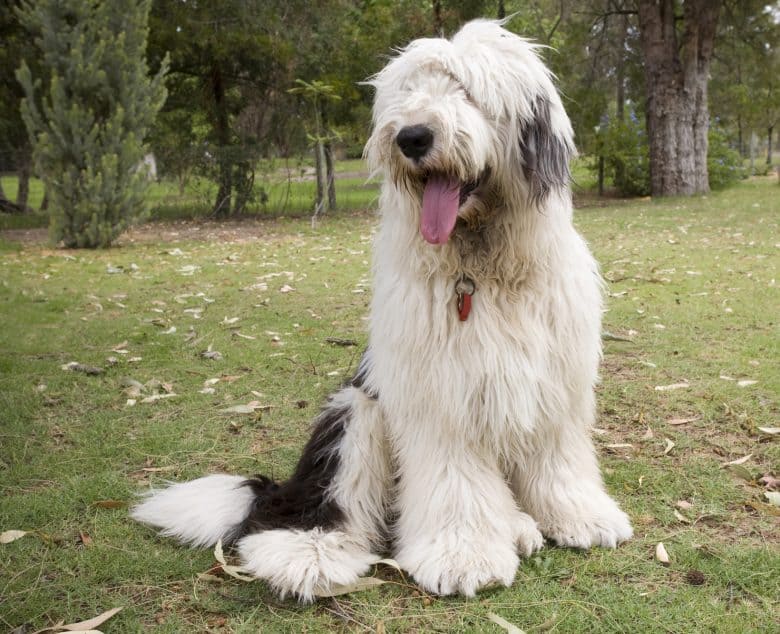
But is there something more to this easy-going pooch? Should you get one? Read on to find out!
Where did the Old English Sheepdog originate?
Often called the “Bobtail,” Old English Sheepdogs are one of the British Isles’ most iconic dog breeds.
Though it’s said that they were developed in Somerset and Devon counties, as well as the Duchy of Cornwall in England’s west, they’re not fully English by blood.
In fact, this fido’s name is a misnomer because they’re not really old as they’ve been around since the late 1700s.
Some also believe that they have ancestors that aren’t sheepdogs such as the Russian Owtchar/Ovtcharka, Deerhound, Briard, Bergamasco, and other European, and Scottish breeds.
The OES was bred to be drovers, moving cattle from the pasture to the markets. It’s white and blue-gray coat was also useful for shepherds in making yarn from their clippings.
Even with an unclear history, the Old English Sheepdog breed was noticed for their temperament and appearance, which landed them in the show ring.
By the 18th century, this purebred has been exhibited by stockmen and has been attending the events from the beginning.
This working dog got registered with the American Kennel Club (AKC) in 1888 under the Herding Group. In 1904, the Old English Sheepdog Club of America was created.
Finally, in 1914, they got into the Westminster Kennel Club’s winner’s circle.
Old English Sheepdogs aren’t limited to fieldwork and conformation events, though.
Paul McCartney’s OES named Martha inspired the song “Martha My Dear” by the Beatles, and they also starred in movies like Disney’s The Shaggy D.A. and The Shaggy Dog.
Do you remember Prince Eric’s canine companion in The Little Mermaid? That’s an OES, too!
What does the Old English Sheepdog look like under that fur?
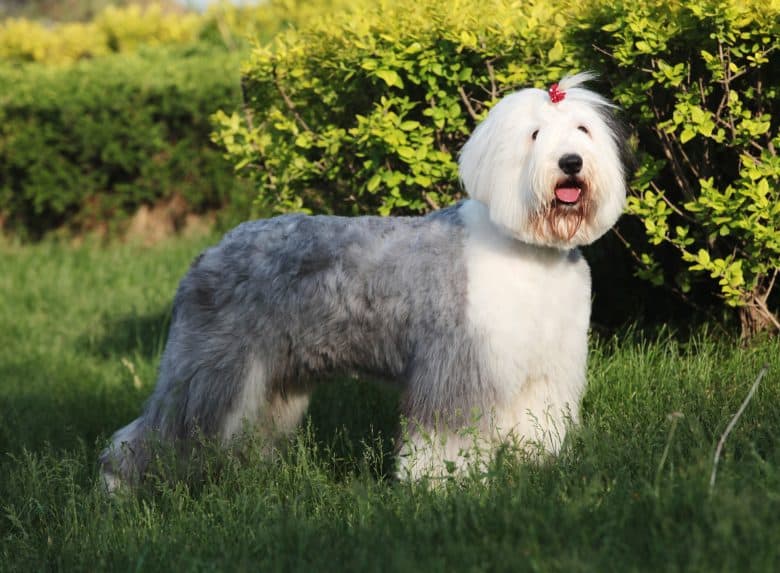
According to its AKC breed standard, Old English Sheepdogs have a compact and square build, showing that they’re a strong and balanced dog.
They may be big and muscular, but they’re pretty agile. They have the physical qualities that help them fulfill the tasks that a drover or shepherd would require.
OES has an overpowering thick coat that makes it difficult to tell the shape and size of their body. Pulling back all that fur, you’ll notice a large, square head and an average-sized snout.
They usually have brown or blue eyes, but amber and yellow are possible. Their noses are always black and stay prominent amongst their shaggy fur.
It may not be obvious because it blends with the rest of their coat, but they have medium-sized ears.
Height and weight: How big do Old English Sheepdogs get?
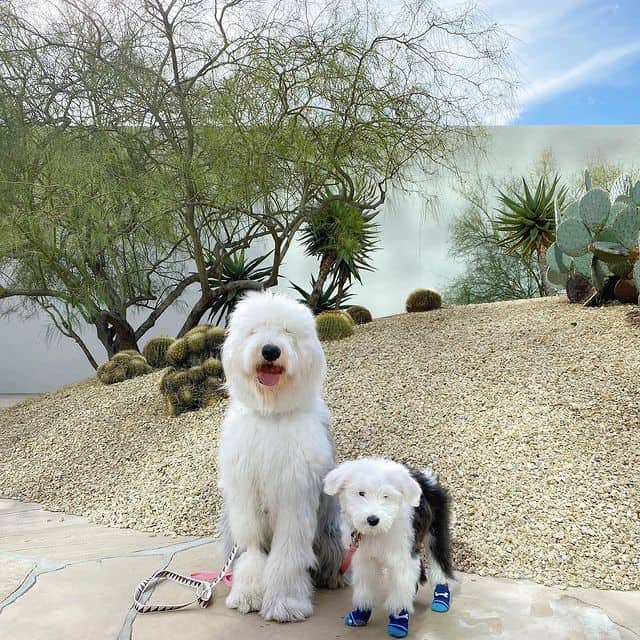
An OES stands at 21 inches (53 cm) and up, and weighs around 60 to 100 pounds (27 to 45 kg).
Male Old English Sheepdogs have a minimum height of 22 inches (56 cm), because like with other canines, males are usually a little bigger than females.
It’s not uncommon for large and giant breeds to mature slowly, which includes this English Sheepdog.
They reach their full-grown height at the age of one, but can still fill out until they’re two to three years old.
And whether an OES is at the medium- or giant-sized range, this purebred dog breed is a great apartment dog, as long as it gets daily walks and play sessions.
If you’re wondering if there are any mini Old English Sheepdogs, there are, but it’s either created from breeding runts or by mixing it with another small breed.
One example is the miniature Sheepadoodle, which is a cross between a miniature or toy Poodle and an Old English Sheepdog.
Do Old English Sheepdogs have fur or hair?
The Old English Sheepdog has a profuse, coarse, and shaggy haired double coat that’s waterproof and falls to the floor.
Their textured outer coat and soft, silky undercoat gives them their unique appearance.
There are so many coat colors associated with the Old English Sheepdog that it’s hard to keep track, but the gray, grizzle, blue or blue merle coats are the most common.
However, blue and white, blue- gray, and fawn and white are also typical.
Some other possible color combinations include:
- Blue Gray and White
- Blue Merle and White
- Gray and White
- Grizzle and White
- Black and White
- Brown and White
- Fawn and White
- White
- Black
- Brown
- Merle
Old English Sheepdogs start to show their age when they gray around age 3 or older. Gray and white markings begin to show up slowly, but other OESs may always have these markings.
Temperament: Are Old English Sheepdogs good family dogs?
Although the Old English Sheepdog has its origins as a working breed, these affectionate and playful couch potatoes are wonderful family pets.
They adore anyone and everyone and are happy to stay close with their doting family members.
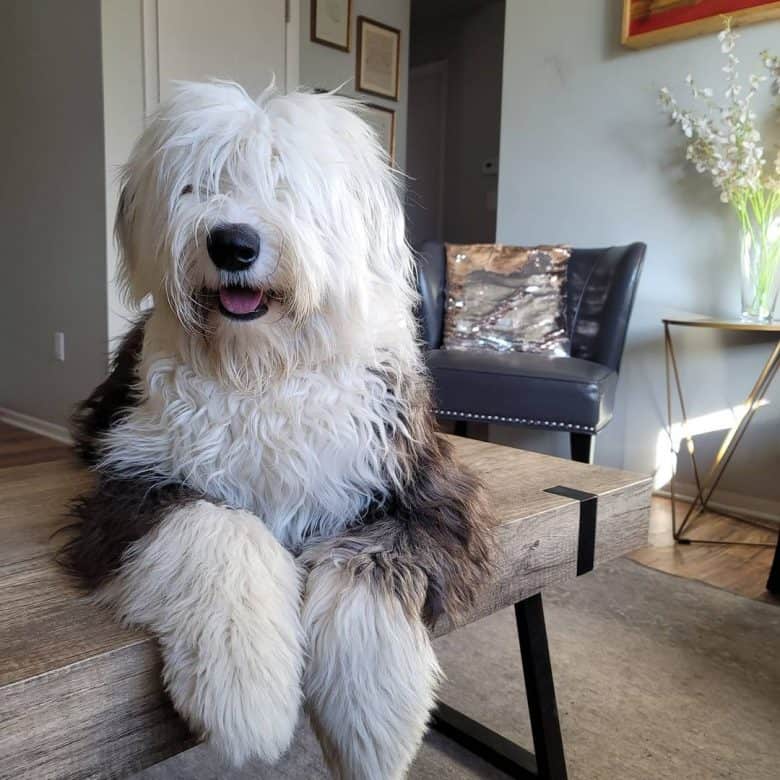
The OES has an incredibly high energy level and are wonderful playmates. Due to their slow maturity into adulthood, they keep their playfulness long into their golden years.
Old English Sheepdogs can enjoy rough play, but they prefer big hugs and long pets.
You’ll need to keep them physically and mentally engaged because their intelligence can quickly get them into trouble.
Be sure to get your pup into dog sports to keep them active, or take long walks, runs, and jogging sessions daily. You can even teach these giant dogs to swim!
Are Old English Sheepdogs aggressive?
It’s rare to come across an aggressive OES because their sweet demeanor will shine through even around other dogs and cats.
Still, they have watchdog qualities that make them protective, so they may bark loudly at strangers without proper socialization.
The Drover’s Dog has a bark that’s bigger than their bite. If anything, they’re just scared that a stranger will take their loved ones away because they have a hard time being alone.
The Old English Sheepdog hates being left alone and could develop separation anxiety quickly.
What may be louder than their barking is their panting. Some panting is normal in all breeds, but the Old English Sheepdog will pant more because they’re carrying a large fur coat.
Pay attention to their comfort level, and cool them down with fans and water if they’re too hot.
The Old English Sheepdog has high trainability and is incredibly smart, but their good-natured and kind disposition means they won’t fare well with negative reinforcement.
Keep them surrounded by the family and praise them constantly to keep them happy.
How to take care of your adorable Old English Sheepdog
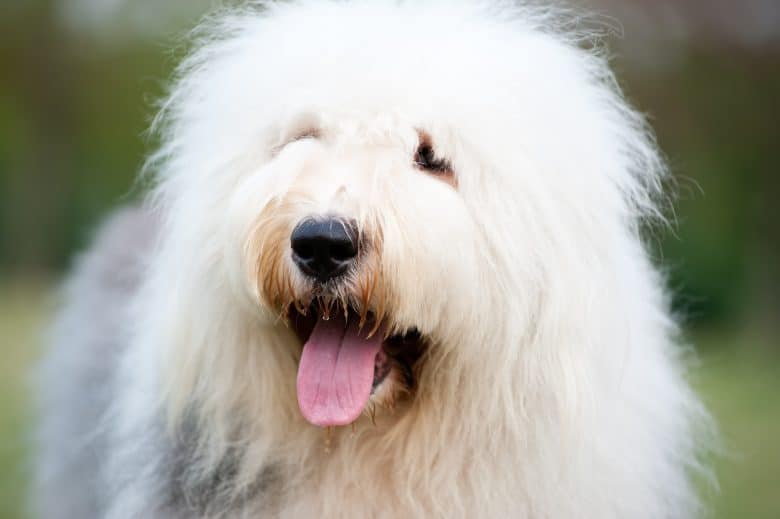
Old English Sheepdogs are very high-maintenance and require special grooming needs. They are also high-energy dogs that need a lot of engaging play.
Otherwise, they could develop obesity and other health conditions if you’re not careful.
The OES’s coat adapts to their environment and can survive harsh winters and warm summers. Just shorten their fur in humid weather to avoid overheating.
Do Old English Sheepdogs need a lot of exercise?
Bobtails are capable sheepherders that spend most of their day running, playing, and guiding the flock. It’s essential that you meet the demands of this physically fit dog.
As they age, the Old English Sheepdog will turn into huge lap dogs, but that’s still 8 years away.
Start playing with your OES puppy as soon as possible. Ramp up their exercise needs until you hit one to two hours a day.
Old English Sheepdogs could be more sedentary, so keep an eye on their energy level throughout playtimes.
Avoid playing fetch and other cardio activities in hot weather, but stuffed animals, tug-of-war, and chew toys are always on the list for this giant breed.
How do you trim an Old English Sheepdog?
Grooming the OES is a challenge. I recommend becoming friends with an exceptional groomer because it takes approximately 3-4 hours a week to keep their shaggy hair in tip-top shape.
You’ll need help learning how to brush them, so stay diligent throughout your pup’s lifetime.
If you want a crash course on how to groom the OES, watch the following video:
The Old English Sheepdog sheds a lot, which is why they aren’t hypoallergenic. They require daily brushing to keep their coat tangle-free and to remove dead hair.
You’ll need to invest in a coarse steel comb, pin brush, and slicker brush. Be gentle and don’t pull the OES’s fur, and always brush away from the skin.
It’s a great idea to spray a detangler or conditioner on their fur before combing to make your pet comfortable.
You must get your OES used to grooming during puppyhood. Otherwise, a large portion of their life will be full of heartache.
This includes brushing their teeth and trimming their nails twice a week and cleaning their ears weekly.
Wash their beards frequently or after every meal because their mouths can turn yellow from their large amount of drool.
You can also apply cornstarch there and rinse the excess after it dries. Bathe the rest of their coat every exit to eight weeks or as needed.
If you don’t want to deal with grooming, you can shave your Old English Sheepdog down once or twice a year. Their fur grows ½” to 1″ a month, so trim it frequently if you want to maintain this look.
Still, keep a puppy’s hair long to get them used to people playing with their fur.
Do Old English Sheepdogs eat a lot?
The Old English Sheepdog eats just as much as the average large or giant breed and they aren’t known for gobbling or overeating.
Due to the Old English Sheepdogs’ oversized coats, it’s difficult to tell if they’re overweight or obese. While grooming, check on their belly to ensure they stay at a healthy weight.
Take your OES to the veterinarian as they grow to help balance their food intake with their energy level.
The recommended daily amount for an Old English Sheepdog is 2.5 to 4.5 cups of high-quality dry food per day, divided into two meals.
For a more specific food plan based on this breed’s varying height and weight, give them 3 cups of an 8 OZ measuring cup per day, two times a day if they weigh between 60-69 lbs (27.2-31.2 kgs).
Add another ½ cup for every 10 extra pounds (4.5 kgs).
Your OES Puppy will require a puppy formulated diet because they gain over 60 pounds in their first year. Change up their dog food after a year and a half.
Keep all adult dogs and puppies away from human food unless recommended by your veterinarian. Keep dog treats to a minimum.
Do Old English Sheepdogs have many health problems?
An Old English Sheepdogs health issues are hit and miss.
It’s important to health screen your pet for a hip evaluation, thyroid evaluation, an ophthalmologist evaluation, or ask your breeder to confirm these tests.
An EIC DNA and hearing test are also helpful.
Hip dysplasia, eye conditions like progressive retinal atrophy (PRA), cataracts and retinal detachment, hypothyroidism, and deafness are common and can appear throughout the OES lifespan.
Be sure to clean their ears frequently as a percussion from deafness.
Other health issues related to the Old English Sheepdog include:
- Autoimmune thyroiditis
- Cardiac anomalies
- Cerebellar ataxia
- Primary ciliary dyskinesia
- Exercise-induced collapse
- Gastric torsion
- Otitis externa
- Bloat
- Immune-Mediated Hemolytic Anemia (IMHA)
- Sensitivity to certain drugs (due to MDR1 gene)
The Old English Sheepdog has an average life expectancy of 10-12 years, which is long for most giant breeds. You can elongate their lifespan with plenty of exercise and frequent vet visits.
How much does an Old English Sheepdog cost?
The Bob is becoming rarer and rarer every year, so it may be challenging to find an Old English Sheepdog puppy from a shelter, breeder, or local rescue in the United States.
When you find one, you’ll need to dish out a lot of money throughout their lifetime.

However, paying for one upfront isn’t that expensive at $1000-$2000, which is the average price for a medium-sized dog.
You’ll get the OES at a bargain, but you’ll watch that price rise to keep up with their grooming needs and food cost.
This purebred pup could rise in price the rarer they become, but now you’ll just need to consider other cost factors such as shipping fees, breeder location, kennel popularity, and bloodline.
Many Old English Sheepdogs come from show dogs.
Old English Sheepdogs have an average litter of 5-8 puppies, but they can get as high as 11 due to the breed’s large size.
While there is a lot to love about the Old English Sheepdog (literally), they are becoming a rare dog breed due to their high-maintenance coat.
They are now at risk of extinction, with only 384 registered in 2018, a 67% drop in the last 20 years.
How to find an Old English Sheepdog breeder
There are very few Old English Sheepdog breeders, but what few there are stay dedicated to this breed.
The OES has a long line of reputable breeders that keep these wonderful pups close to their hearts. Still, always be aware that puppy mills still exist.
Always ask the breeder for genetic testing results because the Old English Sheepdog is prone to many health problems.
Visit the kennel to see their overall temperament because an unhappy OES will be loud, angry, and wary of strangers.
It’s a red flag if a breeder refuses to show health records or their premises. Bobs need a lot of exercise, so check their backyard for signs of running feet.
You can find Old English Sheepdog puppies for sale at these locations:
- Haystac’s Old English Sheepdogs (Churchville, NY)
- SQUARECOTE (Seabeck, WA)
- Bugaboo Old English Sheepdog (Colorado Springs, CO)
Old English Sheepdog rescue and adoption centers in your area
Even though it’s difficult to find an Old English Sheepdog breeder, it’s unfortunately easy to see this breed in rescues or adoption centers.
Many don’t prep for their high-maintenance coats and high-energy needs in advance, which leads to many homeless pups.
Old English Sheepdogs are incredibly smart and love people, so they’ll have no issue adjusting to your new family.
While you can’t health screen them, it’s likely your OES will stay healthy throughout their lifetime due to their stringent breeding standards.
You can try to find Old English Sheepdog puppies with these locator websites:
- New England Old English Sheepdog Rescue (Lincoln, MA)
- Old English Sheepdog Rescue (Santa Monica, CA)
- Texas Old English Sheepdog Rescue (Texas, USA)
Bearded Collie VS. Old English Sheepdog
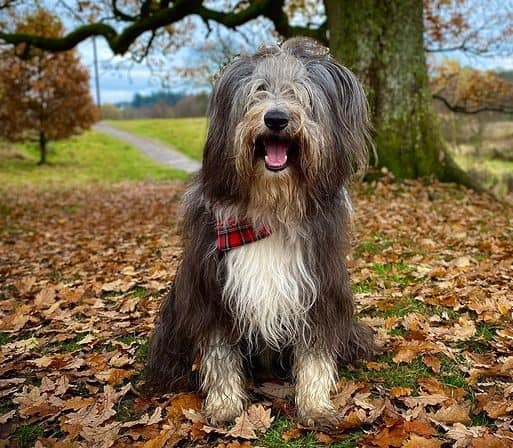
They may have similar origins and fur-covered faces and bodies, but these are two different purebred dog breeds.
Developed in Scotland and bred to herd livestock, Bearded Collies (AKA Beardies, Argle Bargle or Hairy Mou’ed Collies) are smaller than the OES.
This Mountain Collie has a height of 20 to 22 inches (51 to 56 cm) only, and a weight of 45 to 55 pounds (20 to 25 kg).
Speaking of measurements, Bearded Collies have a longer lifespan – 12 to 14 years.
And just by looking at the picture, this canine’s coat is smoother, and is available in fewer colors. Its tail is also quite long, unlike the OES, where they can be born without one.
Who should love the high-maintenance Old English Sheepdog?
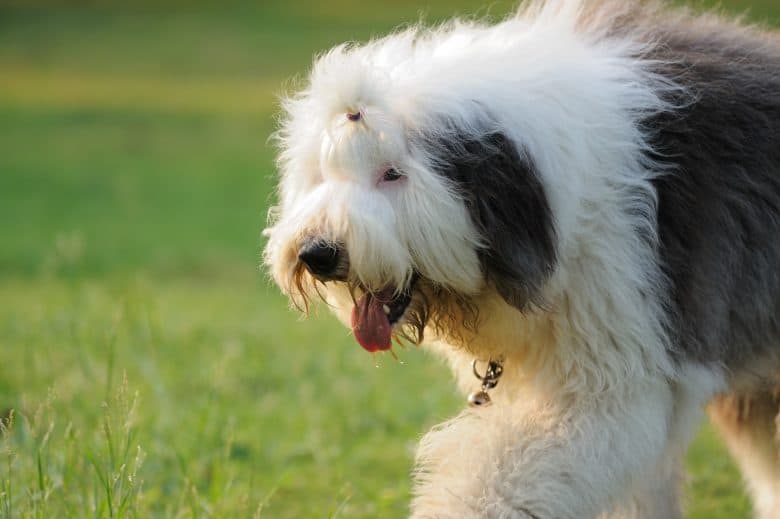
The Old English Sheepdog is an adaptable, smart, and gentle giant that adores all types of people, even strangers, through proper socialization.
Their big hearts make them optimal family pets, but their watchdog tendencies also make them hard workers.
Be prepared for their barking, drooling, and high grooming and exercise needs, or you’ll have a recipe for disaster.
Keep your pup entertained with a lot of play, and train them early, so they don’t overreact to everyone who passes your door.
Although the Old English Sheepdog temperament makes them great for first time owners, their high grooming and energy needs make them fit for only the most ambitious dog owners.
What do you think of the Old English Sheepdog? Are you in love with this oversized teddy bear? Show us your own OES below if you have one of these rare breeds!
Further Reading: Similar breeds to the Old English Sheepdog
Reference
- https://www.aspca.org/pet-care/dog-care/common-dog-behavior-issues/separation-anxiety
- https://vcahospitals.com/know-your-pet/obesity-in-dogs
- https://www.petmd.com/blogs/nutritionnuggets/dr-coates/2015/july/are-you-feeding-your-dog-right-amount-32905
- https://pubmed.ncbi.nlm.nih.gov/1643316/
- https://www.thekennelclub.org.uk/media-centre/2019/june/old-english-sheepdog-reaches-historic-low-and-risks-extinction/