The Akita is a huge dog that hails from Japan. These dogs are muscular and can trace their history far back into ancient Japan. They were once venerated as symbols of good health and happiness.
These are guard dogs, through-and-through. While they are used mostly as companions today, these guard dogs still carry over many of their instincts into modern times. This can make them complicated creatures.
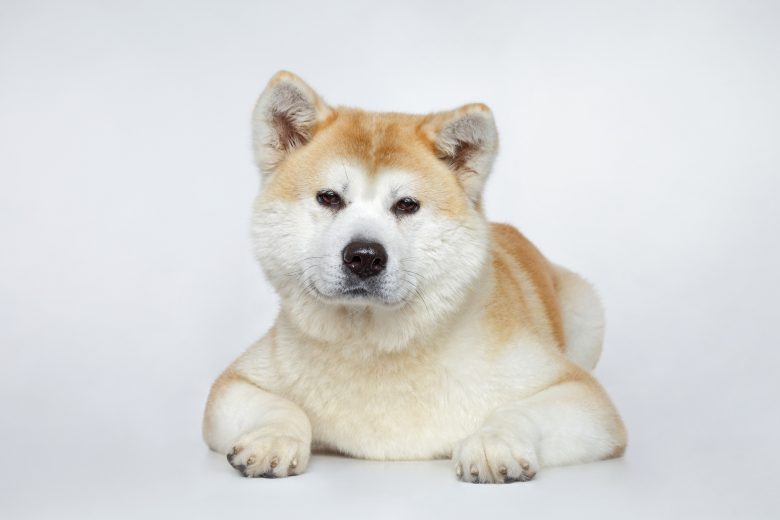
Where did the Akita originate?
The Akita is an ancient Japanese dog. It comes from ancient Japan and is a Spitz-type dog. The breed likely stretches back into history.
However, the breed as we know it today was bred starting in the early 17th century in northern Japan. There are many myths regarding how this dog came to be.
One such myth involves an exiled nobleman who also happened to love dogs. He was sent to live out the rest of his days on an island.
He encouraged others in the Akita prefecture to breed a versatile hunting dog for a big game. Eventually, this created the Akita, known to hunt wild boar, deer, and even bear.
For a long time, owning an Akita was restricted to imperial families. However, in recent times, everyday people have begun to employ them as hunting and companion dogs.
At various times in history, this dog has tattered on the edge of extinction. This is largely because it was restricted to nobles for much of its history. To prevent the breed from dying out, the Japanese national breed club was established in 1927.
Helen Keller later brought the first Akita to the United States. She was taken to see a statue of Hachiko during her trip to Japan.
This famous Akita was well known for waiting years for his owner at a train station. After visiting the statue, she was gifted with two Akitas by the Japanese government.
After World War II, many soldiers brought Akitas back to the states. However, the Akita did not enter the AKC Stud Book until 1972.
What does an Akita look like?
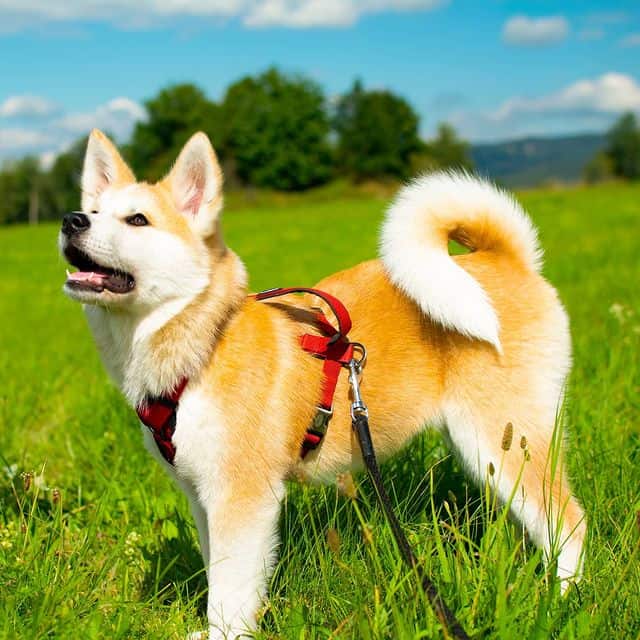
The Akita is a huge and powerful dog. It has a burly, heavy-boned body and is a typical spitz-type dog.
Their head is enormous and massive, making them fairly imposing. This large dog also has a large, curled-over tail.
The erect eats make their head look even bigger than it really is! Their shining eyes are one of the hallmarks of the breed. Their eyes are vigilant and expressive.
What does it mean when an Akita’s tail is down?
An Akita’s tail and flop down for a variety of different reasons. If the dog is disappointed, sleepy, or in pain, the tail can drop as a result.
This commonly happens when puppies are teething since the pain in their mouth can cause their tail to drop for apparently no reason.
Their tail can also droop when they are relaxing or just not very active at the moment. This is common among all dogs that have their tails raised.
Just like dogs with straight tails won’t always have their tail standing straight up, dogs with curled tails won’t always have their tails up either.
However, Akitas can also get something called a frozen tail. This happens when they basically “sprain” the base of their tail.
Usually, when this happens, the dog will not raise it for a week or two because it hurts. Most of the time, the dog will get better on its own. Sometimes, though, it may need to be treated with medication.
Japanese Akita vs. American Akita
There are two main types of Akitas – Japanese Akitas and American Akitas. The main difference between these two types is size. American Akitas are a bit larger than Japanese Akitas.
The Japanese Akitas also have tiny ears. American Akitas have quite large ears.
How big do Akitas get?
Usually, Akitas can stand anywhere from 24 to 28 inches, about 61 cm to 71 cm. They can also weigh anywhere from 70 to 130 pounds or about 31.7 kg to 59 kg.
Males are usually much larger than females. You really aren’t going to find a female that is over 100 pounds or 45 kg. However, males can get as large as 130 pounds or 59 kg.
What colors can Akitas come in?
Akitas can come in a few different colors, including white. Red fawn is one of the most popular coat colors.
However, sesame, black, chocolate, and brindle are all possible as well. White markings are very common.
Other markings are common as well. White, pinto, and black masks are possible.
The Akita has a double-coat, which makes it pretty weather-resistant (and fluffy).
The Loyal and Dignified Akita
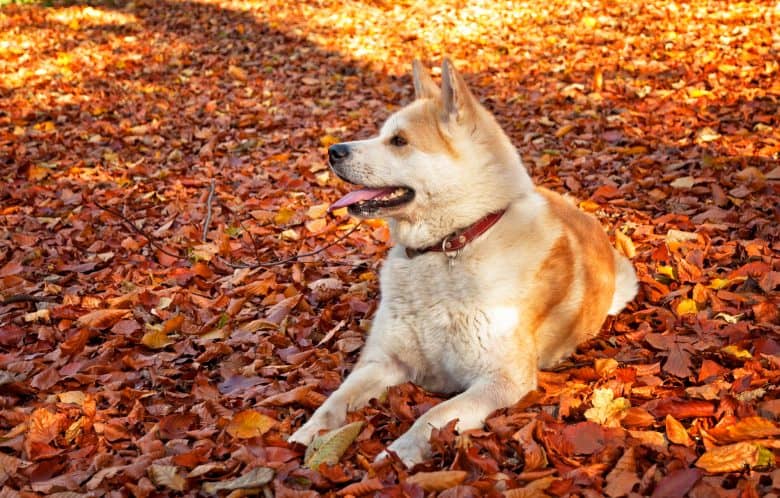
Akitas were bred to be versatile hunting dogs. Many of their ancient instincts and personality traits still show through today.
Are Akitas good family dogs?
Not particularly. They are loyal and affectionate members of most families. They love being with their families and can be a bit protective.
However, they are not particularly fond of strangers. Their huge size can make them difficult to control as well.
They will cuddle with family members, but they are not extremely cuddly. They are not lapdogs.
Akitas can be okay with children, but they are best with older children. They are not particularly patient with younger children.
Can Akitas live with other dogs?
No. They are well-known for being aggressive towards other dogs, particularly those that are of the same gender. Regular socialization does not seem to help this. This dog really belongs in a one-pet household.
Do Akitas get separation anxiety?

Akitas are not particularly prone to separation anxiety. However, any breed can get separation anxiety, so it is absolutely possible.
Separation anxiety can cause a variety of behavioral problems. Because these dogs are so large, they can do a lot of damage.
However, these dogs usually do not have separation anxiety.
Why are Akitas so aggressive?
Akitas were not bred historically to be around many other dogs. They are not pack-oriented and can be territorial.
This is the main reason they are aggressive. They do best in one-dog households or even households completely free from other pets.
Despite some rumors, female Akitas are aggressive as well.
Both genders can make good watchdogs because of this trait.
Do Akitas bark a lot?
They are not particularly noisy, but they do bark. As territorial dogs, they will bark at visitors, people walking outside, and strange dogs. They can make good guards and alert dogs because of this.
However, if you’re looking for a silent dog, this is not it.
Can you train an Akita?
Like all dogs, Akitas are trainable. They are brilliant and loyal, which works in our favor when we’re trying to train them.
However, they can also be a bit stubborn and independent. This tends to be most common in their “teenager” stage.
Early and often training is essential. Otherwise, these dogs can easily become out of control. They should be socialized extensively as young dogs.
Puppy classes are necessary for these canines. They need to learn to accept a wide variety of strangers. Their default is that all strangers are threats; early socialization needs to correct this assumption.
These dogs are very clean. This makes them extremely easy to potty train. In fact, some dogs tend to potty train themselves with little effort from us!
The Care of Akitas
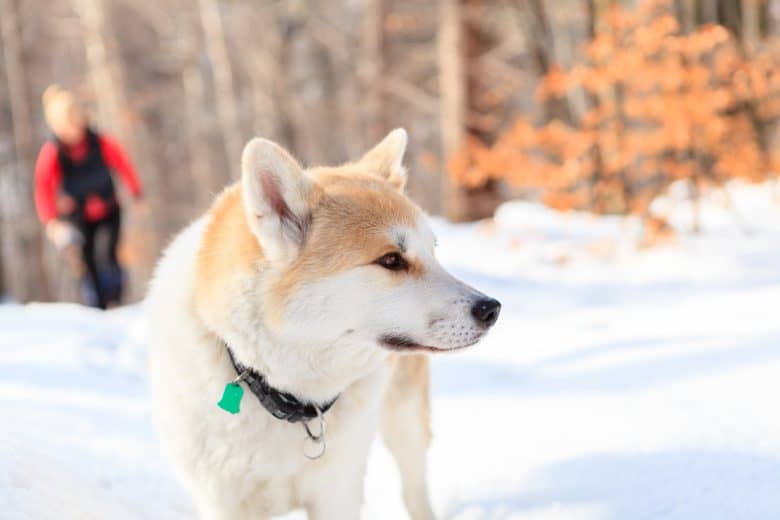
Akitas are not particularly difficult to take care of. In fact, their care requirements are meager. They are not particularly sensitive to the weather and climate, making them good choices for most regions.
How much exercise does an Akita need?
An Akita needs quite a bit of exercise due to their higher energy level. They are not an extremely active breed.
However, they do require a moderate amount of exercise daily. A brisk walk is a good option, though this Japanese breed may need a bit more than this.
With daily exercise, these dogs can do well in a smaller home. They are very sedated inside and well-behaved. It is only when they get too little exercise that they can become destructive.
Even a little playtime outside in the backyard can be a suitable option for these canines.
The Very Clean Akita
These dogs are known for cleaning themselves like cats. They are very clean and do not require much grooming from you because of this.
They have little doggy odors and do not need a bath very often at all. Their deep coat does require daily brushing.
The Akita breed sheds seasonally. During these times, they will need to be brushed more. When they are not shedding, you may be able to get away with brushing them only once a week.
It really just depends on the individual and time of year. You need to keep an eye on their shedding level to determine when you should brush them.
Their undercoat is where most of their shedded hair comes from, so you will need to use the proper brush to reach deep into their coat. Their outer coat can shed as well, but it is usually not nearly as bad.
Like all dogs, you will need to brush their teeth and trim their nails regularly. This is extremely important for their health. Overgrown nails can be painful, and infected teeth can cause life-threatening problems.
How much does an Akita eat?
Akitas can eat a lot. They are huge dogs, and therefore need a lot of extra food to thrive. The usual adult Akita eats about 5-6 cups of food a day.
However, different foods have different caloric amounts. As you might imagine, this can affect the amount you need to feed your canine. Check the back of your dog food bag or can for specific instructions.
These dogs need high-protein food because of their muscular body. They need plenty of protein to keep their athletic build.
Most high-quality dog foods contain lots of meat, which means that they are usually quite high in protein. This will cost a bit more, but it is important for their overall wellbeing.
Akita Dog Health Issues
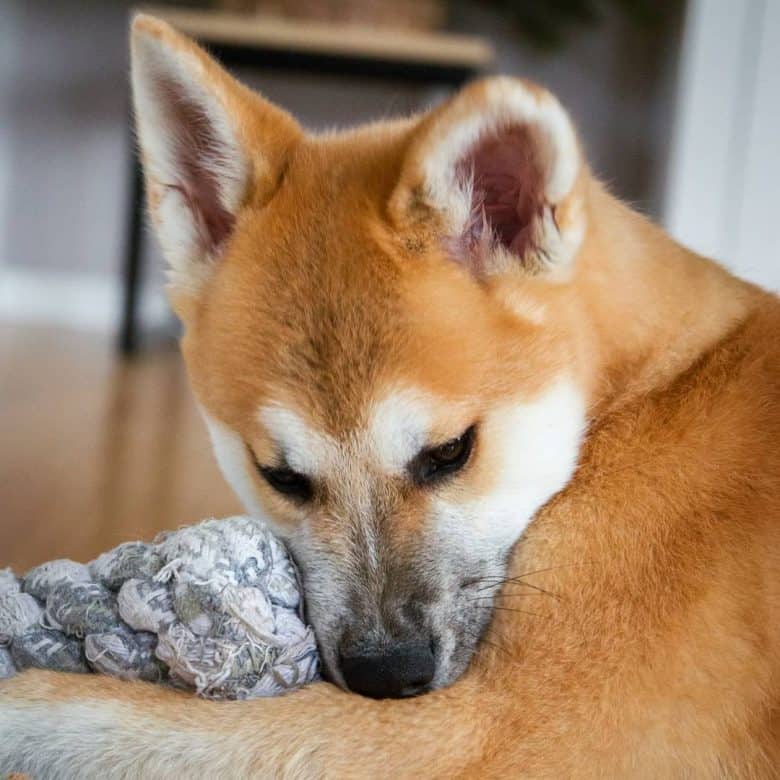
Like most breeds, these dogs are prone to a few different health problems. Firstly, they can have eye problems, such as progressive retinal atrophy or PRA.
This disease basically involves the wasting of your dog’s retinal cells, which help you canine see. Without them functioning properly, the dog will eventually go blind. This is a genetic condition.
Ear problems are also possible, though they are not as common as some other canines. As long as you keep an eye on your dog’s ears and clean them when they become dirty, the chance of ear infections should be reduced.
Because these dogs are large, joint problems are common. This is true for almost all dogs, though it also has a lot to do with genetics. Hip dysplasia is common.
Luckily, there are a few things you can do to avoid these joint problems. Firstly, intense exercise while the dog is developing can cause joint problems later on.
Dogs that are not finished growing should not be exercised intensely, and they should never be forced to exercise. If the puppy needs to lay down and take a break during a walk, you should let them take a break.
You should also ensure you feed the puppy appropriate puppy food. Not all puppy food is appropriate for these dogs.
You need a food that is formulated for larger breed puppies. These contain the nutrients a growing puppy needs to support its joints.
The Akita is also a bit prone to bloat. No one knows exactly what causes this disease.
However, it is life-threatening and seems most common in certain dog breeds for an unknown reason. It basically involves the stomach filling up with gas.
Eventually, the stomach will push against veins, cutting off circulation to certain organs and muscles. This can be deadly very quickly and requires emergency surgery.
Hypothyroidism is somewhat common as well. An abnormality in the thyroid gland characterizes this disorder. This leads to a reduction in the dog’s metabolic ability, which can mess with all sorts of things.
This disorder’s symptoms include weight gain, lethargy, cold intolerance, dull hair, thin coat, and increased pigmentation of the skin.
This disease is not curable, but it is manageable with medications. Your dog will need to take an oral thyroid replacement hormone.
What health screenings should an Akita have?
Before being bred, the potential Akita parents should undergo a variety of health screenings. This is to ensure that they don’t pass on any potential disorders to their children.
Their eyes should be checked, and their joints should be x-rayed to ensure that they are not prone to hope dysplasia.
You should ask about these health screenings before purchasing any puppy. Also, ask about the parent’s health.
If it is at all possible, ask to see the parents and area the puppies are being kept in at the very least.
How long do Akitas live?
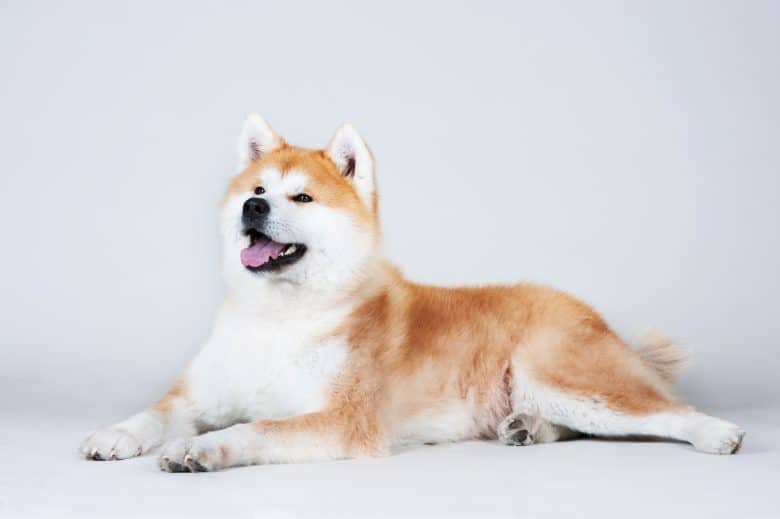
For how big they are, Akitas have a pretty big lifespan. Usually, the average Akita lives between 10-15 years. Genetics, environment, and health play a role in where your Akita will fall in this range.
If a dog is gravely affected by various health problems, its life expectancy is likely lower than a healthy, athletic dog.
Obesity can cause many of Akita’s problems to worsen. For example, extra weight can put a strain on the joints, which can cause joint problems.
Because of this, you should keep your dog’s weight in check if you expect them to be healthy and strong throughout their life.
According to The Drake Center for Veterinary Care, cancer is also a common cause of death in these dogs.
How much is an Akita dog?
Akitas usually cost around $800. The particular breeder you get the dog from matters, as does the bloodline. Dogs that are bred for show are going to be more expensive than those bred as companions.

Many reputable breeders will charge more for dogs deemed “breedable” and closely fit the breed standard.
In other words, if the dog conforms well to the breed guideline and passes health screening tests, the dog may be seen as more valuable because they will likely produce quality puppies.
If you aren’t planning on breeding your Akita, then you can likely save on your pooch by getting them fixed before you take them home.
The lifelong price of an Akita can be very high. For instance, this working dog is quite larger, and therefore everything you purchase will also have to be large.
They’ll need a large crate and bed, sturdy bones, and larger doses of medication when necessary.
They also eat more and need high-quality food. Because of this, you should expect to pay quite a bit of food each year.
Why are Akita’s banned in certain cities?
Some cities consider these dogs dangerous and do not allow them within their city because of this. Some allow exceptions, like if your canine passes certain tests. You should check with your current city guidelines.
Akita Breeders
There are many different organizations and breeders that focus on the Akita. The Akita Club of America is the #1 club in the United States. They are associated with the American Kennel Club and have lots of information about the Akita on their website.
You can also find a list of regional clubs and use their Akita puppy search to find currently available puppies.
The Japanese Akita Club of America focuses on Japanese Akitas. They also have a list of breeders for you to shift through that are members of the organization. This is an easy way to ensure that you are getting a quality puppy.
Akita Rescues
The United States is home to a variety of Akita Rescues. Most of these are regional, however.
Your best bet is to find one that covers your region, as the dogs they rescue will be in your area. This means you may only have to travel a short distance to adopt them.
Some rescues may allow their dogs to be transported to other areas. However, this often means that you will have to pay for transportation or drive to pick the dog up yourself.
Some of the most popular organizations include the:
- Big East Akita Rescue
- Midwest Akita Rescue Society
- Rakki-Inu Akita Rescue.
Akita vs. Shiba Inu
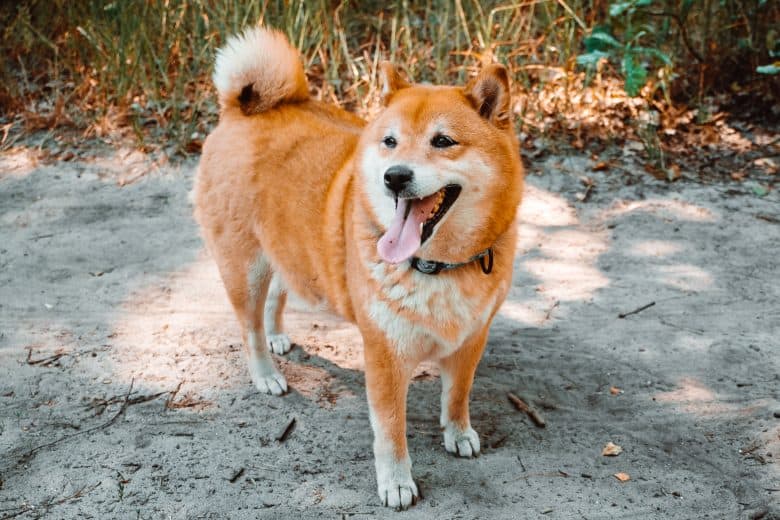
The Akita and Shiba Inu are pretty similar dogs. They are both from Japan and are spitz-type dogs, which makes them look similar. However, they do differ in quite a few different ways.
The most obvious difference is that the Shiba Inu is much smaller than an Akita. Shiba Inus only stands at about 13 to 17 at the shoulder, while Akitas stand over 24 inches. This is the main difference between the two breeds.
Shiba Inus also have a higher life expectancy than the Akita. They can live up to 16 years in most cases.
Akita Mixes
There are quite a few Akita mixes running around these days. Technically, the Akita can be bred with any dog.
However, some mixed breeds are more common than others. The Huskita, Akita Shepherd, and Akita Chow are the most common ones out there.
Some of these mixed breeds have become “designer dog” breeds. In other words, these mixed breeds are being bred on purpose to meet certain criteria.
This is not necessarily a new phenomenon since all purebred dogs were once mixed breeds. However, it can be somewhat controversial.
Still, it is difficult to find a breeder that specializes in these dogs specifically. Because of this, they are often harder to find than a purebred Akita.
Who should get an Akita dog?
Akitas are best for one-pet families who have older children. These dogs are decently energetic and need a bit of exercise each day. Because of this, they are best suited for those who are at least somewhat active.
You should plan to play with your dog outside or take them on a walk each day for at least 30 minutes. Puppies will need even more exercise.
These dogs can also be difficult to train. They are best for experienced dog owners who can commit to puppy training classes and regular socialization. They are not easy dogs by any means.
However, these dogs can be adorable with the right care and one of the most loyal companions you’ll find. They are very affectionate with their family members and can even be good guard dogs if necessary.
The Akita can be a good family dog in certain situations. However, they do require special care and handling.
Thankyou i learned alot and enjoyed this article now will follow through and see about adopting one ive always wanted an akita since seeing one in worldbook. Encyclopediain 1970s