Haven’t heard of the Caucasian Mountain Dog? Also known as the Russian Bear Dog, Caucasian Ovcharka, Kawkasky Ovtcharka, or Baskhan (Karachay) Pariy, this intimidating fido has a towering build and a fluffy coat that’s commonly seen in working dogs.
They may look cuddly, but that serious look should warn you that there’s more to this purebred than meets the eye. Are you ready to understand the Caucasian Mountain Dog better?
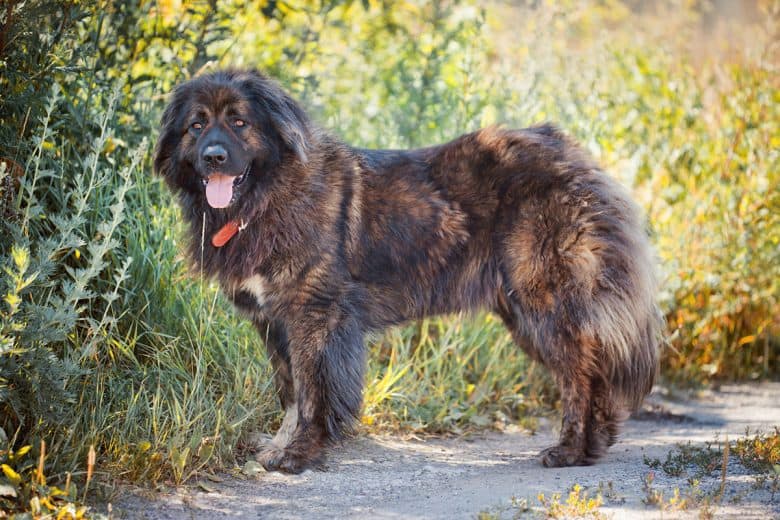
Where did the Caucasian Mountain Dog originate?
If you love history or traveling, you might have an idea where Caucasian Mountain Dogs are from.
It’s in Eastern Europe’s Kavkaz or the vast Caucasus Mountain region between the Caspian Sea and the Black Sea — mostly in Armenia, Azerbaijan, Dagestan, and Georgia.
But there’s also quite a mystery about their origin because some say that they’re domesticated descendants of wolves.
Others believe that they’re a breed developed from the Tibetan Mastiff and different sheepdogs from Tibet.
Then, there are archaeological findings that trace their ancestry to ancient Molosser breeds in Mesopotamia, which dates back to more than 2,000 years!
Fun fact: A large molosser dog was first mentioned in the first century BC and was used by the army of Armenian Tsar Tigran II.
Caucasian Mountain Dogs are bred to help protect the homes and flocks of shepherds from thieves, trespassers, and predators like bears, jackals, and wolves.
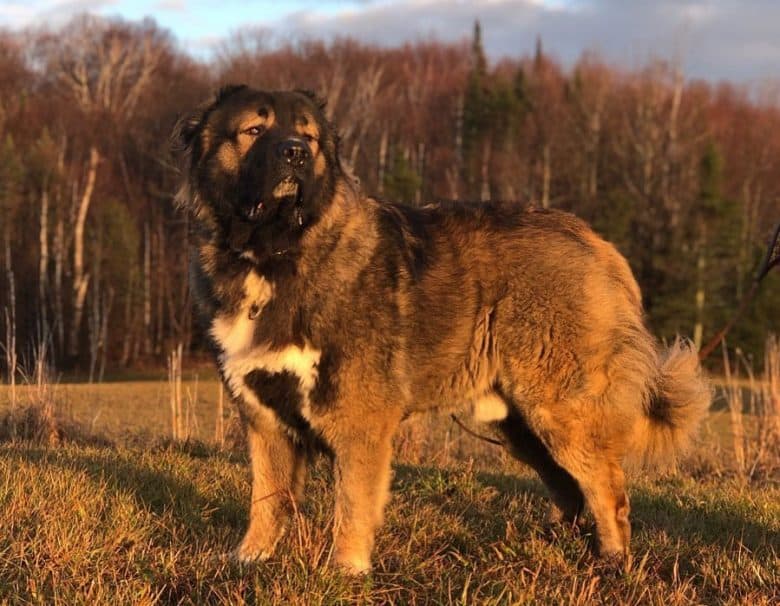
They’re already prized for their courage, power, endurance, confidence, and resilience to harsh weather conditions.
Still, selective breeding from the 1920s has allowed this canine to adapt to all kinds of climates, even those with extreme temperatures.
Today, these fierce working dogs are still one of Russia’s popular dog breed choices in the show ring, as guard dogs, and for flock protection.
Caucasian Shepherds were even featured in Russia‘s Toughest Prisons series on National Geographic, as mentioned in this news article.
Did you know that they were tagged as “Russian Prison Dogs”? They were kept in army kennels and used by the Soviet Union or communist USSR to guard prisoners and create new breeds for military use.
East Germany even used Caucasian Mountain Dogs to patrol Berlin Wall’s borders.
In 1989, when the wall came down, some of these patrollers were distributed to German families as companions, while others served as property guardians, watchdogs, and help shepherds tend their flocks.
By 1996, the American Kennel Club (AKC) recognized the Caucasian Ovcharka under their Foundation Stock Service, while the United Kennel Club (UKC) have this fido in their Guardian Dog Group.
What does a Caucasian Mountain Dog look like?
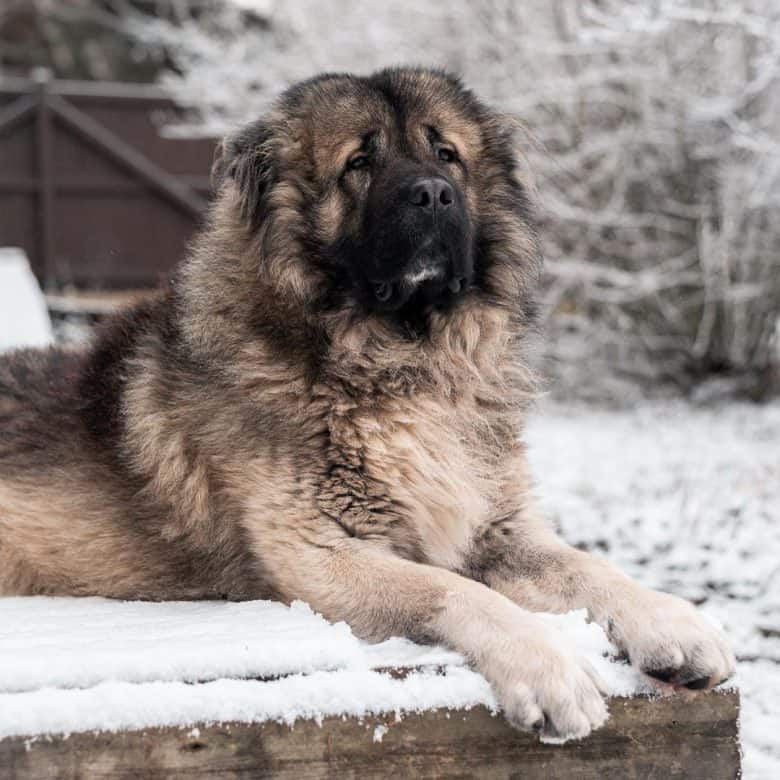
According to the FCI or Federation Cynologique Internationale’s breed standard for the Caucasian Shepherd Dog, they have a large, rectangular build that showcases how powerful and muscular they are.
We want to clarify that there are different types of Caucasian Shepherds. The Steppe dog has a shorter coat and lighter body mass, and the Mountain, which is heavier and has long fur.
In fact, the modern Caucasian Mountain Dog in show class is a hybrid that’s been selected and bred in the breeding kennels of the Soviet Russians.
Their official standard is fundamentally based on the Nagazi or the Georgian Shepherd Dog. They’re the most muscular and massive variant with long, attractive hair.
Often recognized by its dark face mask, its bear-like appearance is made up of a wedge-shaped head, a deep set of dark, oval eyes, round-shaped ears, and a long tail that’s carried low over its back.
If you would notice, this pooch has cropped ears. Most of the time, doing so is either banned, done due to aesthetics, or because of the dog’s health.
But the reason why Caucasian Mountain Dogs have ears traditionally cropped short is for dogfighting and livestock guarding purposes. It will prevent rivals and predators from grabbing onto them.
Is the Caucasian Mountain Dog the largest dog?
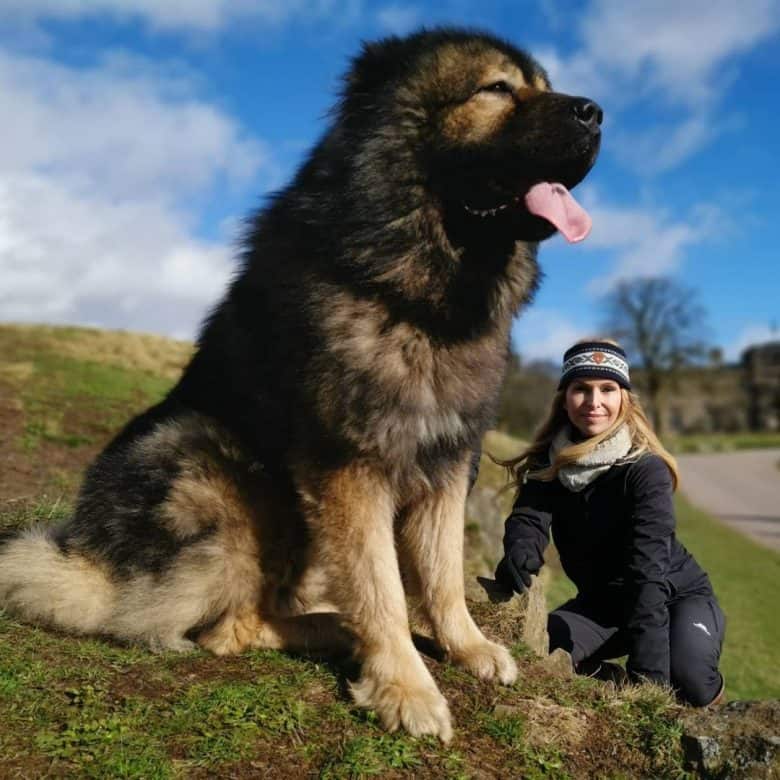
Caucasian Mountain Dogs are one of the largest breeds in the world. The actual fido who holds the title is a Great Dane named Zeus, who lived in Otsego, Michigan in the US and died when he was five years old.
A Caucasian Shepherd puppy will reach its full-grown size by the age of 9 months (end of the ninth month).
This dog breed has a height of 24 to 34 inches (61 to 86 cm) and a weight of 80 to 220 pounds (36 to 100 kg), with males being slightly larger than females.
Like we mentioned earlier, Caucasian Sheepdogs who work in the mountains are more muscular than those who work in the plains.
Thinking about the Ovcharka’s sheer size is an apparent reason why they wouldn’t be happy living in an apartment.
Other than the mountains, farm, or ranch, we recommend this furball to live in a house that has a spacious yard with a solid, high fence.
You wouldn’t want your fur baby going after visitors, the postman, or the pizza guy, right? This video should give you an idea of why you need to make sure your giant dog doesn’t escape:
The protective coat of the Caucasian Mountain Dog
These huge mountain dogs have a thick coat with two layers to protect and keep them warm when the weather is cold.
The outer coat is long and coarse, while the undercoat is soft and fine. It also comes in three lengths – short, medium, long.
Caucasian Shepherds who have long hair have a more pronounced mane covering their necks and more feathering in their tails and around their hind legs.
You’ll commonly see them in black, brown, or red, but they can also have a gray, yellow, fawn, tan, cream, rust, and even a solid white coat color.
They may also have large patches of two or more shades, be brindle, or have piebald patterns.
Other than the dark mask on the face, some have white markings on their body.
Do Caucasian Mountain Dogs make good family dogs?
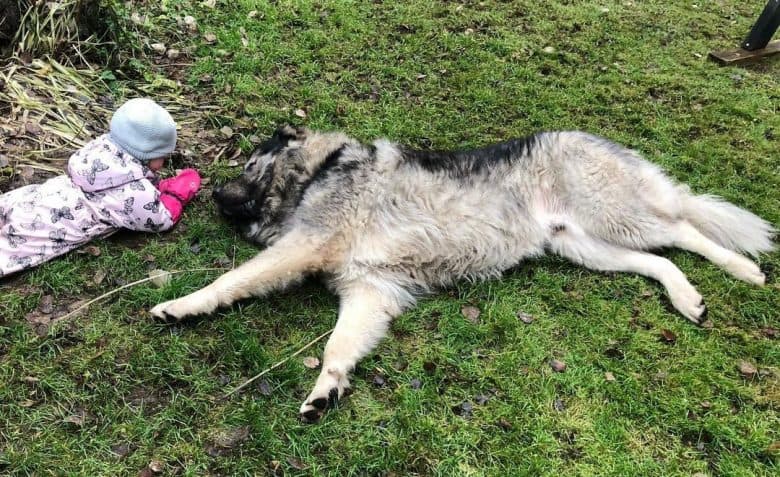
They make excellent family pets! But we have to clarify that this is one of those breeds that aren’t the best choice for families, especially if this is your first time owning a dog or a large canine.
Caucasian Mountain Dogs are more suitable for households that have older children.
Most dogs aren’t aware of their size, and this pooch can easily knock over small kids or older people by accident and cause severe damage.
If you’re an experienced owner, trainer, or handler who can be consistent and patient paw parents, you’ll be rewarded with an affectionate fur baby as a family member.
On the hunt for a watchdog? You can count on the Caucasian Sheepdog! Even if they’re not known for barking, their voice is quite loud and will alert you to any danger, day in and day out.
Is the Caucasian Mountain Dog dangerous?
Breeds like the Pitbull and Rottweiler also get a bad rap due to their background or physical qualities. But remember, NO dog is inherently aggressive.
Caucasian Shepherds are highly territorial and defensive. They’re also courageous and brave. They have to — these are the traits that made them successful guardians.
This also means that they have retained their standoffish, cautious, and sometimes aggressive behavior, so we can expect them to have a natural distrust when it comes to other dogs and strangers.
Leaving them in confined spaces, beating them, or making them feel threatened are other ways that will lead to aggression.
Have small pets? Please, don’t get this breed. Little furries can trigger their strong prey drive, and that will be a disaster.
They’re very difficult to train. That’s why it can be tricky for novice dog owners to handle a Caucasian Mountain Dog.
But those with experience owning large and giant breeds that tend to be stubborn and independent will know how to deal with it.
With obedience training and early socialization, this breed can be great watchdogs, family companions, and become superb therapy dogs.
It does take a lot of effort to bring their calm and affectionate nature to the forefront, but it will be worth it.
How to Care for your Caucasian Mountain Dog
Whew! Owning a Russian Bear Dog is no easy task, that’s for sure. But there’s more. You have to think about what to feed your dog, how much exercise he requires, and when should you groom him.
Before all that, we want to make sure that you’re not living somewhere where it’s often warm, or it can get really hot.
They may be adaptable to extreme climates but think about this dog’s coat. It’s so thick that they can quickly overheat.
You shouldn’t chain or leave him outside, as well. It’s basically a recipe for creating an unruly and uncontrollable pet. Now, how to make or keep him happy?
Exercising your Caucasian Mountain Dog
If you’re not a fan of going outside a lot, then you won’t have an issue giving your pup the workout he needs.
The Caucasian Shepherd has a low energy level and doesn’t require plenty of exercises. A 30-minute walk daily mixed with a few playtime within the day is sufficient.
It just takes a lot out of them to move because of how big they are.
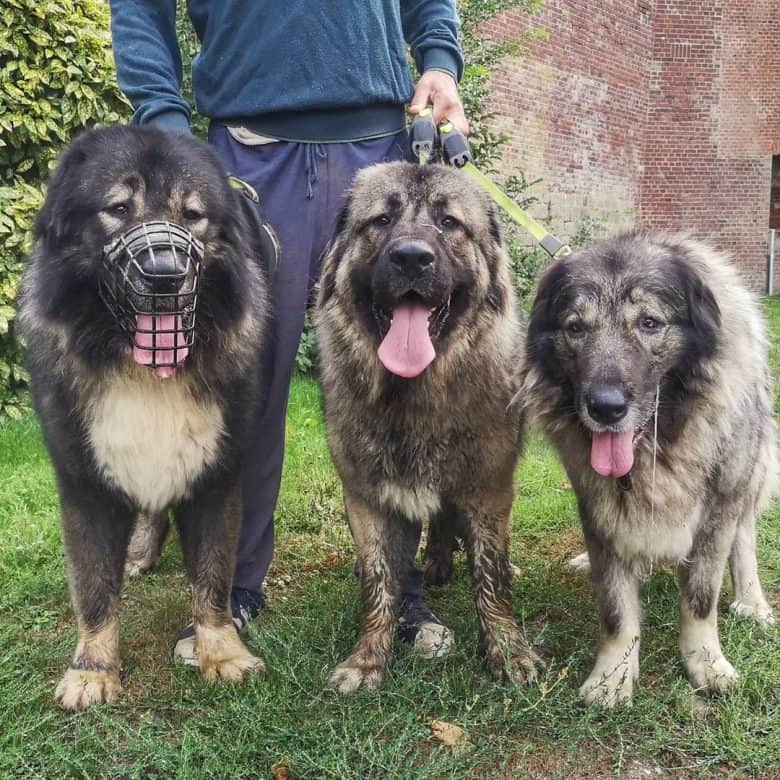
Don’t forget to keep your fur buddy on a leash when going out. You wouldn’t want to wrestle with him when he gets distracted with whatever catches his attention, such as cars, squirrels, and absolutely anything.
Some owners even put a muzzle on their dog to ensure everyone’s safety.
Do Caucasian Mountain Dogs shed?
Caucasian Sheepdogs aren’t hypoallergenic dogs. They shed quite a bit, but excessively during shedding season.
To minimize the amount of dog hair in your home and furniture, brush that double coat at least twice a week. It will also remove the loose or dead fur and prevent matting.
Those with shorter coats can be brushed weekly, while long-coated Caucasian Mountain Dogs are best groomed daily.
Other grooming routines involved are teeth brushing two to three times a week, nail clipping at least once a month, and a weekly ear cleaning to prevent wax or debris buildup and infection.
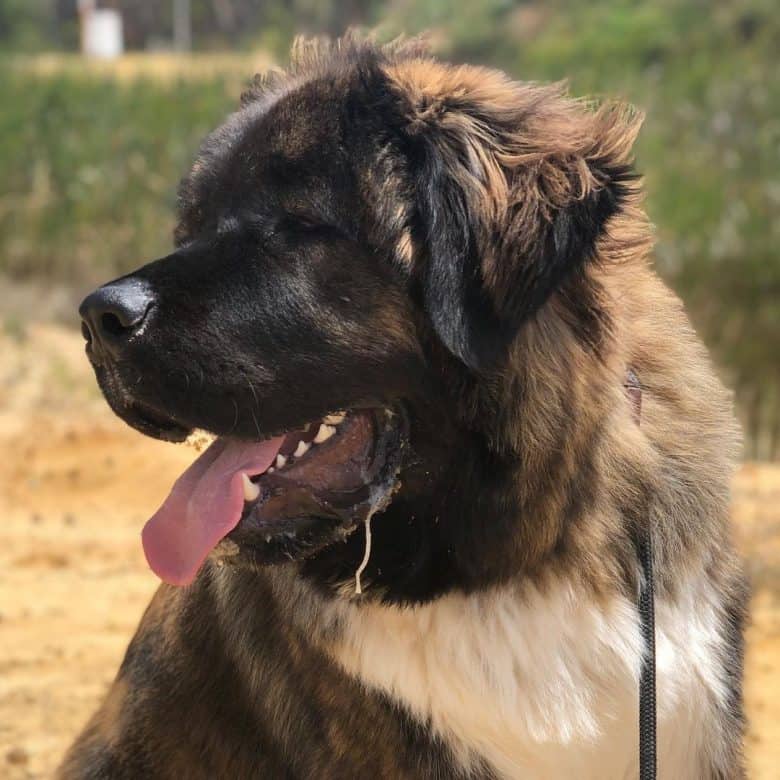
Are you bothered by drooling? We’re only asking because you may have to deal with it if you’re getting this breed. You have to wipe it away, so your stuff doesn’t get covered in slobber.
How much should you feed a Caucasian Mountain Dog?
With a dog this huge, it’s no surprise that it will require plenty of dog food. Generally, a 170-pound (77 kg) Caucasian Shepherd will require about 6 cups of high-quality dry kibble a day.
So, anyone who wants this breed must be prepared to provide the nutrition they need, but that doesn’t mean you have to get the cheapest bag.
Caucasian Mountain Dogs need a diet that’s high in protein and should include quality veggies.
Also, the amount of food and the recipe you choose should depend on your pet’s weight, age, metabolism, and it may be altered based on his health requirements.
If you’re used to feeding your doggos based on their daily caloric intake, here’s a calorie calculator you can use.
You should also think about dividing your mountain dog’s meals into two – one during the day and one at night – to avoid weight gain and bloat.
Those paw parents who have the time to prepare their fur baby’s meals by themselves can opt for a raw diet or mix it with their kibble.
Do Caucasian Mountain Dogs have health problems?
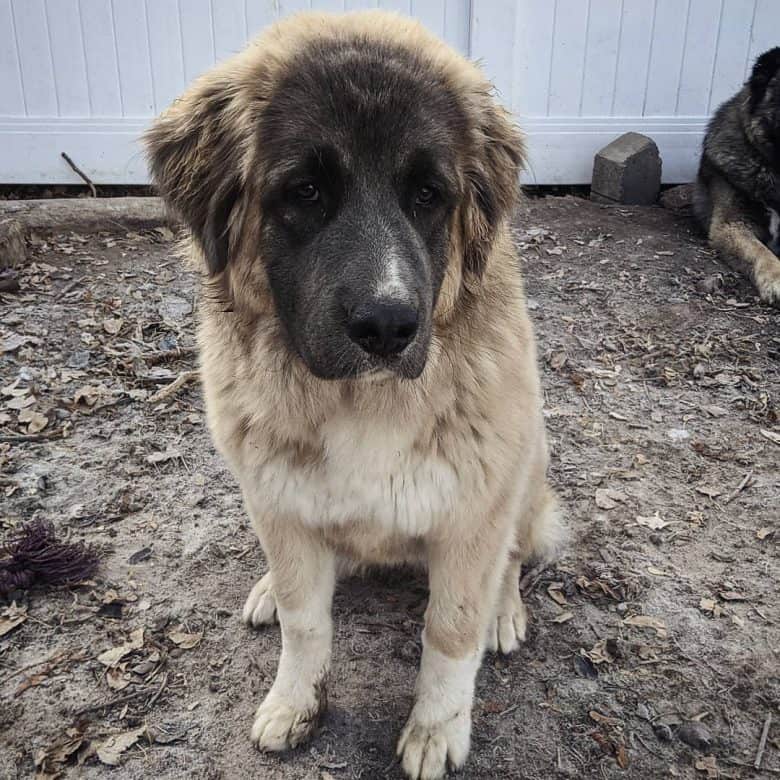
Like all other pets, Caucasian Mountain Dogs will face a few health concerns. The most common illnesses with large and giant dog breeds are hip dysplasia, obesity, and heart problems.
Watch out for cataracts, as well. We’re not saying that all Caucasian Shepherds develop these diseases, or your pup will get all of them.
It’s always better to be aware of the health issues that this breed is predisposed to so you can take the necessary steps to avoid them, like getting your pup to undergo health screenings to ensure that he’s cleared of them.
Other than that, Caucasian Mountain Dogs are robust canines and can enjoy an average lifespan of 10 to 12 years, which is the usual life expectancy range for breeds this size.
How much does a Caucasian Mountain Dog puppy cost?
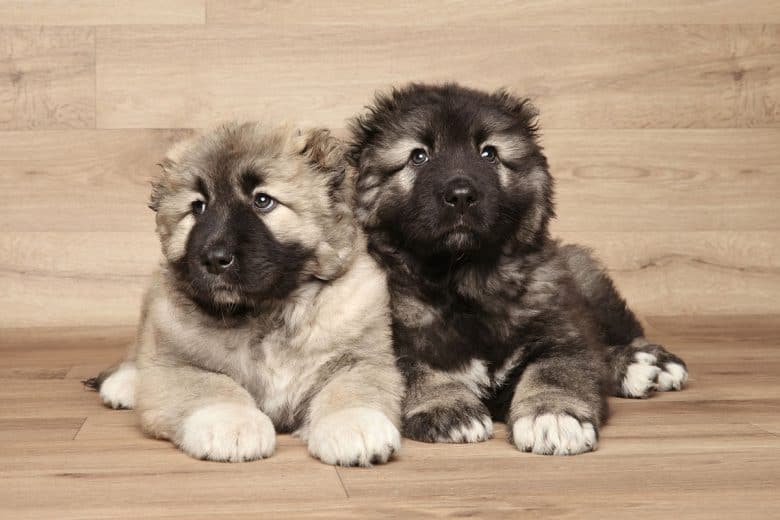
The average price of a Caucasian Sheepdog puppy is somewhere between $1,200 and $1,500. If you want one from proven bloodlines, that can cost around $2,500.
Aside from lineage, each pup’s price is also affected by the breeder’s popularity and location, the puppy’s gender, and availability.
Female Ovcharkas give birth once annually, and each litter can have 3 to 6 puppies.
Once you’re comfortable with the research you did about the Caucasian Mountain Dog’s breed information, and you feel like you’re ready to buy a bear-pup of your own, you have to make sure you’re only buying from reputable breeders and kennels.
Caucasian Mountain Dog breeders
It wouldn’t be too difficult to find a breeder who’s advertising Caucasian Mountain Dog puppies for sale, but you want to ensure that you’re bringing home a healthy pup.
You have to know the Do’s and Don’ts when dealing with puppy sellers before signing any contract and schedule a visit to meet the puppy’s parents and littermates.
Observe their personalities and environment, which will give you an idea if they’re cared for, and it will also let you in on what your pup will look like when he grows up.
We also recommend that you check whether the Caucasian Mountain Dog is not banned in your country or state. They may also have specific rules about owning one.
If everything’s all good, we provided a few websites that have available Caucasian Mountain Dog puppies that you can check out:
- NEK Caucasians (Barton, VT) – russiancaucasianmountaindog.com
- Homestead Caucasians (Yaak, MT) – homesteadcaucasians.com
- Asgard Caucasians (Pittsburgh, PA) – asgardcaucasians.com
Voronezhskie Bogatyri is located in Voronezh, Russia, but they also ship to America, the UK, or anywhere in the world. So does Lion’s Home Kennel, which is located in Europe’s Romania.
Caucasian Mountain Dogs for adoption
Adopting a Caucasian Shepherd isn’t as simple as with any other dog. These dogs don’t take a liking to change.
If you choose to adopt, it can be one of the most rewarding feelings. With a lot of dedication and love, you can teach these fur angels to love again.
You can check your local shelter or visit one of these rescue organizations to see if you can take home a purebred or a Caucasian Mountain Dog mixed breed:
- Silk Road Rare LGD Breed Rescue (CA) – silkroadlgds.org
- Esquire Caucasian Mountain Dogs (Chardon Township, OH) – esquirecaucasians.com
Is the Caucasian Mountain Dog the right dog for you?
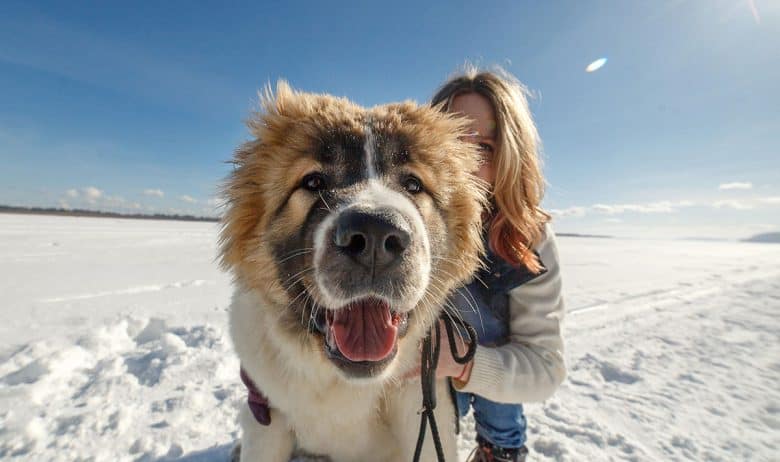
Sure, this breed’s temperament, trainability, and care needs are considered high maintenance for most pet parents.
Still, Caucasian Mountain Dogs are undoubtedly a wonderful addition to any household, family, or trainer who has experience in owning a very large dog with a bold personality.
But regardless of their impressive size and territorial traits, they have a gentle and affectionate side.
What do you think about this large breed? Let us know all your thoughts and experiences with the Caucasian Mountain dog by leaving a comment below.
Further reading: Giant breeds similar to the Caucasian Mountain Dog
Reference
- http://www.mastiffcanada.org/index.php/breed/identifying-molosser-breeds
- http://www.fci.be/Nomenclature/Standards/328g02-en.pdf
- https://www.akc.org/dog-breeds/great-pyrenees/

Cess is the Head of Content Writing at K9 Web and a passionate dog care expert with over 5 years of experience in the Pet Industry. With a background in animal science, dog training, and behavior consulting, her hands-on experience and extensive knowledge make her a trusted source for dog owners.
When not writing or leading the K9 Web content team, Cess can be found volunteering at local shelters and participating in dog-related events.