If you have an active lifestyle and you prefer to spend most of it in the great outdoors, the American Water Spaniel dog breed (AWS) is the perfect furkid for you. They’re intelligent and make great family dogs!
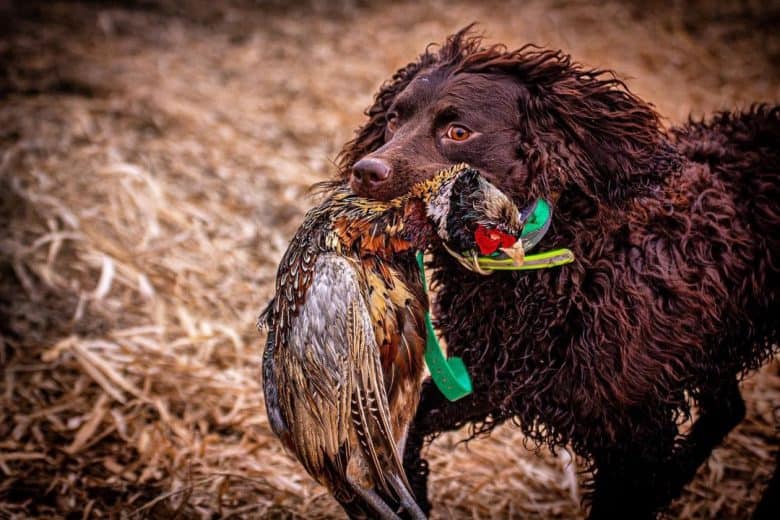
These little brown dogs are setter spaniels that are excellent hunters and retrievers.
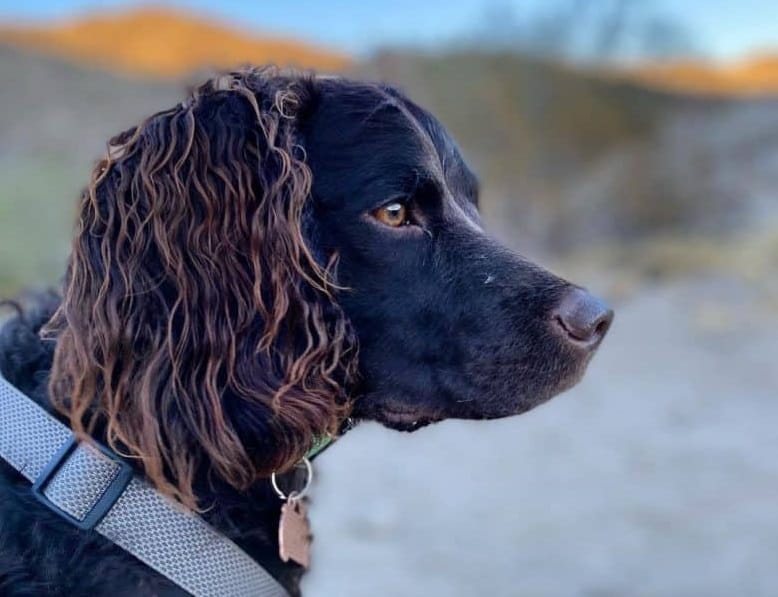
You can count on them as your fieldwork companion to comfortably retrieve grouse, quail, and pheasant, even from boats, because their double layer, water-resistant coat protects them from the cold water.
Getting that itch to get an American Water Spaniel puppy? Learn more about this dog breed first by reading our guide on its appearance, personality, and maintenance needs.
Where did the American Water Spaniel originate?
Their origins are a bit fuzzy, but you can trace the history of this unique dog back to the Great Lakes area in the 1800s. Rumor has it that native American Indians may have had a hand in developing the breed.
By the end of the 19th century, spaniels that could comfortably hunt from a boat and perform well on land became an established breed called the American Brown Spaniel.
The breeding community believes that the AWS stems from a mix of the Field Spaniel, Irish Water Spaniel, Curly-Coated Retriever, and the now extinct English Water Spaniel.
One of the very few native breeds of America, the American Water Spaniel was officially recognized in 1920 by the United Kennel Club (UKC) due to the efforts of Dr. Pfeifer, who rescued them from being replaced by larger retrievers and gundogs.
By 1938, the Field Dog Stud Book also included the American Water Spaniel as a gundog. The American Kennel Club (AKC) followed suit in 1940. In 1986, these dogs adept at waterfowl hunting became the State dog of Wisconsin.
They’re now primarily popular around the Midwestern United States, namely Wisconsin, Minnesota, and Michigan.
What does an American Water Spaniel look like?
American Water Spaniel pups have slightly rounded eyes that vary according to coat color. But according to the AKC breed standard, bright yellow eyes are considered a fault.
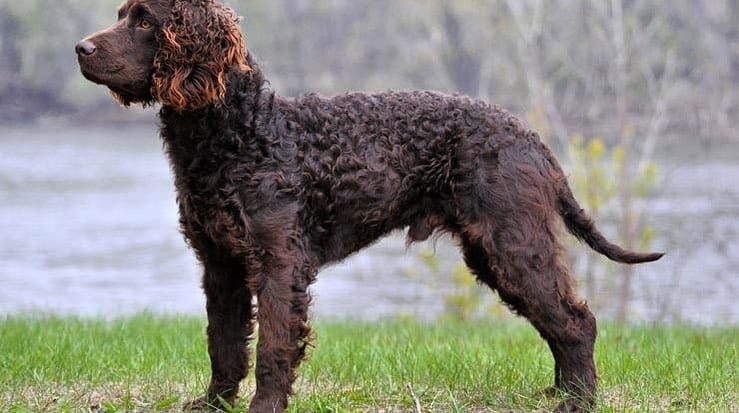
Unlike other spaniel breeds, the AWS’s tail is kept natural. It should be medium-length, curved, and tapered. The shape of the tail allows it to act as a rudder when hunting in fast-flowing water.
This breed has webbed toes, which makes them robust and agile swimmers.
Watch Torrie as she demonstrates her retrieving capabilities:
Size: How big do American Water Spaniels get?
The AWS is a small- to medium-sized dog, standing at 15 to 18 inches (38 to 45 cm) tall, and should weigh between 25 to 45 pounds (11 to 20 kg), with females on the lower end of the scale, usually not exceeding 40 pounds (18 kg).
Its size and temperament make this breed an excellent indoor companion. While it could feasibly live in apartments, farm life is better suited for such an active breed. It’s a canine that will love having a pool or pond to swim in.
The American Water Spaniel’s curly coat
Like we mentioned earlier, the American Water Spaniel has a double coat that’s water-resistant.
It helps protect the dog from the cold, as well as thorns and briars, making it a versatile fido capable of hunting on water and land.
The undercoat is dense and curled, while the outer coat can feature tight curls or uniform waves, called a marcel coat.
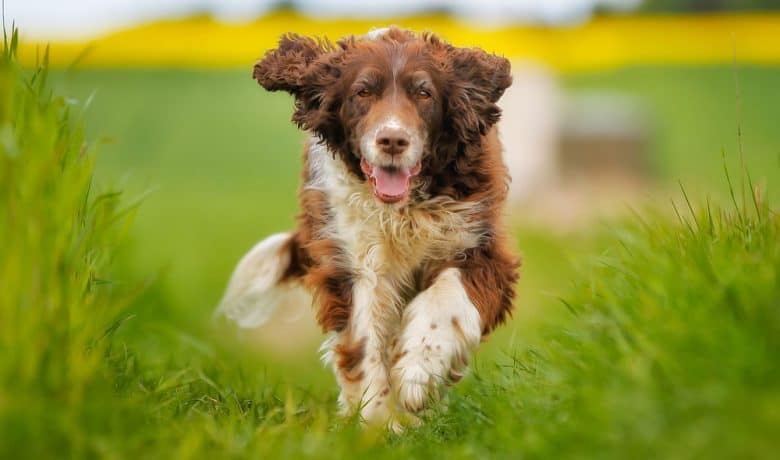
A purebred AWS can range in color from a solid liver to dark chocolate or brown. They also have patches on the toes occasionally, resembling the Springer Spaniel.
Breeds who have naturally oily fur may give them a doggy smell. Sometimes, they can even leave behind greasy stains on your furniture.
But don’t let that push you to give your fido frequent showers or shave his hair. Doing so will result in irreparable damage.
Are American Water Spaniels good family pets?
The best homes for these little brown dogs are where their humans are. Even when hunting, they stick close to their human hunting companions.
And after a long day of work, they love nothing more than curling up at your feet, making them wonderful family pets.
This multi-purpose dog might be bred for hunting and retrieving, but they have high affection levels. With that said, companionship is not optional, so they can’t be left alone for more than a few hours.
They can get quite noisy, and their need for attention usually spurs their barking spells. You can easily remedy this by teaching them the quiet command. But his tendency to bark makes him an ideal watchdog.
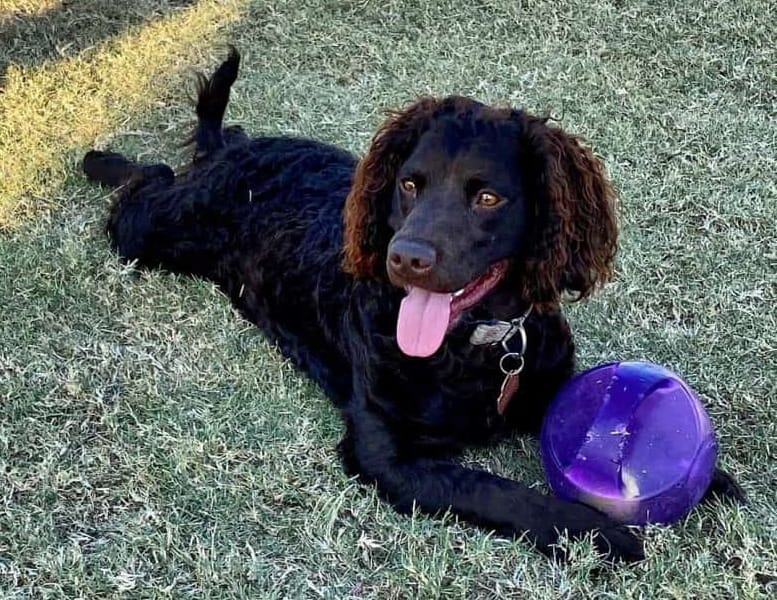
The AKC refers to the American Water Spaniel as a charming, eager, and happy pet. They can be one-person dogs but can also be trained to be people-friendly, depending on how they were socialized as a puppy.
Early socialization is vital so they can go on to be good-natured and easy-going dogs. AWS isn’t known to be aggressive, and their high trainability makes them an excellent choice for service dogs.
It’s essential to start with obedience and behavior training early on. The American Water Spaniel is an intelligent breed that can be rather willful if consistency is not reinforced.
They’ll learn new commands fast, and you’ll need to work to keep their interest because they don’t enjoy repetition.
These sensitive canines do not like irregular routines and harsh words. Strange dogs are seldom welcome, but their pack mentality allows them to get along swimmingly with other pets they’re raised with.
They also love children, but harsh treatment will not be tolerated. Just ensure that interactions are always supervised.
To sum it up, the American Water Spaniel is a multi-faceted dog that adapts well to various environments, especially when trained and socialized at a young age.
How to care for your American Water Spaniel
This breed has high energy levels and has specific exercise needs. A hunting dog, the AWS requires daily exercise. Walks are a great way to stimulate your dog because of all the sensory stimulation the outside world offers.
Still, it shouldn’t be the only form of exercise they get. 1 to 2 hours of exercise or fun activities should make this doggo happy.
Some pet parents enroll their canines in hunt tests and dog sports for a more competitive approach as a workout. It’s great for their mental health, too!
If they don’t get enough exercise or attention, they’ll pull up your plants or chew on your slippers. Their mischievous behavior might seem destructive to you, but it’s just a way to entertain themselves.
Grooming: Do American Water Spaniels shed?
American Water Spaniels are NOT hypoallergenic. They shed lightly throughout the year and require weekly brushing with a rubber-tipped pin brush.
They shed more during fall or spring, so it’s best to brush your dog’s coat daily with a slicker brush. It would help remove the dead hair and minimize the amount of fur in your house.
Hunters sometimes clip the AWS’ coat to make it more manageable as burs and twigs can easily stick to their curly coat. As a pet, they can be groomed for a neater appearance. NEVER should they be shaved unless a vet says so.
Ears should be checked once a week and keep them dry as the AWS is prone to ear infections. Avoid cleaning too deeply as this could hurt them.
For dental hygiene, brush their teeth 2 to 3 times a week.
Clipping their nails every month or two is also essential. Otherwise, it could exacerbate health issues because of the difficulty in how their body weight is distributed. Furthermore, it could hurt them if a nail cracks.
Feeding: American Water Spaniel Food Consumption
Adults typically eat 1 to ½ cups of food a day, divided into two meals. The kind of diet and amount you feed your pet should depend on his activity level, health, weight, and age.
More importantly, you should ensure you feed high-quality dog food and practice portion control. They aren’t prone to obesity, but you can check with the eye and hands-on test.
Can you see or feel your dog’s ribs? If you can’t see or feel them, he needs to lose some weight. If you can see and feel them, he needs to gain some weight.
Health: How long do American Water Spaniels live?
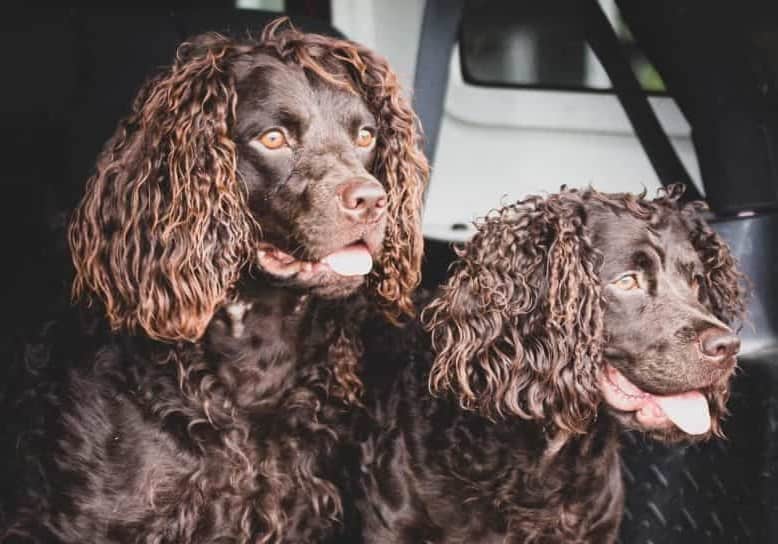
American Water Spaniels are healthy dogs with reasonably long life spans. They have a life expectancy of 10 to 14 years, but some can exceed that. Still, there are a few health problems that this breed is predisposed to.
First is eye conditions, like Progressive Retinal Atrophy (PRA), which causes blindness, and Distichiasis, an eye irritation caused by abnormal eyelash growth.
There’s also Hip Dysplasia. It’s an abnormal development of the hip joints, which causes pain and lameness.
Once American Water Spaniels reach their senior years, some of them develop Degenerative Myelopathy. This disorder affects their hind legs first.
With all that beautiful coat, those who own this breed should also watch out for hair loss. An underlying illness may cause it, but others may be purely cosmetic.
It can be due to:
- Growth hormone-responsive dermatosis that’s common in male dogs aged 1 to 5 years.
- Pattern baldness or saddle alopecia.
- Hypothyroidism is when the thyroid doesn’t produce enough hormones and results in many problems such as weight gain, lethargy, and hair loss.
- Allergies cause excessive scratching, leading to hair loss. There are two kinds of allergic reactions. It could be contact dermatitis or food allergies.
American Water Spaniels can also suffer from Canine Epilepsy and heart problems like Mitral Valve Disease.
How much does an American Water Spaniel puppy cost?

The American Water Spaniel puppies are a very rare breed. Each litter usually has 4 to 6 puppies, with each pup having an average price of $1,200 to $1,500.
It may take months before you find a puppy in the United States. Only 233 pups were registered in 1998 by the AKC, with only 3,000 American Water Spaniels found in the American Midwest.
Because they’re uncommon, breeders often hand-select the buyers. Expect a thorough investigation and prepare to answer any questions, including how you plan to raise your puppy and what your living conditions are.
They may even ask personal questions. All this is to ensure their dogs go to a good home and you’re a good match with the pup.
American Water Spaniel Breeders
With such a small population, the AWS is not an easy dog to procure. If you’re truly desperate, you can search through social media like Instagram and contact owners of the dog breed to ask for contacts.
Barring that, the American Water Spaniel Club has a breeders directory, and the AKC Marketplace are some of the breed clubs with available American Water Spaniel puppies for sale.
American Water Spaniel for Adoption
Do you prefer rescuing an AWS instead? Since it’s not easy to find this breed, even after checking with your local shelter, you can check out the Facebook page of the American Water Spaniel Rescue.
Adopting is an excellent option for aspiring dog owners who don’t want to deal with puppyhood anymore, or they simply want to give a fur angel another chance to be loved.
Who should get an American Water Spaniel dog?

If you’re either often home or mostly spending your time exploring the great outdoors, the AWS is the ideal dog for novice and experienced pet parents.
These puppies form close bonds with their pack, but they do require lots of time and attention.
Rural living is best suited to this breed. And because of its gentle and loving nature, the American Water Spaniel is an excellent companion for young children and older people.
Are you a proud owner of an American Water Spaniel? Tell us the pros & cons of owning one and help others get further informed about this beautiful breed.
Further Reading: Similar breeds to American Water Spaniel
Reference
- https://images.akc.org/pdf/breeds/standards/AmericanWaterSpaniel.pdf
- https://www.petmd.com/dog/conditions/skin/c_dg_growth_hormone_responsive_dermatoses#:~:text=Growth%20Hormone%2DResponsive%20Dermatoses%20in%20Dogs&text=Adult%2Donset%20hormone%2Dresponsive%20dermatosis%20has%20been%20reported%20in%20Chow,be%20seen%20in%20both%20sexes.
- https://vcahospitals.com/know-your-pet/mitral-valve-disease-in-dogs#:~:text=Dogs%20may%20develop%20a%20murmur,the%20heart's%20efficiency%20is%20reduced.