Simply called Bassets, this purebred hound is a low-riding canine companion that is hard to miss. You might’ve seen one in different movies, such as 101 Dalmatian and The Smurfs, with their staple sad-face look.
But aside from their personality and easy care requirements, there are many reasons why Basset Hounds are a household favorite.
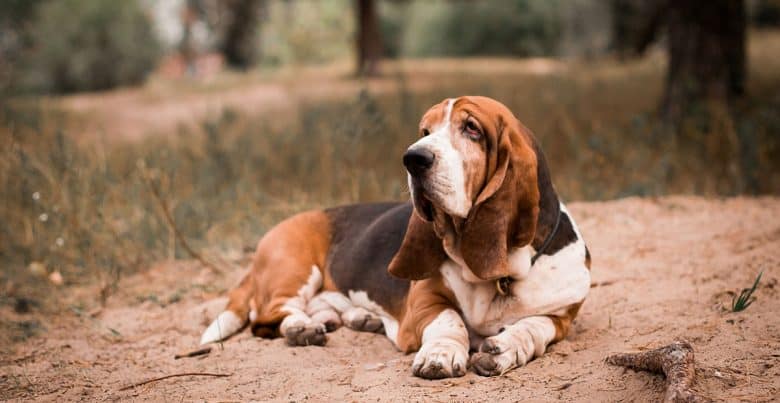
Want to know more? Keep reading to see why you should consider this doggo.
Where did the Basset Hound originate?
Basset Hounds are noble dogs that are mostly known and seen as the Hush Puppy in the famous footwear brand Hush Puppies. But there’s more about this purebred’s history.
Originating from France, the Basset’s name came from the French word bas, which means “low.”
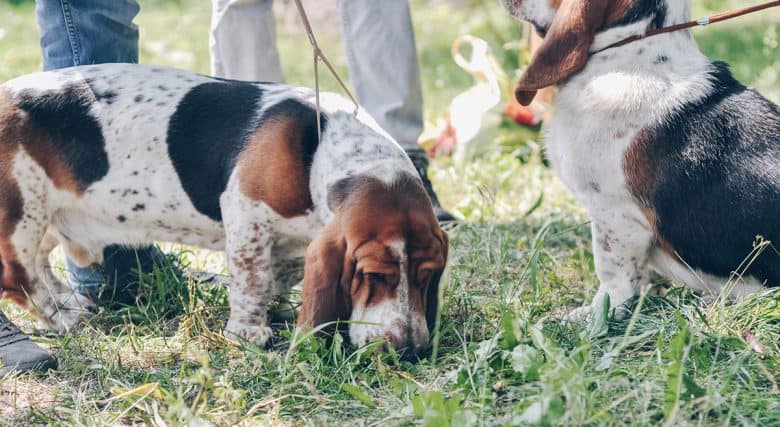
It is said that they have descended from the St. Hubert Hound but in a dwarfed strain.
But Basset Hound’s were first seen in an illustrated book titled La Venerie written by Jacques du Fouilloux in 1585.
This book about hunting showed early French Bassets resembling the modern Basset Artesien Normand.
They were initially popular with the French aristocracy but were eventually used by commoners who don’t have access to horses as hunting dogs.
These canines were followed on foot while they tracked small games like hares and rabbits under brush in thick forests.
In 1874, Sir Everett Millais, considered the “father of the breed,” imported a Basset Hound named Model from France to England and started his own breeding program.
This led to the breed’s fame. By 1875, a Basset was exhibited at an English conformation event, but it’s in the Wolverhampton show in 1880 did the public take note of this purebred.
A few years after, around 1882, the Princess of Wales included Basset Hounds in the royal kennels.
Then in 1882, The Kennel Club (KC) recognized the breed, leading to the formation of the English Basset Hound Club in 1884.
The American Kennel Club (AKC) formally recognized Bassets in 1916, but they began accepting registrations in 1885.
The real turning point for this purebred happened in 1928.
A Basset Hound was featured on Time Magazine’s front cover accompanied by an article about the 52nd annual Westminster Kennel Club Dog Show held in Madison Square Garden.
Their charm was discovered, making them even more popular.
Fun fact: There are fun competitions for crowning King and Queen Basset Hounds to determine who has the “Best Waddling Butt.”
A wide variety of Basset memorabilia are sold in these events, where proceeds go to Basset Hound rescue organizations.
Droopy Style: What does a Basset Hound look like?
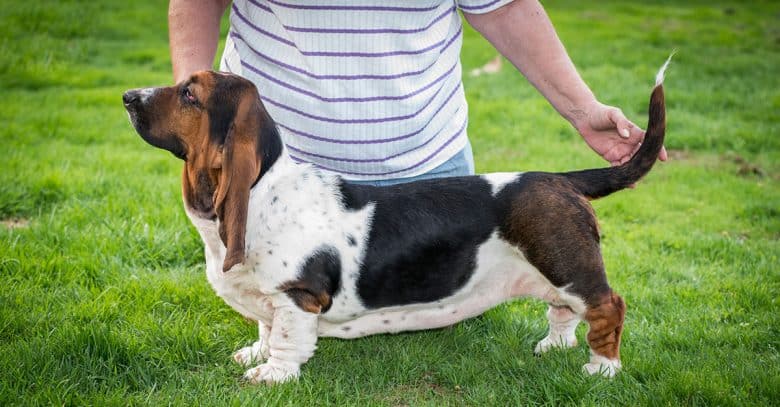
These scent hounds are most famous for their short legs and droopy ears. According to the AKC’s breed standard for Basset Hounds, they typically have a long, dense body, a rounded head, and a deep muzzle.
It’s their face’s excessive loose skin and wrinkled brow that gives them a droopy-eyed look but let’s be honest, it’s one of their allure.
Every part of the Basset Hound’s body serves a purpose. Their short build helps to track prey low to the ground. It also slows them down so their hunter humans can keep up.
You might assume such long ears would mean an excellent sense of hearing. No doubt, Basset Hounds can hear well, but those floppy ears aid more in this hound dog‘s sense of smell.
Their ears drag across the ground and pick up scents that get collected between their facial wrinkles, helping them keep on their scent trail.
They have powerful necks with broad chests, and front legs that bow outward that balances their shoulder weight.
Their long tails that curve upright are white-tipped so that their humans can scope them while hunting in the tall grass.
It may not seem like it, but an adult Basset moves with a strong, smooth grace that comes from such a unique, purposeful facade.
Meet the other types of Basset Hounds
There are several other Bassets in the canine world, but we’d like to introduce you to the different kinds of Basset Hounds accepted by the AKC.
Two of them are in the Hound Group, while the other is Foundation Stock Service.
Petit Basset Griffon Vendéen
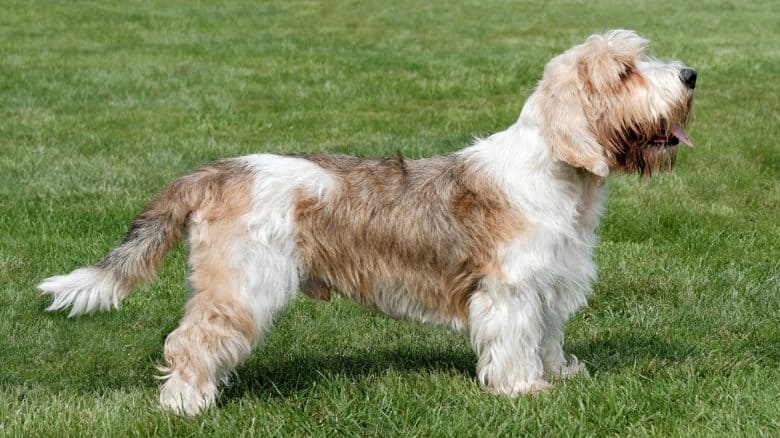
Also known as PBGV and “The Happy Breed,” this Basset variety’s name describes what kind of dog they are – “small, low, and rough-coated from Vendeen.”
They’re vocal scent hounds that stand 13 to 15 inches (33 to 38 cm) tall. The Petit was bred to trail hares in terrains covered in thick brambles, underbrush, and rocks.
Grand Basset Griffon Vendéen
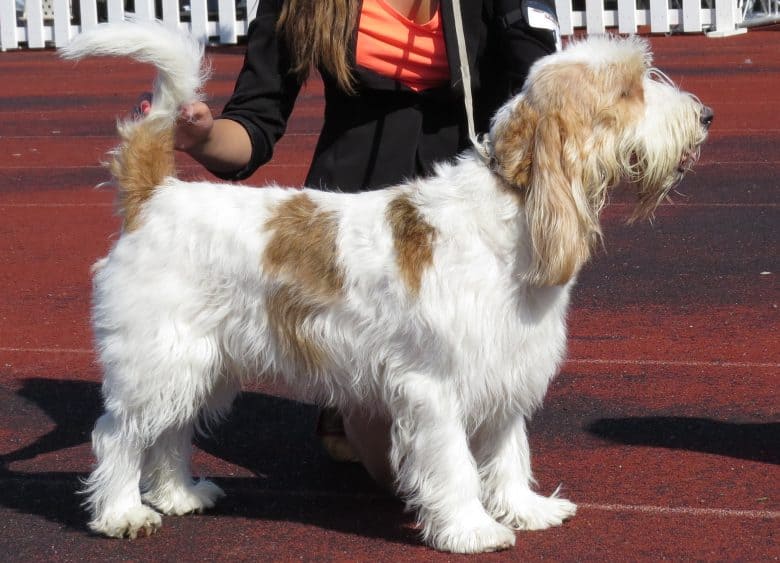
Often referred to as The Grand, the GBGV is larger Bassets that were also used by poor huntsmen who can only follow slower dogs on foot.
Just like Foxhounds and Beagles, they typically hunt in packs to go after deers and wolves.
Contrary to the standard Basset Hound, Grand Bassets aren’t suitable family dogs because they’re unfriendly and have a stubborn disposition.
Basset Fauve de Bretagne
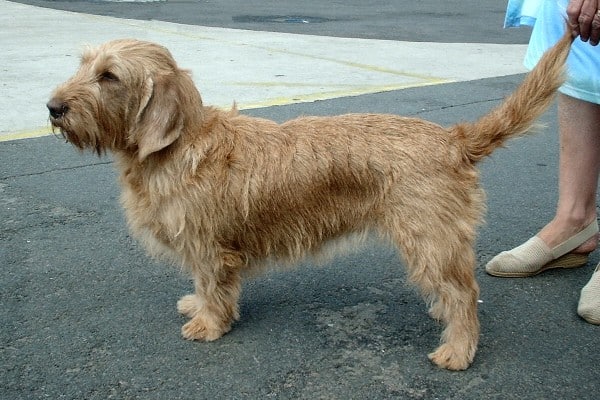
This short and stocky breed is also called the Fawn-Colored Brittany Basset. It generally has a happy and friendly personality, making it an excellent household pet.
This is a devoted fido that’s also courageous and a serious hunter.
The Basset Hound’s size: How big do they get?
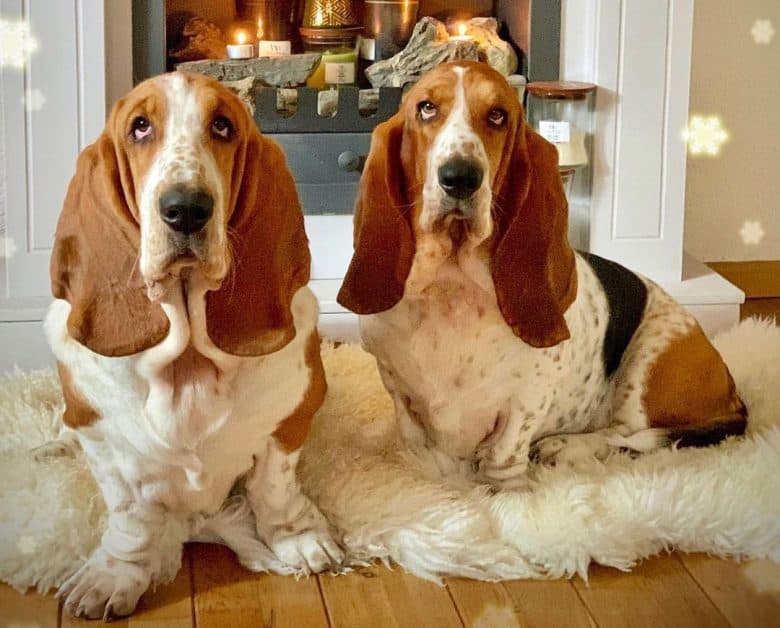
Though they’re longer than taller, they’re considered as large dogs with short legs.
Full-grown Basset Hounds shouldn’t exceed a height of 14 inches (36 cm) and can have a weight between 40 to 65 pounds (18 to 29.5 kg).
According to the AKC, those who exceed 15 inches (38 cm) from its shoulder blade are considered disqualified from conformation events.
But if you want a Basset Hound puppy and you’re not planning to have her register or join dog shows, some of them can be extremely adorable in size!
Miniature Basset Hounds are about 8 to 14 inches (20 to 36 cm) tall and can only weigh under 35 pounds (16 kg).
This cute version originated in the United States in the early 2000s and was created by Juan Johnson, who wanted swimming, sniffing, hunting dog, but in a smaller package.
Overall, Basset Hounds are excellent apartment dogs. With the right training and enough exercise, they’ll do fine in a small- or medium-sized home.
The Basset Hound’s coat, colors, and markings
Basset Hounds have short, smooth coats that are water- and dirt-repellant, which is perfect for when they’re doing fieldwork as they wouldn’t be caught in brambles.
For color, you’ll often see them in different combinations like black and white, black, brown and white, black, tan and white, lemon and white, mahogany, and more!
Watch this video of a Basset adult dog and her puppies for a glimpse of how this breed can come in a variety of colors and patterns:
Personality: Are Basset Hounds good family pets?
Yes. These dogs make great family companions because of their calm, naturally social traits. Bassets generally love children and will get along great with them at all ages.
This pooch enjoying company also means they can have separation anxiety. If you’re often away from home and you’re not willing to pay for doggy daycare or sitters, then the Basset Hound isn’t the breed for you.
Having another pet can work as Bassets do well with other dogs and fur pals. Everything has a limit, though.
Keep in mind that this fido was used in the field and will do fine with pets that they grow up with, like cats. Anything smaller, like a bunny, expect your canine companion to try to hunt it.
Wondering if Basset Hounds love to cuddle? Most do but on their terms. They can easily get distracted when their noses catch a scent trail, so you probably have to let your pup do his thing.

Are Basset Hounds lazy?
Yes and no. Once these pups are on a mission, you can’t stop ’em! They’re determined and driven when it comes to the job, but they’re mostly easy-going and laid-back.
Still, don’t underestimate Basset Hounds. They may be couch potatoes, but they’re also highly intelligent. They just tend to be stubborn, so you have to find a way to motivate your pup to move and respond.
The common answer to that is training your doggo using positive reinforcement and yummy treats.
Any negativity or unpleasantness toward them will make them even more headstrong.
Taking Care of your Basset Hound: Are they high maintenance?
If you think Basset Hounds are pretty easy to care for because they’re loungers, think again. They’re actually high maintenance dogs to own.
You should also know that this breed isn’t suited for extreme weather. If you live somewhere where it can get really hot or too cold, observe your hound, especially if he’s showing excessive shivering or panting.
How much exercise does a Basset Hound need?
Just because your Basset Hound’s energy level is low doesn’t mean he has to skip working out. Make it a point to help him stay fit and healthy.
They require up to an hour of exercise every day to avoid gaining too much weight.
You can split this into two 30-minute daily walks, which is enough for Bassets.
If the climate doesn’t allow your dog to get his daily exercise in, there are a lot of indoor activities that your pup can do, such as puzzles.
You can also have him walk around the house to look for his favorite toy or some healthy doggy snacks. That will keep his scenting ability going.
Grooming: Do Basset Hounds shed a lot?
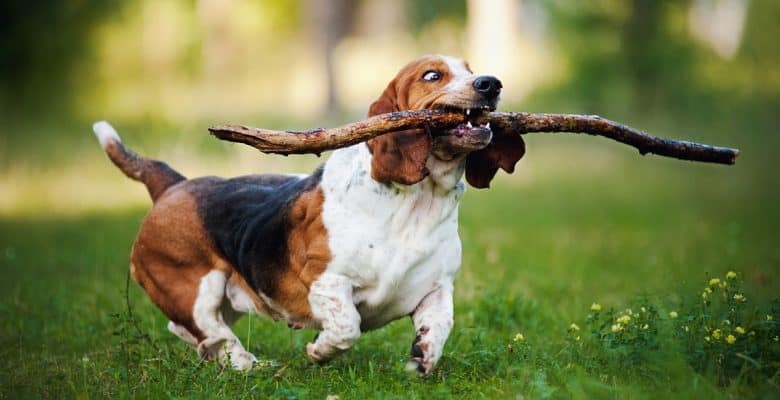
Basset Hounds are moderate shedders, but they shed more during shedding seasons – spring and fall.
It can be easily managed with constant grooming or a weekly brushing. This pooch rarely needs a bath, so wiping their eyes, ears, and wrinkles daily should do the trick.
You should also think about whether you can deal with wiping drool every day because, just like Bulldogs, drooling is one of the quirks you have to deal with when owning a Basset Hound.
Other grooming routines include a weekly check and cleaning of your Basset’s floppy ears with a cotton ball and a dog-specific ear solution to prevent ear infections from developing.
For oral hygiene, brush his teeth at least two to three times a week.
Their large paws should be checked daily for sores and cuts, then trim their nails at least once a month if your pooch doesn’t wear them down naturally.
It’s essential that your Basset Hound gets used to grooming and getting his paws handled from puppyhood to avoid stressful situations whenever he’s at the groomer’s or the vet’s clinic.
Nutrition: How much food should a Basset Hound eat?
Ideally, Bassets should consume 1.5 to 2.5 cups of high-quality dry dog food every day. This amount should be split into separate meals to keep them full and energized throughout the day and help prevent bloat.
You won’t worry about your Basset being picky, but you should watch out because they tend to overeat. Measure your Hound’s food and stay consistent to help prevent obesity.
Giving your Basset Hound smaller meals or using a slow feeder can avert the possibility of Gastric Dilatation-Volvulus (GDC) or bloat, which is more prevalent in large-chested dog breeds.
Without emergency surgery, this condition is fatal.
Note that your fur baby’s diet will shift from puppy stage to adulthood. Aside from his age, the amount you feed him should be based on his weight, activity level, and even health.
If you prefer feeding your pet based on his daily caloric requirement, you can use this calorie calculator to help you compute for it.
What health problems do Basset Hounds have?
While Bassets are generally healthy, they’re prone to some health conditions.
Other illnesses are genetically predisposed, while there are diseases that are less serious and can be mitigated with proper nutrition and an exercise regimen.
One of the minor health concerns with this purebred is allergies, which is why it’s vital to pay attention to their eyes, ears, and skin.
Those adorable droopy eyes can cause prevalent visual issues such as glaucoma, ectropion, entropion, and Cherry Eye.
Some health problems develop because of their build. Bassets are prone to bone and joint problems in their back, shoulders, and kneecaps:
- Patellar Luxation
- Intervertebral Disc Disease (IDD)
- Hip dysplasia and elbow dysplasia
They’re also prone to Panosteitis, also known as Transient or Wandering lameness. If you have a young Basset Hound, be observant because it can be misdiagnosed as dysplasia or luxating patella.
Add to the list a few blood disorders like Thrombopathia and Von Willebrand’s Disease.
But with overall care, they have an average lifespan of 10 to 13 years. Did you know that the oldest Basset Hound almost reached the age of 17? That’s according to the 2004 survey of the UK Kennel Club.
Best “bay” for your buck: How much is a Basset puppy?
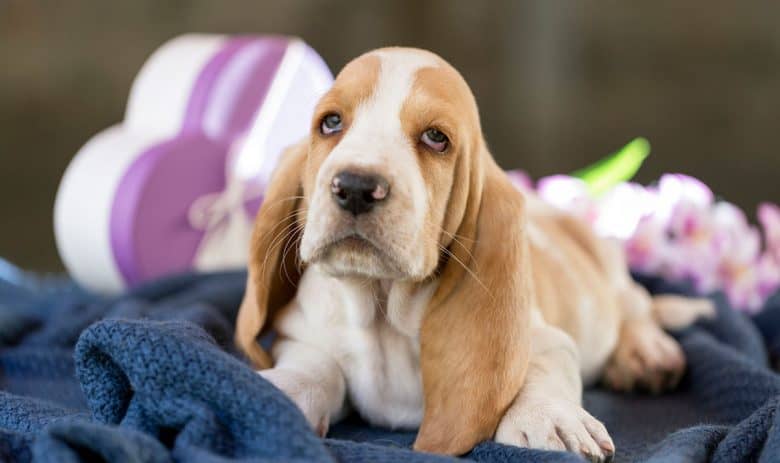
Basset Hound puppies have an average cost that starts at $600. If you’re looking for a show dog or one that comes from a line of champions, start budgeting somewhere from $1,900.
The price is affected by different factors, though, such as the breeder’s location and popularity, the gender you prefer, and even the pup’s availability.
It’s best to know the Do’s and Don’ts when finding and purchasing a healthy pup from a reputable breeder.
Prepare a questionnaire that’s filled with crucial questions you may want to ask the puppy seller before signing any contract.
Other than doing your research, schedule a visit to meet the breeder, the pup you’re interested in, as well as its parents and littermates.
While there, observe their dogs’ temperament and environment to see if they’re well taken care of.
Responsible breeders also let potential buyers check or have a copy of the breeding stock and the puppy’s medical documents to ensure that they’re healthy before and after gestation.
Some of the health certificates you should see are from the Canine Eye Registry Foundation (CERF), Auburn University, and Orthopedic Foundation for Animals (OFA).
Basset Hound breeders & kennels
If your heart is set on buying a Basset Hound puppy through a breeder, you should go for one that follows the Basset Hound Club of America’s (BHCA) code of ethics.
They also provide a breeder directory that you can check out here. Simply select your state!
Here are other websites that have available Basset Hound puppies for sale:
- Sandyhill Basset Hounds (Francesville, IN)
- Huggable Bassets (Charlotte, NC)
- Spectrum Basset Hounds (Bolton, MA)
Basset Hound dogs for adoption
Despite being a purebred and having good qualities, many Bassets end up in shelters. We highly recommend that if you want a pet, consider adopting or rescuing a dog.
Not only will you save a fur angel, but it’s also a cheaper option as the cost is around $300 only.
New and experienced paw parents who don’t want to deal with puppies should opt to rescue.
Check out these rescue organizations that cater to Basset Hounds and their mixes:
- Basset Hound Rescue of South California (Whittier, CA)
- Tri-State Basset Hound Rescue (Deepwater, NJ)
- All Bassets Cherished (ABC) Basset Hound Rescue, Inc. (Buffalo, NY)
Who should get a Basset Hound dog?
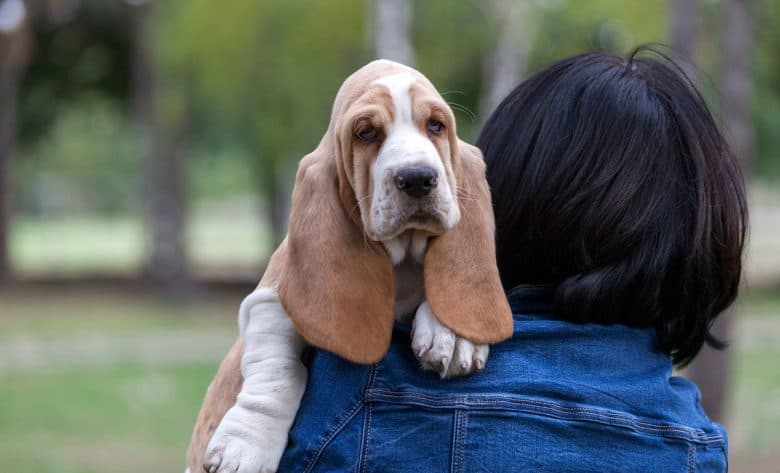
Basset Hounds require lots of attention, as well as patience, especially when you have to train stubborn cuties. They require a family that will provide affection while being a firm alpha leader.
Don’t forget their grooming needs where you have to clean between those wrinkles then kissing their forehead for being such a good doggo!
If you’re okay with all those pros and cons when owning a Basset Hound as a pet, and you want a field dog like terriers, but you prefer one that’s not highly active, then this canine might be for you.
So, are you houndin’ for a Basset pup yet? Tell us all about it by leaving a comment below!
Further Reading: Similar breeds to Basset Hounds
If you’re not convinced that the Basset Hound is for you, then check out these other hounds:
- American Foxhound
- Beagle
- Black and Tan Coonhound
- Bloodhound
Reference
- https://commons.wikimedia.org/wiki/File:Grand_Basset_Griffon_Vend%C3%A9en_in_Tallinn_6.JPG
- https://www.akc.org/dog-breeds/grand-basset-griffon-vendeen/
- https://commons.wikimedia.org/wiki/File:Basset_Fauve_de_Bretagne_600.jpg
- https://www.akc.org/dog-breeds/basset-fauve-de-bretagne/#:~:text=The%20Basset%20Fauve%20de%20Bretagne%2C%20also%20known%20as%20the%20Fawn,and%20fast%20for%20its%20size
- https://pets.webmd.com/dogs/gastric-volvulus-bloat-dogs#1
- https://vcahospitals.com/know-your-pet/luxating-patella-in-dogs
- https://vcahospitals.com/know-your-pet/panosteitis-in-dogs#:~:text=What%20is%20panosteitis%3F,bone%20or%20leg%20to%20another.
- https://www.akc.org/expert-advice/lifestyle/9-tips-finding-working-responsible-breeder/
- https://basset-bhca.org/about-bhca/code-of-ethics/
- https://basset-bhca.org/find-a-basset/breeder-directory/

