Active and aristocratic, you can spot an Irish Setter from miles away due to its lustrous red coat. This distinct characteristic is what coined its nickname: the Red Setter, or in Irish: Sotar Rua.

Let’s take an in-depth look at the mischievous Irish Setter below and what sets it apart from other dog breeds.
Where did the Irish Setter originate?
As its namesake indicates, the Irish Setter came from Ireland. This dog breed uses their keen sense of smell to help hunters locate birds and “set” or crouch down so that they are almost touching the ground.
Once the dog is set, the hunter could throw a net over the dog and the birds.
Years later when guns became prevalent, hunters trained these fast-working dogs to locate and point to upland game birds where they would hold a pointing position to indicate the direction of the bird.
This sporting dog is a combination of spaniels, pointers, and other setters, like the Gordon Setter and the English Setter. Interestingly, the canine wasn’t red from the start.
The first reports of these dogs, from the mid-17th century, described them as red and white setters, making them ideal for hunters since it’s easy to spot them in the field.

Further breeding resulted in pure red setter dogs with no patches of white. The Earl of Enniskillen (Ireland) insisted on having these dogs with exclusively red color, so he filled his kennels with them by 1812.
In 1862, Champion Palmerston was born in Ireland. This bird dog changed the working function of the breed by becoming a sensation in the show dog scene.
We’ll delve into the two types of Irish Setter later in this post — the show and field type. Many of the present Irish Setters come from Champion Palmerston’s line.
The Irish Setter was one of the first breeds the American Kennel Club (AKC) registered in 1878 — just six years before the organization launched in 1884 and officially recognized the breed.
The Irish Setter Club of America is the official parent organization representing the breed in the United States.
By the 19th century, these dogs made a record when the AKC registration for Irish Setters jumped by 1500% in the early 1960s in America. They also ranked as number three of the country’s most popular canine companion list.
The increase in popularity continued into the 1970s. Many attribute this rise in fame to the books and film featuring the Irish Setter, Big Red.
President Nixon also boosted the breed’s fame for his Irish Setter, King Timahoe, who resided in the White House in the United States.
The breed has since dropped in popularity since its rise to fame in the 1960s. Today, it takes the position of number 77 according to the AKC’s rankings.
What does an Irish Setter look like?

If you look at an Irish Setter from the front, you will notice the skull has an oval shape. When viewed from the top, it has a domed appearance.
Setters are a taller breed with a medium-length muzzle with a distinct stop at the forehead.
This Irish dog has almond-shaped, medium-sized eyes in dark hazel to medium brown. Set wide apart, with nose in black or brown with open nostrils. Their long necks and legs add to their swiftness.
The Irish Red Setter looks glamorous in appearance due to its flowing coat and sleek body. Its height allows for more room between the forelegs and hind legs for smooth running.
The forelegs are straight, and the feet are dainty compared to other dogs of similar size. The tail resembles a carrot style as it tapers from the base to a point at the tip.
Two types of Irish Setter
This dog breed had a divergence in work function when Champion Palmerston became a wonder in the show ring and established two types of Irish Setters: show dogs and field dogs.
The breed’s show dogs are heavier and larger than the field dogs, and they tend towards thicker coats, making a statement in the ring. Field dogs are lighter and leaner, making them more agile for hunting.
The field dog and show dog both meet the requirements for the breed standard. Even though show dogs may appear more natural on the stage, they still maintain their instinctive gun dog abilities.
How big does an Irish Setter get?

When it comes to an Irish Setter’s size, there is variation between males and females. Males grow to 27 inches (68.6 cm) in height, whereas females reach 25 inches (63.5 cm).
Males are heavier, weighing in at 70 pounds (32 kg), while the female Irish Setter’s weight is about 60 pounds (27 kg).
They may be tall dogs, but they are not as heavy as other breeds in the large range like the German Shepherd.
Red Setters become fully grown at 11 months to a year old. Although they have reached their full adult size, they are not yet mature. You will have an adult dog with puppy-like enthusiasm for years to come.
If you stay in an apartment, this red dog isn’t the best option for you. The large breed may be too big for smaller spaces, and it can frustrate both you and your dog.
Irish setters have a wealth of energy not suitable for apartment living. But if you are an active runner or cyclist, and plan to take your dog on daily outings, then go for it!
Although the idea of a miniature Irish Setter might get around the size issue for apartment owners, they don’t appear to exist in purebred form.
The best chance you have of a smaller version of the breed is finding an Irish Setter mix like a miniature Irish Doodle.

What does the Irish Setter’s coat look like?
The most distinguishing feature of this large breed dog is its silky, medium-length mahogany or chestnut red coat that seems to embody the color of a traditional Irish red-head.
The long, silky coat can be straight or have a subtle wave, and some setters may have white markings on their neck, head, feet, or chest.
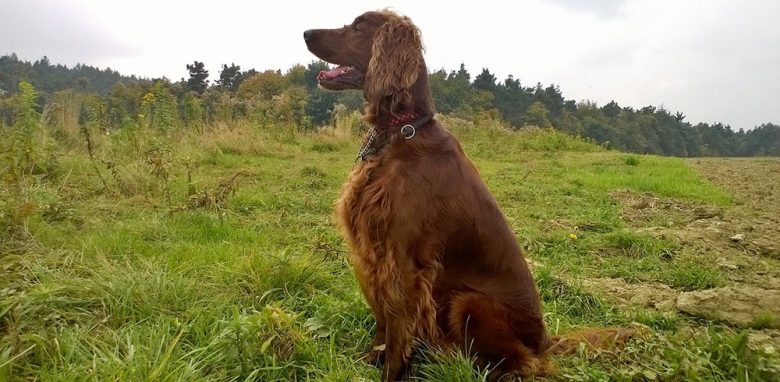
With longer feathering on the ears, there is even longer feathering on the backs of their legs, belly, chest, and tail.
The feathering has a protective function as it protects the dog against many prickly shrubs and plants while in the field.
If you have a penchant for black, unfortunately, there are no black purebred Irish Setters. There is, however, the black Gordon Setter, who is related to the Irish Setter and English Setter.

Temperament: Are Setters good family dogs?
Before we carry on describing this breed, take a look at these cute, funny, and entertaining moments between Irish Setters and their owners.
Irish Setters have a brilliant temperament and are great family dogs. They are affectionate within family environments and good with older children.
However, they may not be the best match for families with infants and toddlers as the Setter’s enthusiasm can result in them bowling small children over.
Irish Setters keep a puppy-like personality for some time after they reach adulthood. For seniors, the red Setter may be too energetic and playful.
This breed needs a family who will engage and stimulate them regularly with long walks, runs, games of fetch, and swimming.
A rollicking breed, the Red Setter is famous for its lively attitude.
This dog is good-natured yet leans toward mischief, which is why we encourage obedience training and crate training especially for youngsters as they like to explore the world via their mouths.
Naturally intelligent, Setters can grasp obedience basics quickly and are very easy to housebreak. You need to be patient and consistent as they have a high level of curiosity and can be easily distracted.
Setters don’t display aggressive tendencies. The Irish Setter temperament is affectionate, playful, and upbeat.
They are loving and good-natured. They do not have the guarding instincts, so they may not make good guard dogs.
They are not quick to bite either. If you need a hunting dog, they fit the bill. They’re also champions in tracking and agility.

Irish Setters thrive as therapy dogs. The role capitalizes on their good-naturedness and love for cuddling.
Since they’re great with kids and friendly to strangers, they’re a great choice to take to children’s wards, hospices, and anyone who needs some cheer.
Irish Setters have the potential to be mouthy and cheeky. These dogs are vocal and observant, making them effective watchdogs. If they see a visitor or intruder, they will let you know about it.
Training is the best way to address this trait and keep the dog calm and less likely to bark.
The Irish Setter’s playful nature and curiosity mean the canine needs a consistent hand in training.
These dogs respond well to positive reinforcement than other methods like shouting. Stock plenty of quality treats and be generous with praise.
Obedience training is a must. If you’re looking for a way to engage the dog’s intelligence, agility training can be fun and exhilarating for you and your dog. It’s also interesting for the canine, helping it with focus.
The Setter’s enthusiasm can result in jumping on people. From the beginning, you need to discourage this behavior.
It will be more difficult to change this behavior if you let it happen past puppyhood. It’s interesting to note that Irish Setters can jump as high as five or six feet.
Training a setter to hunt can be a stimulating and rewarding experience for the owner and canine. If you want to get your Irish Setter hunting, don’t rush into it.
The best route to take is to ask for advice from friends who have been through the process or look to the hunting experts for tips.
Can Irish Setters be left alone?

While they make effective hunting dogs, Irish Setters are not solitary animals. They love being with people and other pets, and might become anxious when separated from their owners.
This separation anxiety will cause them to exhibit such behaviors like chewing or digging. They can also become even more vocal when left alone for too long.
As with any dogs, crate training is a good way to teach your pet from an early age that it’s okay to be left alone. And since Irish Setters are fastidious animals, their trainability is high.
You also need to watch them with smaller animals, like hamsters, as they do have a natural prey drive.
Care tips for your dog

Irish Red Setters require a lot of attention and engagement and can be high-maintenance companions. They also need extra grooming attention because of their thick coats, which we’ll look at later.
Their coats afford them a good level of heat and cold sensitivity. As their hair is long, they can handle cold weather. They can also manage hotter living conditions, but nothing too extreme either way.
Drooling will not be a problem for Irish Setters. These pets may excessively drool when they’re experiencing Gastric Torsion or other health problems.
How to keep your dog fit?
Puppies need to exercise and socialize from a young age.
You don’t have to go straight into running or cycling with your puppy, but putting them in a puppy school is an effective way to tick the boxes for obedience, exercise, and social needs.
Adult Setters, on the other hand, have high energy levels, are playful, and enjoy running and frolicking.
Daily exercise and stimulation are needed to keep this sporting breed in good form and stop them from becoming destructive.
Without enough exercise, they would get active within your home, chewing precious garments or digging in gardens.
It’s ideal to have a large garden for ample room to roam. We recommend a minimum of one hour of exercise per day. Make it as vigorous as possible. A good option is to run or cycle with your dog.
If you’re not an avid sports enthusiast, you can use a ball launcher to get your dog sprinting around. Agility training and dog sports are a great fit for this dog.

Do Irish Setters shed hair?
For those with intense allergy problems, take note Irish Setters are not hypoallergenic because they are moderate shedders. They need regular grooming, and you may need to hoover regularly.
With a coat like the Red Setters, prepare to brush your dog at least every second day to keep it shiny and healthy.
Since the hair is long, you will want to make regular checks for burrs and ticks after your walks and outings together.
You can groom and trim your dog’s hair yourself. Here’s an effective and simple way to groom your Irish Setter:
Start with the feathering. Take a comb and run it through the dog’s fringes to detangle any clumps. Check the dog’s feet and remove any excess hair around the paw pad.
Moving to the front, you can give his head hair a trim by following the grain of the hair to the bottom of the skull.
You can also trim the dog’s cheeks, ears, and muzzle if necessary. Keep the ears tidy as this can be a problem area for this breed.
You can trim the hair at the front of the body, beginning at the neck and following the grain again.
For the lower half of the body, make the dog’s elbow your stopping point as you maneuver around your dog. Make sure you don’t upset the feathering.
For the feathering, take thinning shears and trim it. Trim it by one to three inches (2.5 to 7.6 cm), depending on how short you want it.
Trim the tail base and hocks for a neater appearance and attend to the dog’s hygienic needs by trimming long hairs around the rectal region. Then, shape the tail so it’s thicker at the base and tapers to the natural point.
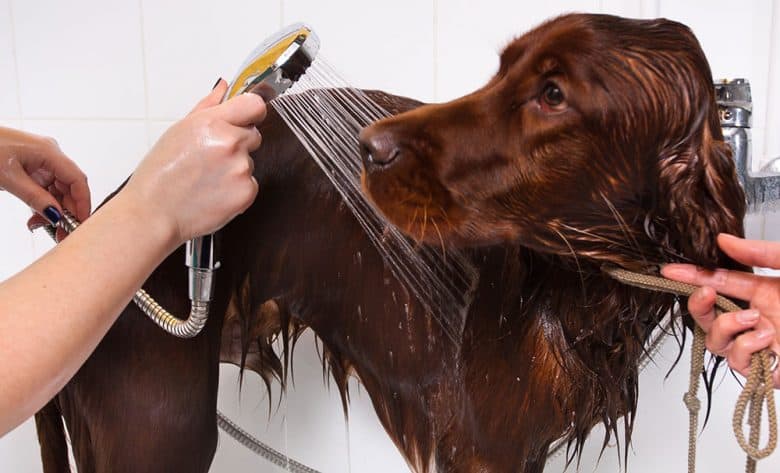
If you’re consistent with brushing and grooming, you won’t need to bathe your dog too often. You’re looking at a bath every few months.
Unless you plan on showing your dogs, then you may need to wash them more often.
When it comes to dental care, brush your dog’s teeth two to three times a week. Regular brushing will prevent a buildup of tartar and bacteria in the mouth.
As this breed does experience ear infections, it is wise to get in the habit of checking their ears weekly for infection. Symptoms include redness and nasty odor.
Clean their ears with gentle drops or an ear cleanser treatment to prevent infections.
Feeding: How much and how often
As with any animal, how much your dog eats will depend on several factors like build, weight, metabolism, exercise levels, age, and size.
However, we do recommend, as a general outline, Irish Setters receive two to three cups of high-quality dry food a day. Split this into two meals or even three meals.
A quick way of making sure your dog is a healthy weight is by looking and feeling. When you’re above him, looking down, you should see a defined waist.
If you put your hands on the dog with your fingers spread over the rib area, you should feel the ribs without using too much pressure. You shouldn’t be able to see them.
This breed is prone to bloating and can have a sensitive stomach. We recommend feeding your dog two to three smaller meals a day, not one large meal.
What health problems do Irish Setters have?

Red Setters are robust dogs and have a life expectancy of 12 and 15 years. With regular exercise and a good diet, you can contribute to their longevity. Regarding health, they are prone to several conditions.
Not all Setters experience these health problems, but you need to be aware of them if you want an Irish.
As mentioned, these dogs are prone to ear infections. They can also experience eye troubles in the form of Progressive Retinal Atrophy (PRA).
PRA is an eye disorder that can lead to blindness but is detectable years before the dog shows symptoms.
As with many large breeds, joint problems are a possibility. Here are three of the joint conditions an Irish may experience:
- Hip Dysplasia: This is a hereditary condition where the thigh bone and the hip joint do not fit well together. In later years, this can cause arthritis, lameness, and pain.
- Osteochondrosis Dissecans: An improper growth of joint cartilage, usually occurring in the elbows. It causes pain and stiffening in the affected joint.
- Panosteitis: The disease affects the bones in young dogs, especially in the limbs resulting in lameness in one or more legs due to bone inflammation.
Hypothyroidism, which affects the thyroid gland, can result in obesity, infertility, and low energy levels.
Canine Leukocyte is an abnormality affecting the Irish Setter breed and influences the dog’s ability to withstand infection.
The Irish dog can inherit epilepsy, which manifests with mild and severe seizures. Infectious diseases can also trigger this disorder.
Hypertrophic Osteodystrophy can lead to lameness. This disorder attributes to excessive amounts of calcium and protein in a dog’s diet and can be deadly.
We mentioned Gastric Torsion, a severe form of bloat, which can be life-threatening if left untreated. It can happen when a dog overeats at once or engages in strenuous exercise after eating.
Osteosarcomas may also occur in Irish Setters and other large breeds. It is a malignant bone tumor, which mimics human osteosarcoma.
By taking your dog for regular checkups and health screening, you can detect many of these issues and treat them before they become severe.
If you are buying an Irish Setter from a breeder, ask for the health clearances of the parents.
How much are Irish Setter puppies?

If you’re ready to make this canine your best friend, you can expect to spend around $800.
But with other factors to consider such as pedigree, breed lines, and gender, they can get more expensive, so the price range can reach $1,600 to $5,000 and up.
Irish Setters have litters of between eight to 12 puppies. However, there have been cases of dogs giving birth to 15-18 puppies. Many Irish puppies can end up in puppy farms or pet shops.
We encourage you to buy from a reputable breeder instead of a pet shop or puppy farm. This option increases the likelihood of getting a healthy dog and stops you from supporting unethical practices.
The Irish Red Setter is more active than other breeds. You may need to fork out more dog food to sustain them.
Additional costs may include grooming and any vet expenses as a result of the health complications described above.
Where to find Irish Setter breeders

Make sure you find a good breeder who will be upfront about the parent’s health. There are some reputable breeders listed with the Irish Setter Club of America.
Ask if the breed suffers from any common problems. If they deny it, walk away. If they don’t mention one or some of the mentioned conditions in the previous section, they’re being dishonest.
You can also check the AKC Marketplace for setter puppies.
Dog Rehoming and adoption
If you want to see Irish Setters for adoption, look at rescue organizations for the breed. There are benefits of adopting a full-grown setter dog.
You can easily see the dog’s temperament and personality and if it’s a good match for your environment.
- Irish Setter Rescue (New Jersey)
- Adopt a Pet
- IRWSAA (Marietta, Ohio)
Irish Setter mixes you’ll adore
As the Irish Setter has such a great temperament and beautiful coat, it’s not surprising that so many mixes emerged as a result. Let us take a look at five of them.
Golden Irish (Golden Retriever and Irish Setter mix)

The Golden Irish combines the beautiful coats, good looks, and affectionate personalities of the Irish Setter and Golden Retriever. You can expect a high-energy family dog.
Irish Doodle (Poodle and Irish Setter mix)

The Irish Setter Poodle mix is a hybrid between an Irish Setter and a Poodle, aka the Irish Doodle. The result is a cute, light-hearted, and intelligent dog.
Those with allergies may gravitate towards an Irish Setter Poodle as this dog tends to shed less than an Irish Setter. They get this non-shedding quality from their Poodle parents.
Lab Setter (Lab and Irish Setter mix)
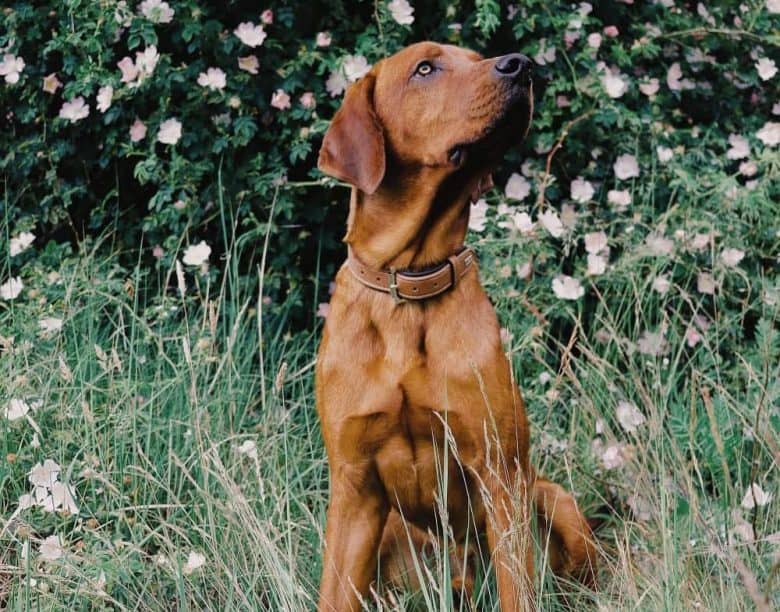
The Irish Setter Lab mix is a combination of two family-friendly dogs, the Irish Setter and Labrador.
You can expect lots of energy, affection, and playfulness from this cross, and you’ll need to take care of its grooming and companionship needs.
Irish Shepherd (German Shepherd and Irish Setter mix)

The German Shepherd Irish Setter mix is what happens when the German and Irish meet.
It will be a lucky packet in terms of temperament as you might get a pup with the seriousness of a German Shepherd or the Irish’s clown-like personality.
Border Collie and Irish Setter mix

The hybrid offspring of the Irish Setter and Border Collie is active, hardy, and popular with farmers across the world.
If you’re looking for a dog with great herding abilities and sheep management skills, this is the ideal dog for you.
Irish Setter compared to other breeds
The Red Setter Dog is often in comparison to other dogs in the setter family and sporting group. Below, we look at the similarities and differences between the Irish and English Setters and the Irish and the Golden Retriever.
English Setter VS Irish Setter
The first difference is noticeable; these two setters came from different lands of origin. However, both are gundogs and purebreds. AKC recognizes both breeds.
Size-wise, the English male can be heavier than the Irish, weighing in at 80 pounds (36 kg). The female English Setter can be smaller, weighing between 45 and 55 pounds (20 and 25 kg). The breeds are similar in height.

English Setters are famous for being Belton, which describes the different speckled patterns they have on their coats, ranging from the liver to lemon.
These dogs need less grooming attention than the Irish, so you can brush them once a week. They’re known as the gentlemen of the dog world, more mellow and mannered than the Irish.
Golden Retriever VS Irish Setter
Besides the differences in coat between these two lovable dogs, you might wonder what the difference is between them.

The Golden Retriever is not as tall as the Irish, standing between 21 and 24 inches (53 to 61 cm) tall. They also have a shorter lifespan – between 10 and 12 years. They also have golden coats, setting them apart from the Red Setters.
They have a similar temperament to Irish Setters as both breeds are friendly, loyal, and intelligent.
Both the Goldie and the Irish canines are adept at hunting and field trials. Both serve as therapy dogs. But, the Golden Retriever is also well-known for their work as guides for the blind.
Who should get an Irish Setter?

If you don’t live an active lifestyle, either get ready to change or don’t get an Irish Setter.
As mentioned many times, they have a high energy level and need their daily exercise. But, if you’re happy with this, you’ll find this dog to be easy to care for.
The Irish are a large breed, so smaller homes aren’t the best fit. They do best with a larger home and a sizable garden to frolic in.
In an apartment, you might end up tripping over them. Living by a park would be ideal as these setters love to bound around.
The Irish Setter is also perfect for a family. They can receive attention from multiple family members and are affectionate and loyal to their loved ones.
Take care if you have smaller children as they are enthusiastic about play. Read this post to find out more about getting a dog.
Feel free to comment and share your tales about these canine companions.
Further reading: Similar breeds to Irish Setter