The Caucasian Ovcharka is also known as the Caucasian Shepherd Dog and Caucasian Sheepdog. This huge dog was bred to protect herds from predators and guard properties from trespassers.
Despite its massive size and fearless attitude, this guardian dog is quite loving and loyal to his family.
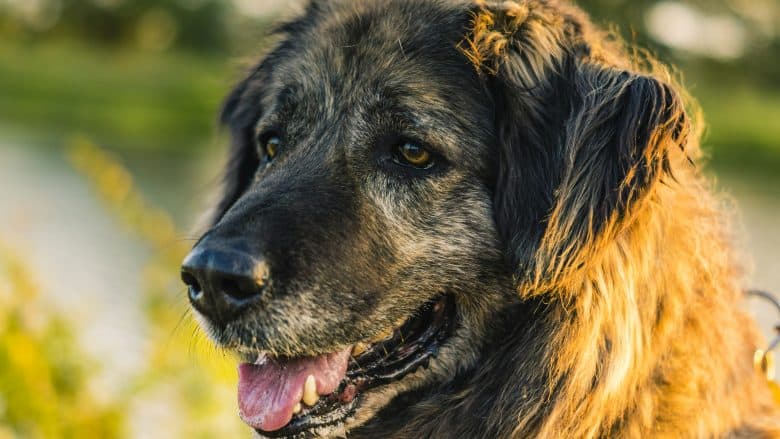
Read on to know what makes the Caucasian Shepherd the lifelong guardian and protector anyone could wish for.
Where did the Caucasian Ovcharka originate?
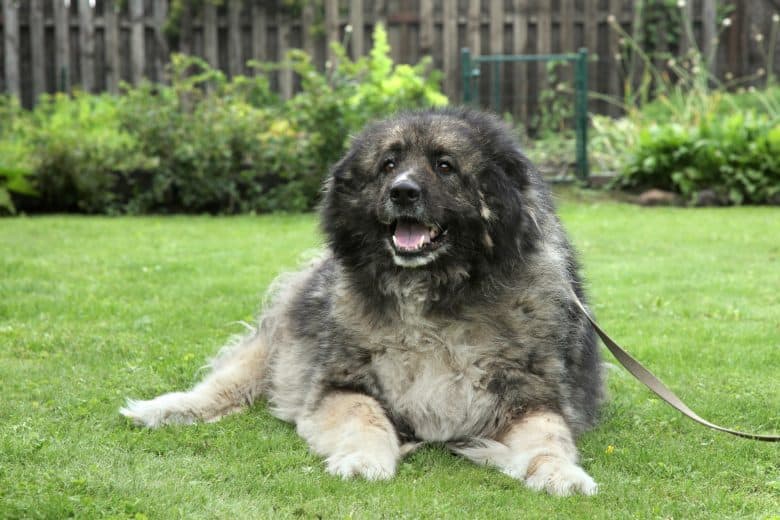
The Caucasian Ovcharka was developed in the Caucasus mountain range in Eastern Europe, where it got its name – “Caucasian.”
This large dog breed is popular in Russia and surrounding countries, such as Georgia, Armenia, and Azerbaijan. This is how it got its second name, “Ovtcharka,“ which means “sheepdog” in Russian.
While it is most commonly referred to as the Caucasian Ovcharka, it is also known as the Caucasian Mountain Dog, the Caucasian Shepherd Dog, Georgian Nagazi, and the Russian Bear Dog.
The Ovcharka is one of the most ancient breeds of Molosser dogs, but their origin is a bit of a mystery.
There are people who believe that they came from domesticated wolves, while others say they originate from Mastiffs of Asia and other breeds.
Many experts attest that the Ovcharka are descendants of sheepdogs that migrated from Tibet. But modern archaeological evidence suggests they date back to Mesopotamia and has been around for more than 2,000 years.
Wherever they came from, Caucasian Shepherd Dogs were the best dog companions to the shepherds of the Caucasus region for years.
They fearlessly guarded their owners and flocks of sheep from dangerous wildlife such as bears, jackals, and wolves. They were bred to be intimidating and strong while being resilient to cold weather and harsh conditions.
The first mention of this canine was in the first century BC. This dog was used in the army of the Armenian Tsar Tigran II.
The USSR selectively bred the breed in the 1920s, which likely led to the dog as we know it today. This is done mainly in their Georgian territory.
The United Kennel Club recognized the Caucasian Ovcharka as a member of its Guardian Dog Group since 1995.
On the other hand, the American Kennel Club recognized the breed as part of its Foundation Stock Service since 1996.
The other organizations that recognize this breed are as follows:
- NKC = National Kennel Club
- NAPR = North American Purebred Registry, Inc.
- FCI = Fédération Cynologique Internationale
- DRA = Dog Registry of America, Inc.
- CKC = Continental Kennel Club
- APRI = American Pet Registry, Inc.
- AKC = American Kennel Club
- ACR = American Canine Registry
- ACA = American Canine Association Inc.
What does a Caucasian Ovcharka look like?
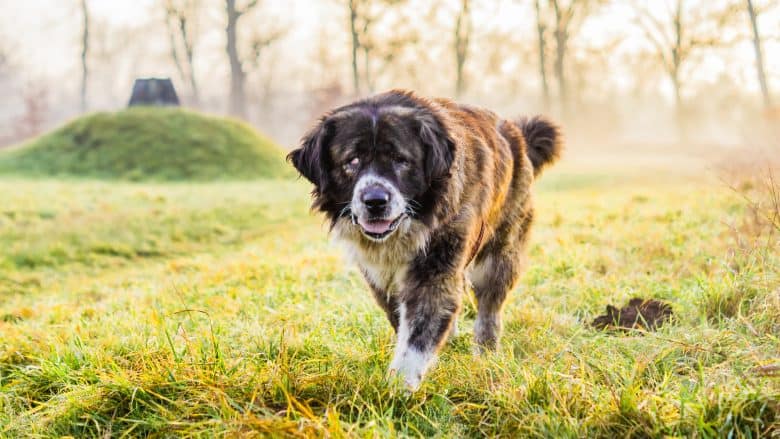
The Caucasian Ovcharka ears are heavily covered with hair for insulation. Its nose is black and prominent with large nostrils. They have moderate deep-set, dark eyes.
In its native country, people still crop the Caucasian Ovtcharka’s ears short. Although in other countries, this practice is prohibited.
The Caucasian Shepherd’s forelimbs are straight, long, and densely boned. Its hips are slightly raised with a tail covered with long, heavy hair.
Its paws are large and heavy, with fur between its toes to providing excellent insulation and protection against harsh weather conditions.
Is the Caucasian Shepherd the largest dog?
Although classified as a large dog breed, the Caucasian Shepherd is NOT the largest dog there is. According to AKC standards, the Great Dane still holds the tallest dog and the English Mastiff as the heaviest dog breed.
Caucasian Shepherd dogs can weigh anywhere from 99-200 pounds (45-90 kgs). They stand anywhere from 23-30 inches (58-76 cm).
Male Caucasian Ovcharkas are bigger than females, weighing around 110 to 200 pounds, though they may be slightly shorter. They reach their full adult size at the age of 12-14 months.
Like any large dog breed, Ovcharkas do best in a larger home where they have plenty of room to stretch their legs. Their large size just doesn’t make them appropriate for apartments. They need room.
What type of coat hair do Caucasian Sheepdogs have?
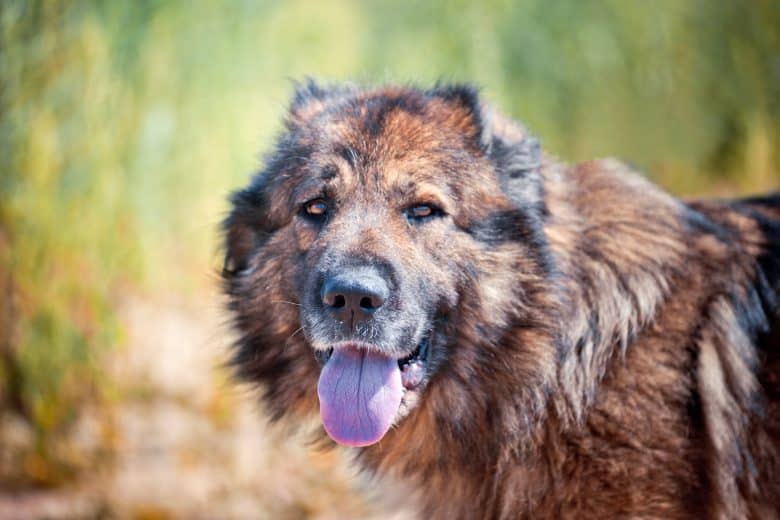
The Caucasian Sheepdogs’ coat length can vary from the long, intermediate, or short coats. They also have a thick double coat, which protects them from the weather.
Their undercoat is soft and fine, while their outer coat tends to be much coarser. Their thick coat is very straight and well-developed.
According to the Federation Cynologique Internationale or FCI, the total length of the Caucasian Sheepdog’s hair is no less than 5 cm, even for dogs with short coats.
Their head and forelegs typically have shorter fur, but it is significantly thicker. Dogs with long coats tend to have a “mane.”
Caucasian Sheepdogs can come in a huge array of colors. Agouti and white are the most common colors of this breed, but these colors are also possible:
- Yellow
- Tan
- Fawn
- Cream
- Rust
- Red
- Grizzle
- Black
- Gray
- Black and Gray
On top of their range of coloration, these canines also have various markings such as sable, piebald, brindle markings, and white markings. Dark “masks” and spotted colors are possible as well.
Are Caucasian Ovcharka good family dogs?
Yes and no. To their core, Caucasian Ovcharkas are protective. They were bred to be guard dogs, and their guarding instincts are still very evident today. They are very loyal to their families and bond strongly with their owners.
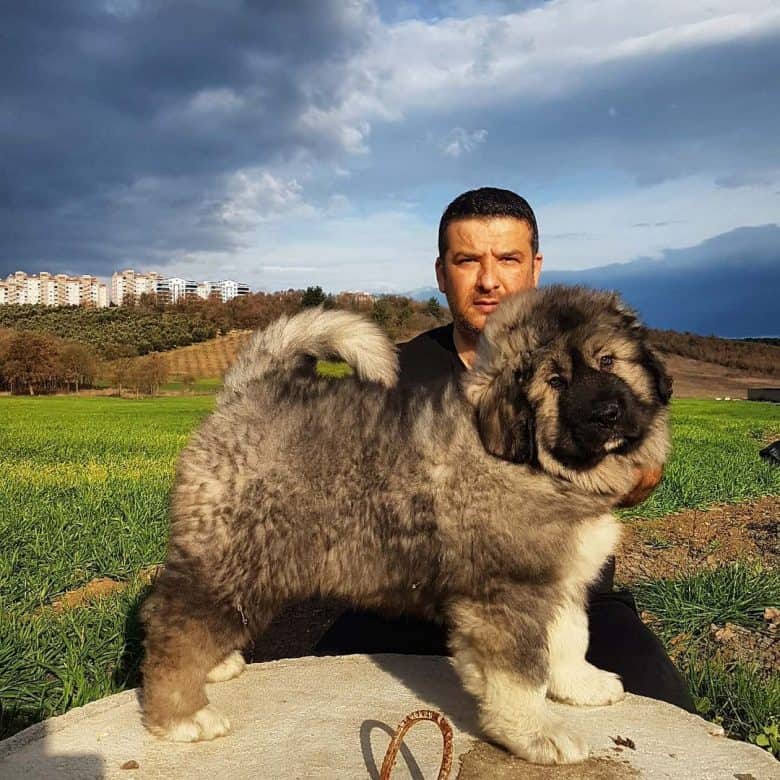
Because of their natural herding instinct, Ovcharkas should not be left alone with children as their ‘play’ can become too rough and pushy towards small children.
In some cases, they can be one-person dogs, meaning they bond strongly to one person and pretty much ignore everyone else. They may not bond easily with all family members.
Is the Caucasian Ovcharka dangerous?
Yes. Caucasian Ovcharkas can be dangerous when not trained properly. They have an innate distrust of strangers and can be violent towards them. They were bred for guarding purposes, after all.
Early socialization and training are necessary to keep Ovcharkas accepting of strangers, though they will never be as friendly as other dog breeds.
When not guarding, these dogs are quite laidback. They can be sweet and affectionate with their family members.
With that said, these canines are also fairly independent. Ovcharkas are intelligents dogs and are not people-pleasers, therefore are a bit difficult to train. They require a lot of patience and regular training.
These dogs do not have separation anxiety. They are a guardian breed and are used to spend long hours by themselves guarding their people.
How to take care of your Caucasian Ovcharka
Ovcharkas are quite high-maintenance. However, they are not necessarily difficult to take care of. They just require more maintenance in general because of their large size.
As you might imagine, a simple brushing session can take a very long time with these massive canines.
These dogs are wonderful in any weather. They were built to handle the harsh climate of the mountains, so they can do well in even extreme weather.
Exercising your Caucasian Ovcharka
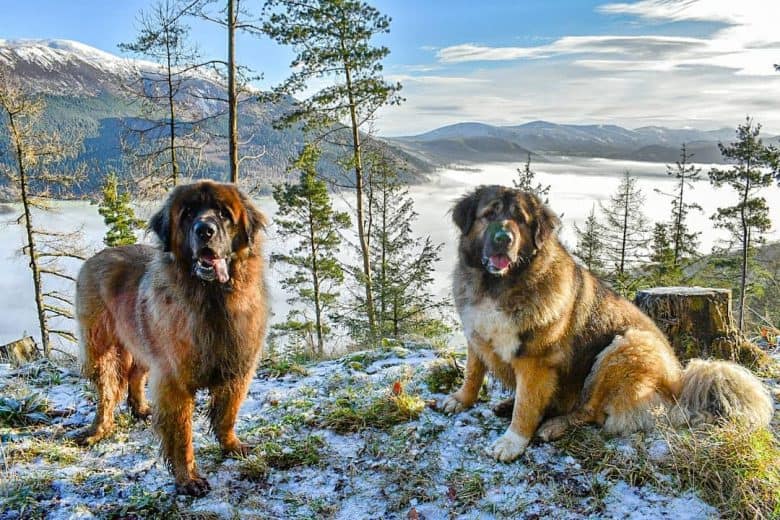
Caucasian Ovcharkas are low-energy dogs with very high endurance. They don’t exactly need much exercise. They do best with a large backyard that they can roam in as they please.
Don’t expect much running around, though. Instead, these canines are more of a roaming breed.
They should always be kept contained or on a leash when they exercise because they tend to wander off. They don’t do great with recalls for this reason. They are just as likely to come back to you as they are to keep wandering.
With that said, you should take them on walks every day. Your walks don’t have to be extremely long, as these dogs are usually satisfied with short walks.
They are suitable for hiking and similar activities. If you’re looking for a dog to go hiking with you, they may be a solid option.
Do Caucasian Ovcharka Dogs shed?
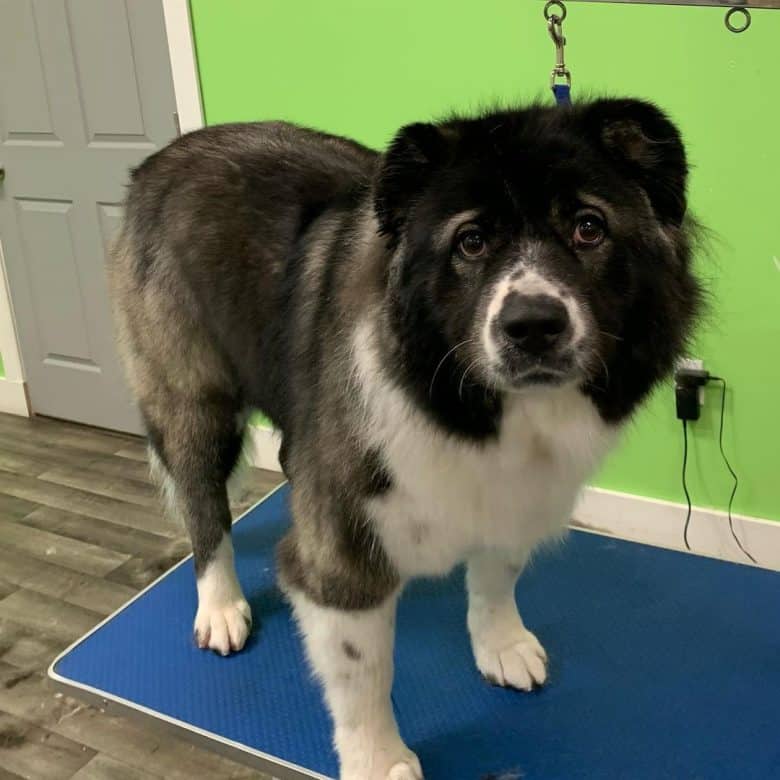
Caucasian Ovcharkas are heavy shedders. They have long coats that will need to be groomed daily. Their fur will be prone to matting, so you need to brush it out daily to prevent this.
They also go through an annual shedding known as “blowing coat”. It is essential to brush their coat consistently and bathe them at least twice a week during this time.
Luckily, these dogs are pretty chill – even when it comes to grooming sessions. They will happily sit there and be brushed. This is especially true if you brush them from the time they are puppies.
They have very fast-growing nails that will need to be trimmed regularly. You can do this with nail clippers or with a grinder. If you don’t do this, they can overgrow, which will cause splitting and cracking.
You will need to check their ears regularly for a build-up of wax and debris. This can cause ear infections. They will also need their teeth to be brushed regularly, like all dogs.
Another thing to note is that Ovcharkas have a strong tendency to drool. You will need a towel or wipes on hand for those moments.
Otherwise, these dogs don’t need much grooming. They should never be clipped as this can mess with their coat. They are very good at regulating their body temperature. Do not let their excessively long coat fool you.
How much should a Caucasian Ovcharka eat in a day?
In general, Caucasian Ovcharka dogs can eat around 4 cups. You should split this into multiple meals.
Caucasian Ovcharka puppies require special nutrition because they grow so quickly. Regular puppy food isn’t going to cut it. Instead, you need puppy food that is designed for giant-size dogs.
Usually, these dog foods are very high in protein and fat, as that is precisely what these dogs need to grow healthy.
They also usually contain vitamins and minerals for joint support, something you need to worry about when these dogs are so big.
You can select food for giant-sized dogs, but this is not completely necessary. Once these dogs are done growing, any high-quality adult food is suitable.
What health problems does Caucasian Ovcharkas have?
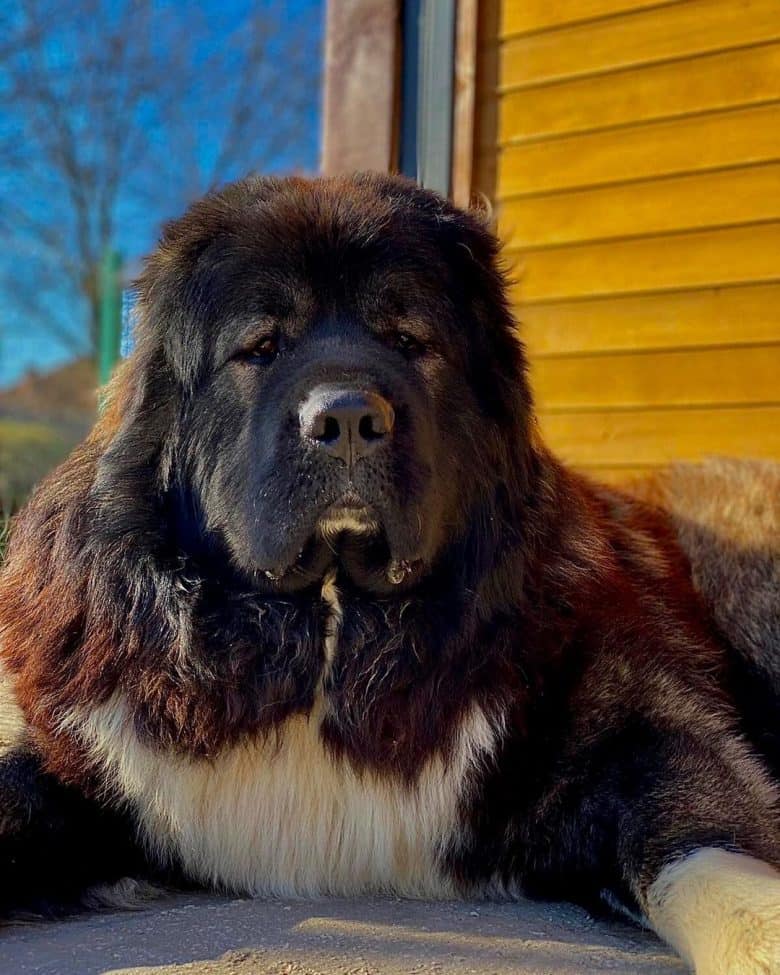
Ovcharkas are generally healthy. They were bred for function, not necessarily form. Therefore, many breeders prioritized health over aesthetic traits, which led to these dogs being very healthy.
They are prone to some health issues, though. For instance, some are prone to joint issues and hip dysplasia because of their excessive weight. These dogs need to avoid obesity for this reason. It can just make these problems worse.
They are also susceptible to cataracts, though these usually don’t occur until later. This is a genetic disease. It can be affected by environmental factors, however.
These are the two main diseases that these dogs are prone to. However, heart problems are somewhat common to this large dog breed.
Health screenings are important for breeding pairs. All breeding dogs should have their hips evaluated by the Orthopedic Foundation for Animals, and the Canine Eye Registration Foundation should clear their eyes.
Ask any breeder for these bits of information before purchasing a puppy.
Caucasian Ovcharka dogs usually have a lifespan of 10 to 12 years.
Can you own a Caucasian Ovcharka in the US?
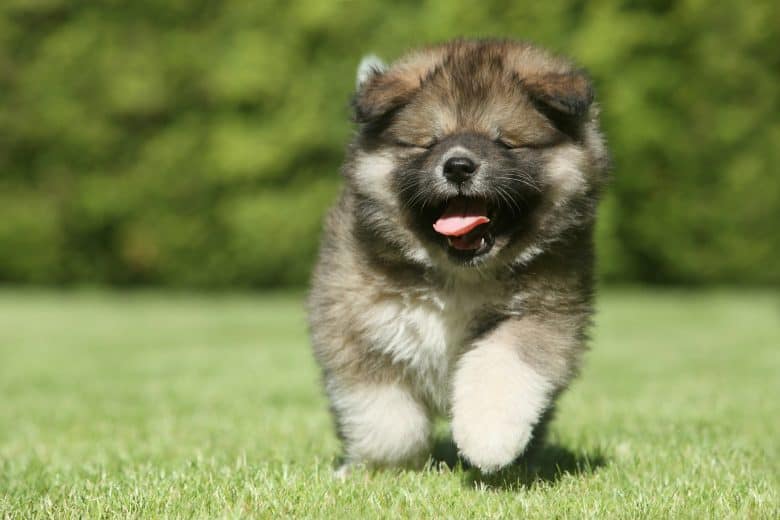
Yes, you can own Ovcharkas in the US. There are breeders in the US, though these dogs are a bit rarer than other breeds. It is not incredibly difficult to find a breeder, luckily.
These dogs usually have 5-10 puppies. Most Ovcharka puppies cost between $1500 to $3000 a dog. This is expensive, even when compared to other dogs.
However, it is largely because of their size. They are huge, so they cost more to breed. Lactating females need more food, and they need larger birthing areas.
Caucasian Ovcharka Breeders
The best place to find Caucasian Ovcharka breeders is through the breeder registry from the Caucasian Shepherd Club of America. Another place to find Caucasian Ovcharka puppies is on AKC Marketplace.
Adopting from a Caucasian Ovcharka rescue or shelter
ThunderHawk Caucasian Shepherd has rescue dogs from time to time, though, this is rare. Caucasian Ovcharka Rescue Rehome is another rescue organization that focuses specifically on these dogs. They do not always have dogs available, either.
You may also want to check Esquire Caucasians National Caucasian Mountain Dog/Ovcharka Rescue. They have been rehoming since 1990.
Curious about Caucasian Ovcharka mixes
There aren’t too many common mixes with Caucasian Ovcharka. Because they are rarer, so there are fewer opportunities for them to breed with others. However, there are a few mixed breeds that are decently common.
Caucasian Ovcharka Husky Mix (Caucasian Husky)
Caucasian Huskies are extremely fluffy. They tend to be very stubborn with toned-down guarding instincts. They are still protective, though. You will need to brush them constantly, as they can get matted very easily.
The Caucasian Ovcharka Husky Mix can be very friendly among others they know. They also tend to bond very closely with their family members.
Caucasian Ovcharka Staffordshire Bull Terrier Mix
The Caucasian Ovcharka mixed with Staffordshire Bull Terrier is decently common. They have different coats length, though many of them do tend to have very short coats in general.
These dogs adore their children and bond deeply with them. They are very loyal and strong.
However, they can be quite energetic. They tend to be very excitable so that they can knock children down accidentally. Otherwise, they are great family pets.
Is the Caucasian Ovcharka the breed for you?
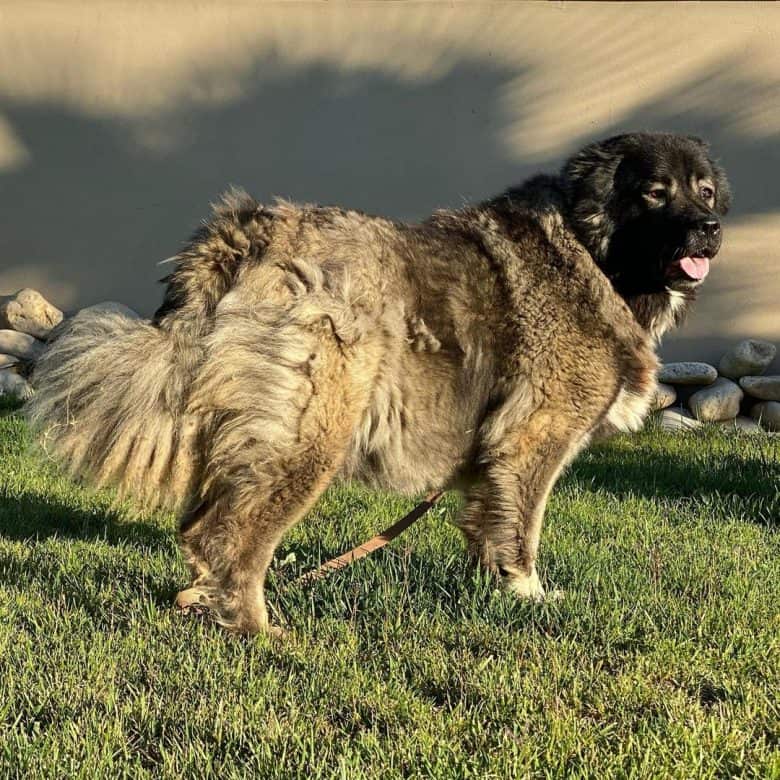
For dog owners who want a guarding dog, you can’t go wrong with these canines. Caucasian Ovcharkas are extremely protective and huge, which makes them suitable as watchdogs.
They bond very deeply with their people as well, though they can be one-person dogs on occasions.
However, they are not recommended for novice dog owners or families with small children. They do best in active families with big homes.
They don’t have an incredibly high energy level, but they do need to exercise every day. They also require regular grooming.
Do you own an Ovcharka? We’d love to hear more about them! Leave a comment below to share with us.
Further Reading: Here are more breeds that you might love
- Tibetan Mastiff
- Pyrenean Mastiff
- Tornjak
- American Bulldog Pitbull
Reference

Cess is the Head of Content Writing at K9 Web and a passionate dog care expert with over 5 years of experience in the Pet Industry. With a background in animal science, dog training, and behavior consulting, her hands-on experience and extensive knowledge make her a trusted source for dog owners.
When not writing or leading the K9 Web content team, Cess can be found volunteering at local shelters and participating in dog-related events.