Also known as Pems or PWCs, Pembroke Welsh Corgis are one of two types of Corgi. Known for their adorable looks with short legs and big ears, Pembroke Welsh Corgis are loved by many the world over.
This includes being a favorite of the Queen of England! Before you buy your own Pembroke Welsh Corgi Prince or Princess, keep reading to discover everything you need to know about this dog.
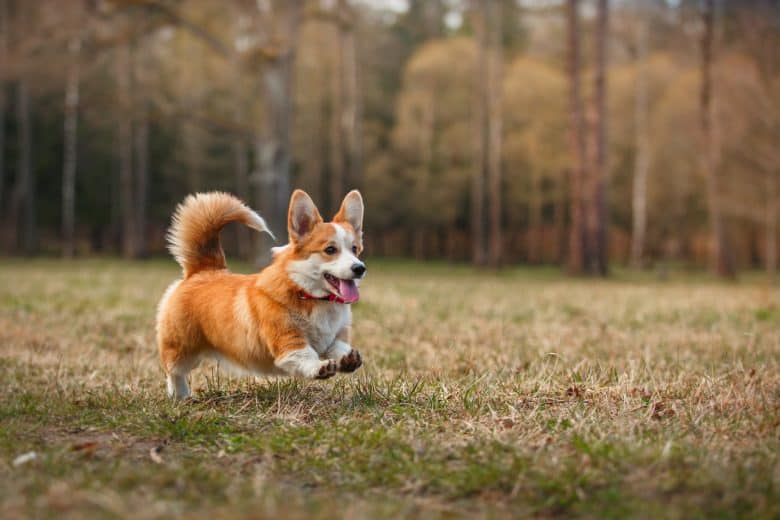
Where did the Pembroke Welsh Corgi originate?
The word Corgi is Celtic for dog or dwarf dog.
Corgis are thought to have been descended from Spitz-type dogs such as Vallhunds, Swedish cattle dogs, and Siberian Huskies.
Some other dogs linked to creating the Pembroke Welsh Corgi as we know it today include the Pomeranian, Chow Chow, Samoyed, Schipperke, and Norwegian Elkhound.
They were brought to Wales either by Flemish weavers in the 12th century or Vikings in the 9th and 10th centuries.
Although much of these breeds early history is uncertain, Welsh cattle dogs have been mentioned in literature dating back to the 11th century.
Pembroke Welsh Corgis get their name from Pembrokeshire in Wales, where they originated and were used as working dogs, herding cattle, sheep, and even horses and ponies.
Pembroke Welsh Corgis excelled at this herding task because of their small stature and ability to quickly duck under the hooves of cattle and sheep, nipping at them to move them along.
Being small, these dogs were also easy to keep and maintain, and their docked tails meant they were exempt from taxes as they were recognized as working dogs.
Although, a Welsh legend gives rise to the belief that these dogs came from the fairies.
As the tale goes, children in Wales thought the dogs initially to be foxes. However, on closer examination, they discovered fairy saddle-like markings on the dog’s back and shoulders.
It was so determined that the fairies used the dogs to ride into battle and gifted them to the children.
Pembroke Welsh Corgis were first shown in the United States in 1936.
And as the smallest dog in the American Kennel Club’s herding group, the Pembroke Welsh Corgi rose quickly through the ranks to become one of the most popular dog breeds in the 1960s.
Today the Pembroke Welsh Corgi still ranks in the top twenty in terms of popularity.
This Corgi breed is also very popular with Queen Elizabeth II of England. The Queen received her first Corgi, a puppy named Rozavel Golden Eagle, also known as Dookie, from her father, King George VI, in 1933.
Since that day, Corgis has always had a prime place at Buckingham Palace with the Queen, even breeding her beloved dogs.
What does a Pembroke Welsh Corgi look like?
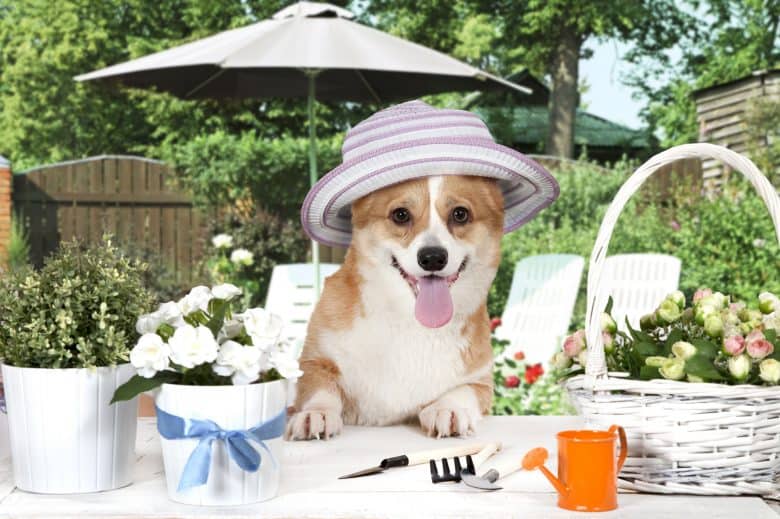
It is easy to see why those Welsh children of old might have mistaken a Corgi for a fox. This breed’s heads are wedge-shaped like a fox with large upright ears tapering to a rounded point.
However, unlike foxes, Pembroke Welsh Corgis have large oval-shaped expressive eyes that are brown. Their eyes are framed by a black rim and a matching black nose.
Pembroke Welsh Corgis are known as achondroplastic dogs, a dwarf breed with stubby legs.
Although they are not longer than most dogs, they appear long because of their short, straight legs and low-slung appearance.
They have a level topline with oval feet, and the dewclaws are typically removed.
Pembroke Welsh Corgis do not have long tails and are sometimes born with hardly any tail at all.
Sometimes breeders will dock the tails of this dog breed, and the AKC requires tails to be docked to no longer than two inches.
Docking, however, is against many countries’ laws and is not a requirement to show these dogs in the United Kingdom.
How big do Pembroke Welsh corgis get?
A small dog breed, sometimes even fitting into the toy category, this dog breed stands between 10 and 12 inches (25 and 30 cm) in height.
Females weigh up to 28 pounds (13 kg) and males generally no more than 30 pounds (14 kg) in weight.
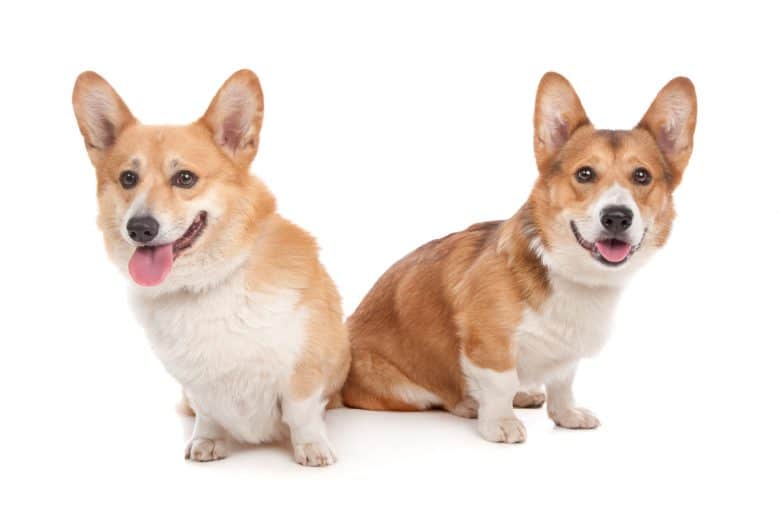
While there isn’t such a thing as a Miniature Welsh Corgi, sometimes the Pembroke can be mistaken for one because of their smaller size compared to the Cardigan Welsh Corgi breed.
Pembroke Welsh Corgis will reach their full height at about a year old but can get a bit bigger and heavier until around two years old.
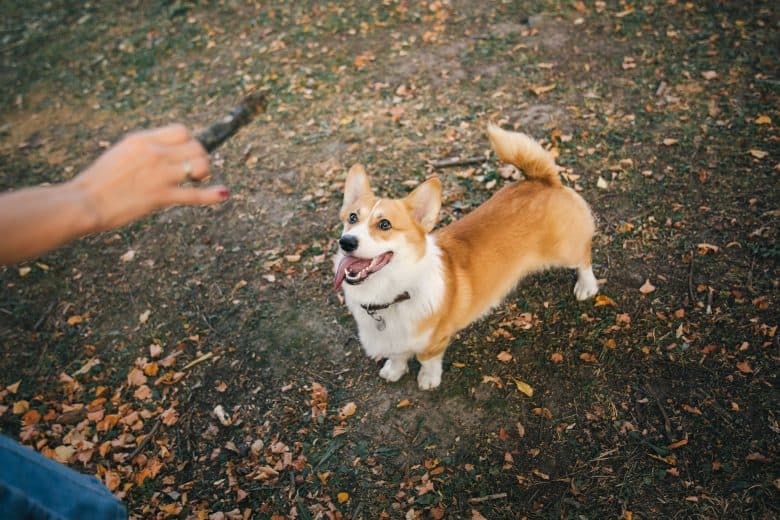
Check out this small, adorable Pembroke Welsh Corgi puppy playing fetch with his owner:
What kind of coat do Corgis have?
The Pembroke Welsh Corgi coat is a double weather-resistant coat of medium-length, featuring a softer undercoat and a coarse waterproof outer coat that is slightly longer.
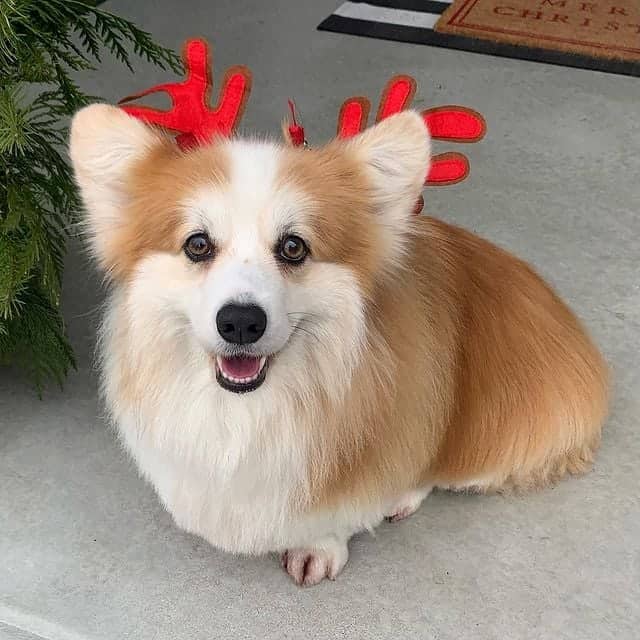
Some incredibly fluffy Pembrokes, also sometimes called longhaired Corgis, will have additional feathering on the chest, feet, and ears.
Fluffy Corgis do not fit into the AKC breed standards and cannot be shown as a result.
Pembroke Welsh Corgis can come in a few colors: red, fawn, black and tan, sable or tri-colored, red, black, and tan. The coat will sometimes have white markings, typically on the legs, neck, belly, face, and chest.
Pembroke Welsh Corgis can also have a narrow blaze on their heads, and many have the fairy saddle feature on their backs.
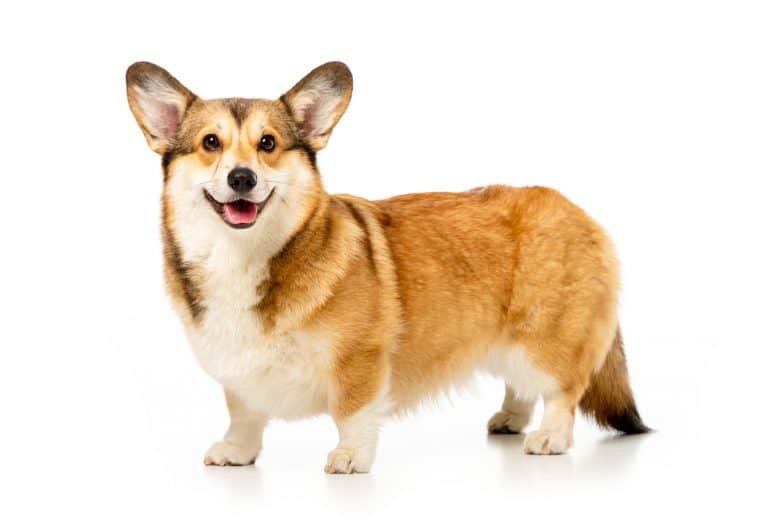
The fairy saddle marking extends down from the shoulders and back and is usually accompanied by a differentiation in the hair’s thickness and a change in coat direction.
Are Pembroke Welsh Corgis good family dogs?
With a good affinity for children, the affectionate Pembroke Welsh Corgi will do well in a playful family environment.
Do be warned as an athletic breed with a strong herding background, without proper training. Corgis tend to nip at the ankles, particularly when around small kids.
These intelligent, sensitive dogs love to be around their family and adapt well to a range of homes, without being too needy.
Often having a giant dog’s traits in a small package, this robust and muscular breed loves speed, is independent, and performs new tasks with ease, which they do with a fearless attitude!
Although this forceful and animated personality does mean that your Pembroke will never want to be left out of what is happening around him.
With firm leadership, these dogs will be fiercely loyal and willing to do whatever you ask.

Do Pembroke Welsh Corgis bark a lot?
Corgis make good watchdogs because of their big dog alarm bark. Their acute senses will cause them to be wary of strangers and lead to them barking at anything they find a threat.
However, due to this, vocality training is vital, or you could end up with a dog that simply barks at anything, all the time!
Your Pembroke Welsh Corgis love to be a part of the family and don’t like to be left alone outside. If left alone too long or without proper training, Corgis can be destructive, digging or chewing or barking unnecessarily.

Can Corgis be aggressive?
Although not aggressive and generally good with kids and other pets, early training and socialization are essential.
Also, you may find your Pembroke Welsh Corgi to be okay around pets in your household but wary of strange dogs.
Their territorial, herding instincts may cause them to chase or bark at dogs they deem intruders.
Although an independent breed, Pembroke Welsh Corgis are willing and eager to learn and respond well to training. For this smart, sensitive breed, reward-based training will yield the best results.
Corgis can also tend to be stubborn, especially when it comes to potty trainability, and in this instance, crate training may be necessary.
Human owners need to have a strong hand and ensure dominance from a young age.
By showing a consistently firm but loving and calm approach to training, Pembroke Welsh Corgis are less likely to develop some of the problematic overprotective behaviors for which this breed can be known.
Training is also necessary to ensure that the Corgi’s inbuilt herding instincts do not come into play, causing that annoying herding and nipping habit where children and other pets are concerned.
An untrained Corgi can also be manipulative and stubborn, thinking he is in charge of the household.

Are Pembroke Welsh Corgis high maintenance?
Pembroke Welsh Corgis are hardy dogs that don’t require too much maintenance. The one thing to be aware of with this breed is to avoid weather extremes.
Although their water-resistant coats do well in most weather conditions and generally do not need extra layers of insulation in the form of a doggy jersey, extreme heat or cold should be avoided.
Also, be sure to always leave your Corgi with enough fresh water and a shady area where they can escape the sun.

Exercising your Pembroke Welsh Corgi
Pembroke Welsh Corgis have quite a bit of energy for a dog of their size and will need a moderate amount of daily exercise, from walks to play sessions.
Despite their squat appearance, you will be surprised to discover just how quick and nimble the Pembroke Welsh Corgi is!
This breed will do well on a long walk or even a slow jog, but their short legs prevent them from hiking or running alongside a bicycle.
With plenty of stamina, this breed of dog requires at least one hour of exercise each day.
When walking your Pembroke Welsh Corgi, always be sure to keep them on a lead and make them walk alongside you, so they know who is in charge.
This intelligent breed is happiest when they have a job to do and will love activities such as obedience training, agility, or herding and tracking.
With a smooth movement with good reach, drive, and skill, the Pembroke Welsh Corgi excels at these types of activities.
Are Corgis hypoallergenic?
The Pembroke Welsh Corgi does shed a fair bit, especially with the seasons changing in spring and fall; it is not considered hypoallergenic and a good dog for people with allergies.
To keep their shedding under control, you will need to groom your Corgi daily.
A daily brush with a comb and slicker brush will help to remove the shed hair and prevent your home from becoming covered in Corgi hair, while a rake will assist in stripping the undercoat.
Bathing will also help loosen up these dead hairs and ensure your dog is totally dry before you start brushing.
In addition to regular brushing, also be sure to check your Corgi’s large ears regularly for any debris or build-up and trim their nails at least twice a month.
Brushing your dog’s teeth is also an essential part of the grooming ritual and should be done at least once a week.
How much should I feed my Pembroke Welsh Corgi?
The recommended daily amount of dog food that you should feed your Pembroke Welsh Corgi is between three quarters to one and a half cups of high-quality dry kibbles split into two meals to sustain their energy levels.
Corgis are particularly prone to obesity, so be sure to watch your dog’s daily food intake and weight. This includes giving treats, which although help with training, can lead to your dog overeating.
Also, be sure not to leave food out throughout the day as these dogs will simply help themselves without being aware of their limits.
Pembroke Welsh Corgi health issues
A relatively healthy breed Pembroke Welsh Corgis have a life expectancy of between 12 and 13 years.
One common health condition that can affect your dog and cause joint problems is elbow and hip dysplasia.
The National Breed Club does recommend a hip evaluation is done by the Orthopedic Foundation for Animals (OFA). Pembroke Welsh Corgi puppies should score a fair or better in this test.
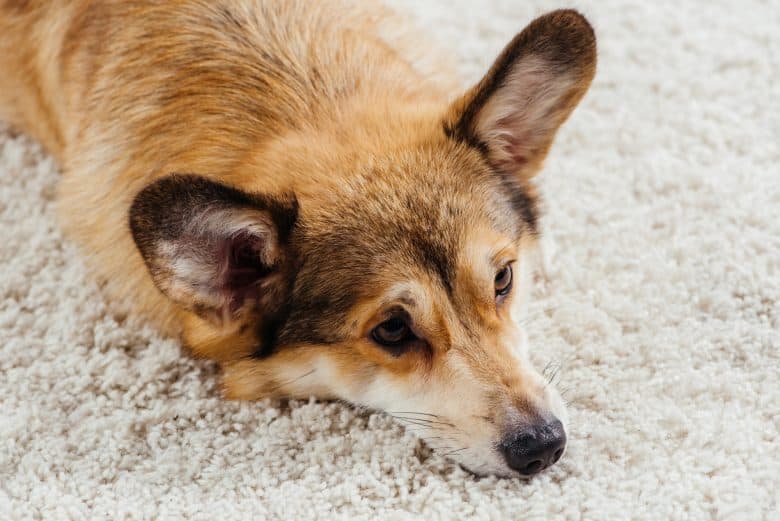
Other diseases that affect mobility in this breed are Degenerative Myelopathy, a progressive spinal cord disease, and intervertebral disc disease.
Pembroke Welsh Corgis are known as chondrodysplastic dogs, which means that they tend to have back problems due to slightly bowed limbs.
Because of their susceptibility to mobility issues and fractures and back issues, Corgis should also not be allowed to jump up on or down from couches, other furniture, or cars.
If you want your dog around you at all times, you may need to invest in stairs or a ramp. Back issues also are more common in obese dogs, so the diet should be carefully observed.
Another test recommended by the National Breed Club is an Ophthalmologist Evaluation from the Canine Eye Registry Foundation (CERF).
In this test, dogs are tested for any possible eye disorders or conditions such as cataracts, glaucoma, and Progressive Retinal Atrophy (PRA).
The Auburn University also provides health checks for thrombopathia. This is a platelet disorder that is inherited and can lead to prolonged bleeding in your dog.
Other health problems to look out for include the bleeding disorder, von Willebrand’s disease, hypothyroidism, which can lead to weight gain and thinning of the coat.
Also, look out for Epilepsy, Cutaneous Asthenia, a skin disorder, and the genetic ailment Cystinuria which affects the bladder and urination.
How much are Pembroke Welsh Corgi puppies?

Pembroke Welsh Corgi vary in price from around $1,000 to $2,200. This high price is due to these little dogs’ popularity, and the numerous health checks typically included when purchasing a puppy.
Also, be sure to take in additional factors that will influence the cost of your Pembroke Welsh Corgi puppy, such as food, bowls, pets, leads, vaccinations, and so on.
Pembroke Welsh Corgis typically have about six or seven puppies per litter, and it is not uncommon for these dogs to need cesareans due to their small size.
These difficulties in birthing also lead to the expensive cost of Pembroke Welsh Corgi puppies.
Pembroke Welsh Corgi breeders
If you are thinking about buying a Pembroke Welsh Corgi from purebred parents, make sure that your dog comes with all the necessary health checks mentioned earlier.
Also, be sure to do a home check on your breeder so that you can ensure the parent dogs are well cared for, and the puppies have been brought up in a healthy environment.
Always be wary of Pembroke Welsh Corgis that are too cheap as this is a red flag for puppy farms or mills.
An excellent place to start your search for a Pembroke Welsh Corgi puppy is on the Pembroke Welsh Corgi Club of America, where a list of reputable breeders in different locations can be found.
Here are some AKC registered breeders to get you started on your search for the perfect Pembroke Welsh Corgi puppy to call your own:
- Thomas Acres (Staunton, Illinois) – thomasacres.com
- F&M Corgi’s (Mulberry, KS) – www.fmcorgi.com
Rescue a Pembroke Welsh Corgi
Even though Pembroke Welsh Corgis are purebred dogs, you might be lucky enough to find one of these dogs, particularly adult or older Corgis, looking for a home at a Corgi specific shelter or rescue organization.
Here are some such rescue organizations to start your search:
- East Coast Corgi Rescue, Washington DC – eastcoastcorgirescue.org
- Southeast Corgi Rescue, NC, SC, and GA – southeastcorgirescue.com
- Mayflower Pembroke Welsh Corgi Club, – mayflowercorgiclub.org
Cardigan Welsh Corgi vs Pembroke Welsh Corgi
Did you know there are two types of Welsh Corgis, namely Pembroke Welsh Corgis and Cardigan Welsh Corgis?
Although recognized as a purebred in the 1920s and showed for the first time in 1925, up until 1934, Corgis were recognized as one breed by the United Kennel Club.
In 1934, both the United Kennel Club and American Kennel Club recognized the two different Corgi types as separate breeds.
Today many breeders believe the two breeds developed separately, and the Cardigan ancestry includes breeds like the Dachshund, which shows no links to the Pembroke.
Some think that the older Cardigan breed could even have been used in the development of the Pembroke.
Although similar in stature and personality, Pembroke Welsh Corgis are slightly smaller and lighter than their Cardigan counterparts.
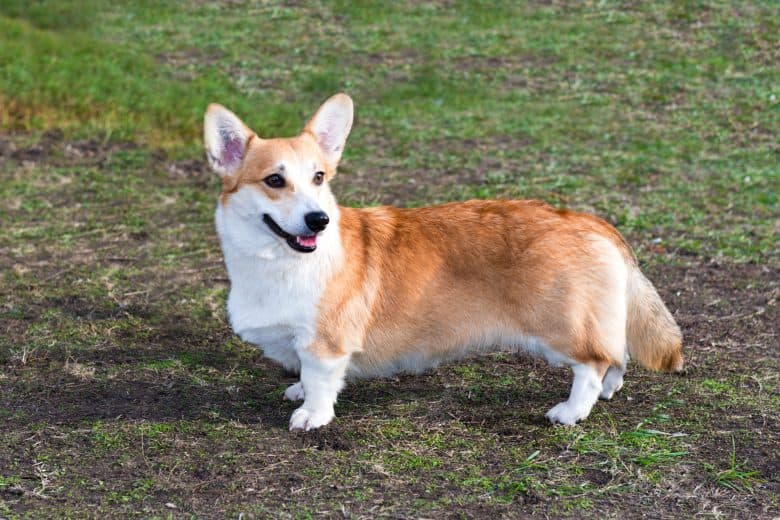
Also, the Pembroke Welsh Corgi is not as long as their Cardigan cousins with straighter legs and a more triangular head.
These two breeds’ ears are also noticeably different; Pembroke Welsh Corgis have smaller pointed upright ears while Cardigan Welsh Corgis have more rounded ears.
However, the main difference is with the tails; Pembroke Welsh Corgis have naturally short tails, although cropping is not uncommon.
Cardigan Welsh Corgis will always have a long tail, and tails’ docking is prohibited in the Cardigans’ breed standard.
Pembroke Welsh Corgi mixes
There are various Corgi cross breeds out there that combine the adorable, sweet nature of the Corgi with some larger, more energetic breeds.
Some of the most popular mixes include:
- Corgi Husky Mix, aka the Horgi
- Corgi German Shepherd Mix
- Corgi Alaskan Malamute Mix
- Australian Shepherd Corgi mix, aka the Auggie or Corgherd
Should you or should you not get a Pembroke Welsh Corgi dog?

Pembroke Welsh Corgis are loyal and loving, making the perfect family pet. However, you need to be willing to give this spunky dog the training it needs and look after its high energy demands.
If you just want a cute fluffy bundle that will cuddle all day and not require maintenance, this is not the breed for you.
Let us know about your own Pembroke Welsh Corgi in the comments.