The most popular breed of dog in Japan, the Shiba Inu, is an adorable dog with a bold, beautiful personality to match. Are you thinking of getting a Shiba Inu to call your own?
Keep reading to discover all you need to know, from their history as an ancient Japanese hunting dog to understanding their fiery personality and learning how to care for these dogs.
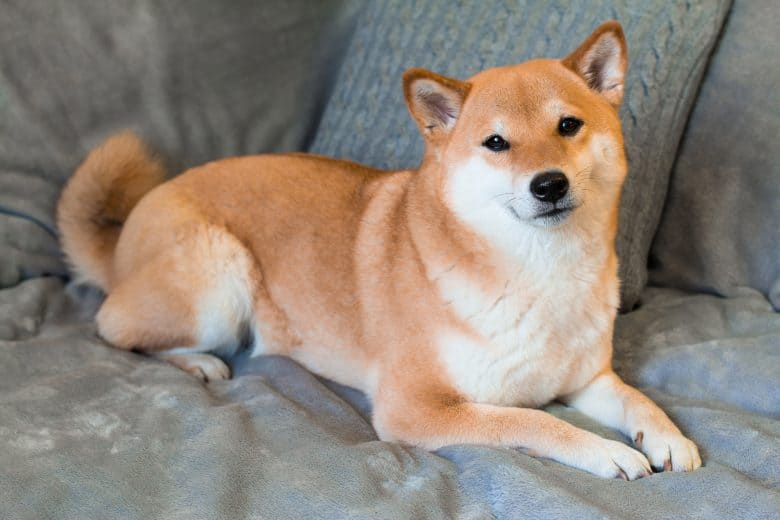
The Shiba Inu at a Glance
We’ve put together a table below to give you a quick overview of the Shiba Inu.
| Breed Summary | Shiba Inu Quick Facts |
| Group | Non-Sporting Group |
| Breed Purpose | Hunting Dog; Companion Dog |
| Breed Size | Medium |
| Height | 13.5 to 16.5 inches (34 to 43 cm) |
| Weight | 17 to 23 pounds (8 to 10 kg) |
| Coat Type | Double Coat, Short, Thick |
| Shedding | Moderate |
| Most Popular Coat Colors | Red |
| Lifespan | 13 to 16 years |
| Temperament | Confident, Fearless, Alert |
| Energy | Moderate |
| Exercise Needs | 1 hour per day |
| Average Price | $1,400 to $2,200 |
Where did the Shiba Inu originate?
The Shiba Inu is the smallest of Japan’s six ancient spitz breeds. The other five include the medium-sized Kai, Kishu, Shikoku, and Hokkaido, as well as the large Akita.
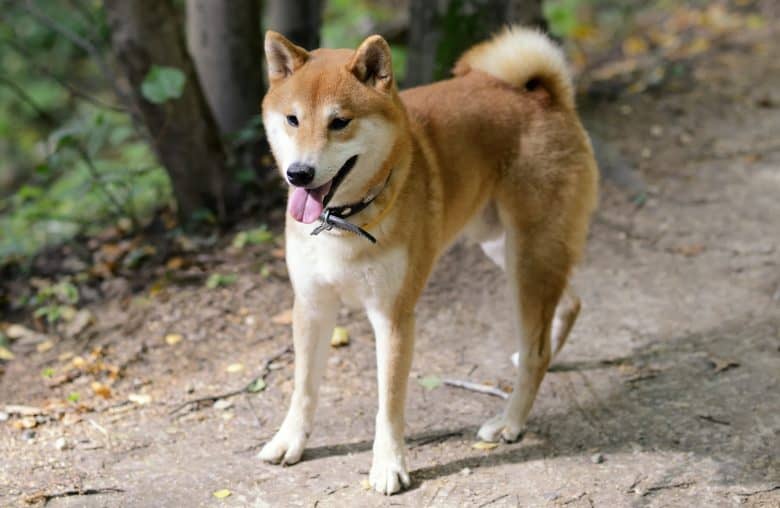
Some say that it is possible that these dogs were around as early as 7,000 BC when the earliest immigrants inhabited Japan.
Archaeological records found Shiba Inu-sized dogs’ remains among those of the country’s Jomon-jin people who lived from 14,500 BC to 300 AD.
It is now thought that Shibas were created by breeding immigrant dogs with the Jomon-jin dogs around 300 BC.
Today, they have been declared a national treasure by Japan’s people, and some Shiba Inu dogs have found fame on social media, such as YouTube and Instagram.
The Shiba name comes from the Japanese word brushwood and is thought to refer to the red color of this breed or the dense brush found in Japan’s mountains.
Alternatively, an obsolete translation of the word Shiba simply means little. The second part of their name, the word Inu, means dog in Japanese, giving their name a translation of ‘brushwood dog’.
These Japanese dogs were initially bred to hunt small game and flush out wild birds or, occasionally, wild boar in Japan’s mountains. They hunted by sight and scent in the undergrowth.
Originally there were three types of Shiba Inu, named for the region in which they originated. These were the Mino, the San’in, and the Shinshu bloodlines.
The Mino was furthest from the modern Shiba, being a deep brown color with black tips and a sickle tail.
The larger San’in was mottled black and known for its independent, non-affectionate nature.
The third variety, the Shinshu was a red color with round, emotional eyes.
Unfortunately, by the end of World World War II, Shiba Inus were virtually extinct, killed in bombing raids, and severely affected by canine distemper.
To revive the breed, Shiba Inus from remote reaches of Japan were brought into breeding programs, and in 1948 the Japanese Kennel Club was established.
Most of the dogs used to repopulate modern-day Shiba Inus were Shinshu Shibas, although all three varieties contributed to the breed as we know it today.
Breed standards for this Japanese breed were drafted by Nihon Ken Hozonkai and were adopted by the Federation Cynologique Internationale and the Japanese Kennel Club.
The first Shiba Inu to arrive in the United States of America was brought to the country in 1954 by a military family.
These dogs were then recognized by the American Kennel Club in 1992, being added to the AKC’s non-sporting group in 1997.
Although bred as hunters, these dogs are not classified in sporting group like Retrievers and Terriers may be.
One famous Shiba Inu named Mari saved her family from an earthquake in 2004 when she woke up her elderly owner trapped beneath a cabinet.
She miraculously also managed to move and save her puppies. Mari’s fantastic story of survival was turned into a film in Japan called; A Tale of Mari and Her Three Puppies.
What does a Shiba Inu look like?
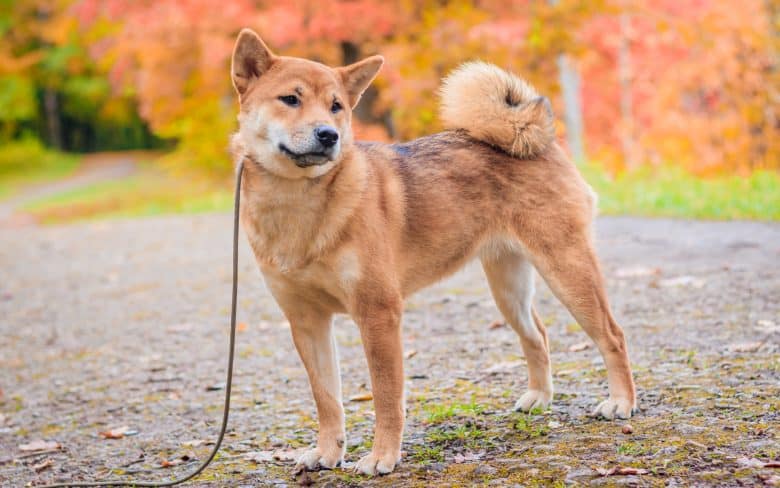
The purebred Shiba Inu is a medium but sturdy dog with a robust and muscular body, straight legs, and a head that is well proportioned to the body.
They are fox-like due to their smooth stride, small pointed, forward-tilting ears, and cat-like agility.
The dog’s face has a round muzzle with a black nose, a scissor bite, and deep-set triangular eyes with a black rim.
Also, this dog’s wide cheeks give its face a natural smile that will make anyone happy. The fluffy tail is also characteristic of this breed. It is thick at the base and curls over the back.
Although Shiba puppies are born with long tails and floppy ears, the tail curls as these dogs get older, and their ears start to stick up.
Also, a Shiba Inu’s face can look a bit scrunched up as a puppy, looking a bit like a Pug. While adorable, Shiba Inus do grow out of this fat-faced puppy stage.
Male and female Shiba Inus are quite different in appearance, with females having a lighter, more feminine structure, without being weak. For the full Shiba Inu breed standard, see the AKC.
How big is a Shiba Inu?
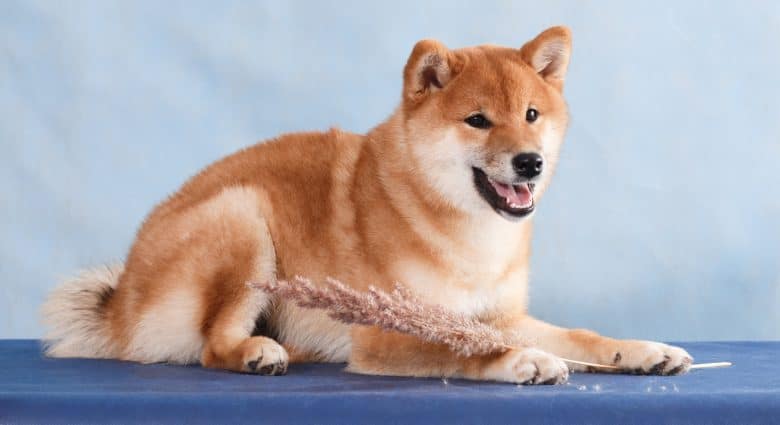
A medium dog breed, male Shiba Inu’s stand between 14.5 to 16.5 inches (37 to 43 cm) tall, with females around 13.5 to 15.5 inches (34 to 40 cm) in height.
A female Shiba Inu will weigh around 17 pounds (8 kg), while a male can weigh up to 23 pounds (10 kg). Shiba Inus will reach their full size between six and eighteen months old.
Due to their medium size, Shiba Inus does well in both city and country environments; however, they will need a secure yard to run around and play.
What does the Shiba Inu’s coat look like?
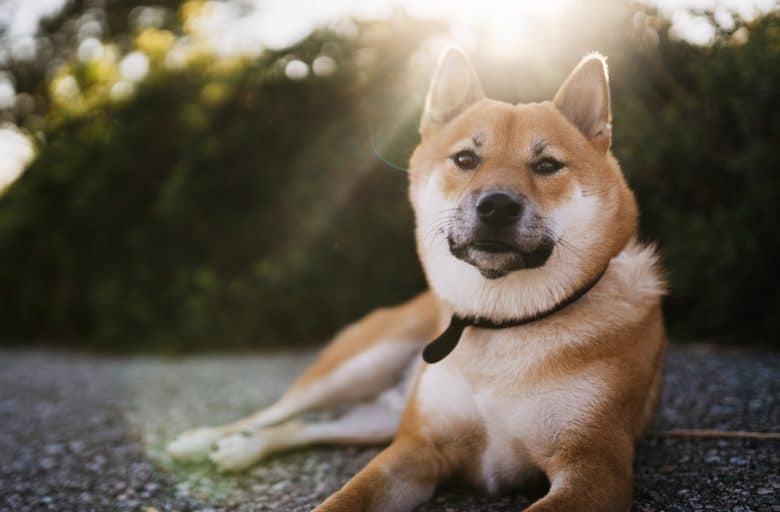
Shiba Inus are often referred to as a fluffy teddy bear because of their thick double coat. The undercoat is soft and fluffy, with the outer coat being stiff and straight.
This double coat helped keep Shibas warm during their years hunting on the tall icy mountains of Japan. The fur is short around the face, legs, and body but longer on the tail.
Shiba Inus can come in various colors, the most common being the rich orange-red autumn color that is the same as Japan’s brushwood leaves.
This red color is often called sable, with the deeper red the coat, the more desirable or show-worthy the dog.
Red-colored Shiba Inus should not have heavy black markings; this is called dirty-sable.
Other colors include black and tan or cream or sesame.
While all four color variants can be registered with the American Kennel Club, only red, sesame, and black and tan Shiba Inus are eligible for show.
In addition to their base color, all Shiba Inus should display Urakiro or Urajiro markings. This refers to white markings on the chest, neck, stomach, cheeks, snout, and legs.
These markings are also typical on the underside or tip of the tail. The undercoat of all color varieties of Shiba Inu will be buff, grey, or cream.
The Shiba Inus coat color can change quite a bit from puppyhood through to about a year old.
This disappears by around six months old, with the white markings becoming more prominent as the dog gets older.
What is a sesame Shiba Inu?
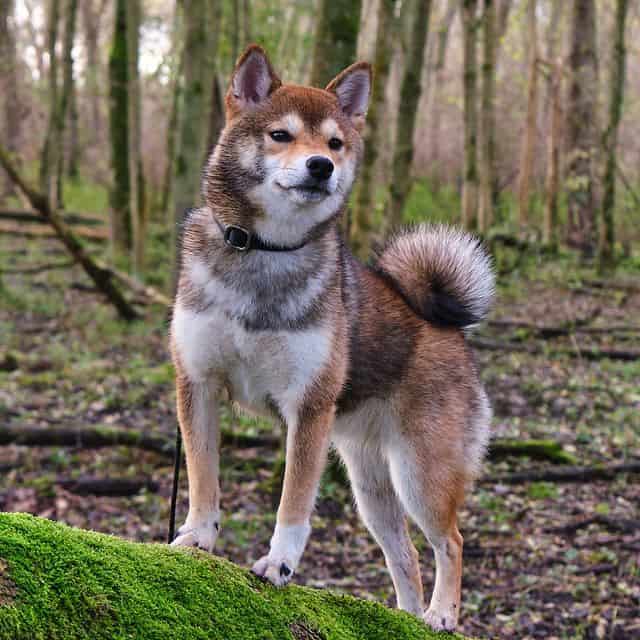
The fourth and final color of a Shiba Inu is the rare sesame variety.
Although many dogs are marketed as being sesame-colored, real sesame Shiba Inus are, in fact, tough to find.
The Japanese call this color variety Goma, which translates to sesame.
To be considered a real sesame Shiba Inu, the dog must have a red base coat with a percentage of black throughout the coat.
The black-tipped hairs show in a similar pattern to that of the black and tan Shiba. This black coloring should be evenly blended, without forming dark black patches of a mask on the dog’s face.
These black-tipped hairs sometimes concentrate around the base of the muzzle or at the widow’s peak area. However, overall a sesame Shiba should not be more than 50% black.
You may also hear the term red sesame being used to describe these dogs, but in fact, all sesame Shiba Inus are red sesames.
This color is a genetic variation and cannot be created by breeding a red Shiba with a black and tan variety, which is often the misconception.
Also, looking for a sesame Shiba Inu puppy can be difficult as these dogs tend to only show their full coloring from around a year old.
Are Shiba Inus good pets?
Shiba Inus are known for their spirited and bold personalities. These confident dogs are alert, active, and highly intelligent.
The Japanese use three words to describe this breed; kaani-i, which refers to their bold spirit, ryosei, which means they have a good nature, and soboku means to be alert.

These calm, dignified dogs are also fantastic with children if given early socialization training, making them great family dogs. They will be very loyal and devoted to their owners.
They can be suspicious of strangers; however, this also makes them excellent, attentive watchdogs.
However, this guarding nature can turn into possessiveness. This is not a dog that will share his toys or food very well, and these should be put away around young kids.
Also, Shiba Inus can be aggressive with other dogs, especially males that are not fixed. They may also tend to hunt smaller family pets like rabbits, guinea pigs, and birds.
Their strong-willed temperament can also make them challenging to train. Often described as stubborn, it can be challenging to get a Shiba Inu to do something they don’t want to do.
You have to make them think the training is their idea!
The same goes for cuddling; these dogs can be affectionate, but only on their terms. It is that cat-like attitude for which they are famous.
However, if they want something, the Shiba Inu will let you know, and their load yodel or howl can annoy neighbors!
As a result, first-time dog owners may find it challenging to train a Shiba Inu and can find this breed is not the best dog for them.
However, the good news is that Shiba Inus are born practically housebroken.
Also, they do not engage in destructive tendencies if left alone, although some are known to suffer from separation anxiety. As a result, crate training is recommended for this breed.
To see a Shiba Inu playing with his best human friend, view this adorable video:
Care: Are Shiba Inus high maintenance?
Shiba Inus have moderate maintenance needs when it comes to food, grooming, and daily exercise.
Meet their needs, know what health conditions you need to look out for, and provide them with the necessary training and socialization, and you’ll end up with a happy pet.
As these dogs were bred to hunt outside in Japan’s mountains, they can withstand a range of temperatures.
While they do well in both cold and warm climates, just be sure to keep a close eye on them in extreme weather.
Due to their medium size, they also can adapt well to traveling and are happy to go along with you on new adventures.
Exercising your Shiba Inu
Shiba Inus are moderately energetic and want to be exercised. They need at least an hour of exercise every day.
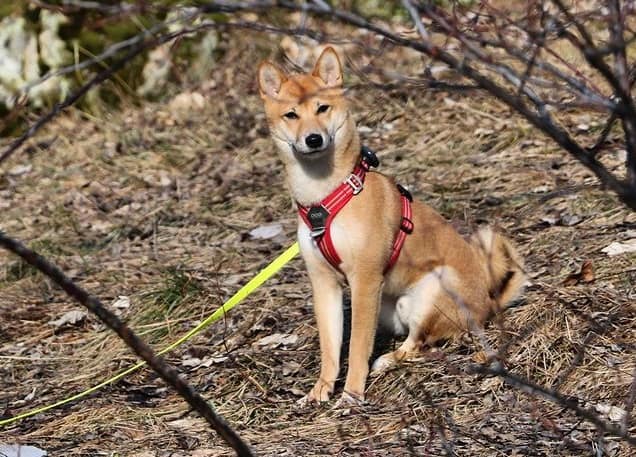
As quick and agile hunters, they love to go for long walks; however, DO NOT let this dog off the leash if you are in an unconfined area.
They love to chase and quickly disappear after chipmunks, cats, squirrels, or even other dogs.
They are great escape artists, known to dig underneath fences and jump over walls, and so should always be microchipped and collared with tags.
There is further bad news; however, Shiba Inus don’t like to be restrained. They will fight to put on a collar and leash, so patience is a must for exercising this breed.
While these dogs will love to play at enclosed dog parks, you need to keep a close eye on them as they can get over-excited and sometimes aggressive towards other dogs.
Tiring them out with a game in your backyard will be just as much fun without the stress.
Although this is an active breed with a moderate energy level, they can adapt to a more sedentary lifestyle when older.
If given a daily walk, they will be more than happy to spend the remainder of the day snuggling on the couch.
Do Shiba Inus shed?
Shiba Inus do shed a lot, particularly during the changing of the seasons. As a result, they will need to be brushed once a week to remove any dead hair and distribute oils.
While the Shiba Inu’s double coat doesn’t mat, it may need to be brushed more frequently in the shedding season to reduce the amount of hair left around your house.
You can also try blowing your dog with a hairdryer to remove any loose hair. Shiba Inus tend to like a blower as it won’t pull their coat or skin as a brush does. Just be sure not to let it get too hot.
Take care of your dog’s coat, and they need little other maintenance, being a naturally odor-free and clean dog.
The good news is that these dogs are naturally clean and like to keep themselves looking good. Another one of their cat-like tendencies is to lick and groom themselves regularly.
As a result, bathing is also only necessary when very dirty as over-bathing can dry out the skin of your Shiba Inu. A bath every three or four months should be enough for this breed.
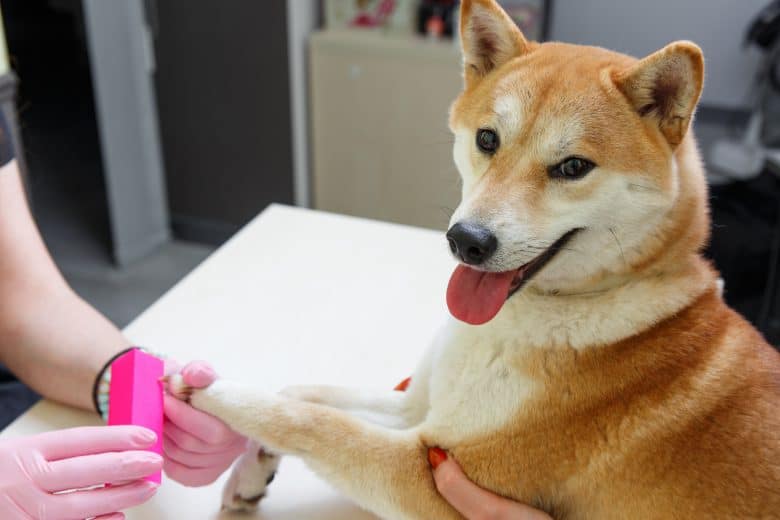
Their nails will also need to be trimmed about once a month if they don’t wear them down themselves, although the Shiba Inu will often put up a fight when it comes to cutting his nails.
You should also be brushing your dog’s teeth two or three times a week to prevent the build-up of bacteria and tartar.
How much should I feed my Shiba Inu dog?
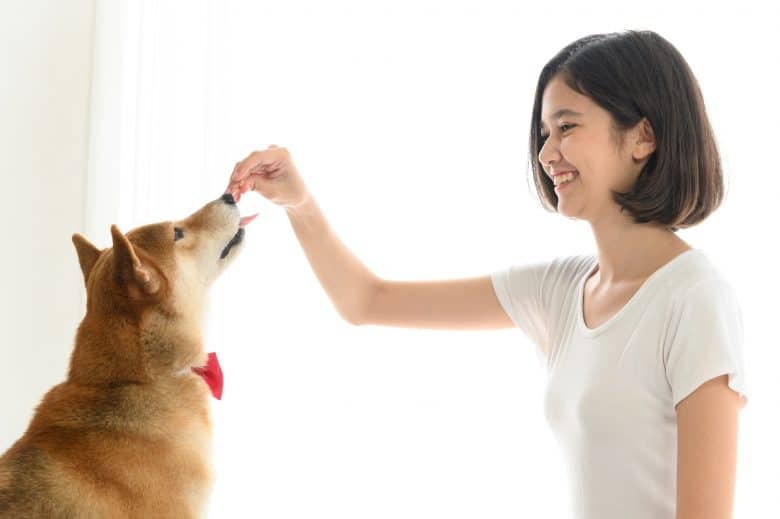
Shiba Inus should be fed between half a cup and one and a half cups of high-quality dry dog food every day. This food can be split into two servings, one in the morning and one in the evening.
Shiba Inus are prone to overeating, so be sure to keep an eye on your dog’s calorie consumption to control their weight.
As this breed was initially used for hunting purposes, their diet would have typically included wild birds, fish, and game meat. Thus they do well on a balanced diet that is rich in protein.
A raw food diet may also be a good choice for this breed but be sure to chat to your vet first before trying this out on your dog.
How long does a Shiba Inu live?
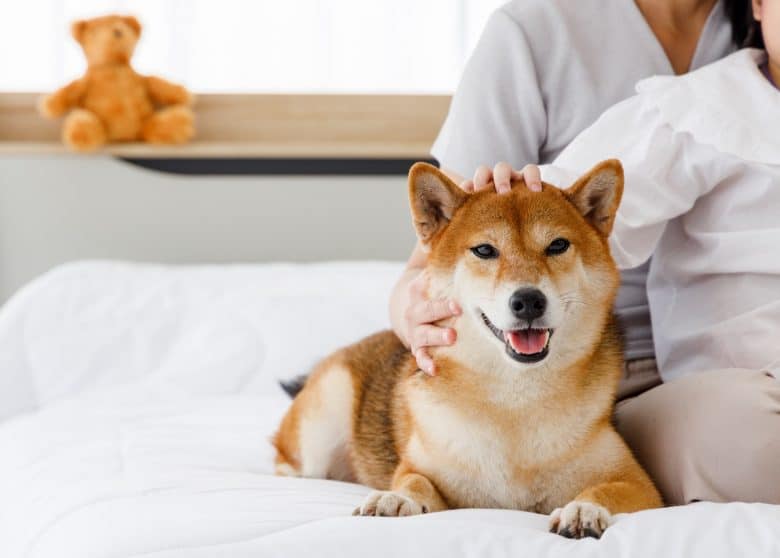
The lifespan of a Shiba Inu is between 13 and 16 years. As a medium breed, they will live longer than some larger dogs.
Although generally healthy, the most common ailment affecting this breed is allergies. Just like in humans, allergies can cause skin irritation and itching in Shiba Inus.
Health problems that can affect the life expectancy of Shiba Inus include Chylothorax, which consists of a build-up of fluid in the chest, causing coughing, lethargy, and difficulty breathing.
Glaucoma is also a possibility, creating increased pressure on the eye leading to pain and vision loss, while canine cancer also affects this breed, leading to swelling, sores, and bumps.
Other diseases that Shiba Inus get include epilepsy, an inherited illness that causes seizures, and patellar luxation, which causes pain in the kneecap and joint.
They are also prone to progressive retinal atrophy, an eye disease that leads to deterioration of the retina and can lead to blindness.
And hypothyroidism is a disorder of the thyroid that causes epilepsy, obesity, and patches on the skin.
These dogs can sometimes be susceptible to the heritable condition hip dysplasia, which causes pain in the joints and can lead to lameness.
The National Shiba Club of America recommends that all breeders do tests for patellar luxation, and hip dysplasia and get an ophthalmologist evaluation for eye disorders.
These tests can be checked on the OFA website, and in addition, you may want to consider getting additional eye examinations for your dog at least every two years to maintain good health.
These regular checkups include checks for any hereditary defects and should be done by a board member of the American College of Veterinary Ophthalmologists.
How much do Shiba Inu puppies cost?
Shiba Inu puppies can vary greatly when it comes to price. This is not a cheap breed. You can expect to pay between $1,400 and $2,200 for a companion dog and as much as $3,500 for a show Shiba puppy.
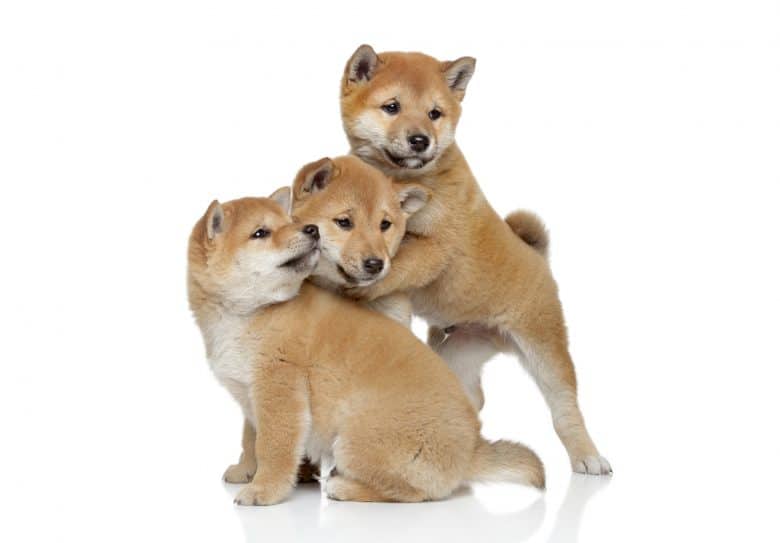
Their status as a desirable, Instagrammable pup has increased the demand for these dogs, and thus the price.
The main factors affecting a Shiba Inu puppy’s cost include whether the dog has been raised as a show dog or just a companion, their parent’s lineage and if they have full registration papers.
The sex of the Shiba Inu puppy for sale and the coat color will also have a bearing on the price.
Red Shiba Inu puppies are the most sought after and thus the most expensive, with cream Shibas being the cheapest variety.
As a Japanese medium-size dog, the litter size of a Shiba Inu is tiny, pushing these dogs’ price up. Typically litter sizes will range between two and five dogs, with three being the average.
Besides the initial expenses of buying a Shiba Inu, you can also expect to pay between $200 and $500 for neutering or spaying your dog
Food and grooming can set you back around $60 a month.
Read more: Guide to Shiba Inu Dog Price
Shiba Inu breeders
With Shiba Inus being a trendy designer dog, they can often be found online or at pet stores.
However, always do your homework before getting one of these puppies to ensure that you do not support an unethical puppy mill operation.
Puppies raised in these facilities are not well taken care of, nor are their parents, making them more susceptible to various health problems.
A breeder should be able to provide you with a full medical history of both parent dogs, and an unwillingness to do so should be seen as a red flag.
For a complete list of AKC registered breeders, visit the National Shiba Club of America website.
It is unlikely to find cream Shiba Inus with registered show breeders because this coat color is not permitted in the show ring.
For all colors, be sure to take a look at the parent dog before buying a puppy, as this will give you a better idea of what your Shiba Inu will look like as it gets older.
Here are some Shiba Inu breeders where you can start looking for a puppy to call your own:
- Anderson’s Shiba Inus, Miami, Oklahoma
- Marma Farms, Fruithurst, Alabama
- Spitfyre Shiba Inu, Akeley, Minnesota
Shiba Inu rescue/for adoption
If you are looking to provide an older Shiba Inu with a loving home, then you may want to consider adopting one of these gorgeous dogs.
Various Shiba Inu-specific rescue organizations can assist you in re-homing the perfect pet. Here are some to get you started:
- Midwest Shiba Inu Rescue (Gurnee, IL)
- Safe Harbor Animal Rescue
- DC Shiba Inu Rescue (Washington, DC)
Read also: 30 of the Most Adorable Shiba Inu Mixes
Who should get a Shiba Inu dog?
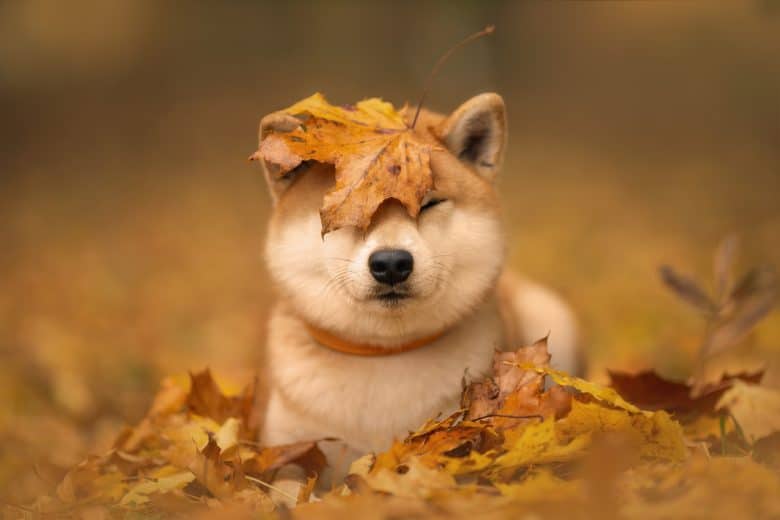
Shiba Inus are strong-willed dogs whose bold personalities can be a little much for some people. New owners especially will struggle with training this stubborn breed.
However, with the proper training and socialization, these adorable dogs can make loving family companions. Super cute and medium in size, they will fit nicely into your home.
Do you have a Shiba Inu of your own? Please let us know in the comments below.