The Chinese Shar Pei is calm, loyal, and exceptionally wrinkled! And it’s come a long way since its role as a fighting dog.
It’s also known as the Cantonese Shar-Pei, Chinese fighting dog, and Shar-Pei. But no matter what you choose to call it, it’s gorgeous.

This article explores everything you need to know about this breed and what makes it so unique.
Where did the Chinese Shar Pei originate?
This dog breed originated in southern China, and some believe that it came from the Kwangtung Province.
Since roughly 200 BC, around the same time as the Han Dynasty, it has served as guard dogs and livestock herders, making it an ancient breed.
Most believe that the Shar Pei is a descendant of the ancient Han Dog, an ancestor that it shares with the Chow Chow.
Both have the blue-black tongue unique to that shared ancestor. But today, it’s known to be a cross between the mastiff and Nordic breeds.
Political turmoil in China in the 20th century nearly resulted in the extinction of the breed, following the creation of the People’s Republic of China. Only a small number remained in Hong Kong, Taiwan, and Macau.
They were then sent to the United States in 1973 after a Hong Kong breeder named Matgo Law begged dog fanciers to “save the Chinese Shar Pei.” And in 1974, they formed the Chinese Shar Pei Club of America.
They are one of the rarest dog breeds. With all their wrinkles, they became a popular breed for dogfighting.
Their wrinkly, loose skin was nearly impossible to bite through. However, when the West introduced larger breeds, they quickly fell out of favor.
Despite being around for centuries, the AKC (or American Kennel Club) only recognized the Chinese Shar Pei in 1992. It was accepted as a member of the Non-Sporting Group.
What does a Shar-Pei dog look like?
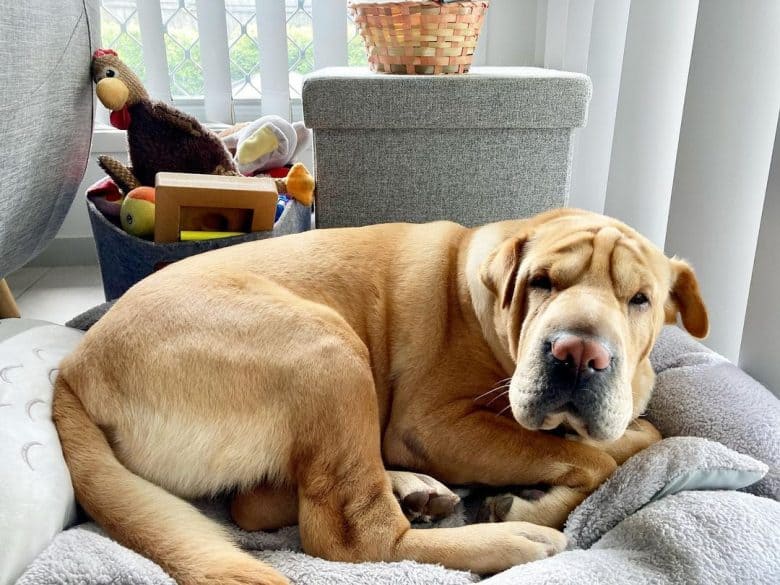
The Chinese Shar Pei is a wrinkled dog with a ‘hippopotamus’ muzzle, terrier-like stature, and many folds of skin.
They have a large head with skin folds framing the face. Their heads are big but not disproportionate.
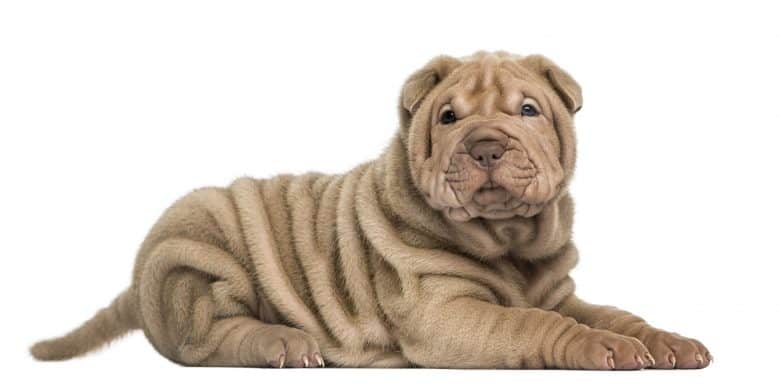
The skull is broad and flat with a moderately defined stop. Their brachycephalic skulls cause them to snore and breathe heavily.
As we mentioned previously, its muzzle is broad and full with no snippiness, and they have a black nose.
Their ears are small, thick, and triangular. They’re set wide apart and high up on its head, with tight ear flaps. It lays flat and faces forward towards the front of the skull.
Its eyes are small and dark. They’re sunken into the skull and framed by folds of skin that give the dog its scowling expression.
Their eyes are one of their weak spots and tend to water due to a condition called ‘entropion,’ which is very common in the breed. This may improve as the puppy grows older.
Heavy pigmentation causes blue-black tongues and gums, which not all Chinese Shar Pei dogs have.
It’s ideal and reflects good genetic traits, but some have spotted or solid pink tongues. It may darken when the puppy reaches 3 months old. But if not, most consider it a genetic flaw.
The Chinese Shar Pei breed has a hereditary medical condition that causes a build-up of hyaluronic acid. This results in the many folds of skin that they’re famous for.
Shar Pei puppies are significantly more wrinkly, but these wrinkles minimize as they reach adulthood.
They have a medium-length neck set into the shoulders with abundant dewlap. The topline dips slightly and rises over its broad, short loin.
Its back is short and close-coupled while its chest is broad and deep. Its brisket extends to its elbow, rising slightly beneath its loin.
It has a flat croup, and the base of its tail is extremely high-set and appears to rest above either side of its tail set area.
It’s thick and round at the base, curling over to a point at the end. This positioning exposes an up-tilted anus.
Its forequarters have muscular, sloping, well-laid-back shoulders. Its forelegs are straight and spaced moderately and its elbows remain close to the body.
The pasterns are strong and flexible and moderate in length. The feet are firmly set and not splayed, and the removal of its front dewclaws is optional.
Chinese Shar Pei vs American Shar Pei
The main difference between these two kinds of Shar Pei breeds is the muzzle.
The Chinese Shar Pei is the traditional kind, bred for hunting. It possesses a bone-mouth or a “dry” muzzle thinner than the width of its skull.
Their nostrils are bigger, with no padding over their nose. And less flesh on their cheeks.
For more information on bone-mouth and meat-mouth, check out the video below:
There should be nothing between the jaws and teeth that would hinder a good bite. When its mouth is open, it gives the appearance of a smile known as “toad mouth.”
Its eyes are large and not very deeply set inside the skull. They also have fewer skin folds and have a taller, more athletic build.
The American Shar Pei has more skin folds, a meat-mouth which refers to its thick, fleshy cheeks, and padding on its nose.
This gives it the famous “hippopotamus” appearance, which is more apparent in the American kind.
They are shorter, bulky in stature, and most desirable for dog shows, breeding, and a ‘pet lifestyle.’
Size: How big does a Chinese Shar Pei dog get?
As per the AKC breed standard, a full-grown Chinese Shar Pei can reach a height of 18 to 20 inches (46 to 51 cm) and can weigh 45 to 60 pounds (20 to 27 kg).
In case you’re wondering if there’s a mini version, there is! How big does a Miniature Shar Pei get? They stand 14 to 17 inches (36 to 43 cm) tall and only have a weight of 25 to 40 pounds (11 to 18 kg).
Because of their moderate size and calm temperament, they’re perfect for apartment-dwellers. As long as they get a moderate amount of exercise regularly, they should be just fine.
But when they leave the apartment, it’s best to keep them on a leash as they can be aggressive toward other dogs.
In a family home with a yard, it’s a good idea to fence them. They make good watchdogs and guard dogs because of their territorial nature. But you shouldn’t allow them to run around freely.
The unique Chinese Shar-Pei coat
“Shar Pei” translates to “sand-skin,” a fitting description for the Shar Pei’s harsh coat. Its texture resembles sandpaper and serves as one of its distinguishing features.
Its double coat is thick and dense, and the type varies from one type of Shar Pei dog to another.
The “horse” coat is extremely short and harsh and is the closest to the original Chinese Shar Pei breed. The “brush” coat is slightly softer, and the hairs are longer, reaching up to 1 inch.
The “bear” coat is even longer and resembles that of the Chow. A Shar Pei with this coat is often referred to as a ‘long-haired Shar Pei.’
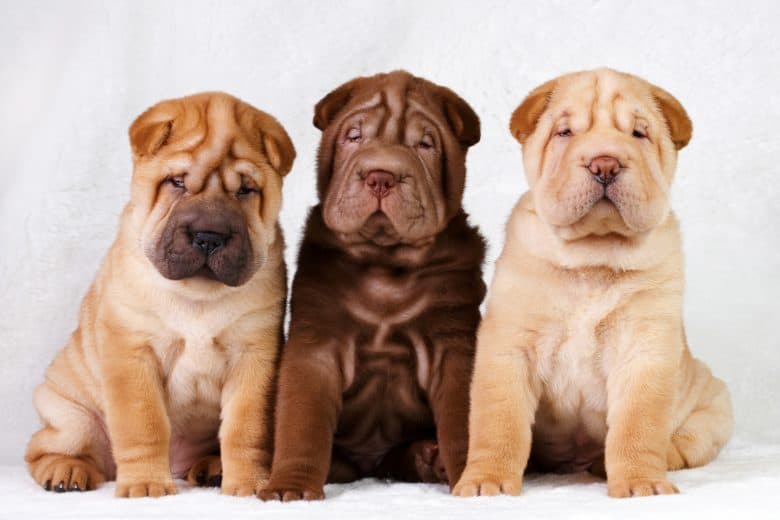
However, dog breed organizations only recognize the horse-coat and brush-coat Shar Peis. The AKC considers other kinds to be too genetically similar to the Chow Chow.
Shar Pei colors include black, blue, fawn, lilac, cream, sand, and red. They also have a variety of color patterns and markings.
These include sable, mask, pointed, saddle pattern, spotted on white, white markings, and brindle.
A ‘flowered’ Shar Pei refers to the distinctive splash pattern on the dog’s coat. In other breeds, it’s known as ‘piebald.’ In the Shar Pei breed, the AKC disallows it as the flowering gene is recessive.
Temperament: Is a Shar Pei a good family dog?
Shar Peis are intelligent, alert, loving, independent, and somewhat aloof toward strangers.
With proper and extensive early socialization, you can reduce any behavioral issues. And they can become a well-mannered family member.
Their naturally calm demeanor is always a bonus when there are kids around.
They handle cold weather much better than hot weather, but they hate water.
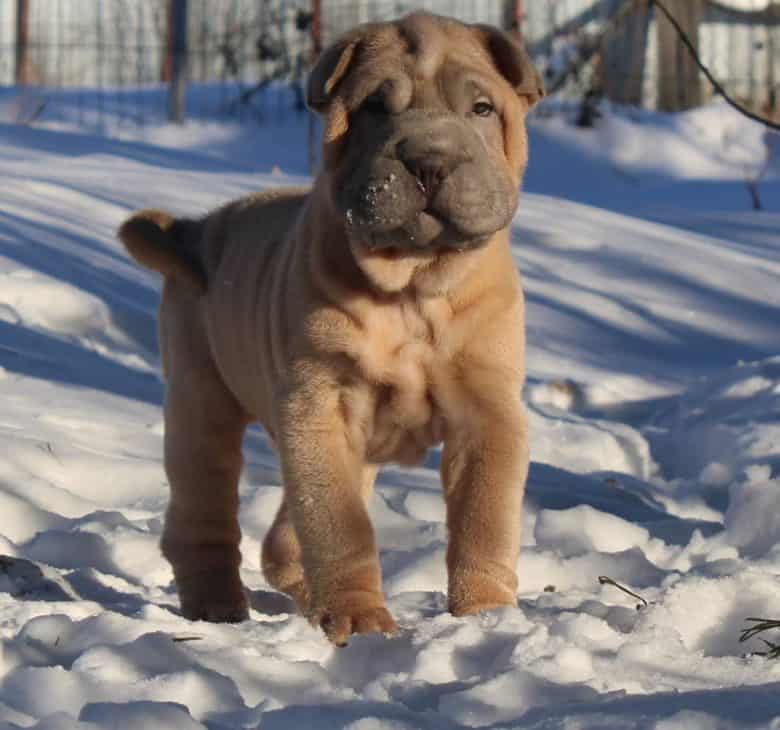
They may be happy to live with other pets if you rear them together, but they might feel the innate urge to hunt smaller animals or livestock.
Like many hunting dogs and guard dogs, they can be stubborn and territorial. But they will reward you with their loyalty, devotion, and fierce protection.
Is a Shar Pei dangerous?
The Shar Pei can be friendly with other household pets if you raise them together, but they are generally wary of strangers and can become aggressive. And they can show even greater hostility toward other dogs.
Especially if you don’t socialize them with other puppies from a young age.
While you can leave them alone, a Shar Pei can experience separation anxiety when you keep them apart from their loved ones. So they may be independent, but that’s no excuse to neglect them.
Because of their independent nature, they are better suited to experienced owners. But they are one of the easiest breeds to housebreak and don’t need much exercise. And compared to other dogs, they rarely bark.
How to take care of your Chinese Shar Pei
While they are not exceptionally high maintenance, Shar Peis still need a decent amount of time and grooming.
They don’t need a special diet or special exercise equipment, but there are a few things to keep in mind when caring for your Shar Pei.
They’re generally clean and don’t shed much, so their coat is reasonably low maintenance. However, without proper attention, their skin folds could become smelly or sickly.
Try a hypoallergenic dog shampoo for the occasional bath. Regular baths can dry out their skin. So a regular brush is more important.
Since their ears are small and placed high atop their heads, you need to clean them weekly to avoid a yeast infection.
Their nails grow faster than most other breeds, so you would need to clip them once a month. And they tend to drool.
They don’t do well in hot weather or while running and can suffer heatstroke either way. So they need to be cool in the summertime. They are better suited to cold weather.
Exercising your Chinese Shar Pei
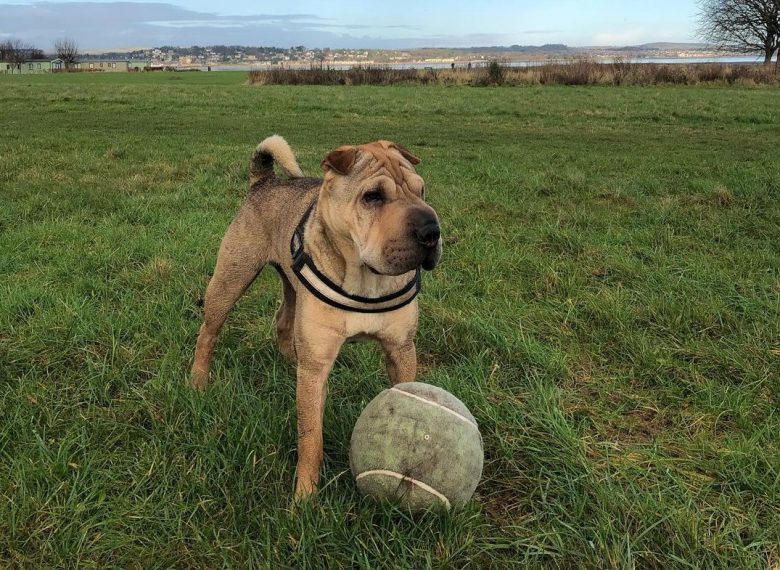
The Shar Pei breed generally has low energy levels, making them well suited to apartment and city living.
They make lousy running partners, especially with the possibility of heatstroke, and don’t need any more exercise than a brisk daily walk.
Grooming: Does Chinese Shar Pei shed?
The Shar Pei doesn’t shed much, but they aren’t hypoallergenic either. And they tend to shed more around spring and autumn.
So you should regularly clean for the sake of basic hygiene and anyone suffering from allergies.
This can include your Shar Pei themself. They’re prone to skin infections called ‘Shar Pei Syndrome,’ where their prickly hair irritates the skin.
Their skin becomes inflamed, and hair loss occurs, which causes patches or bald spots. It can sometimes affect the whole body and often doesn’t respond well to treatment.
In other cases, they could have microscopic mites known as ‘Demodex,’ which causes dry, irritated, and hairless lesions.
Despite these risks, they’re relatively easy to groom. You need to brush the coat once a week, brush their teeth twice a week, and bathe them every three months.
Unless, of course, they’ve found a wonderfully smelly dirt patch to roll around in. We recommend a high-velocity dryer to loosen any dirt or excess hairs before the bath.
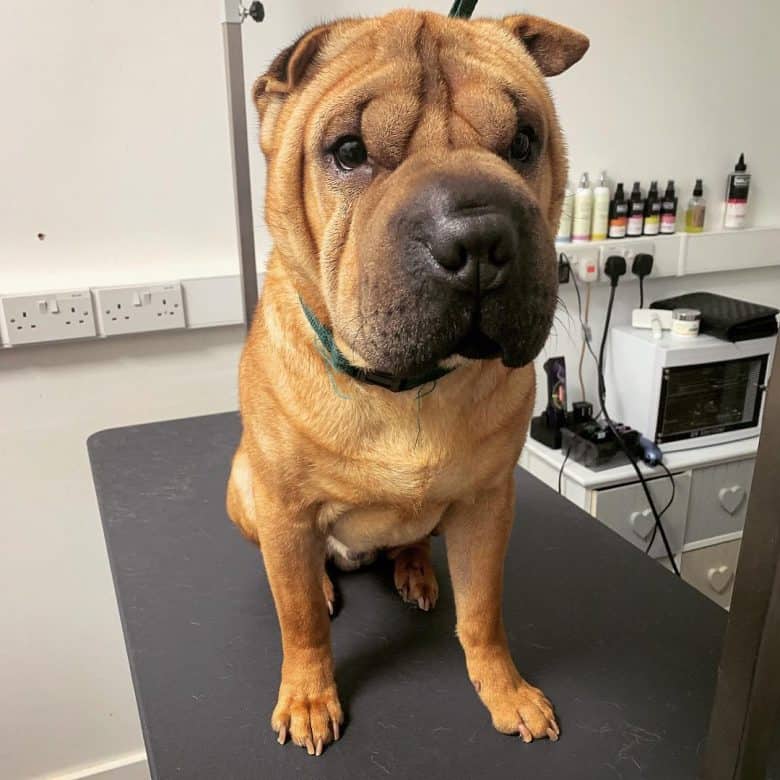
They don’t produce a natural odor, but their skin folds can become smelly if not dried properly when wet. Use a soft, dry cloth and inspect the area for any growths or irritations.
You can use a hydrating spray after the bath to help them retain a healthy amount of moisture.
Clean your dog’s ears weekly using a cotton ball and pet-safe cleaning solution to avoid infection.
Feeding your Chinese Shar Pei
Chinese Shar Pei puppies should eat around 1 cup per 6 pounds of body weight, split into 3 to 4 small servings a day while growing.
Adults should have their daily intake divided into two meals. The amount would depend on their age and activity levels.
They need a wholesome diet with all the necessary nutrients, just like any other dog. However, the Shar Pei tends to have more food allergies than other breeds.
Beef, for example, disagrees with them. So their protein intake should come from high-quality commercial dog food.
Avoid giving them table scraps or food with high-fat content. Give them treats sparingly while training as too many can result in obesity.
Does Shar Peis have health problems?
With a balanced diet and necessary care, the Shar Pei has an average life span of 9 to 11 years. However, this breed is prone to certain health conditions that potential owners should be aware of.
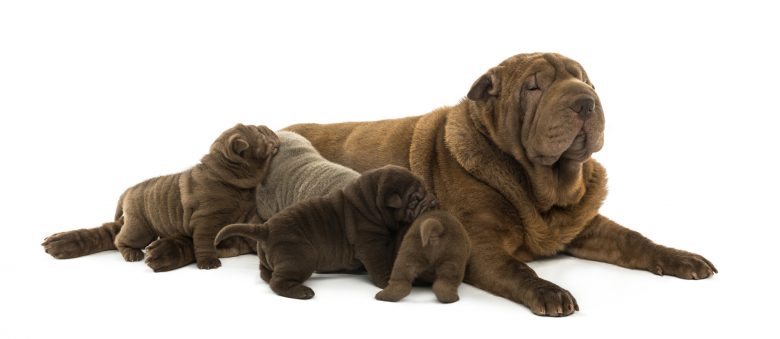
Shar Pei fever, also known as ‘FSF’ (Familial Shar Pei Fever) and ‘swollen hock syndrome,’ is one of these conditions, where they have recurring fevers and swollen hocks.
The cause is unknown, but it’s believed that it’s inherited. Fevers typically last between 12 to 36 hours, and the condition can eventually lead to premature death caused by liver or kidney failure.
Their short nose also sometimes gives rise to breathing difficulties, which causes chronic discomfort, especially during exercise. They’re also at risk of the following conditions:
- Hypothyroidism (thyroid disorder)
- Cancer
- Gastric torsion
- Elbow dysplasia
- Hip dysplasia
- Demodectic Mange
- Seborrhea
- Pyoderma
- Patella/Patellar Luxation
- Osteochondrosis Dissecans (also known as OCD)
- Cutaneous Mucinosis
- Brachycephalic Airway Obstruction Syndrome (BAOS)
- Glaucoma
- Entropion
- Bloat
- Allergies
How much is a Chinese Shar Pei puppy?
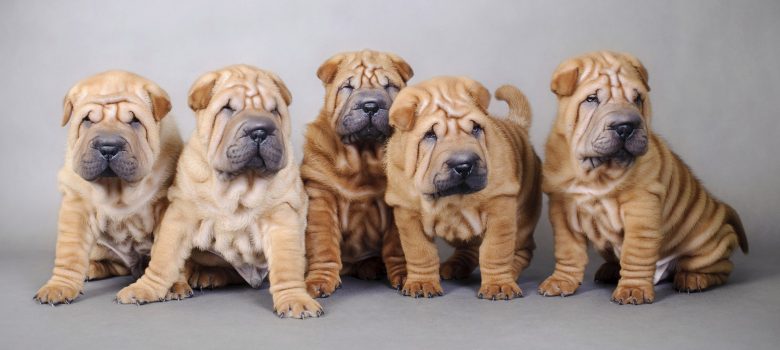
Chinese Shar Pei puppies can cost around $600 to $1,200.
Some are more expensive and can reach a price of $3,000 because of bloodline or show quality, and other factors like the breeder’s location and popularity, the pup’s gender, as well as their availability.
If you think that’s pricey, you might be forgetting the costs involved in getting and raising a puppy.
You have to purchase doggy stuff like your fur baby’s bed, leash, collar, dog food, treats, grooming tools, and more. Then there’s health-related expenses like annual check-ups and vaccinations, as well as emergency visits.
Still, feel like getting a Shar Pei puppy of your own?
Chinese Shar Pei breeders
Congratulations on your decision of purchasing a Shar Pei puppy! Or maybe you just want to go window shopping? No problem because we got you.
Here’s a list of Chinese Shar Pei breeders and kennels that have available puppies within the United States:
- Happei House (Fayetteville, NC)
- Tuck ‘N Roll Acres (Newberg, OR)
- Destiny Kennels (Rochester, MN)
The American Kennel Club (AKC) marketplace has various Shar Pei puppies for sale for those ready to welcome a new member into the family.
Remember the Do’s & Don’ts when choosing and dealing with breeders to ensure that you’re paying and bringing home a healthy puppy.
Also, prepare a questionnaire so you don’t miss important information about your dog before you sign any contract.
Chinese Shar Pei for adoption
Many Shar-Pei dogs end up in shelters because their previous owners aren’t aware of this breed’s care requirements.
Adopting is one noble option if you also want to save some money as adoption costs are only around $300.
You can check on your local shelter if they have a Shar Pei ready to go home with you. If not, then take a look at these rescue sites and they might have the fido for you:
- The Shar Pei Rescue of Virginia
- The North American Shar-Pei Rescue
- Pei People Shar Pei Rescue (Tucson, AZ)
Curious about Chinese Shar Pei mixes?
Chinese Shar Pei Pitbull mix
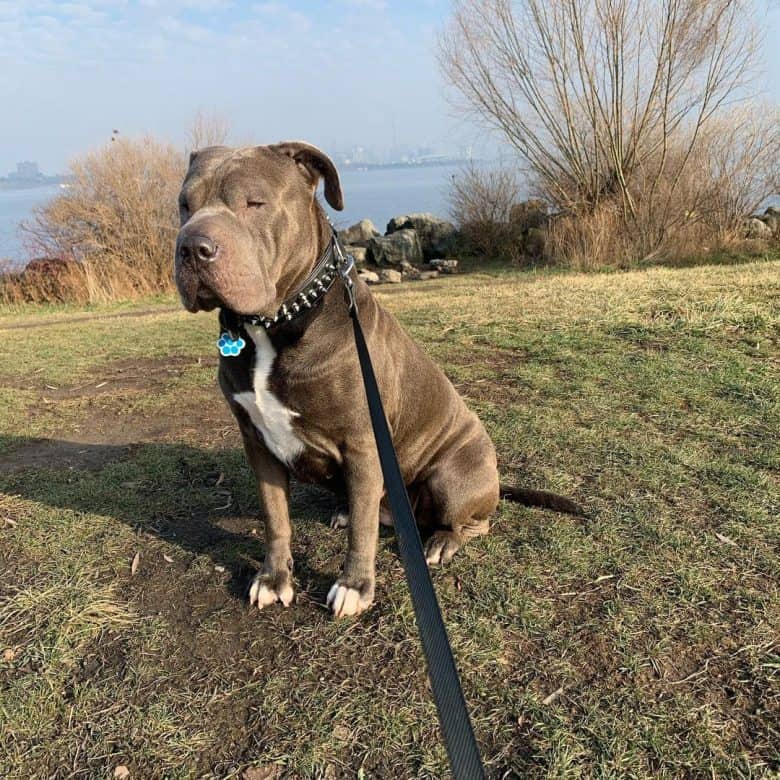
The Chinese Shar-Pei Pitbull mix combines two smart, loyal, and strong-willed breeds into the ‘Pit Pei.’
They are intelligent and learn quickly, but you should train and socialize them early to avoid them becoming too aggressive and territorial.
Chinese Shar Pei Labrador mix
The Chinese Shar Pei Lab mix is also known as the Lab Pei or Sharpay Lab. They’re protective, loving, and loyal and get along well with children.

Chinese Shar Pei German Shepherd mix
The Chinese Shar Pei German Shepherd mix, or the Shepherd Pei, is an unpredictable mix and better suited to experienced trainers.
But they will more than likely be strong and athletic, and they make devoted watchdogs.
Who should get a Chinese Shar Pei?
There are many factors to consider when thinking about introducing a Chinese Shar Pei into the family.
You should be aware of all the needs of this breed before committing to them. This includes the good, the bad, and the ugly.
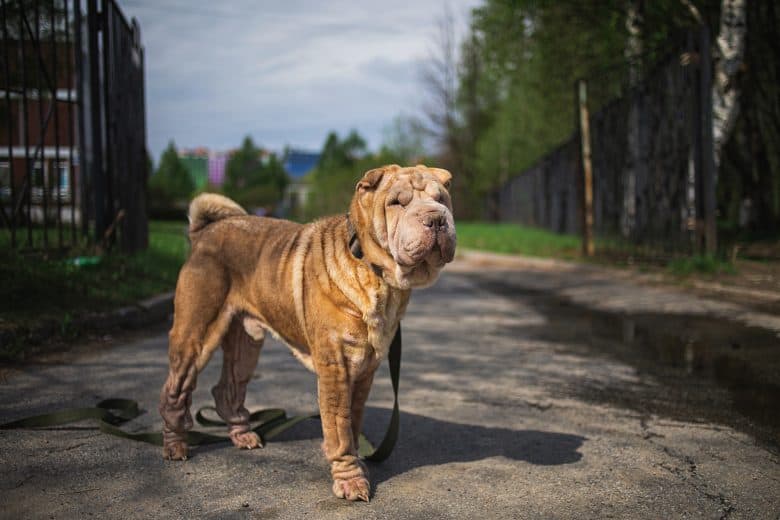
While the Chinese Shar Pei makes a great companion, they’re not suitable for first-time dog owners. They are strong-willed and challenging to train, and highly suspicious of unknown people and animals.
They can be cold and aloof, and possibly even aggressive, to those they don’t know.
But when it comes to their loved ones, they are loyal and protective. They are highly intelligent and have little exercise needs in comparison to other breeds.
They don’t need lots of grooming either, so they aren’t difficult to maintain.
As long as you’re informed about what it takes and what to expect, the Chinese Shar Pei can make an excellent companion.
If you have any thoughts or experiences with the Chinese Shar Pei, feel free to share them with us in the comment box below.