The Nova Scotia Duck Tolling Retriever (NSDTR), a vivacious purebred, is often called Toller for short.
Though, it goes by many names such as Little River Duck Dog, Little Red Duck Dog, Novie, Scotty, Tolling Retriever, Duck Toller, and Yarmouth Toller.
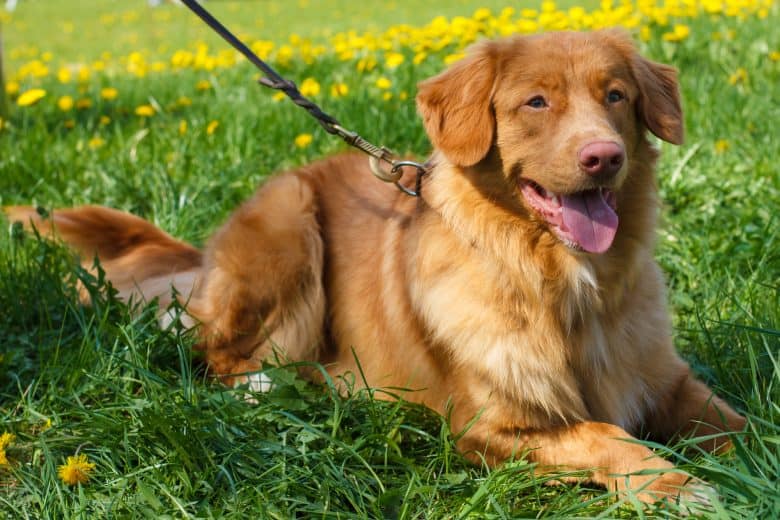
These loyal family dogs are intelligent with the potential to be troublemakers. Their high energy nature may not be for everyone, but this unique breed still offers a lot.
Origins of the Toller
This particular breed of retriever got its start in the 19th century with the Micmac natives of Canada. They trained their dogs to mimic the tolling behaviors of foxes.
Tolling, a Middle English term, is the art of luring ducks to within gun range of the hunters, much like the foxes of the region. Because of this ability, these “duck decoys” were often referred to as “gundogs.”
The hunters of Little River Harbour in Yarmouth County, Novia Scotia, took notice of these dogs and began creating their own.
These hunters combined several breeds:
Golden Retrievers, Cocker Spaniels, Labrador Retrievers, Flat-Coated Retrievers, Chesapeake Bay Retrievers, and Irish Setters, with the possibility of farm Collies and the original Micmac dogs.
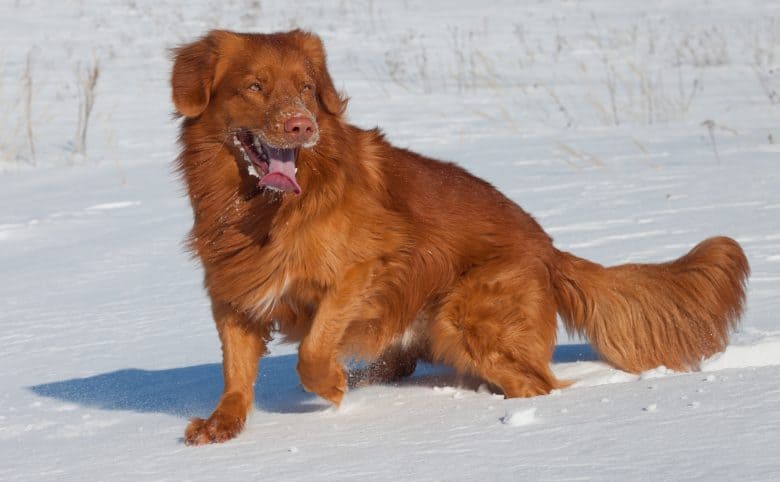
Little River Duck Dogs were the result of their efforts, but they were a little-known breed.
In 1945, the Canadian Kennel Club (CKC) recognized the breed and changed the name to the Nova Scotia Duck Tolling Retriever, which began to shed some light on these dogs.
The breed found its way to the United States in the 1960s, where it remained mostly unknown.
It picked up some popularity through the 70s and 80s, and by 1984, the Nova Scotia Duck Tolling Retriever Club of the United States was founded.
In 2001, the American Kennel Club (AKC) allowed the Toller into the Foundation Stock Service. These dogs are allowed to compete in events like agility, obedience, and tracking.
Finally, in 2003, the AKC officially recognized Tollers as part of their sporting group.
The Look of the Nova Scotia Duck Tolling Retriever

This medium-sized dog breed is well balanced for strength and agility, which came in handy when they were after waterfowl.
They have level backlines that lead to long, well-feathered tails. A Toller features a deep chest that tapers toward the hindquarters.
They have broadheads that are slightly rounded toward the ears. Their ears are triangular with rounded tips, and they are set high and far back on the head.
A Toller’s eyes are set far apart, and they’ll be a shade of brown or amber. They’ll also have a black or brown nose at the end of a medium-length muzzle.
How big do Tollers get?
Even though the Nova Scotia Duck Tolling Retriever is a medium-sized dog, they’re the smallest of all retriever breeds.
They still pack a lot of energy into their well-proportioned frames, and they can do well in an apartment or house as long as you keep them well exercised.
| Nova Scotia Duck Tolling Retriever: |
Male |
Female |
| Height: | 18-21 inches | 17-20 inches |
| Weight: | 35-50 pounds | |
The Unique Toller Coat
Tollers have a unique water-repellent double coat made for protection in frigid waters.
The undercoat is soft and dense, while the outer coat is medium length and soft to the touch. Their coat will also feature moderate length featherings.
Coat Color
Toller’s coats are red and varying hues of red. Their hair can land anywhere between a golden red to darker copper tones.
The breed standard considers any colors outside of the red variations a disqualification.
Distinct Coat Markings
It’s common for Tollers to have white markings. These markings can appear on the tip of the tail, the feet, blaze, or chest to add a little flair to their coat.
The Toller’s Temperament

The devoted Toller makes an excellent family pet. They are great with children and love to play. They can act reserved around new people, but this is merely caution, not shyness.
If you socialize them well, this behavior can be quelled.
Tollers also do well with other pets, but given their innate prey drive, you’ll want to keep them away from smaller animals like birds and cats.
Your pup will keep alert and bark to inform you, but outside of that, you won’t hear them much. However, Tollers aren’t the best watchdogs.
When your Toller gets overly excited, they produce a “toller scream,” a high pitched wailing as seen in this video. Keep in mind that this won’t be all the time, but you’ll know when they are thrilled to be playing.
Tollers are intelligent dogs that respond well to positive reinforcement.
They have a lot of energy that requires both physical and mental stimulation making them highly adaptable to training that rewards them while making them feel helpful.
Their active nature can lead to separation anxiety and mischief if left alone for too long or not adequately stimulated.
Your Toller will have a happy, affectionate disposition, and they’ll love to cuddle after running out some energy. They will love being your best friend.
Caring for Your Toller

The Nova Scotia Duck Tolling Retriever can have high maintenance needs when it comes to grooming and exercise.
Ensuring you can meet these needs is paramount, but they are adaptive pets that can thrive in any environment.
They will do best in moderate temperatures, but they were bred well to handle the cold.
Exercising Elegance
Tollers have a high energy level, and you’ll need to make sure they get it out if you don’t want them being troublemakers. Long daily walks, runs, and fetching games are recommended to keep them satisfied.
If you’ve got a big backyard, they’ll love taking full advantage of it. Tollers will behave best with an hour of exercise each day.
Canine sports are also a good outlet. Tollers love taking part in agility games, flyball, and fieldwork as it exercises their mind and body.
These dog sports will reinforce their training and strengthen their bond with you.
Grooming Needs
The Toller is not hypoallergenic as their double coat will have you seeing seasonal shedding. During this time, daily brushing will be required. Outside of their seasonal shedding, a weekly brushing will suffice.
When you are grooming them, make sure to pay special attention to the feathering in their coat. You’ll need to brush tangles out of the feathering carefully.
Bathing your Toller once a month is generally sufficient, but they won’t hesitate to run through some dirt and mud, so more often may be required.
During all their grooming, check their ears to ensure they are free of contaminants and make sure they get those nails clipped once a month.
Your Doggies Diet
Tollers will need a high-quality dry dog food designed for a high energy breed. Dry dog food can also help in maintaining their teeth.
Your Toller will require 2-3 cups of food a day depending on their activity level and size, but following a recommended diet as they age is best.
You always want to remember that certain foods can’t be given to your dog.
If you are ever unsure about a food, research it before letting them have it. Check out this list from the ASPCA to help keep yourself informed.
Healthy and Happy
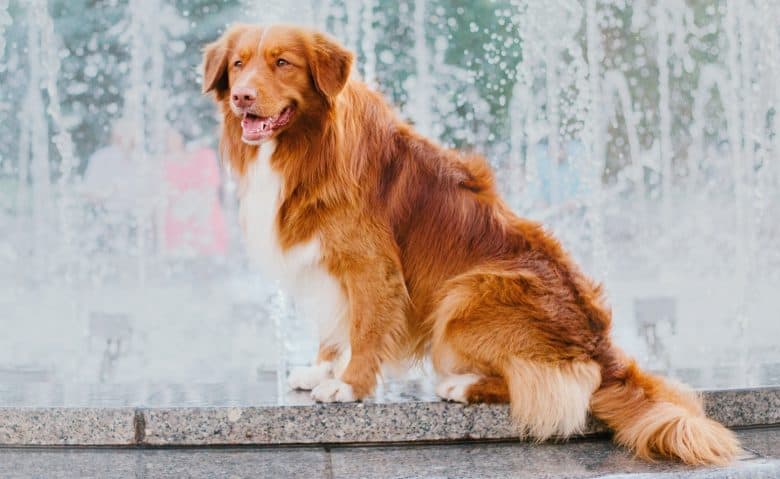
Your Toller will be a generally healthy pup with an average life span of 12-14 years.
They can be prone to autoimmune disorders and Addison’s Disease, which may not present until they are middle-aged. However, other health problems may surface during their lives.
Possible Health Conditions:
- Thyroid Problems
- Addison’s Disease
- Autoimmune Problems
- Progressive Retinal Atrophy (PRA)
- Hip Dysplasia
- Collie Eye Anomaly
- Deafness
Regular visits with your veterinarian are always recommended to keep your pup in tip-top shape. There are even tests and screenings your vet can do to ensure your Toller is healthy.
Health Screenings & Occasional Tests:
- Hip Evaluations
- Ophthalmologist Evaluations
- PRA Optigen DNA Test
- Cardiac Exam
- Juvenile Addison’s Disease DNA Test (JADD)
The Orthopedic Foundation for Animals (OFA) is an excellent resource when it comes to caring for your pet. The OFA offers hip and ophthalmologist evaluations as well as DNA tests.
They also have lists of recommended screenings by breed. The OFA dedicates itself to helping your pets, and they are a reliable organization.
The Price of a Toller

The Nova Scotia Duck Tolling Retriever has an average litter size of seven puppies, and they can be pricey. Prices tend to start around $1500, but some breeders may charge as much as $4000.
A reputable breeder’s fee may be high, but they’ll test for genetic conditions, they’ll be upfront about medical histories, and they’ll affiliate themselves with trustworthy organizations.
Pet stores and puppy farms will be cheaper, but you give up the assurance that your dog comes from good genetic stock with that price.
Puppy farms also prioritize profit, so their dogs tend to live in inadequate conditions with a disregard for health and quality care.
Initial costs like microchipping, toys, leash, and spaying or neutering can cost you another $350-$500 depending on various factors.
After that, you will likely spend about $1000 a year in annual costs for food, vet visits, and grooming needs.
Toller Breeders
When it comes to finding a Toller breeder, there are some excellent resources to utilize.
The Nova Scotia Duck Tolling Retriever Club offers breeder referrals on their site, and they ensure they are reputable breeders.
The American Kennel Club also has several trusted breeders listed on their site. With excellent resources like this available, it should greatly help you search for a Toller puppy.
Toller Rescue
I’m an adoption advocate, and some organizations dedicate themselves to rescuing Tollers. The Nova Scotia Duck Tolling Retriever Club has a page specifically for adoptable Tollers.
Toller Rescue Inc. is a group of like-minded people all working to rescue this lively breed. They have adoptable dogs listed on their available Tollers page.
I recommend using these resources to find a dog in need of a forever home.
The Toller vs. Similar Breeds
Given that Tollers have such a diverse genetic background of breeds, you may be curious about how they match up against some of their peers.
Well, we took a look at the Golden Retriever and Border Collie to explore comparable characteristics and unique differences to Tollers.
The Golden Retriever vs. The Toller
The Golden Retriever is a popular purebred that most people would recognize.
When you compare them to Tollers, the first thing you may notice is the size. Tollers are medium-sized while Golden Retrievers are large-sized.
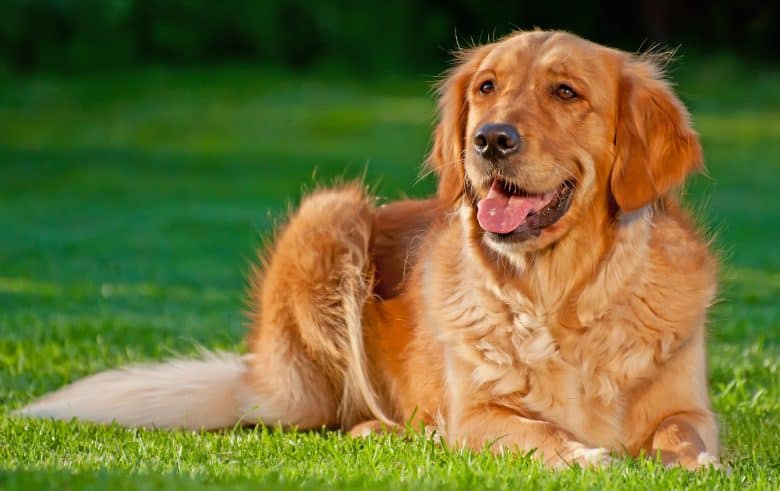
Golden Retrievers stand between 21-24 inches tall and can weigh between 55-75 pounds, depending on age and gender.
There are also distinct differences in their coats. While both breeds feature water-repellent double coats, they will be different colors.
Tollers are shades of red, while Golden Retrievers live up to their name with golden shade variants.
Goldens have similar seasonal shedding and grooming requirements, and they are also not hypoallergenic.
You may notice differences in the temperaments of the breeds. They are both playful, loving breeds, but the Golden Retriever is more intelligent with a lower prey drive.
Goldens can also do better with people and other pets, but they have a higher likelihood of separation anxiety. Goldens can be excellent service or therapy dogs while Tollers won’t.
A Golden Retrievers’ average life expectancy is slightly shorter at 10-12 years, but they are generally healthy dogs.
Given that they are larger than Tollers, their dietary and exercise needs will be slightly greater. Goldens will also drool more than Tollers.
Both breeds will net you a loving companion with an energetic personality, but each breed has unique needs to explore before deciding to make either a pet.
The Border Collie vs. The Toller
Border Collies are medium-sized dogs that are physically comparable to Tollers. They stand at 18-22 inches with a weight between 30-55 pounds.
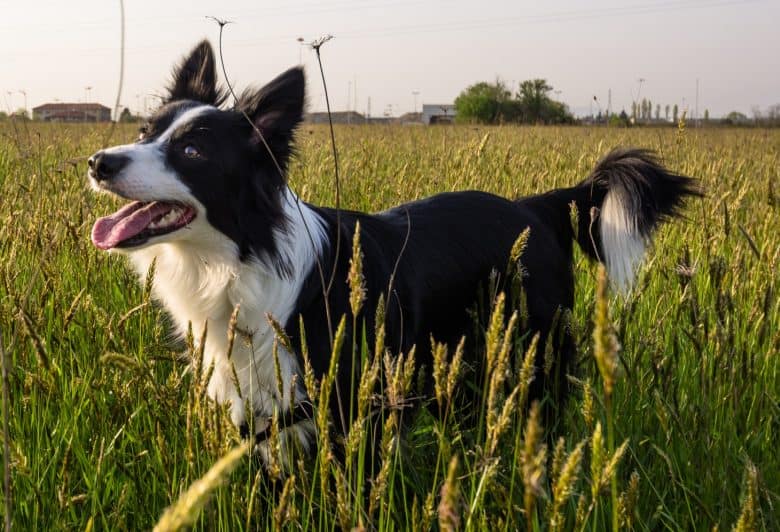
The first big difference you may notice is in the Border Collies coat. Tollers have water-repellent double coats, while Border Collies have a weather-resistant double coat that can be smooth or rough.
Border Collies also have a wide variety of colors and markings that can be prominent in their fur, while Tollers will only be shades of red. Neither are hypoallergenic.
Each of these breeds has its own temperament. Border Collies are the most intelligent breed, making them more independent and sensitive to routine changes.
Border Collies also make for better watchdogs even while being better with strangers. They have a lesser prey drive but can be worse with other pets.
However, both breeds do well with children.
Border Collies share a similar life expectancy of 12-15 years, and they are generally healthy dogs.
However, Border Collies can be predisposed to particular health concerns that should be screened for regularly.
They also have higher energy levels that can require more daily exercise, but their dietary needs can be comparable or even less than that of the Toller.
Either breed makes for a quality companion, but you should properly research their unique needs before deciding to bring one home.
Mixing it up: The German Shorthaired Toller

The German Shorthaired Toller is a crossbreed between the German Shorthaired Pointer and the Nova Scotia Duck Tolling Retrievers.
They are a small to medium-sized mix with varying characteristics depending on the parent they take after most.
| German Shorthaired Toller: | Male | Female |
| Height: | 15-20 inches | 13-18 inches |
| Weight: | 40-50 pounds | 35-45 pounds |
| Life Expectancy: | 12-14 years | |
We don’t know much about this breed’s history, so the best to understand them is to understand their parent breeds.
The Toller has been broken down at length here, but I recommend checking out the AKC’s breed page for more information on the German Shorthaired Pointer.
We can surmise that this cross was intended for hunting and tolling because of their parents’ affinity for the activities.
This cross has a sturdy appearance, and its ear shape can come from either parent.
Their ears can be high set on the head with a triangular shape like the Toller, or they can flop down on the sides of the head like the pointer.
They have brown eyes, a medium-length muzzle, and a nose that can vary in color but often takes after the coat color.
The German Shorthaired Pointer has a short, thick, water-repellent double coat. This coat can be white, brown, or red, but red can be overly prominent.
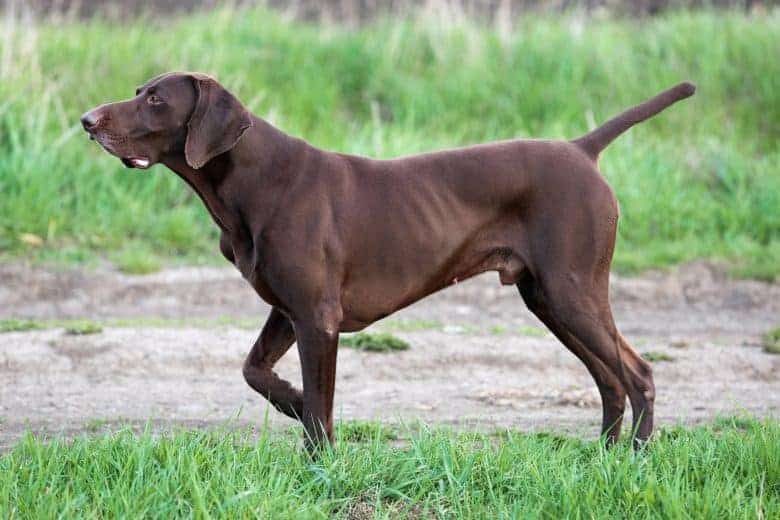
The coat can feature white markings on the feet, chest, and tail like the Toller, but it can also be roan or ticked. However, it’s easy to maintain with weekly brushings and monthly baths.
This mixed breed is a loyal family dog that will do well with strangers and children. They’ll be intelligent, easily trainable, and happiest by your side.
However, they don’t make the best guard dogs, and separation anxiety is common.
Your German Shorthaired Toller will have a high energy level, and they will require daily long walks, runs, and games to meet their exercise needs.
You’ll need to be active to handle these rambunctious rovers and keep them from gaining weight.
The only way to anticipate this crossbreed’s medical concerns is to look to the parent breeds.
With that in mind, we can surmise that Bloat, Hip Dysplasia, and Progressive Retinal Atrophy (PRA) could be concerns during the dog’s life.
Adhere to regular vet visits with occasional physicals, eye examinations, X-rays, and CT Scans to keep your pup healthy.
The German Shorthaired Toller is also not a popular crossbreed, making them tough to find and expensive once you find them.
If you’re lucky enough to track down a reputable breeder, you could pay $1000-$2000 for a new puppy.
The German Shorthaired Toller is a unique crossbreed that stems from elegant parentage, and while they may not be common, they can be wonderful companions to the right person.
Should I get a Toller?

If you enjoy a good run, long walks, and games with your dog, this breed could be for you. They’ll love to play with the whole family, they’ll be responsive to training, and they are eager to please.
If you can’t handle some of their high maintenance needs, it could be best to avoid this breed.
Their grooming and exercise needs may be too time-consuming for some owners, and separation anxiety could be a problem if you’re gone too long.
If you already have other small pets like cats or birds, a Toller may not be the best fit due to its prey drive.
Toller’s have specific and unique needs that require the proper level of care, which can be a time-consuming effort. Still, to anyone capable of keeping up, they are loyal, affectionate dogs.
Further Reading: Similar breeds
If a Toller doesn’t feel like the right pup for you, we’ve found some similar breeds that may be more your speed. Check out these other breeds to see how they measure up.
- Nederlandse Kooikerhondje
- Flat-Coated Retriever