Crate training is a great way to calm anxiety in a dog, creating a safe environment where your dog can relax.
As natural den animals, dogs take well to crate training, with the small, enclosed space offering them protection. It also saves your home from damage and helps prevent destructive behaviors.
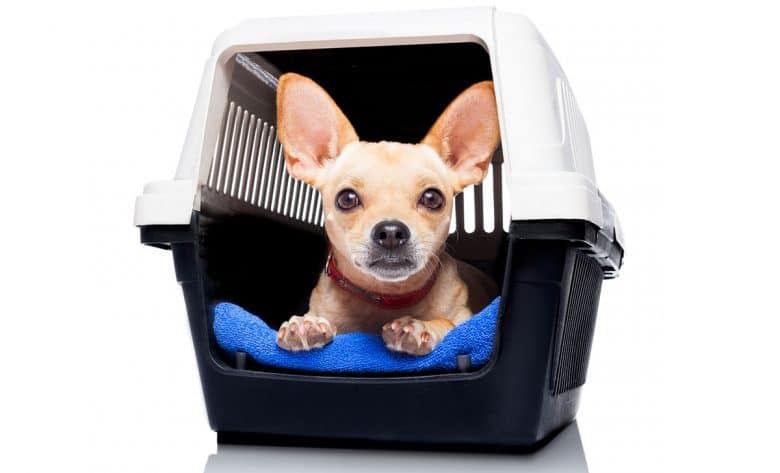
Keep reading to find out more about using crate training to ensure a well-behaved dog.
When to Use a Dog Crate
Most dogs will naturally choose a small area to relax, such as their dog bed or a corner of the room.
A crate or kennel provides this safe space that serves as their napping or sleeping area. It can also be a place where they eat.
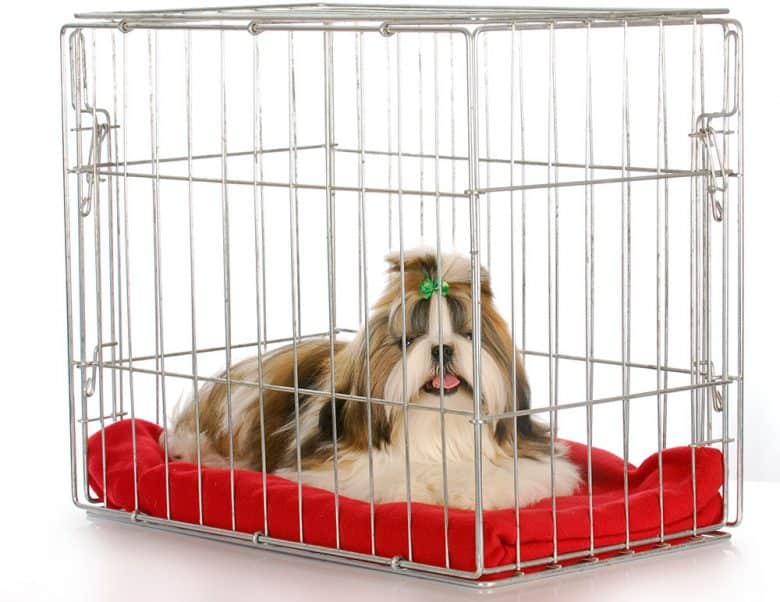
Leave your crate open at all times so your dog can voluntarily retreat to it when they need some peace.
Crates are also helpful when you simply can’t supervise them. Perhaps you’re busy preparing a meal or small children are coming over. Their safe space protects your dog, your belongings, and your guests, too.
When your dog’s overly excited and starts to jump or nip, crate training can be used to calm and control your pet. Use it for timeouts in a calming, positive manner and not as a form of punishment.
Puppies can also be a bit too boisterous for older dogs, so placing them in a crate is a smart move.
As your dog starts to see their crate as a den, it can also be used in house training new puppies.
Your puppy will begin to hold their business when in the crate, as no one likes to poop where they sleep. They’ll learn that when they are let out, then that is their chance to relieve themselves.
If you can’t watch your puppy all the time, or you don’t know what to do at night, the crate is thus a great place to leave them until you can take them outside.
Last but not least, crates are, of course, suitable for traveling with your dog.
Placing him in a crate is the safest way for your pooch to travel, offering a calm space while protecting both dog and owner from any accidents that can occur.
The crate will also provide a safe, well-known space for your dog when they arrive in a new, unfamiliar environment.
When Not to Crate Your Dog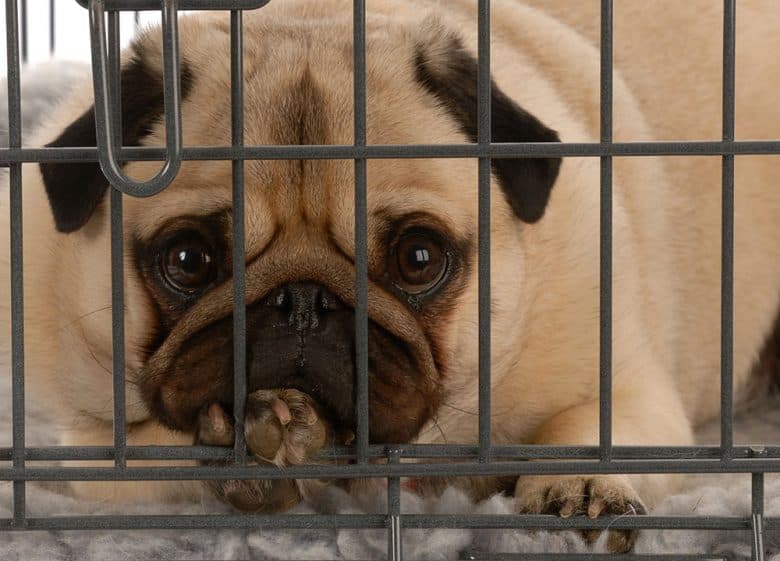
While some people look at crate training as imprisoning your dog, this shouldn’t be the case. It’s supposed to be a positive thing and experience for both the owner and the dog.
Crates should never be used as a form of punishment. While an excellent method to use when training your dog not to perform certain behaviors, crate training is not about locking a dog away for long periods.
If you do this, your dog will start to dislike their crate and won’t want to use it anymore.
If your dog shows anxiety or is afraid of the crate, it is cruel to force him into it. If your dog flattens his ears, tucks in his tail, and visibly shakes before going into the crate, then it is best not to use this form of training.
Your dog should be willing to go into the crate by himself and should be a comfortable, safe space for him.
Dogs who suffer from separation anxiety also don’t do well with the crate train method.
Dogs with severe anxiety will only feel more alone and panicked in a crate and could try and destroy it, ultimately harming themselves.
You should also not use a crate if the time you plan to spend away from your pet is longer than what your dog can hold it.
Your dog will try not to soil their crate, and if they do this, it could lead to anxiety feelings.
They can also get depressed due to the lack of socialization and exercise that comes with spending extended time in the crate.
Instead, leave the crate in the garden with the crate door open so your dog can come and go as they please.
If your dog regularly soils its crate even over short periods of time, this could be a symptom of an underlying medical condition, and your dog may need to see a vet.
Crates can make several medical conditions worse, especially if your dog is throwing up or convulsing. Restricting their movement is the last thing you want to do in this situation.
Old dogs or those with arthritis can also worsen if they are restricted to crates as the joints tend to seize up.
Crates should also never be used as an excuse for some quiet. This isn’t fair to your dog and is negligent on your behalf.
Puppy ownership is hard, tiring work, and a crate shouldn’t be used as an easy way to get out of your responsibilities.
Also, be careful using a crate in high temperatures. Your dog won’t be able to seek out the coolest or warmest spot when confined to a crate, which can be dangerous.
Crate Selection (Type, Size, and Location)
Your crate should be durable, comfortable for your pet, and flexible to your needs.
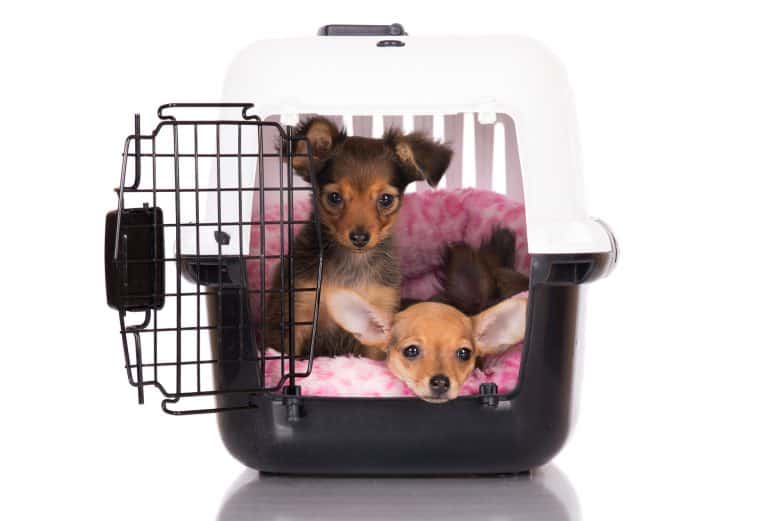
Kennels work well for dogs that like to sleep in the dark or outside, while enclosed airline crates are ideal for travel, and wire crates work for dogs that like to keep an eye on their surroundings or need a breathable space.
Playpens or barricades can also work to crate your dog, provided they are escape-proof and there aren’t any other distractions in the area you cordoned off.
Metal and plastic crates tend to be the most durable, while a fabric or collapsible crate works well if you plan to move around a lot with your dog.
Your pet supply store may have several dog crates from which to choose. Click on the below links to read more about the different types of crates:
- Plastic dog crate
- Wire dog crate
- Collapsible dog crate
- Wooden dog crate
- Soft dog crate
- Heavy-duty dog crate
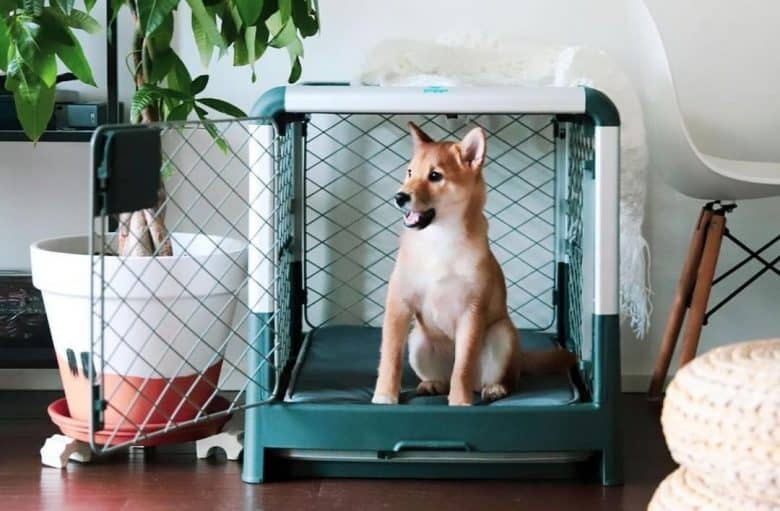
Crates can be placed in a living room or family room where you spend a fair amount of time, a bedroom where your dog sleeps, or even in the kitchen.
When buying a crate for your dog, ensure they have enough space to stand, turn around and stretch out, but not too much space that the crate doesn’t do the job of providing a safe, small area where your dog can feel protected.
As you want to use the same crate throughout your pet’s lifetime, look for one that will fit their adult dog size.
However, when they are a puppy, you may want to use a divider to block the crate to make it smaller so that your dog can’t relieve themselves at one end and sleep on the other side.
What you put inside the crate will depend on your dog. A bed, soft blanket, or towel will create a cozy environment; however, some dogs prefer to sleep on hard surfaces.
On the other hand, some dogs feel more secure with a blanket draped over the top of their crate.
Whenever your dog enters the crate, be sure to remove its collars and tags. These can get caught on the crate and lead to accidental strangulation.
The Crate Training Process
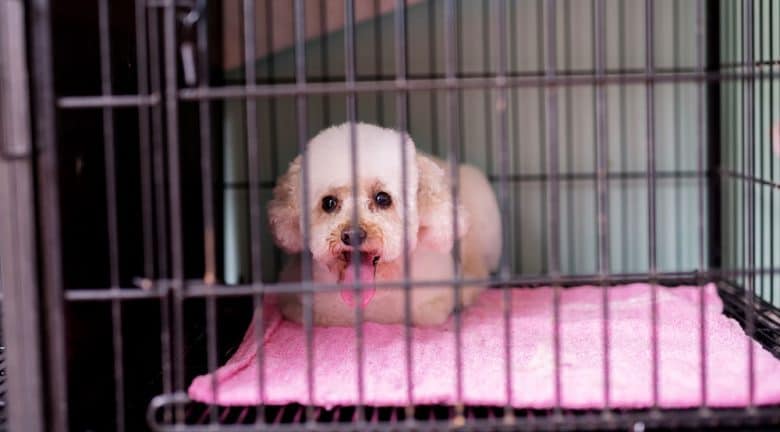
Crate training should always be a joyous process for your dog. Achieve this, and your dog will see the crate as a place where they enjoy hanging out.
You can introduce a new dog to a crate as soon as you bring them home. Treats and their favorite toys can be placed inside the crate, so your dog starts to create a positive association with the crate.
Always be sure to start with your crate training steps slowly, introducing your dog to the crate with an open door, so they never feel as if they are trapped.
You can then incorporate the crate in playtime, try a game of hide and seek with your dog or leave treats inside for them to find.
A fantastic way to get your dog to see their crate as a happy place is to provide them with a kong filled with peanut butter so that they spend a good few hours inside their crate occupied and having fun.
Food or water can also be placed in the crate. To feed your dog in the crate, start by just placing the food bowl at the entrance to the crate.
The bowl can be moved further and further to the back of the crate as your dog gets used to the idea.
Once your dog is used to the crate, you can start by leaving them in there for a short time. The first time can be as short as 5 minutes while you make yourself a cup of coffee.
You can then work up to a longer length of time from there. Always keep your arrival and departure low-key ad fuss-free to avoid getting your dog worked up.
Always be sure to bring your dog to the crate when they are calm. Young puppies may cry or whine at first, but this should stop once they have got used to the routine.
If your dog whines, do not reward this behavior by releasing them from the crate too soon.
Crating a Dog While at Work
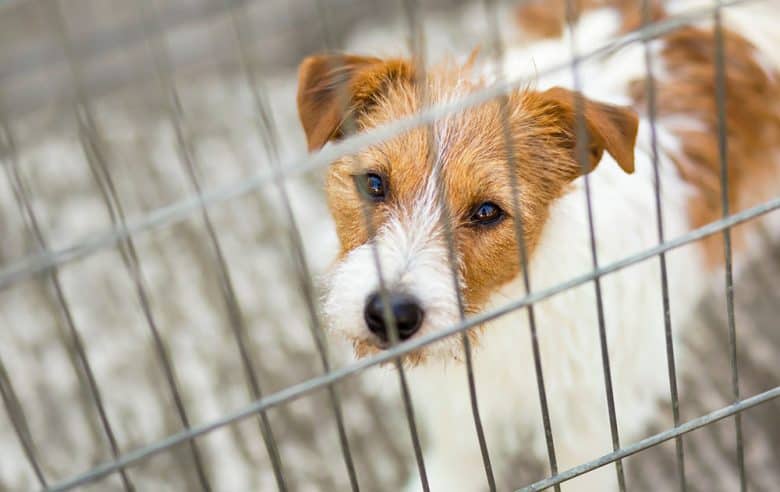
Many people believe crating a dog while at work is a convenient solution for the dog owner and provides the puppy with a comfortable, safe space.
Attitudes towards crating your dog differ from country to country.
In the United States, crate training is generally an approved practice by veterinarians, and many working people use this method of caring for their dogs when away at work.
However, others say that this is a cruel solution and that a puppy daycare or house sitter is a much better solution.
Common Questions Asked When Leaving a Puppy in a Crate While at Work
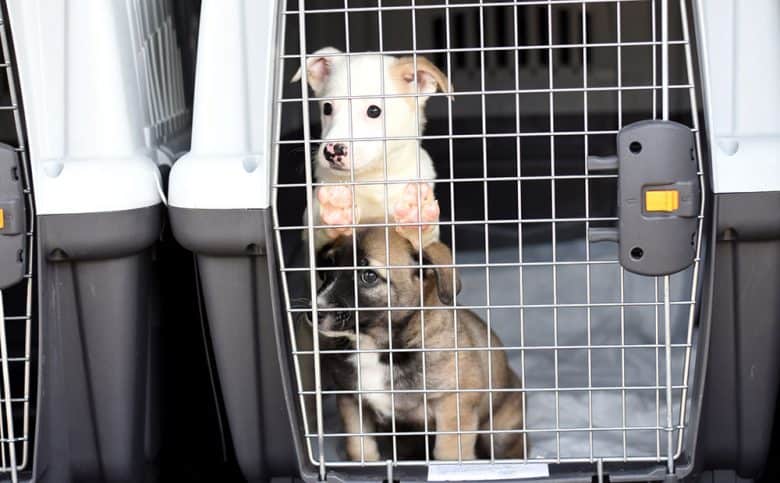
How long is considered ‘too long’ to leave a dog in a crate?
A crate is an excellent option for leaving your puppy while you are at work. Just remember that your dog will also need time where they can go outside, eat, play, and go potty, so be sure not to leave your dog too long.
It is recommended to not crate your dog for more than five hours at a time, and puppies under six months of age should not stay longer than three hours in a crate.
Is it cruel to crate a dog while at work?
Your dog will also need lots of exercise and attention before and after he is placed in the crate.
You may also want to hire a dog walker to come and give them a break for the crate if you can’t pop in during a lunch break.
Dogs are also social animals, so if you have more than one, it is better to place them in a room where they can be together rather than separate crates.
It may also be a good idea to leave a pet camera or monitor on the crate when you leave your dog for longer periods, so you can keep a beady eye on your puppy’s behavior and see if they are crying, whining, or distressed.
Crating a Dog at Night
Crating your dog at night is a fantastic option for getting your pet to sleep soundly. Keep the crate nearby so you can hear if your dog gets up, needs to relieve themselves, or is distressed in any way.
A dog’s crate should never be seen as a place to leave your pet home alone at night. If you work nights or need to go away, instead hire a dog sitter than look after your pet when you are not there.
When Can I Stop Crating My Dog?
The aim of crating is to provide your dog with a safe place to go for their entire life.
Although you might not feel a need for a crate anymore once you have a well-behaved pooch, they might still need the comfort their crate provides.
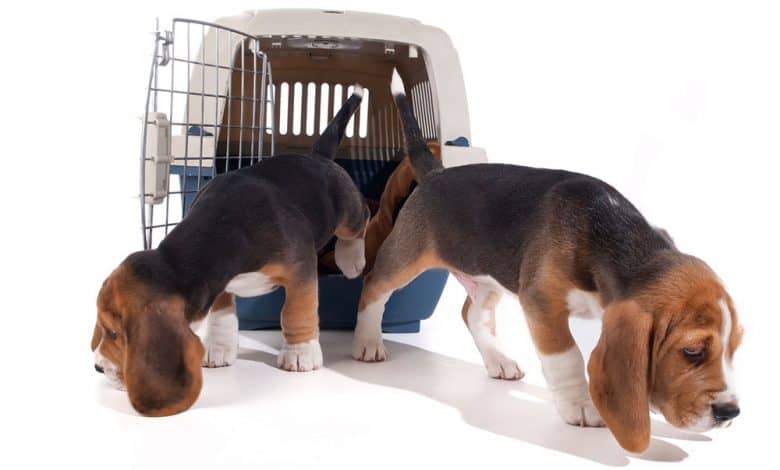
Thus it is advisable to keep it for them with an open door to use as and when they desire.
At this stage, however, it is not necessary to confine your dog to the crate, and they should be allowed to use it at their discretion as it has served its purpose as far as dog training goes.
Should You Crate Train Your Dog?
Crate training is a fantastic way to create a well-behaved, pleasant pooch. Although it may seem cruel, crate training is actually very beneficial for both owner and dog.
Just be sure to be patient, crate training does take time, and it can take at least six months before your dog gets used to his crate. You may even need to enlist the help of a professional dog trainer.
Further reading: More Dog Crate Ideas

Cindy Moore is the founder of K9 Web. She started collecting, checking, and refining her comprehensive Dog FAQs since early 1992, most of it gathered from information originally disseminated on Usenet. Today, K9 Web covers virtually all things canine.