Once a herding canine, the Australian Shepherd, simply called Aussies or Aussie Shepherds, has made its way into the hearts and homes of people across the world.
Thanks to their intelligence, loyalty, and playful personality.
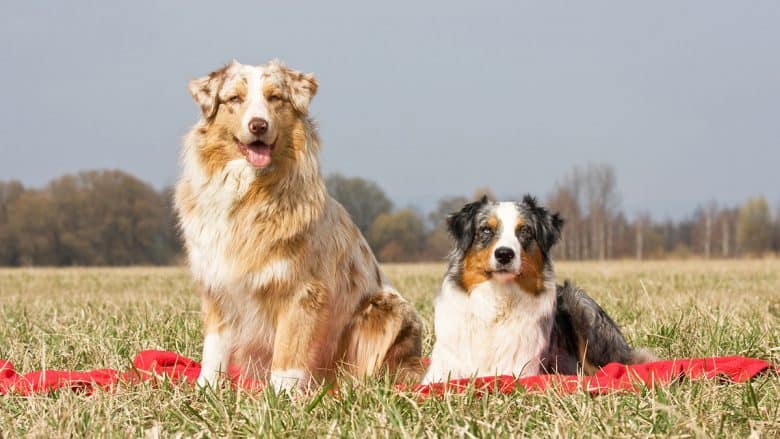
Curious to learn all about this special shepherd dog’s origin, looks, care requirements, and lifespan? Then let’s jump into your ultimate Australian Shepherd dog breed guide!
The Australian Shepherd at a Glance
We’ve put together a table below to give you a quick overview of the Australian Shepherd.
| Breed Summary | Australian Shepherd Quick Facts |
| Group | Herding Group |
| Breed Purpose | Herding Dog |
| Breed Size | Medium |
| Height | 18 to 23 inches (46 to 58 cm) |
| Weight | 40 to 65 lbs (18 to 29 kg) |
| Coat Type | Double Coat, Medium, Straight to wavy, Water-/weather-resistant |
| Shedding | Moderate |
| Most Popular Coat Colors | Blue merle, Red merle, Black, Red |
| Lifespan | 12 to 15 years |
| Temperament | Intelligent, Protective, Affectionate |
| Energy | High |
| Exercise Needs | 1 to 2 hours per day |
| Average Price | $800 to $1,800 |
Where Did the Australian Shepherd Originate?
The American Kennel Club (AKC) first recognized the Australian Shepherd (Australischer Schäferhund) in 1993, but the breed has a much longer history than that.
You might be surprised to learn that this working dog doesn’t come from Australia. What? It’s true!
The original Australian Shepherds originated in Europe near the Pyrenees Mountains in France and Spain where they were used to help the locals herd their animals.
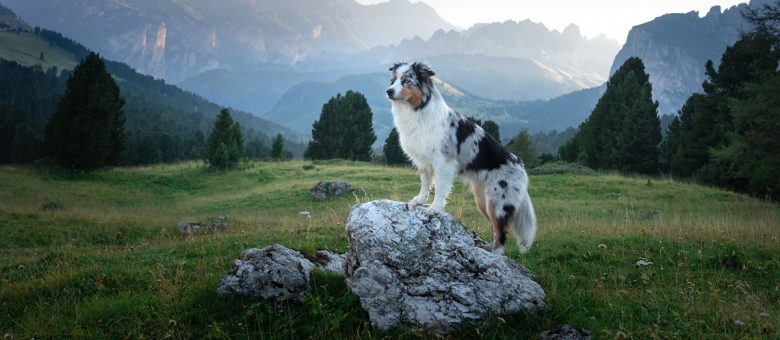
They were bred using Pyrenean Shepherds and other Basque Shepherds, then they were refined over the years to suit the needs of herders.
After that, immigrants from Europe settled in Australia and started moving inland to do cattle ranching in the early 1800s.
They brought along their pups to help them do the job and, over the years, bred them with Collies and Border Collies to create the familiar dog we know today.
When immigrants left Australia for the United States, they took with them their ranch helpers, and locals there assumed that the dogs came from Australia.
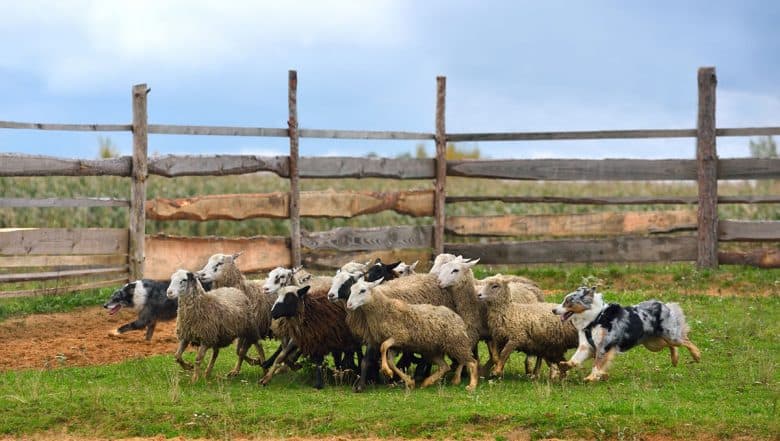
Since then, they’ve been an icon of the American West and you’ll still see them working alongside ranchers and performing in rodeos.
They’ve also earned a reputation as service dogs and search-and-rescue animals.
They’re part of the AKC’s Herding Group, which includes other breeds like Shetland Sheepdogs, Bearded Collies, Belgian Malinois, Norwegian Buhunds, and Pembroke Welsh Corgis.
The other organizations that recognize Aussies are:
- American Canine Association Inc. (ACA)
- United Kennel Club (UKC)
- Dog Registry of America, Inc. (DRA)
- Continental Kennel Club (CKC)
- American Canine Registry (ACR)
- National Kennel Club (NKC)
- American Pet Registry, Inc. (APRI)
- New Zealand Kennel Club (NZKC)
- Australian Shepherd Club of America (ASCA)
- North American Purebred Registry, Inc. (NAPR)
What Does an Australian Shepherd Look Like?
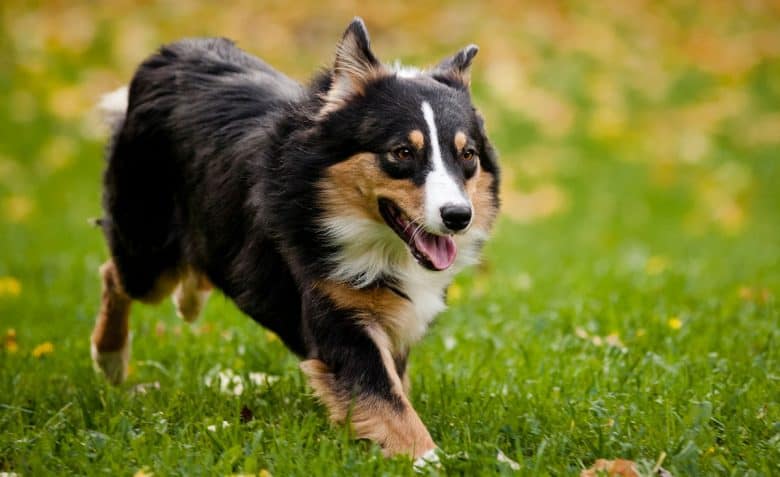
As per the AKC’s breed standard for Australian Shepherds, they have a head that’s in proportion to their bodies, with a balanced muzzle that tapers from the base to nose.
One of the things that can make them stand out is their eyes, which can be brown, blue, hazel, amber, or green eyes. But sometimes they can have two different colored eyes, which is called heterochromia.
They have a strong, arched neck, a straight back, a broad chest, and strong legs.
Do Australian Shepherds have a tail? You bet! It’s just not always very long. They have a straight tail that might be docked or naturally bobbed.
The AKC says that their tail shouldn’t exceed four inches in length.
“Why do they specify that you should cut the tails off of Australian Shepherds?” Some people feel that it’s safer for the dog because their tail might get damaged as they’re working out in the field.
Others argue that it is easier to care for. They don’t get matted or attract dangerous foxtails as much as shorter tails. That’s important when a dog is working hard outdoors all day.
But others feel that the practice is unnecessary and cruel. They say that there are plenty of herding dogs out there who have long tails and are just fine.
England has banned tail docking of many breeds, including Australian Shepherds.
The dog’s forequarters should feature long, flat shoulder blades and oval, compact feet with arched toes.
Their hindquarters are equal in width to the forequarters and their hocks are short. They shouldn’t have any rear dewclaws.
Size: How big is a standard Australian Shepherd?
The standard size for male Australian Shepherds is 20 to 23 inches (51 to 58 cm) in height, and they weigh 50 to 65 pounds (23 to 29 kg).
Females are a bit shorter, standing 18 to 21 inches (46 to 53 cm) tall, with a weight of 40 to 55 pounds (18 to 25 kg).
There is also a size called the Mini Australian Shepherd, now known as Miniature American Shepherds, that are recognized by the AKC as a separate breed.
This smaller version stands about 13 to 18 inches (33 to 46 cm) tall and weighs 20 to 40 pounds (9 to 18 kg).
Although they’re not that big, this purebred is NOT suited for apartment living, not unless you’ll be able to provide the exercise it needs.
But we recommend them to live on a ranch or farm, where they can run to their heart’s desire or even do what they’re bred for.
If you live in the city, an average-sized yard will do for this pooch.
There’s also a Toy Australian Shepherd which is smaller than the Mini Aussie. It only stands between 10 and 14 inches in height and weighs around 12 to 17 pounds. This new breed is not yet recognized as an official breed by the AKC.
Also read: Australian Shepherd Growth and Weight Chart
The coat & color of the Aussie Shepherd
Like most working dogs, Aussies have a medium-length, dirt- and water-resistant coat that’s very useful whenever they’re out in the field herding livestock.
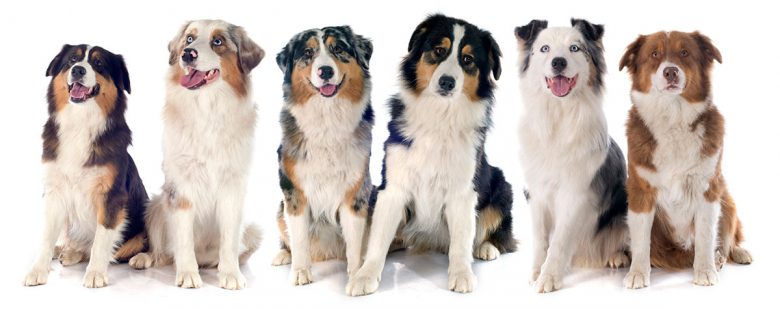
A double-coated canine has an outer layer that’s mostly weatherproof, while the inner layer offers insulation for comfort in harsh weather conditions.
Adding to the Australian Shepherd’s beauty is its wide range of colors.
They always have some white, usually on their legs and neck, along with a combination of black or merle (red and blue). They can also be red or black tricolor.
Some have tan points that can be with or without white markings. These tan points are small spots above their eyes, on their cheeks, side of the nose, on the chest, legs, or tail.
Read more here: What Do You Know about Australian Shepherd Colors?
Personality: Is an Australian Shepherd a Good Family Dog?
The answer is yes! They’re loyal to the people in their family, though they can be a bit standoffish with strangers.
They’ve been bred over the years to be focused on the people in their life so that they can work well together.
Just keep in mind that they might try nipping at kids to herd them, so you’ll need to train them not to.
But even if they aren’t working, that focus is still a part of their personality. They will want to be near and with their family at all times.
Are Australian Shepherds cuddly? Yep. They are affectionate and sweet, though again, they might not want to snuggle up with someone they don’t know well.
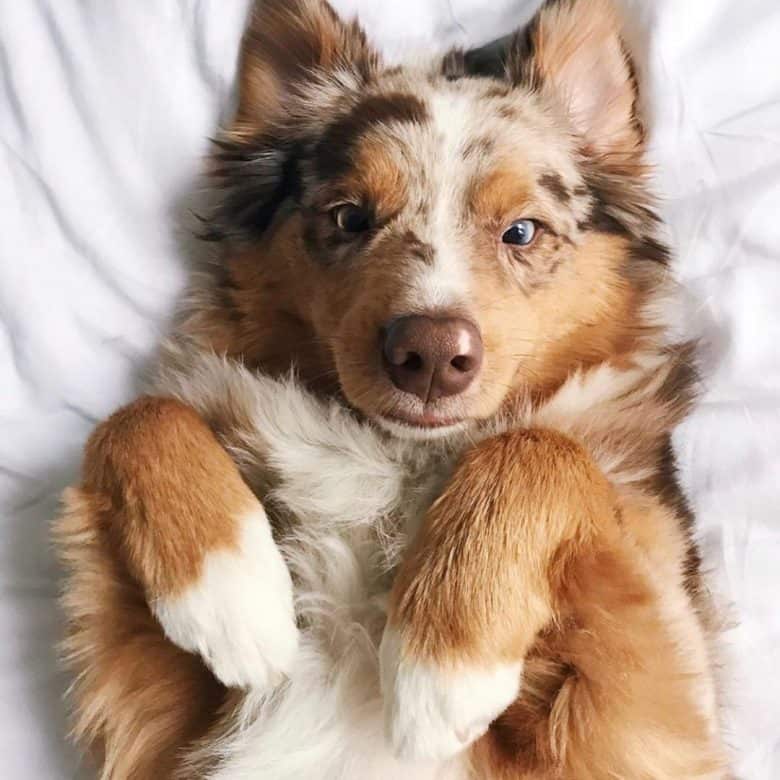
So you might be wondering if Australian Shepherds are friendly.
They are extremely friendly with their family members, and while they aren’t going to run up and greet a stranger like that person is their new best friend, they won’t be mean. But they will be careful.
So that’s the good news, but the bad news is that all that love for their humans can sometimes go too far. Ann Aussie can get separation anxiety if they’re left alone.
This means that they can become destructive, unhappy, and frightened when they’re left behind.
Luckily, some consistent training and early socialization can help them develop the confidence to stay on their own.
All dogs are pack animals and they prefer to be in a group. So can an Australian shepherd be left alone? So long as you teach them to be calm when you leave, absolutely.
How do you do that?
Give them a treat as you leave if Fido is calm. That helps to teach them that it’s not a bad thing when you leave. Then, when you come back, act calm and relaxed so that they don’t see your return as a big deal.
So what about aggression? While any breed can be aggressive, usually the result of poor breeding or socialization when they’re young, Australian Shepherds aren’t considered an aggressive breed.
Australian Shepherds aren’t the type of dogs to walk around your house acting as a guard dog and barking at threats.
But they do bark as a way of herding animals, and that can translate into barking when they’re at home, as well.
They might bark while they’re playing or while they’re trying to speak to their owner. They might bark to express displeasure or to alert you to a problem.
You can train this out of them by rewarding them when they listen to your request to be quiet and correcting them when they bark inappropriately.
You can even teach them to bark on command, which gives them a sense of when it’s okay to bark and when it isn’t.
One of the great things about Aussies is that they’re incredibly easy to train. That’s because they’ve been bred to be responsive to their owner’s needs.
In fact, they have been bred to be incredibly smart so that they can anticipate what their owner needs.
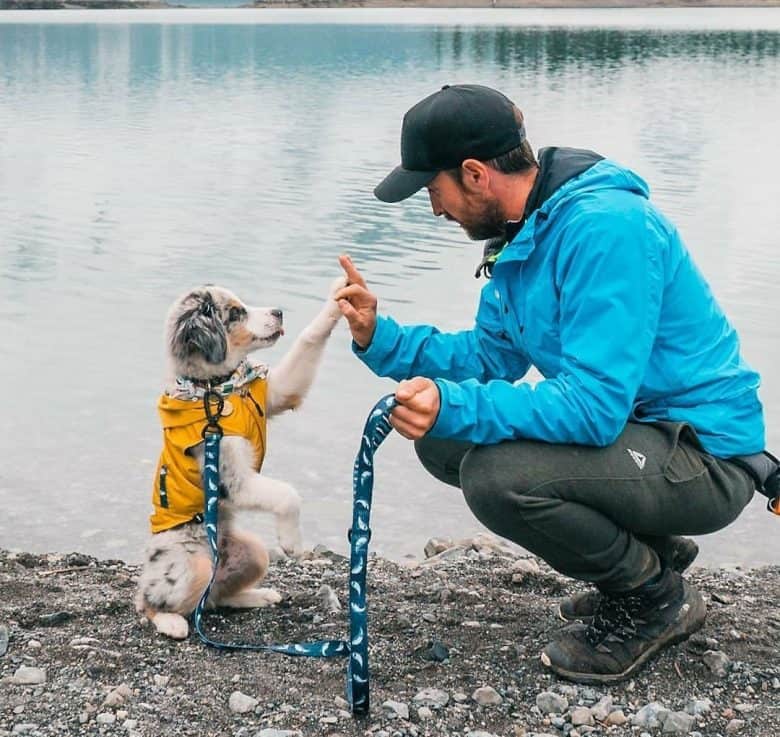
Whether you’re potty training them or teaching them to find and rescue lost hikers, they’ll be quick to learn and pick up on the skills you’re wanting to teach them.
Speaking of house training, if you want to potty train your Aussie, it’s important to give them boundaries.
Dogs naturally won’t soil the area where they sleep or eat, so if you keep them in a small area unless they’ve just been out potty, it will help encourage that natural instinct.
That doesn’t mean that they have to stay in a crate non-stop. You can block off sections of a room with a puppy gate or fence. Be sure to keep an eye on them.
Then, reward them well when they go to the right place.
Australian shepherds can be good with other dogs, but sometimes they can try to be a little dominant. That’s something you can work with them on, however.
Teach them to sit calmly when meeting a new dog and let them meet each other gradually.
Reward your dog when they act politely and separate them if things start to get tense. Keep trying until they can play together nicely.
When it comes to greeting strangers, the same kind of rules should apply. Make your dog sit calmly and introduce them slowly. Don’t ever let the leash get taut, because this can make your dog feel tension.
Don’t expect a reserved dog to fall in love with everyone they meet, though. It’s totally fine if they don’t want to be best friends with strangers. That’s just their personality.
When it comes to other pets, you need to be a bit more careful. Aussies may want to herd every animal they meet, from chickens to horses, and they can try to nip at the heels of animals. That can scare them.
You can teach them not to herd other animals by rewarding them for being calm and respectful and discouraging herding behavior.
Whenever they give into that strong herding urge, you need to correct them and teach them to sit until you release them.
When it comes to cats, The Smart Canine says that about half of the people surveyed said their dog got along with cats. If yours doesn’t, you can always train them to at least be respectful.
The trick is to slowly desensitize the animals to another. You can do this by introducing them VERY slowly. Put a cat in one room and a dog in another and reward your pup when he’s good.
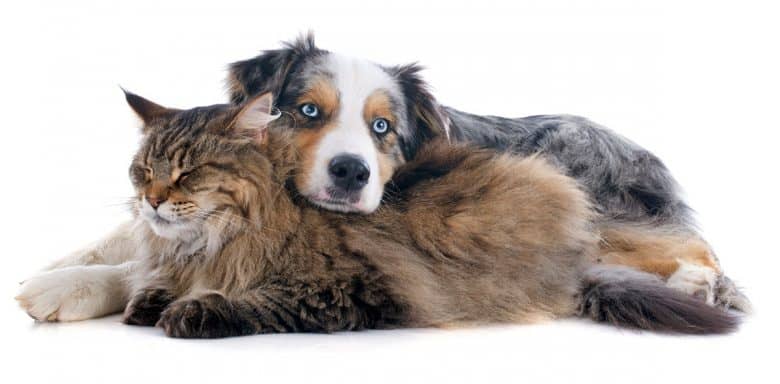
Slowly let them get closer and closer, always rewarding good behavior and ending the practice session if either the cat or dog gets too excited.
Once they’re good together, you can let them meet face to face. Keep your pup lying down or sitting and watch to see if either animal looks tense or excited. If so, separate them and try again more slowly.
Once they can be near each other, give them lots of treats and praise.
You might never be able to let them say alone together, but at least they will be respectful of each other and it won’t turn into chaos when they get near each other.
How to Take Care of your Aussie Shepherd
Australian shepherds aren’t heated or cold-sensitive, so you don’t need to treat them any differently than you would any other dog.
Some breeds, such as pugs or chihuahuas, might not be able to handle the heat, but Aussies are generally fine.
Watch out, since they do have a heavy coat, though. In the heat of summer, be sure to give them a spot in the shade and a constant supply of water.
When it comes to cold weather, these amazing dogs generally love it! When the snow is falling, they’ll be bouncing around in it and having fun.
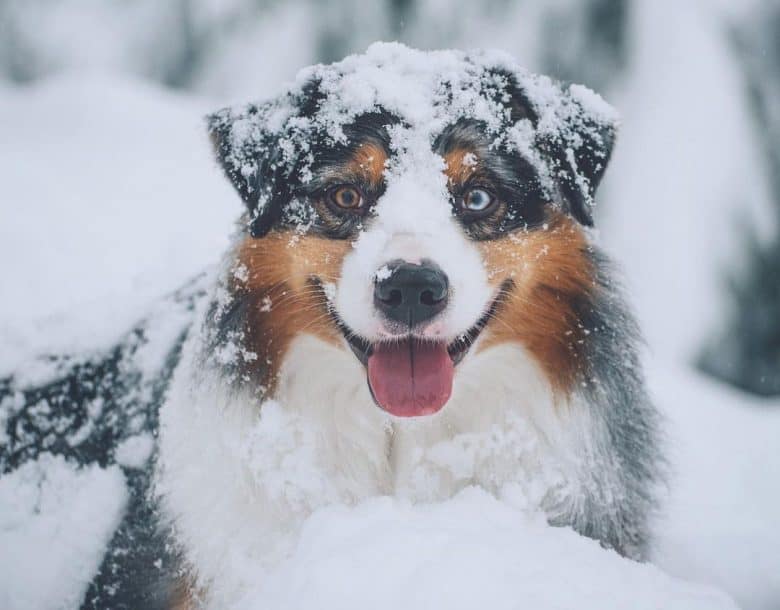
That doesn’t mean that they can live outdoors in the winter, however. They don’t have the same kind of thick coat as Huskies or Siberian Shepherds do.
In very cold weather, they shouldn’t be outside longer than 20 minutes or so.
So what temperature is too cold for an Australian Shepherd? A good rule of thumb is that if it’s too cold for you, it’s too cold for them. If you wouldn’t sleep or stay outside for hours, your Aussie shouldn’t, either.
Remember, their coat is weather-resistant, not weatherproof.
Exercising your Australian Shepherd
Australian Shepherds are working dogs and athletes.
You’ll see them working on farms, on ranches, at horse shows, at rodeos, competing in flyball and agility, or as therapy dogs. But what if your dog isn’t doing any of those things?
You still need to keep them active and busy. If you don’t, they’ll find ways to stay busy and you might not like it.
A bored Aussie can get into all kinds of trouble because on top of being highly active, they’re extremely smart.
Just check out this Aussie doing some playing and training to see what they can do.
That means they can get really creative when it comes to making trouble.
Don’t worry! All it takes is some exercise, both mental and physical, to wear them out and keep them out of trouble.
So what are the exercise requirements for these pups? They need between 1 and 2 hours of good exercise every single day. That means in the cold, in the heat, and even when you’re just not feeling it.

If you are more of a couch potato, then you should probably consider a different breed.
Each day they need to run, fetch, swim, hike, walk and chase. That means you can jog with them, swim with them, go for a long hike, let them run next to your bicycle, or play a lot of fetch.
Even better, get them into something challenging like agility or flyball.
It doesn’t end there, though. Not only do they need physical activity, but they need lots of mental exercises, too.
That means you can’t just put your dog on a treadmill for an hour and expect them to be happy. You might wear his body out but his brain will be completely bored.
So in addition to exercise, give them some mental stimulation, as well. For example, give them puzzle games to solve and hide their treats and make them find them.
You can also play hide and seek by having someone hold your dog while you run and hide. Then, let them come and find you.
Keeping Your Aussie Well-Groomed
The Australian Shepherd Club of America has some great tips for helping you learn how to groom your Aussie.
They advise grooming daily or at least several times a week. Not only does this help to remove some of that shedding hair, but it also stimulates the oils in their skin and keeps their hair and skin healthy.
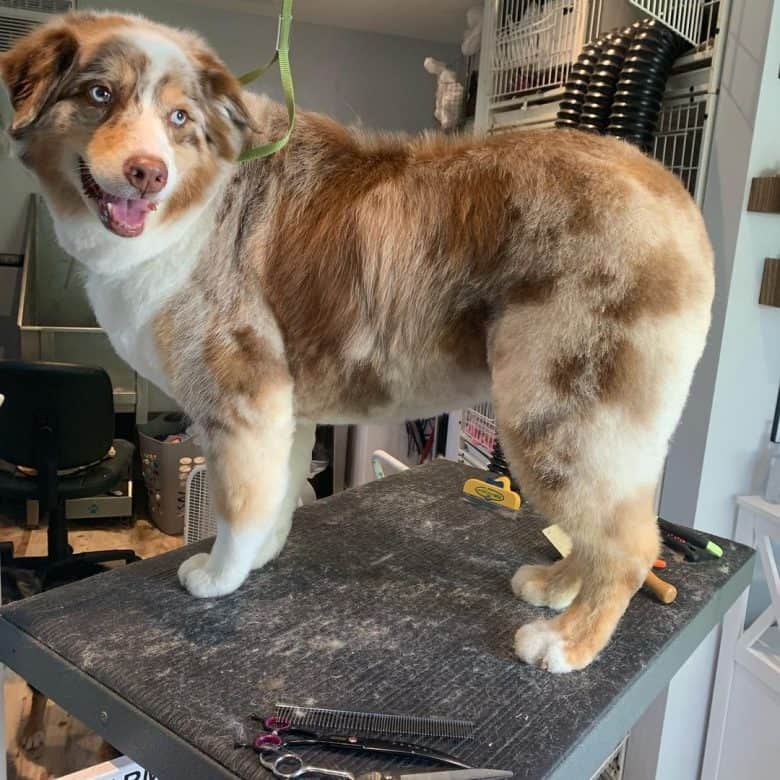
Plus, a well-brushed coat is better able to withstand heat, cold, and rain.
Use a good quality slicker brush to brush through the entire coat until it is smooth and tangle-free. Then, use a long-toothed comb to brush out the face, ears, and tail.
Use an undercoat rake to keep shedding to a minimum and to prevent mats. This is especially important during the shedding season.
Speaking of shedding, yes. Australian Shepherds shed a lot. They have a lot of hair, and it’s constantly falling out and being replaced.
Some people like the idea of shaving their dogs so that they don’t have to worry about hair, but that’s not a good idea.
Not only does it make your dog unable to withstand the elements, but you’ll just end up finding shorter hairs everywhere.
You can lightly trim them, however. Use a pair of thinning shears to lightly thin the coat without removing too much hair. You can also trim the feet, tail, and ears to make them look a bit tidier.
If you want, you can trim the fringe of the front legs.
How often you bathe an Aussie depends on their lifestyle. A working dog will probably need to be washed every month or so because they’re out there in the mud and elements.
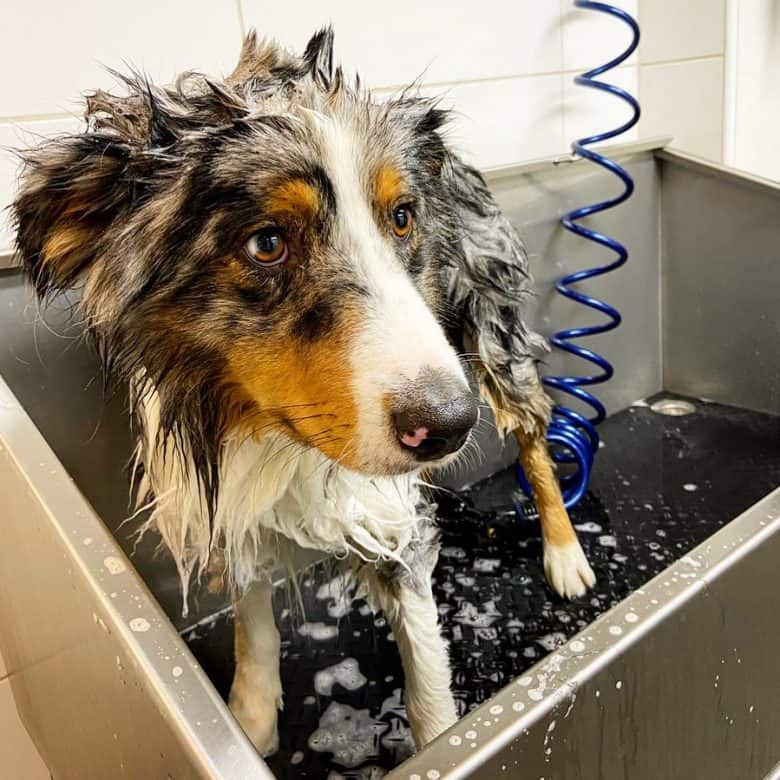
But a dog who spends most of its time indoors can go four months without a bath.
When it’s time to give them a scrub, use a shampoo formulated for dogs and work it throughout the wet coat. Then, rinse them completely.
Towel dry them and then spray them with a little finishing spray to help keep their coat shiny and tangle-free.
At the same time, wipe out their ears using a cotton cloth or cotton ball. Most Aussies are cool with water, which makes the process a little easier.
Don’t forget teeth brushing time. You should brush your dog’s teeth once a week using dog-specific toothpaste and either a gauze cloth wrapped around your finger or a toothbrush made for dogs.
How to Feed Your Pup
When it comes to feeding time, how much your dog should eat depends on a number of factors. A smaller dog eats less than a bigger dog, and a working dog eats more than a pet.
Regardless, you want to give them high-quality dog food that has meat-based protein as the first ingredient. You can find quality frozen foods that are raw or fresh.
Canned food is also a good option, but it can be more expensive, and you’ll have to take extra care of their teeth since they aren’t getting that crunch from dry food.
That means feeding them treats to clean their teeth and ramping up your tooth brushing routine.
The dry food is perfectly good, as well. Aim for about three to four cups of dry food each day and see how your dog’s weight looks.
You should be able to feel your pet’s last rib or two and their waist should taper slightly when you look at them from above.
If they look like they’re getting a bit heavy, cut back the food a little. A good rule of thumb is 30 calories per pound of weight each day.
Break the feeding up to two times a day.
Feel free to supplement with treats, but don’t overdo it.
Don’t miss: Best Dog Food for Australian Shepherds
Australian Shepherd Health Concerns
Australian Shepherds are fairly healthy, but like any purebred dog, they do have their health problems. Here are the things you need to keep an eye out for.
These dogs are particularly susceptible to eye problems. Those dual-colored eyes aren’t just part of a pretty face.
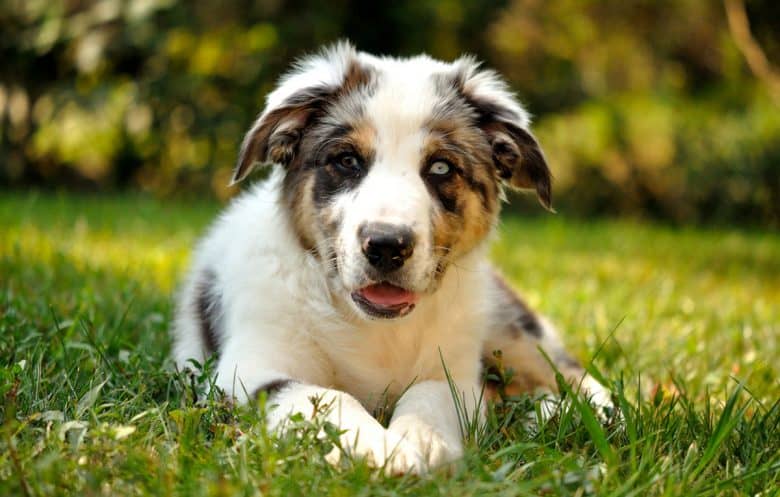
Aussies are susceptible to Progressive Retinal Atrophy (PRA), which is a degeneration of the retinal tissue. They can also have cataracts and Collie Eye Anomaly (CEA).
Speaking of eye issues, they can also suffer from Iris Coloboma & Iris Hypoplasia.
Also watch for Distichiasis, which causes abnormal growth of the eyelashes. Because they’re descended from Collies, they may also have Collie Eye Anomaly.
Finally, watch for Persistent Pupillary Membranes. This happens when blood vessels from birth remain in the eye.
Some Aussie is also prone to deafness. This is particularly common among dogs who are merle or who have white around or on the ears.
Many medium to large-sized dogs are prone to joint problems like Hip Dysplasia and Elbow Dysplasia. Watch for limping or favoring a leg.
They may also have Osteochondritis Dissecans, which is when cartilage in the elbow or shoulder joint.
On top of that, your pup may suffer from epilepsy, which causes them to have seizures that can threaten their health. They may also have hypothyroidism or allergies.
Many purebred dogs are prone to cancer, as well. Australian Shepherds are prone to Lymphoma and Hemangiosarcoma.
The bad news is that many of these dogs also have drug sensitivity, which means that certain medications can cause illness or death.
You’ll need to chat with your vet to determine what treatment is best for your dog with a thorough health screening.
Ivermectin another anti-parasitic are particularly dangerous. You’ll need to chat with your vet to determine what treatment is best for your dog with a thorough health screening.
A DNA test can often tell you what to watch for, so you’ll know if heartworm medication or flea treatment is a bad idea.
With all these issues, you may be wonder how long Australian Shepherds normally live. Despite the potential issues, most dogs live from 12 to 15 years.
The longest living Aussie also happens to be the oldest living dog, who hung around until 29 years and 5 months of age.
The incredible dog, named Bluey, was euthanized in 1939.
How Much is an Australian Shepherd Puppy?
So how much does an Australian Shepherd puppy cost? The price can vary depending on a number of factors, including breeding, conformation, age, and sex.
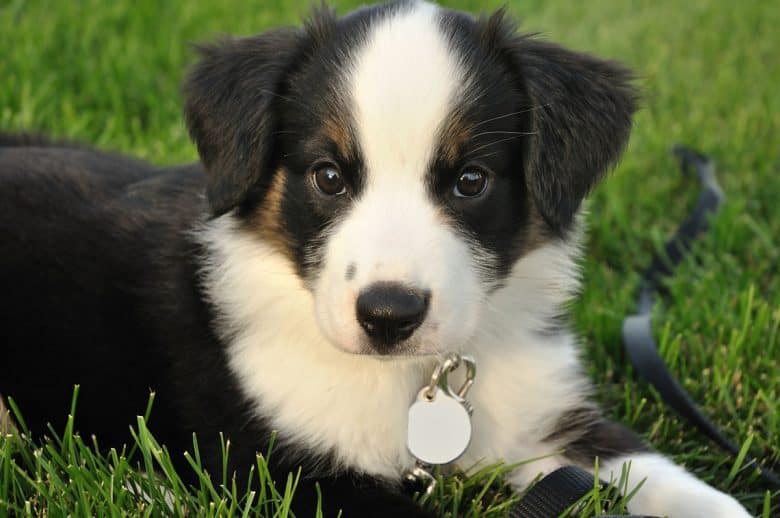
Dogs that come from exceptional breeders and that have potential in the show ring (known as confirmation) are going to cost a lot more than a puppy that has some flaws that impact its appearance or one that comes from a poor breeder (sometimes known as backyard breeders).
Females also tend to cost less than males. Dogs that have been trained for work or therapy will also cost a lot more.
While there can be a lot of variation, you can expect to pay somewhere from $800 to $1,800. Rescue dogs will likely only cost the amount that you are required to pay for adoptions.
Don’t miss out: Australian Shepherd Price
How to Find Aussie Breeders
Beware if you see a breeder selling dogs for cheap. That doesn’t necessarily mean that they are a bad breeder, but it’s a red flag.
Other red flags are breeders who offer PayPal buttons on their website and who won’t let you visit the parents or the home where the pups are raised.
Choosing an Australian Shepherd Breeder requires doing your research. You should read any reviews and speak with people in Aussie clubs or other breeders in your area.
If you visit the United States Australian Shepherd Association, they have a list of approved breeders in nearly every state.
For instance, in Arizona, they recommend Antebellum. In Florida, they suggest checking out Sunfire.
Consider Rescuing Your New Friend
If you want to adopt your new family member, there are lots of routes you can go. Check Craigslist, Facebook, and your local shelters for available pups.
On top of that, there are many rescue organizations that focus on Aussies.
Aussie Rescue & Placement Helpline is a nationwide service that helps to match people looking for a dog with those who have been surrendered or rescued.
The Australian Shepherd Club of America also offers help finding a rescue.
Australian Cattle Dog VS. Australian Shepherd
Aussies often get confused with or compared to other herding breeds, such as the Australian Cattle Dog.
The Australian Cattle Dog is similar in size, at 17-20 inches tall and weighing anywhere from 35-50 pounds. They’re both working dogs that help out cattle ranchers.
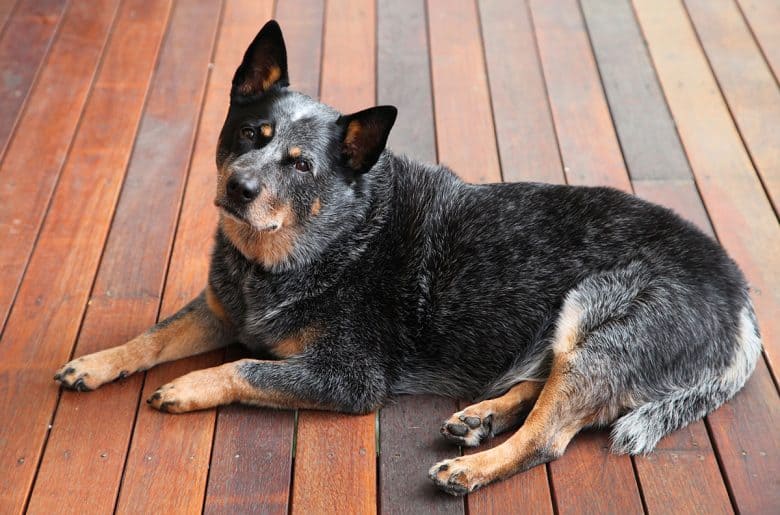
That’s about where the similarities end. Cattle dogs, also known as Blue Heelers, are descendants of the Dingo, a wild dog in Australia.
They have short, wiry coats and are either blue or red or mottled or speckled blue or red.
Some people also compare the Aussie to a Border Collie, a dog that hails from Scotland and has a similar appearance.
King Shepherds, on the other hand, are nothing like Australian Shepherd. They look like German Shepherds, which they were bred from.
While all three dogs are intelligent and loyal to their owners, and all three can be used to shepherd cattle or sheep, they aren’t similar.
Old English Sheepdogs are large dogs in gray and white that were bred in England to protect flocks and herd them. These dogs look like teddy bears but have a surprisingly high energy level.
Australian Shepherd Mixes
On the other hand, sometimes people breed Aussies with other dogs including terriers and retrievers in order to create a crossbreed that has the best of both worlds. Here are a few that you might like:
- Australian Shepherd Lab mix (AKA Aussiedor)
- Australian Shepherd Golden Retriever mix (AKA Golden Shepherd)
- Australian Shepherd Poodle mix (AKA Aussiedoodle)
We have a whole article dedicated to Australian Shepherd mixes if you want to learn more.
Who Should Get an Australian Shepherd Dog?
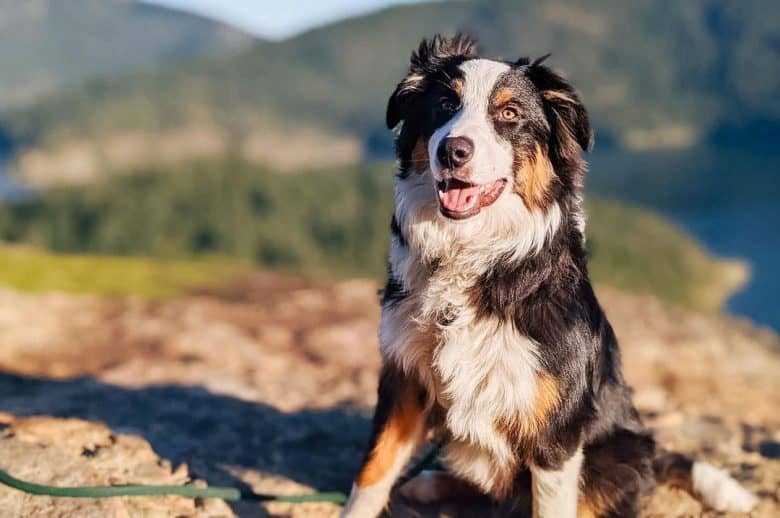
So what’s the bottom line with this smart, sweet, loyal, and high-energy pup?
The pros are that they are easy to train, thanks to their drive to please and their intelligence. In fact, they rank near the top on the list of dogs with high trainability.
As we mentioned, they’re also an incredibly loyal companion. Once they latch onto a person, they’ll never let go. They can also live in all kinds of climates and in an apartment or on a massive farm equally well.
They’re also a good size no matter what your preferences are. They’re large enough to participate in dog sports but small enough to fit into your car.
So what’s the downside? Perhaps the biggest problem, if you can call it that, is that they have a lot of energy. Don’t forget, they need a ton of exercise, or neither of you will be happy.
They also shed quite a bit, so if you are worried about having an extremely clean home, you might want to consider another breed.
They also have those interesting two-colored eyes sometimes, but those eyes can cause all kinds of problems. They might have cataracts, detached retinas, or a number of other problems.
Like many dogs, they also suffer from health problems like hip dysplasia. That can be painful and costly for your poor pooch.
As long as you know what you’re getting into and you’re ready to make the effort to keep them happy, an Aussie can be the perfect family pet.
Further reading: Learn more about Australian Shepherds
- Australian Shepherd Colors
- Australian Shepherd Names
- Red Merle Australian Shepherd
- Blue Merle Australian Shepherd