Ready to be enchanted by a spunky little pooch with a glorious coat of fur? Get ready to meet the Shih Tzu.
Wondering how it’s pronounced? It’s not what you might think. Shih Tzu is pronounced “sheed-zoo” or “sheet-su” and means “little lion.” Want to get to know the frisky and fierce “lion dog?”
Where did the Shih Tzu originate?
The Shih Tzu originated in China and was actually the dog of Chinese royalty. It was the royal house pet to the Ming Dynasty and a favorite of Empress T’z Hsi in the 1800s.
It was likely bred from two ancient breeds hailing from Tibet, the Lhasa Apso and the Pekingese, according to the American Kennel Club (AKC), in order to be a lapdog.
They became popular in the United States after World War II when soldiers brought them home from abroad after the war ended.
They have become particularly popular in England and even Queen Elizabeth II has had one. In the United States, they rank as the 20th most popular dog among the 196 recognized by the AKC.
They’re sometimes known as Chrysanthemum dogs and are part of the toy group of dogs.
Shih Tzus can live quite a long time, with one dog recorded as living 23 years. So what is the oldest living Shih Tzu today?
According to All Things Shih Tzu, that honor goes to Teddy, who lived to 19 years old before passing in December 2019.
Currently, they are looking into finding the oldest living Shih Tzu still around today.
The Shih Tzu family is classified by some people into three different types.
There is the American Shih Tzu, which is recognized by the AKC and has a small chest, high front legs, a short neck, and small eyes.
The European Shih Tzu is the one recognized by the United Kennel Club (UKC).
This dog is slightly different from the American type, with a wider stance and a rounder head. They also have a longer neck and larger eyes with a broad chest.
Finally, there is the Imperial Shih Tzu, which isn’t recognized by either the AKC or UKC.
This dog either smaller than the breed standard or otherwise has a genetic fault that would disqualify it from fitting the breed standard. This includes “teacup” dogs.
Beyond the AKC and the UKC, the breed is recognized by the Federation Cynologique Internationale and all other breed clubs in the English speaking world.
What does a Shih Tzu look like?

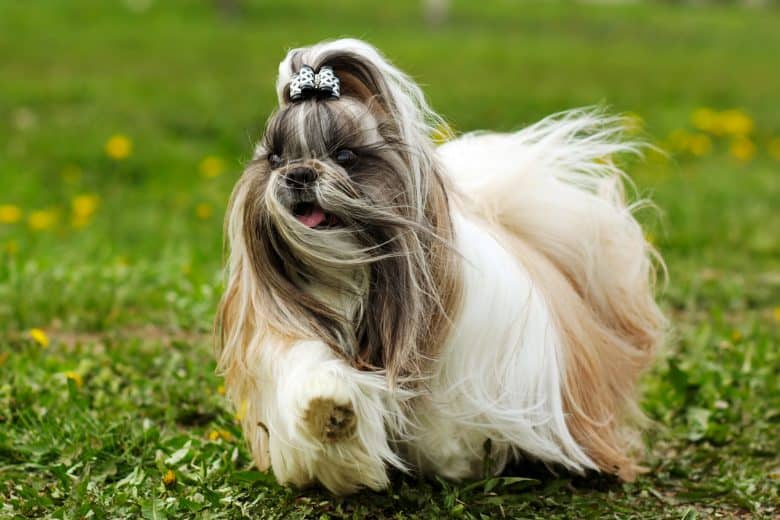
So what does a Shih Tzu look like? One of their most stand-out features is that incredible tail.
Their tail is set high and carried curved over the back. When allowed to grow out, it is heavily plumed and quite dramatic.
The other thing that stands out is that they look quite like a little lion with their heavy mane of fur around their head and neck.
They have a round, broad head with large, heavily coated ears. Their skull is domed with a distinct stop, and a square, short muzzle. They have an underbite with a broad, wide jaw.
They have a proportional neck with a level topline and a shot, sturdy body.
The eyes are large, round, and prominent with dark rims, except for blue or liver pigmented dogs, which may have lighter eyes.
All Shih Tzu puppies are born with blue eyes and you may occasionally see a dog that retains the blue into adulthood. They are rare, though, and blue eyes are not considered to fit the breed standard.

How Big is a Shih Tzu?
Obviously, these are small dogs, but exactly how big do Shih Tzus get? Usually, they weigh anywhere from 9 to 16 pounds and are 9 to 10.5 inches at the shoulder.
Remember, there are teacup Shih Tzus, which are much smaller and aren’t considered “true” purebred dogs.
They can weigh just a few pounds and may only be 6 or 7 inches tall.
A healthy Shih Tzu should weigh between 9 to 16 pounds depending on their height and build.
All About that Gorgeous Coat of Hair
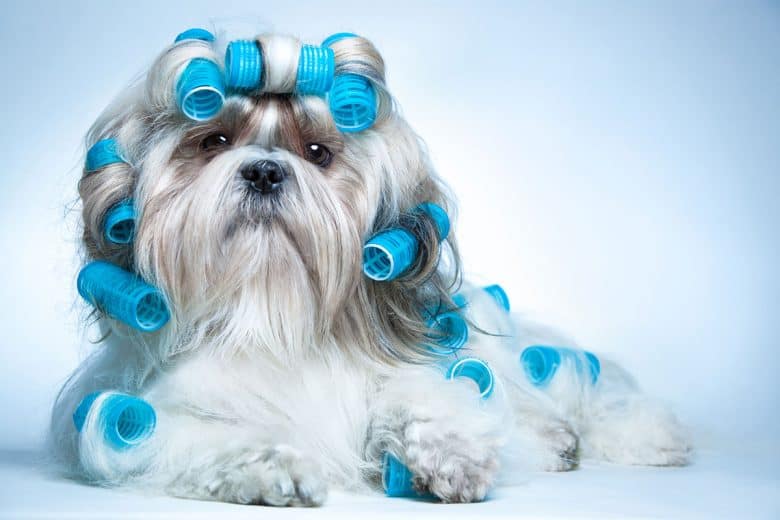
When a Shih Tzu has a full, long coat, they are a sight to see. Their legs almost disappear under their hair and they appear to float along the ground in a cloud of fur.
Their double coat is actually made up of two layers, with a shorter inner layer and a longer outer layer that is long and silky.
These two layers keep the dog warm in the cool weather and protect them from the sun, wind, and rain.
Shih Tzus come in a huge range of colors, including black, black and white, blue, blue and white, brindle, brindle and white, gold, gold and white, liver, liver and white, red, red and white, silver, silver and white, and brown.
They can have white on the chest, legs, face, tail, and head, but a white tip on the tail and a white blaze on the forehead are particularly prized.
No matter what color, they can also have black markings or even a black mask. Some have tan markings on their body or face, as well.
Get to Know the Shih Tzu’s Incredible Personality
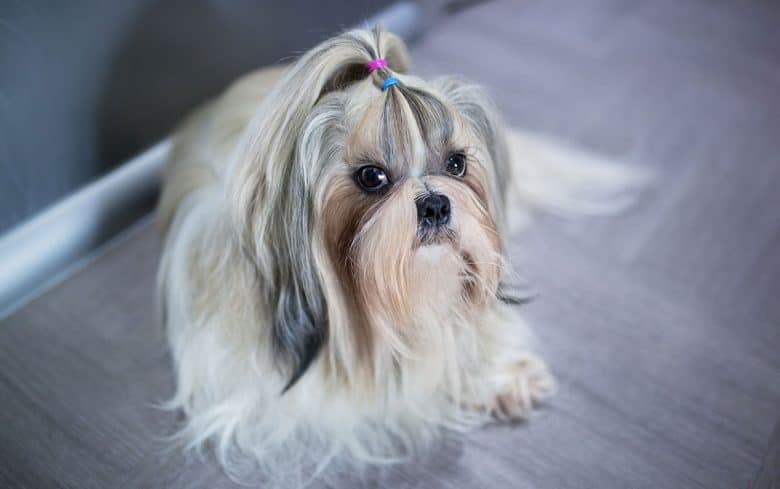
Shih Tzus are small dogs, but they have a really big personality. They can be stubborn, opinionated, independent, and spunky.
They’re also friendly, playful, alert, and courageous.
In other words, don’t expect them to be timid little lap dogs. They know what they want and they’re not afraid to tell you.
But while they can be outspoken, they’re also one of the most loyal breeds. They love their people and stick to them like glue.
Many people wonder whether a male or female dog is right for them. In the battle of the sexes, which makes a better pet?
There is no evidence that there is a personality difference in Shih Tzus between males and females.
That’s not to say that there aren’t differences. Females enter estrus (also known as “heat”) twice a year. When that happens, a dog is more likely to seek out other dogs (because she wants to breed).
But if you aren’t planning on breeding your dog, spaying her will avoid this situation.
Similarly, unneutered male dogs will be more dominant and high spirited, particularly when they sense a female in estrus nearby. But if you spay your male, you can avoid this issue.
Knowing this, you might wonder if Shih Tzu a good family dog or pet?
Absolutely! They love being around their people, and while they don’t immediately warm up to strangers, they are completely loyal to the humans within their immediate circle.
If you spay or neuter your dog, they’ll be even more likely to be the ideal family pet.
Shih Tzu’s aren’t your typical demonstrative dog. They don’t want to cuddle with you on your couch, necessarily. But when they are in the mood, they will seek you out for some snuggles.
So are they good with kids? Yes, they have a docile, accommodating personality, as long as they are trained from a young age to accept and respect everyone in your family.
Shih Tzus are friendly little pups, outgoing, and willing to meet new people. They are also cordial with other dogs for the most part, especially if they were socialized well as puppies.
They can get along with cats with proper training and especially if they are raised together.
Since Shih Tzus were bred to be companion lapdogs, their personality is geared toward being around people, so they’ll always want to be by your side.
That means that they can get separation anxiety, however. Since this little lion dog thinks that it should be with you all the time, when you aren’t around, they can get upset.
That doesn’t mean that you can’t leave them alone – though they prefer to be with you if they can – but it does mean that you’ll need to train them to accept those times when you can’t be together.
If you don’t, they can bark a lot in an attempt to get you to come home, or they may have an accident in the house or chew on things they shouldn’t.
To avoid this, praise them and give them a treat as you walk out the door to teach them that leaving is a fun thing.
Then, when you return, act very calm and matter-of-fact to teach them that it was no big deal that you were gone.
Don’t worry, this won’t teach your dog not to love being around you, it just gives them the confidence to know that they can be alone and nothing bad will happen.
Speaking of barking, Shih Tzus can definitely be diligent watchdogs.
As Shih Tzu owners everywhere know, they’ll let you know if someone is walking by your home if there is a delivery coming, if someone is at the door, and sometimes for no obvious reason at all.
This is also something you can train. Reward them when they stop barking with a treat and praise and teach them the command to bark. That way, you have control over when they start barking and when they stop.
Is all that barking potentially aggressive, though? Shih Tzu’s aren’t considered aggressive in the traditional sense, but they can have a bit of a pushy streak. When the little lion dog feels backed into a corner, they can lash out.
They can also be demanding when they feel like it, as this adorable Shih Tzu video demonstrates.
No matter the reason, this is something you should train your pup not to do. You can talk to an expert if the situation becomes concerning. Luckily, Shih Tzus can be quick learners… when they’re in the right mood.
Speaking of training, Shih Tzus are usually easy to train because they love being the center of your attention.
When you’re training them, they get all the focus. Use this to your advantage to teach them basic obedience and good manners.
Potty training is the one area where training won’t be so easy. Shih Tzus have a reputation for being difficult to house train.
Use a crate to help make the job easier, and never let a puppy move around your home without supervision. With consistency and patience, you’ll be able to train your new pal.
How to take care of your Shih Tzu
Is all this making you worry that the Shih Tzu is a high maintenance pooch? Their glorious coat is undeniably high-maintenance.
You either need to have it regularly trimmed or you need to brush and groom them daily.
Also, keep in mind that they are sensitive to heat and cold. Because of their small size, they can’t handle temps that are too hot or cold Also, their short snout makes it difficult for them to breathe in extreme weather.
It’s Time for Exercise
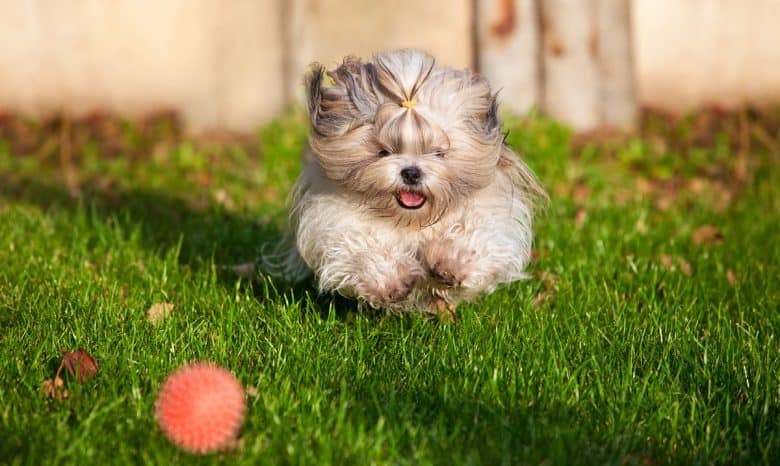
Some dogs require a lot of exercises, but Shh Tzu’s are the ideal dog if you are more couch potato than a marathon runner.
They only need a few short daily walks to be happy. If you have a yard, you can let them out to romp a few times per day, instead.
Twice a day, you should take your dog out for a walk for ten minutes or so, for a total of about 20 minutes of exercise.
Shih Tzus aren’t athletes and they won’t be able to run or walk long distances. They just don’t have a high energy level or the physical build for intense activity.
If you want to take your dog on longer trips, you’ll need to slowly increase their endurance. With the right training, they can happily walk 3 miles with you.
Grooming: Do Shih Tzus shed?
Shih Tzus have a lot of hair! This might make you worry that they shed a lot, but that’s not the case. While they do have a lush, glorious coat, they don’t drop much hair.
That’s part of the reason that they require so much grooming – all that hair stays in place, much like human hair.
However, when they are transitioning from puppyhood to adulthood, they go through a period of shedding as they get older.
That doesn’t mean that they don’t drop any hair at all. Do you know how much of your hair comes out when you brush it? The same thing happens with this dog breed.
So what does it mean if your dog is shedding after it becomes an adult? Much like humans, if a Shih Tzu is dropping more hair than usual, they could be eating a poor diet or in poor health. Check with your vet.
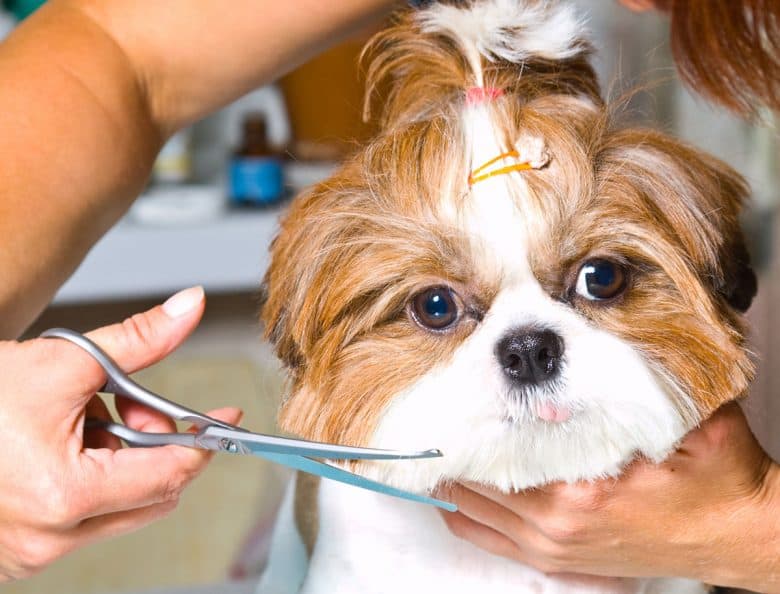
It’s time to talk grooming – perhaps one of the most challenging parts of raising this little dog.
How often should a Shih Tzu be groomed? That depends on whether their coat is kept long or short.
Long coats should be brushed and combed every single day. If you don’t, they’ll get tangled and matted in no time flat. Both combing and brushing are required.
Daily brushing may sound like a major chore, but make it a fun part of the day and some bonding time for the two of you.
If they have a top knot, you should remove the rubber band and replace it every day or so. Otherwise, it will become extremely messy and tangled.
Their coat requires special tools, including a fine comb, a wide comb, and a brush. Their ears, tail, and body should be scissored every month or six weeks.
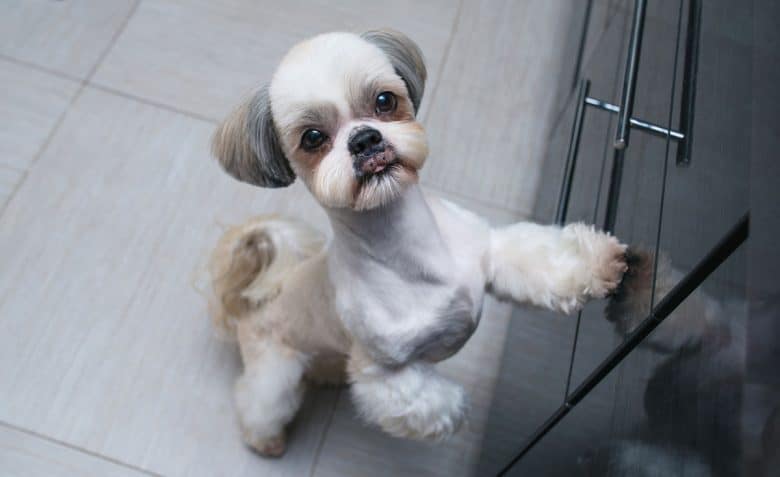
Dogs with shorter coats don’t need to be brushed nearly as often. You can get away with a weekly comb out. The bad news is that you’ll need to cut their hair or take them to a groomer every six weeks or so.
When your dog is shedding its puppy coat and growing its adult coat, you’ll definitely need to brush it well every day, if not more. The coat will be quick to tangle during this stage, which takes place around a year old.
How often should you bathe a Shih Tzu? Again, they need frequent bathing. Once a week isn’t too often if you want to keep their coat looking top-notch.
Our guide on Shih Tzu coat options can help give you an idea of all the great options out there for haircuts. For instance, the teddy bear clip is particularly popular (and adorable).
Trim their nails once a week and brush their teeth daily. These dogs are prone to dental problems, so it’s important to keep on top of their dental health.
They also tend to get ear infections because of their floppy ears and long hair.
How much and How Often Should a Shih Tzu Eat?
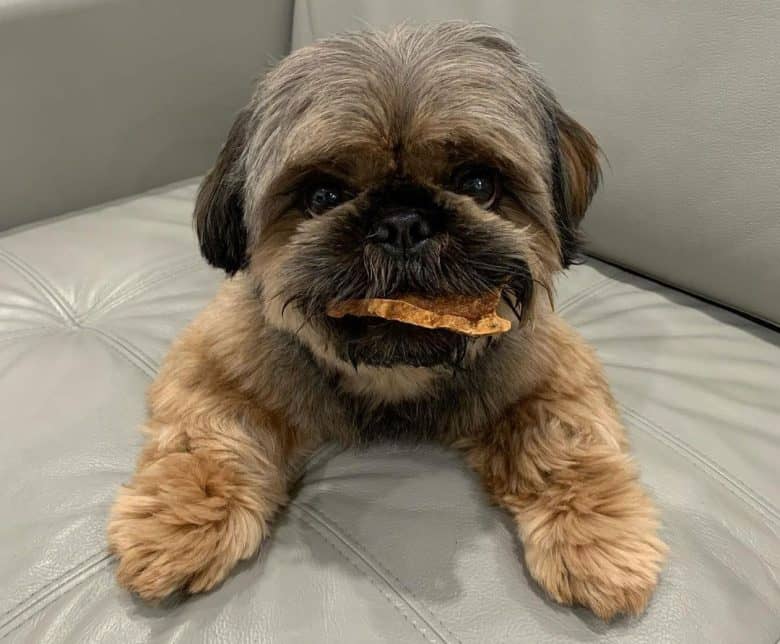
To keep your dog healthy, you should split feeding up into two times a day. They need a high-quality dog food that has protein as the top ingredient. Don’t use food with fillers or cheap ingredients.
Like all dogs, they shouldn’t eat anything that could make them sick, such as chocolate, grapes, onions, and garlic. You may also find that your dog has food allergies.
If this is the case, you’ll need to try eliminating things from their diet to figure out what’s causing the problem.
What health problems does Shih Tzus have?
Shih Tzus tend to have long lifespans, and most of them die from old age and complications associated with aging. The second most common problem is heart issues.
Beyond heart issues, they can have a range of health issues. We already discussed ear problems like infections, but they can also have eye problems. Inflamed corneas called keratitis isn’t uncommon.
Their eyes can also become dislodged from the socket, a condition called proptosis. Also watch out for progressive retinal atrophy, and dry eye (also known as keratoconjunctivitis sicca).
Like many small breeds, they can also have joint problems. Among these are canine hip dysplasia and patellar luxation, which is when the kneecap becomes dislocated.
They can also have food allergies, contact allergies (caused by their skin touching something that irritates it), and inhalant allergies.
Inhalant allergies are similar to the type that humans get during the spring when there is a bunch of pollen in the air.
Juvenile renal dysplasia is a disease that impacts young dogs’ kidneys.
If your dog drinks a lot and urinates a lot, you might want to take them to the vet for a check-up. If it continues, dogs can lose weight and vomit frequently.
Shih Tzus also get bladder stones and bladder infections.
They also experience what is known as reverse sneezing. This happens to brachycephalic dogs (ones with short noses). Reverse sneezing happens when the dog gets excited, inhales an allergen, or eats too quickly.
Their noses start to drip secretions into their throat and they’ll start wheezing. When they’re having an episode, you want to help them calm down so they can breathe again.
You should have a yearly health screening to make sure that your dog isn’t having any health problems that you haven’t identified. A trained professional can spot issues that the average person might miss.
The average lifespan is anywhere from 10 to 16 years.
How much is a Shih Tzu Puppy
There are two ways to get your hands on a Shih Tzu of your own. The first is to purchase one, usually a puppy, or you can rescue a puppy or an adult.
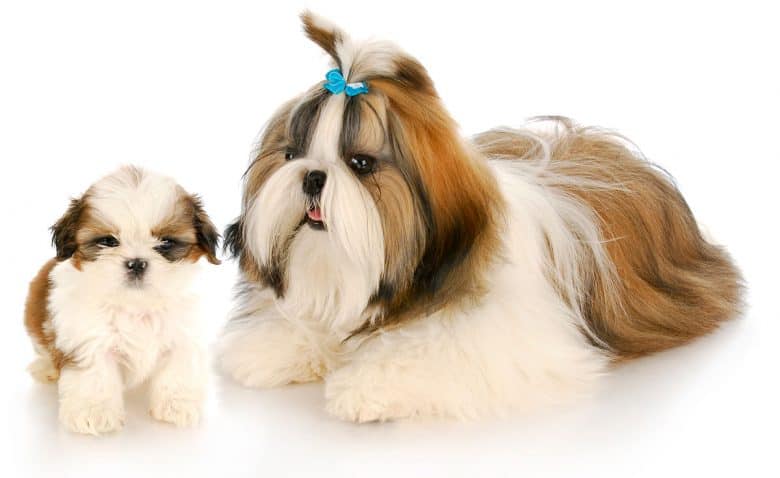
Expect to pay anywhere from $600 to $1,000 on average for a puppy. Adoption fees range from free to several hundred dollars.
Breeders with Shih Tzu Puppies
Before you choose a breeder, it helps to check out some clubs and organizations that focus on Shih Tzus. The Official American Shih Tzu Club and the AKC can help you locate reliable, responsible breeders.
If you want to find a breeder on your own, look for one that is willing to provide health certificates and the full health history of both parents.
They should also be willing to let you meet one or both of the parents and see where the puppies are being raised.
A good breeder will also provide a health guarantee that assures they will take the dog back for any reason, whether that means they are suffering from health issues or you’re just can’t keep the dog any longer.
Finally, good breeders won’t ship their puppies and they’ll want to know about you before they’ll send their puppies your way.
Finding Shih Tzus for Rescue or Adoption
Because Shih Tzus are so popular in the United States and the United Kingdom, there are many people who aren’t able to keep their dogs for whatever reason.
That means there are lots of opportunities to find the perfect puppy or adult dog looking for a forever home.
Shih Tzu Rescue works to match people with dogs in need across the country.
You should also check with local rescues like the Humane Society and the ASPCA, as well as any county or city rescue organizations.
Shih Tzu vs Lhasa Apso
Shih Tzus and Lhasa Apsos often get compared, probably because the Lhasa was one of the breeds that were likely used to help create the Shih Tzu breed.
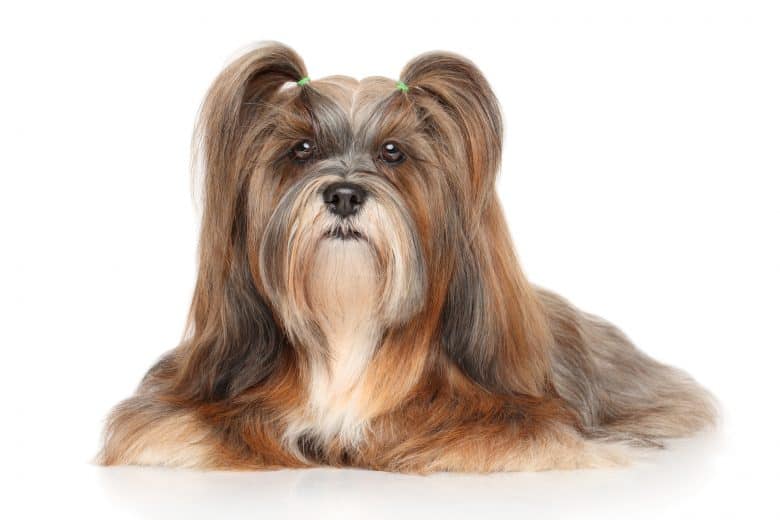
Both are Tibetan dogs and have a somewhat similar look, so what’s the difference?
As we mentioned earlier, Shih Tzus were likely bred using the Pekingese and the Lhasa Apso. So while they’re related, they aren’t the same breed.
Both are smaller in size, but Lhasa Apsos are larger. They generally weigh a few extra pounds and are a few inches taller than their cousins.
Shih Tzus come in a wider range of colors, while Lhasa Apsas are usually gold, white, cream, black, tan, or red.
Shih Tzus tend to live a little bit longer.
Where they are alike is in their coats: both have long, flowing, silky double coats. They are also both prone to barking and are both independent.
Both need little exercise and prefer to be sitting on your lap than anything else.
The Lhasa Apso is categorized as a non-sporting breed, while the Shih Tzu is considered a Toy Breed by the AKC.
Other Shih Tzu Mixes
Shih Tzus are often used to breed with other dogs to create a crossbreed that has some of the traits of both parent dogs.
For example, the Shih-Poo is a poodle and Shih Tzu mid. The Shorkie is a Shih Tzu and a Yorkshire Terrier.
Also, look for Shih Tzus mixed with Malteses and Shih Tzus mixed with Chihuahuas or Pugs. There are even crossbreeds using different bulldog breeds.
There are also Peking Shih Tzus, which are Pekingese bred with Shih Tzu dogs.
There are a lot of Shih Tzu mixes and we have an entire guide that introduces you to mixed-breed Shih Tzus.
Who should get a Shih Tzu dog?
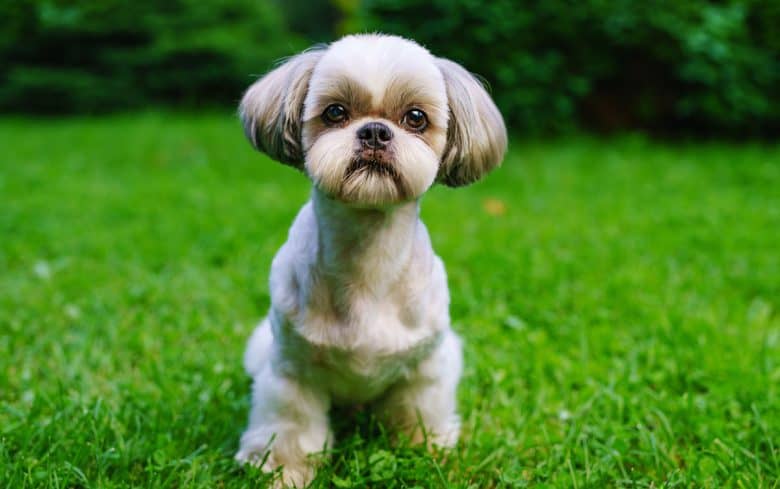
Now that you’ve gotten to know this incredible Lion Dog, you might be wondering exactly who is the right person for the Shih Tzu.
On the positive side, these dogs are loyal, friendly, and don’t need much exercise. That means they’re happiest if they get to be with you as much as possible.
If they get the attention they crave, they’ll be happy and agreeable.
On the other hand, they can be stubborn and opinionated. These are small dogs with a big personality, which can be too much for some owners.
For instance, if you aren’t comfortable being strict about potty training, this isn’t the best dog for you.
Don’t forget that glorious coat, which is both a positive and a negative. It’s beautiful, but it takes a lot of work.
But for the right person, it’s pretty hard to beat this amazing little dog.