Not to be confused with the American Staffordshire Terrier or Bull Terrier. The Staffordshire Bull Terrier is an incredibly courageous and tenacious dog used for brawling.
Careful breeding has made these puppies milder and more playful than the Staffies of yesteryears. Also known as the nanny dog, SBTs love children, but they aren’t for everyone.
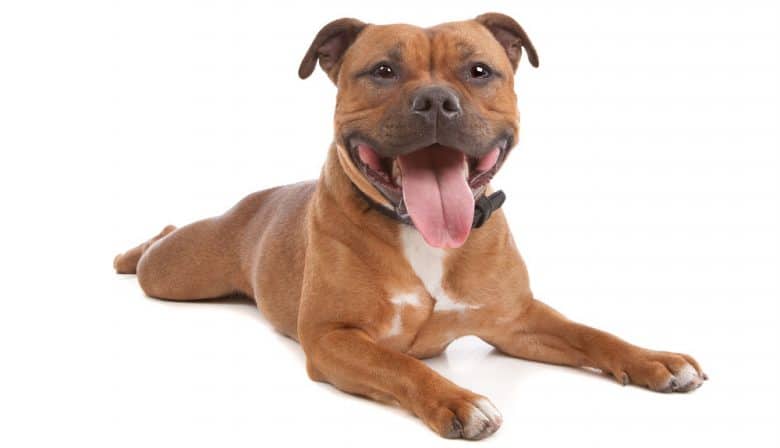
Find out if these medium size companions are a good fit for your household below!
Where did the Staffordshire Bull Terrier originate?
This canine went by many names throughout history. They’ve been the Bull-and-Terrier, Patched Fighting Terrier, the Staffordshire Pit-dog, and the Brindle Bull.
The Staffordshire Bull Terrier is related to other “bull type” dog breeds, like the Bull Terrier and American Staffordshire Terrier.
These breeds share a similar history and are likely related to Mastiff-like breeds of the past and ancient Greek’s Molossian war dogs.
Before the 19th century, animal blood sports were very popular in England. Some of this involved dog-fighting and similar dog sports.
The first breed developed for these events was the Bulldog, and other sub-breeds expanded from there.
In 1835, bull-baiting was outlawed. However, dog fighting was not banned until 1976. To make the dogs more agile for dog fighting, Bulldogs were bred with terriers.
Both the Manchester Terrier and Black and Tan Terrier were likely involved in creating the Staffy.
The American Kennel Club didn’t recognize the SBT until 1975 after the Staffordshire Bull Terrier Club of America was founded in 1974. Today, it’s ranked 80 in terms of popularity out of all 196 AKC recognized breeds.
Are Staffordshire Terriers the same as Pit Bulls?
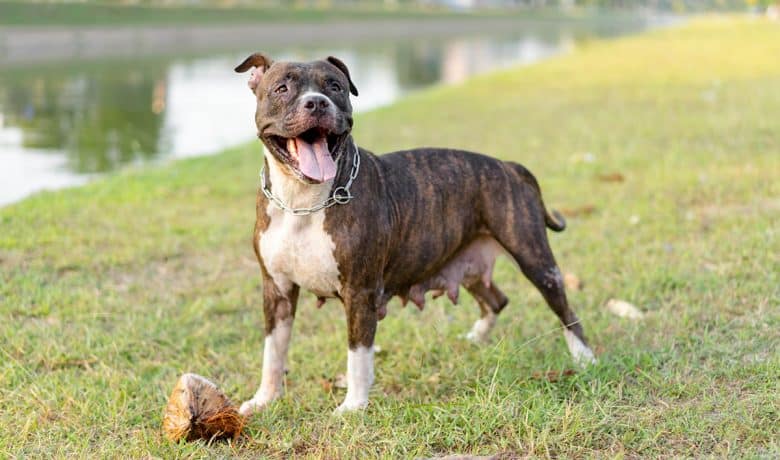
The Staffy is not an American Pit Bull Terrier, although they might look similar. In fact, Pit Bulls didn’t exist until 1927 and are considered a class of dogs rather than a dog breed.
However, in the United Kingdom, the term “Pit Bull” is used in reference to the American Pit Bull Terrier breed (which, funnily enough, isn’t recognized by the AKC).
What does a Staffordshire Bull Terrier look like?
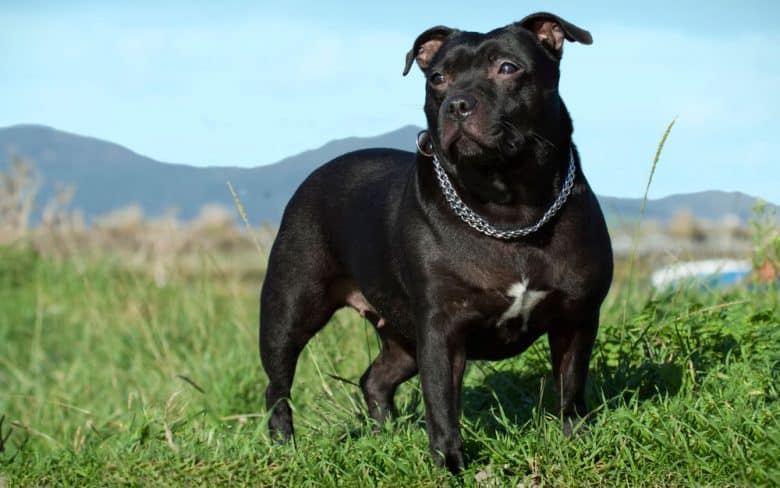
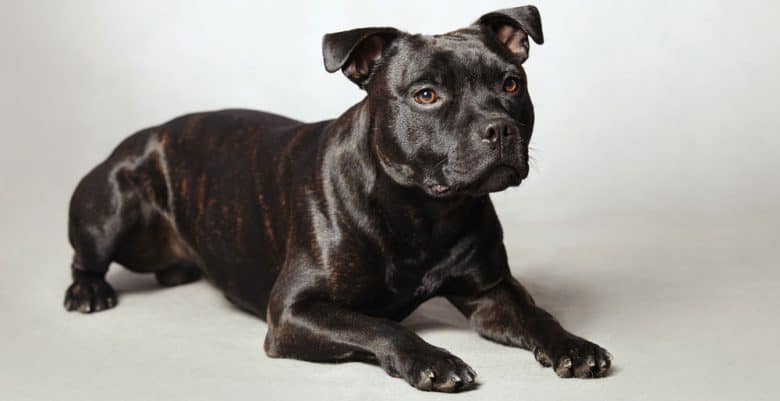
The Staffordshire Bull Terrier is a stocky and muscular dog. They are surprisingly strong for their medium size, well-built with pronounced cheek muscles. Their strength comes from their broad chest and stoat stance.
Their medium-length tail is carried low and should not curl. They can have rose or half-priced ears, but full-drop or full-pricked ears are a severe fault.
Dark eyes are preferable but their eyes may also bear some relation to the dog’s coat coloration.
How big is a Staffordshire Bull Terrier?
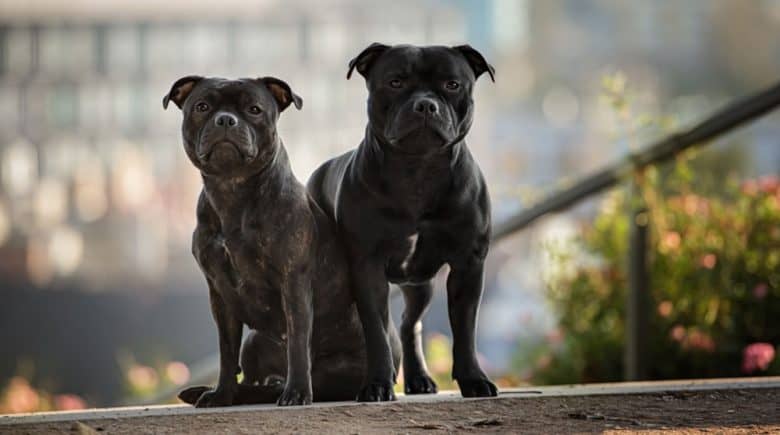
Male Staffordshire Bull Terriers can weigh anywhere from 29 to 37 lbs (13 to 17 kg). Females are significantly smaller and not as stocky.
This makes them about 24 to 34 lbs (11 to 15 kg). Both genders usually stand 14 to 16 inches (36 to 41 cm) at the shoulder.
What type of coat do Staffordshire Bull Terriers have?
These dogs have smooth, short coats. Their coats do not need to be trimmed as it is extremely short and sleek.
They can come in many different shades and varieties. Red, fawn, white, blue, and black are all common colors. White markings are also considered normal, even in Brindle Staffys.
Black-and-tan and liver colors are not part of the breed standard, meaning they would be disqualified from the show ring.
Temperament: Are Staffies good family dogs?
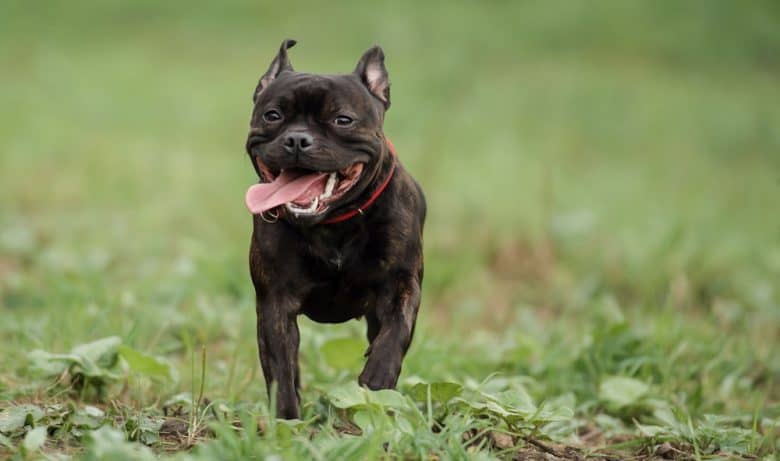
Despite the Staffy’s history as a fighting dog, they were bred to be gentle to their handlers. Their gentle nature allows them to develop close bonds with children, making them popular family dogs.
While they have high affection levels towards humans, they aren’t the most friendly to other dogs. Also, don’t underestimate their high prey drive and powerful jaws.
In terms of trainability, they need a strong leader. They are loyal but can be willful, which makes them better suited to an experienced handler.
With proper obedience training, Staffies can be allowed off leash under careful supervision.
They do perfectly fine when inside apartments and smaller houses – as long as you meet their exercise requirements.
Are Staffordshire Terriers an aggressive breed?
An intimidating watchdog, Staffords won’t stand down from a fight and can be mistrustful of strange dogs. However, they aren’t aggressive dogs.
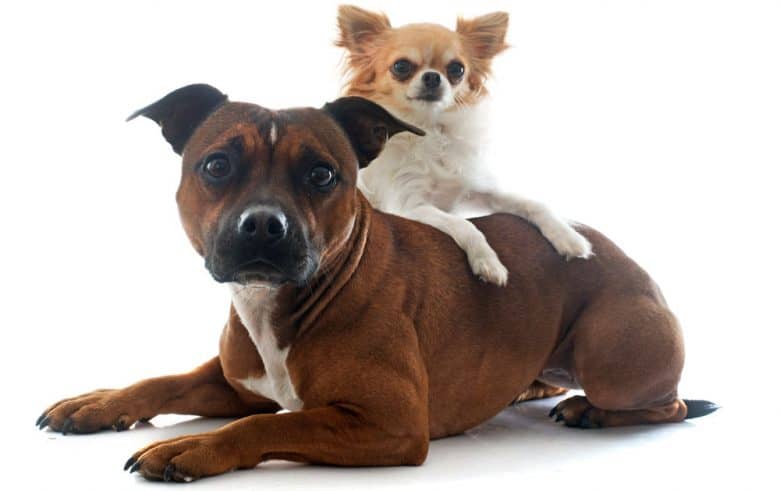
They might never be as friendly as a Golden Retriever, but with proper socialization and training, you can have a mild-mannered dog on your hands.
Staffies are often exuberant and over-zealous, especially when they are younger. They can be quite noisy, barking at all kinds of activity, even passersby or visitors.
Some people love it, while others quickly get annoyed by just how excitable these dogs are.
How to take care of your Staffordshire Bull Terrier
The Staffordshire Bull Terrier is not a high-maintenance breed. They do require quite a bit of exercise, but only minimal grooming. Training them can be a bit difficult when compared to other breeds, but it is doable.
They do fine in most climates as long as they aren’t left in the elements too long. They were not bred to withstand extreme temperatures so that they will need appropriate protection.
Exercising your Staffordshire Bull Terrier
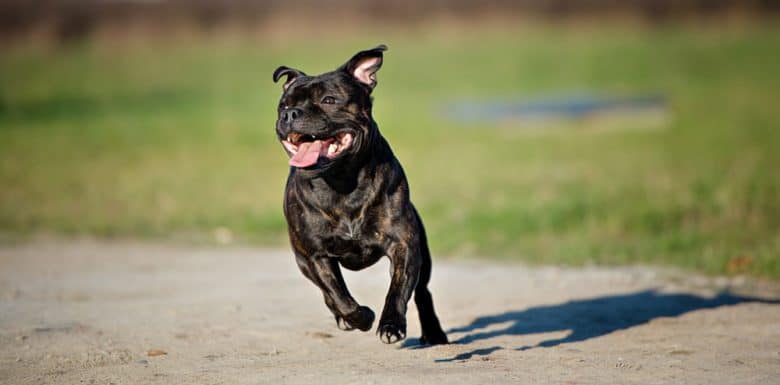
Before adopting this breed, it is essential that you understand just how energetic they are. These dogs do things in extremes. They need their daily exercise, which is one trait that makes them very fitting for active families.
These dogs need at least an hour of moderate to intense physical activity a day. This is the absolute bare minimum.
These high stamina dogs are athletes and would be happier with more than just two walks a day. You may play fetch with them or enroll them into agility classes.
Since they are milder after exercising, we recommend giving them a brisk morning walk or jog so they may spend the rest of the day in a generally calmer state.
Grooming: Do Staffordshire Bull Terrier Dogs shed?
The Staffordshire Bull Terrier sheds a moderate amount and cannot be described as hypoallergenic. However, their grooming needs are very minimal.
Trimming these dogs is not recommended as their coat may not grow back the same.
You will need to brush them a few times a week to remove any excess hair and dirt from their coat. Brushing is also an easy way to keep your dogs clean and can minimize the frequency of bathing your dogs.
Because these dogs are so energetic, they tend to get dirty a lot. But it’s recommended to only bathe them once a month or every two months.
During their grooming sessions, you should check their eyes and ears. When cleaning their ears, take care not to clean too deep.
Feeding: How much should a Staffordshire Bull Terrier eat in a day?
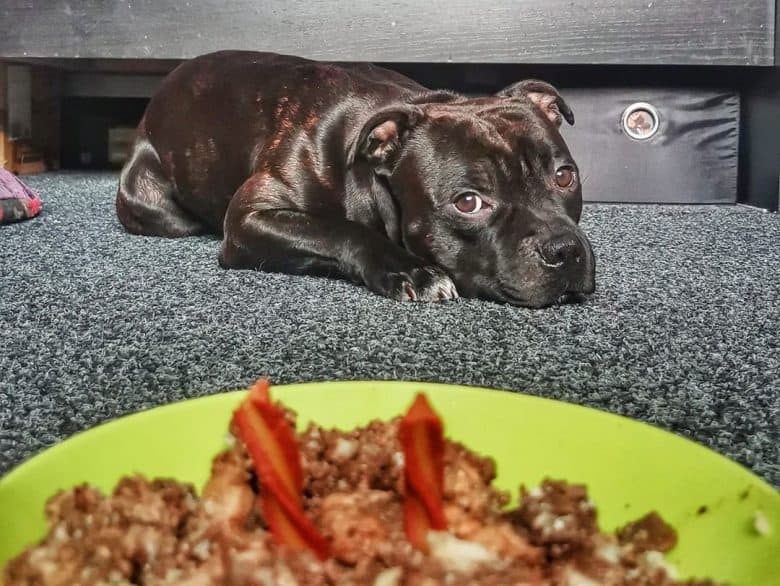
For most of these dogs, one to two cups a day is appropriate. These dogs tend to overeat, so it is important to portion their food out. They do not do well with free feeding.
The exact amount of food your dog needs will depend on their weight, which is largely determined by their gender.
Females will need closer to one cup, while males usually need closer to two. These aren’t strict guidelines as you also need to take into account their activity levels.
There are no special dietary requirements these dogs need, even as puppies. Any high-quality dog food or puppy food should be just fine.
It is not necessary to choose grain-free food unless your dog is allergic to gluten. Dogs can develop allergies over time, so you’ll have to monitor their condition.
You can prevent allergies from forming by switching your dog’s food regularly. Dogs become allergic to certain proteins after eating them for a long time. Switching up their diet can help.
What health problems do Staffies have?
Like all canines, Staffies are prone to some genetic health conditions. Luckily, most of these are not very serious.
Overall, these are robust and healthy dogs with a life expectancy of about 12-14 years. This lifespan is about average for their size.
SBTs are prone to canine hip dysplasia. This is a common problem in dogs that can cause debilitating pain. The easiest way to avoid this problem is proper nutrition and care when the dog is a puppy.
Staffies also carry a gene that makes them prone to cataracts. It is a recessive gene, so both parents need to have the gene for the puppies to be affected.
In these cases, the dog will usually go blind in 2 to 4 years if they are not treated. Early detection can help prevent blindness.
PHPV or Persistent Hyperplastic Primary Vitreous is another genetic eye condition that can commonly affect these dogs.
This eye condition can cause discomfort for the puppy, but it is not progressive. PPSC is another eye condition Staffies have been reported to develop, but it is much rarer.
Staffies may develop canine follicular dysplasia. This is a cosmetic condition that might cause balding or thin out the coat. It does not cause any pain or discomfort for the dog, though they may need sunscreen on their bald patch.
L-2-Hydroxyglutaric Aciduria is sadly quite common with Staffies as well. It is a neurometabolic condition that is also genetic. It can cause tremors and seizures, particularly during exercise or excitement.
There is no cure for this disease. Depending on the severity, the dog may need to be euthanized. Dogs with minor symptoms can go on to live comfortable lives.
Below is a list of less common health problems these dogs may be prone to:
- Elbow dysplasia
- Patellar luxation
- Skin allergies
- Demodectic mange
- Mast cell tumors
- Gas problems
Health testing can be done for many of these problems. When adopting a puppy, ensure that the breeder did proper testing on each parent dog before breeding. Each parent should have their hips and elbows tested for dysplasia.
You should also ask to see genetic tests for L2 HGA and hereditary cataracts. Proper health testing is the only way to prevent these problems and give your puppy a long and fulfilling life.
How much do Staffordshire Bull Terrier puppies cost?
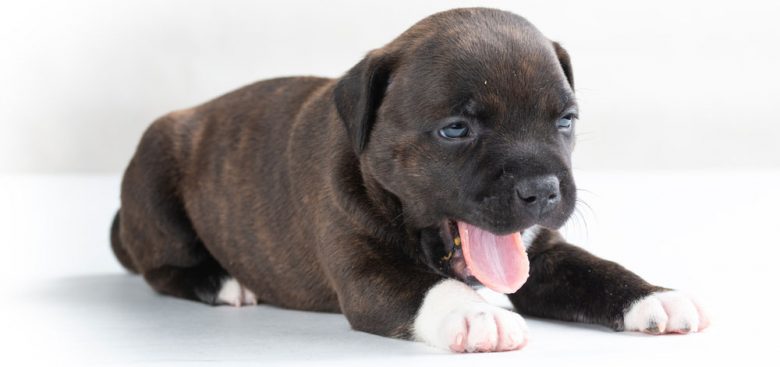
The average cost for a Staffie is around $1500. This is considerably higher than some dogs, but that is largely because this breed is rarer.
Furthermore, they require quite a bit of health testing, which pushes the price even further.
If the dog is from a show line, then you can expect them to cost even more. For a puppy that is descended from champion dogs you can expect upwards of $2000 or more.
You may be able to purchase a puppy cheaper from a pet store or puppy farm. However, we do not recommend this. Most puppy farms do not health test their dogs before breeding them together.
Furthermore, their living conditions may be deplorable. Pet stores very rarely source their puppies from reputable breeders.
Here is a short guide to purchasing a Staffordshire Bull Terrier. They can be a bit rarer in the states, though they are absolutely available:
Staffordshire Bull Terrier Breeders
There are about 20 Staffordshire Bull Terrier breeders in the United States. While these dogs aren’t extremely popular, they are reasonably easy to find.
- Dyna Staffs (Sandy, UT) is one of the more popular breeders. With champion dog pedigrees, their prices might be slightly higher.
- Wild Blue Staffords also breeds Staffordshire Bull Terriers in the Dallas area of Texas. They are a small hobby breeder, but they are quite popular in the area.
Staffordshire Bull Terrier Rescue
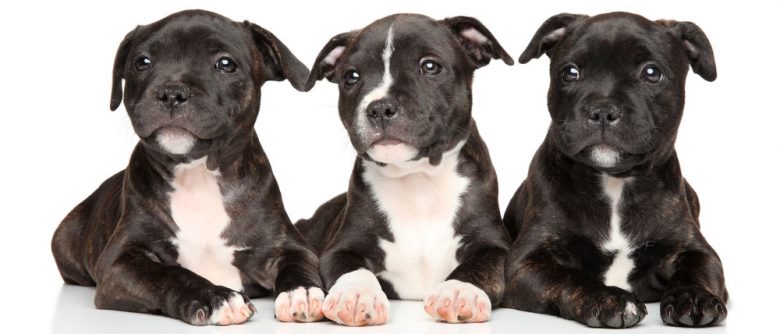
Instead of purchasing a puppy from a breeder, you may want to consider rescuing an adult dog. Puppies are rarely found at shelters, with most rescues around two years old or older.
They are typically rescued from abusive situations or surrendered by families that can no longer take care of them.
If looking for a rescue, your best bet is to try the Staffordshire Bull Terrier rescue. They work across the United States and usually have quite a few dogs available. You can stay updated through their Facebook page.
Here are a few rescues you can also check out:
- Fresno Bully Rescue (E. Belmont Ave Sanger, CA)
- Valley of the Sun Dog Rescue (Mesa, AZ)
- Don’t Bully Us (Wenonah, NJ)
Staffordshire Bull Terrier vs. American Staffordshire Terrier
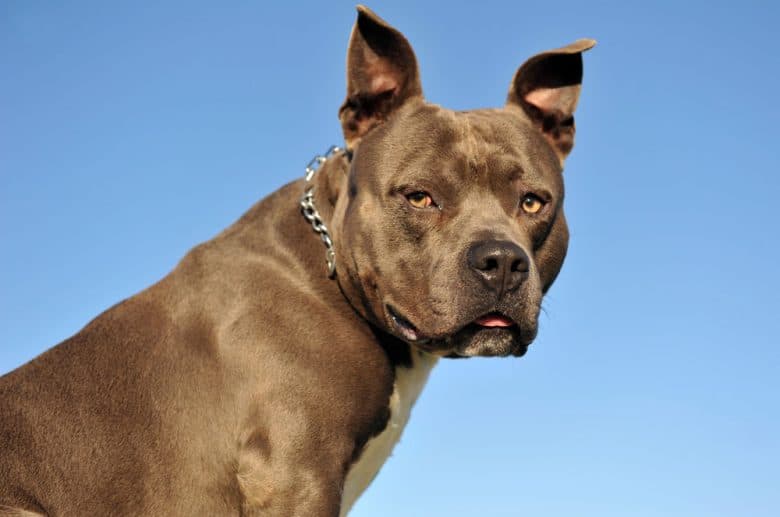
These two canines have names that look relatively similar to each other. For this reason, they are often mistaken as the same dog. But they are very different breeds that are suitable for different families.
The American Staffordshire Terrier is a descendent of the Staffordshire Bull Terrier.
Firstly, the American Staffordshire Terrier is a bit larger than the Staffordshire Bull Terrier, standing at 17 to 19 inches (43 to 48 cm) tall. The Am Staff can be easier to train but they are much more vocal.
Their ears are their biggest difference, if the Pit Bull’s ears aren’t cropped, they would flop over whereas the Staffy’s ears tend to fall to the sides.
They’re both built rather stocky and are decently intelligent. Both are designed to be companion dogs and get along well with children.
Curious about Staffordshire Bull Terrier mixes?
There are countless mixed breeds out there that come from a Staffordshire Bull Terrier parent. If a purebred is not a right choice for your family, perhaps a crossbreed might be.
Labrador Retriever & Staffy mix (AKA Labrastaff)
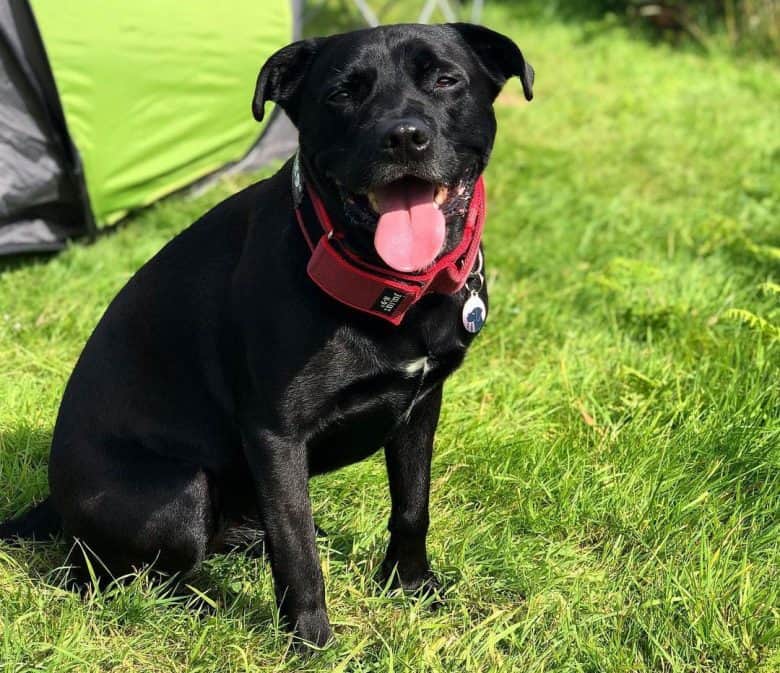
The Staffordshire Bull Terrier Labrador Retriever mix or Labrastaff is extremely friendly with friends and strangers alike. They are quite intelligent, but not so smart that they’ll outsmart their owners.
They enjoy people-pleasing and are extremely easy to train for this reason. Plus, they are also a very suitable canine for families due to their overall friendliness.
Boxer & Staffordshire Bull Terrier mix (AKA Bullboxer Staff)
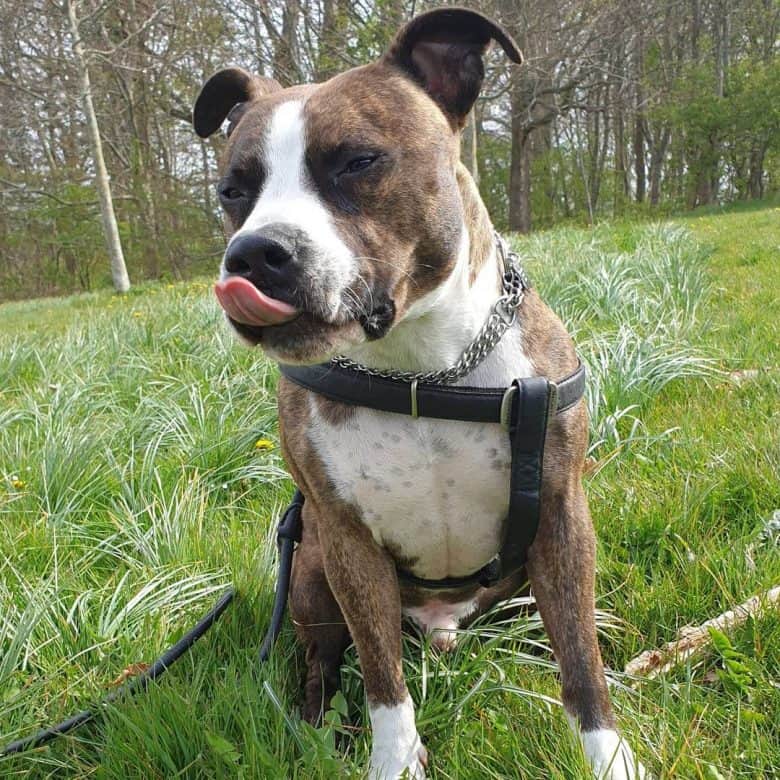
The Staffordshire Bull Terrier Boxer mix is another similar mixed breed. The Bullboxer Staff is a friendly dog that is relatively easy to train.
They can be extremely active, however. They need a lot of exercise and time, so you should only adopt one if you have plenty of free time on your hands.
Who Should Get a Staffordshire Bull Terrier?
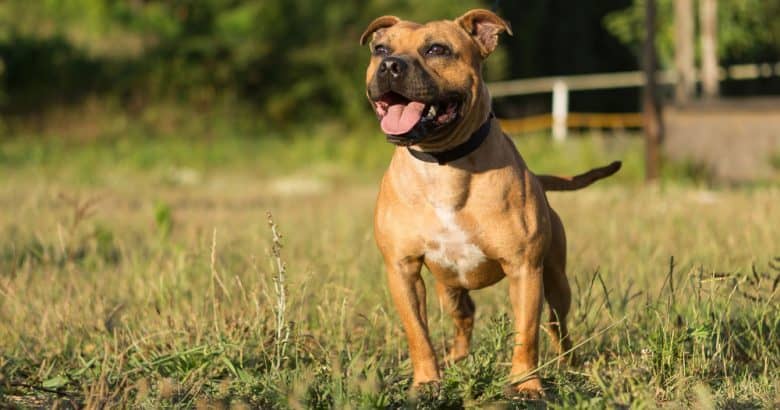
Staffordshire Bull Terriers are amiable companion dogs. They get along very well with children, making them perfect family dogs.
They are a bit energetic and have high energy levels, so they need plenty of playtime and lots of walks. They are pretty easy to train, though they may not always listen to you in the heat of the moment.