Have you ever seen your dog take off to chase after a squirrel or rabbit? Maybe it was merely a white plastic bag in the wind? This behavior is just your dog acting on their prey drive.
Some dogs have a low prey drive, but pups with a high prey drive may want opportunities to exercise it.
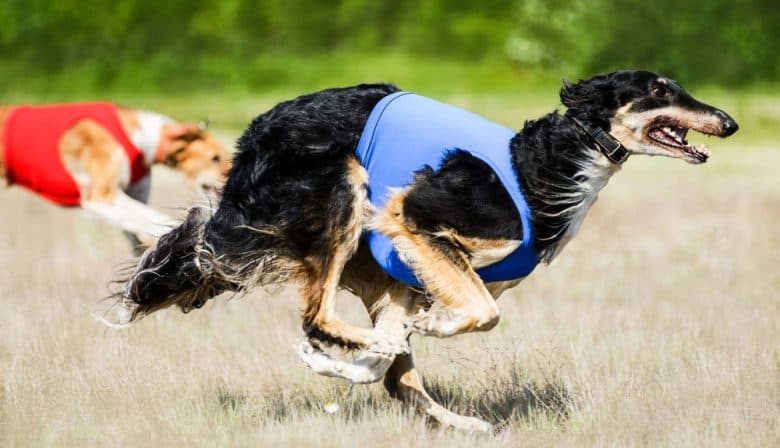
That’s where lure coursing can come in handy. But what is lure coursing?
What is Lure Coursing?
Lure coursing is a sporting event that allows your dog to utilize its innate prey drive in a safe, controlled environment.
An artificial lure is made to zig-zag across hundreds of yards of open field to simulate active prey. The dogs chase the lure while making agile turns to follow the pattern.
But why should you and your pup get involved in lure coursing? Well, a dog with a high prey drive will love lure coursing and the thrill of the chase, and it can help with their agility and focus.
It’s also not a bad way to socialize your dog.
The history of lure coursing goes back much farther than you may assume. Evidence of lure coursing can be found in 4,000-year-old Egyptian writings, so it can be considered an ancient dog sport.
Certain dog types are bred for their ability to chase down prey like rabbits, foxes, pigs, and deer. These breeds are utilized in lure coursing.
Lure coursing, as we know it today, took shape with Lyle Gillette in the 1970s. Lyle helped develop a controlled course where a plastic bag or artificial fur lure is pulled on a string through a system of pulleys.
This portable system became quite popular, and it’s the basis of today’s competitions.
Want to see what Lure Coursing looks like? Watch this video and you’ll be amazed by this canine sport:
What is a Coursing Dog?
Not all dog breeds are meant or ideal for lure coursing because many lack the instinct and hunting agility for the sport, like scent hounds.
This is for canines who have a skillful sight and speed, which are mostly sighthounds.
What are Sighthounds?
Sighthounds are any breed of dog that hunts using sight and speed and has lean bodies built for agility. Once they spot their prey, they quickly take off after it.
They’re highly agile, and some can run as fast as 40 miles per hour, like Greyhounds.
Some of the other common sighthound breeds are Whippets, Azawakhs, Borzois, Ibizan Hounds, Irish Wolfhounds, Italian Greyhounds, Salukis, Scottish Deerhounds, Rhodesian Ridgebacks, Sloughis, Kannis, Kombais, Mudhol hounds, Taigans, and Spanish Greyhounds.
It’s important to note that not all kennel clubs recognize every dog breed listed above, which means some may not be able to compete in certain events.
Lure Coursing Title Structure
This refers to the levels within lure coursing competitions that can earn your dog specific honors and titles. The lower levels are introductory for hounds new to the tournament.
These levels are also prerequisites that must be completed before achieving the higher levels.
The higher levels are meant for real competitors who have excelled in the sport. After completing the lower levels, they can continue to compete to meet the requirements that could earn them the higher titles.
These titles will be added as a suffix to your dog’s name.
The following title structure is from the American Kennel Club (AKC).
Junior Courser (JC) is the first level. It requires your dog to complete a test course twice. He must show enthusiasm while running alone with no interruptions.
If he succeeds, he’ll earn qualifications from two separate judges.
The next level is a Qualified Courser (QC). This level requires that your dog runs with another hound of the same breed or a comparable running style.
Again, your dog has to do it with enthusiasm and without interruption, but for this, he’ll also need to run the course while not interfering with the other hound. A certificate will be issued for completion.
A Senior Courser (SC) dog needs to compete in four trials to earn qualifications from at least three separate judges.
Master Courser (MC) dogs have put in the time to earn their place.
They’ll need to be a Senior Courser first, but to be a Master Courser, they must rack up another 25 qualifying scores in trials that can include Open, Veteran, or Special stakes.
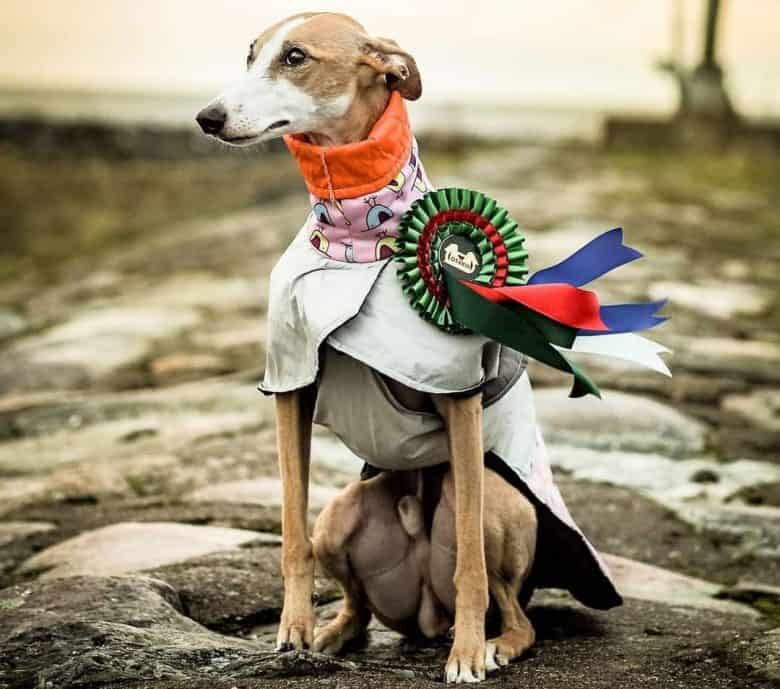
A Field Champion (FC) dog is a real contender. After ascending the other levels, your dog will need 15 championship points, two of which need to be majors or 1st place.
The two majors must be done under two different judges, and at least one of them needs to be earned against a dog of the same breed.
A Dual Champion (DC) is the best of the best. For your dog to be a Dual Champion, he’ll need to earn the Field Champion status, but he’ll also need to earn a CH title, or Champion Title, in conformation dog shows.
The following title structure is from the American Sighthound Field Association (ASFA).
The Field Championship (FCH) title comes after your dog practices with another hound with a similar running style. This is then followed by 100 points for placement while taking two firsts or two seconds and a first.
The Lure Courser of Merit (LCM) title requires another 300 points and four first placements. Subsequent LCMs can be earned.
There are variations of FCH and LCM under the Veterans stakes, and there are Single Stake events for dogs with breed disqualifications.
Depending on how many trials your dog competes in throughout an event, he could also be eligible for a Best of Breed award.
How to Find Recreational Lure Courses
The best way to find recreational lure courses is to find local clubs set up by lovers of the sport. They also tend not to have the larger clubs’ breed restrictions, as it is purely recreational.
Local clubs will run 2 or 3 dogs at a time, and some will even run multiple lures so that each dog has its own to chase.
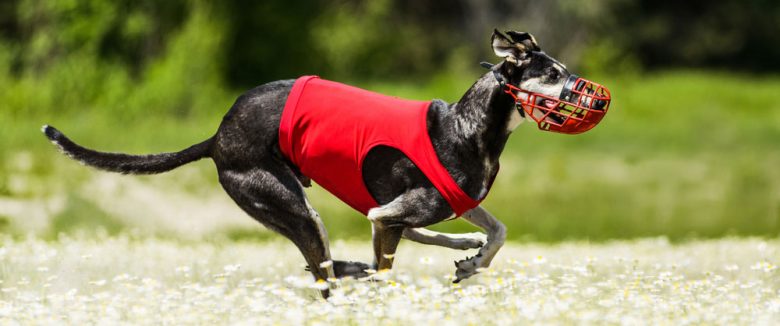
Different lures also help to keep it from being competitive. Some may also require muzzles, but this usually isn’t the standard.
Official Lure Coursing Clubs
There are a few official breed clubs that span the globe. They hold lure coursing competitions exclusive to sighthounds, and in many cases, the dog must be registered with the kennel club to compete.
It’s also likely that your dog will need to be a purebred.
Here’s a list of official Lure Coursing clubs:
- American Kennel Club (AKC)
- American Sighthound Field Association (ASFA)
- Federation Cynologique Internationale (FCI)
- Canadian Kennel Club (CKC)
- The Saluki Club of America (SCOA)
- The National Greyhound Association (NGA)
Organizations in North America
The active breed clubs in North America are the AKC and ASFA in the United States and the CKC in Canada, so they’ll be the organizations to register your dog.
They’re also the main sponsors of lure coursing competitions.
If you’re looking to get your dog into a trial, you’ll want to find local breed clubs through either the AKC, ASFA, or CKC.
The local clubs capable of running sanctioned trials will be associated with the larger official clubs and their rules.
The only real difference between the AKC and ASFA is where your dog’s titles will be recorded. If they’re competing in AKC events, those scores and titles will be held by the AKC.
If they are competing in ASFA events, those scores and titles will be held by the ASFA.
There’s no reason your sighthound can’t compete within both clubs. There are no rules against it, and your dog can earn separate titles from each club.
Attending a Lure Coursing Event
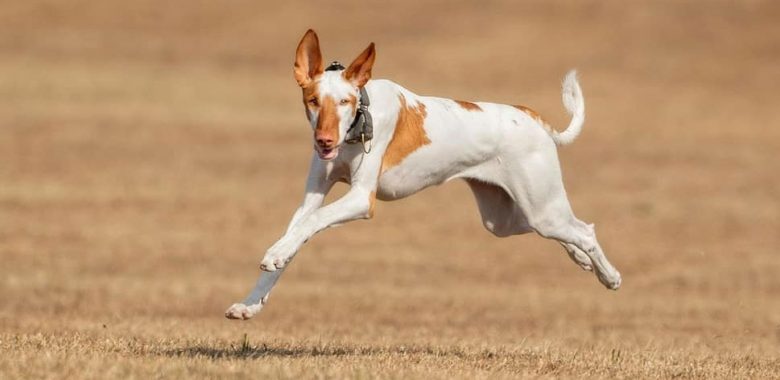
So you’ve decided to attend a lure coursing event! Well, it’s best to consider and know these things before going.
What should I bring?
What you’ll need to have on hand will depend on whether or not your dog is attending with you.
If this is your first event and you’re merely trying to get a feel for things, it may be better to leave your pooch at home so you can get a full understanding of etiquette.
If you’re bringing your doggo, you’ll need to keep him under control the entire time. This will be a time and place for his best behavior.
Items for a day of observation without your dog:
- Weather-appropriate clothing.
- Something to snack on/drink over what can be a lengthy day.
- A comfortable chair.
Items for a day of observation with your dog:
- The items listed above.
- Plenty of water, a water bowl, and dog food.
- A collar and leash.
- Depending on the weather, you’ll also want protection for your dog, and you may also need to shade or shelter them from the elements.
Should I enter my hound in a trial without prior practice?
The short answer is no. The AKC and ASFA both have rules that stipulate your dog must be practiced before competing.
Without training, your dog will be prone to interference, which will likely lead to disqualifications.
How do I get my hound to a practice?
It can be challenging, but this is where local clubs and networking with other dog owners can come in handy. You can find practices being set up through local breed clubs, so researching them is ideal.
Attending lure coursing events will also be a great way to connect with other owners. They can tell you how they taught their dogs, and some owners even offer to teach and train new dogs.
Clubs often run practices after sanctioned trials as well as during public events like dog shows. Researching upcoming events can be highly beneficial.
How to Get Started With Lure Coursing
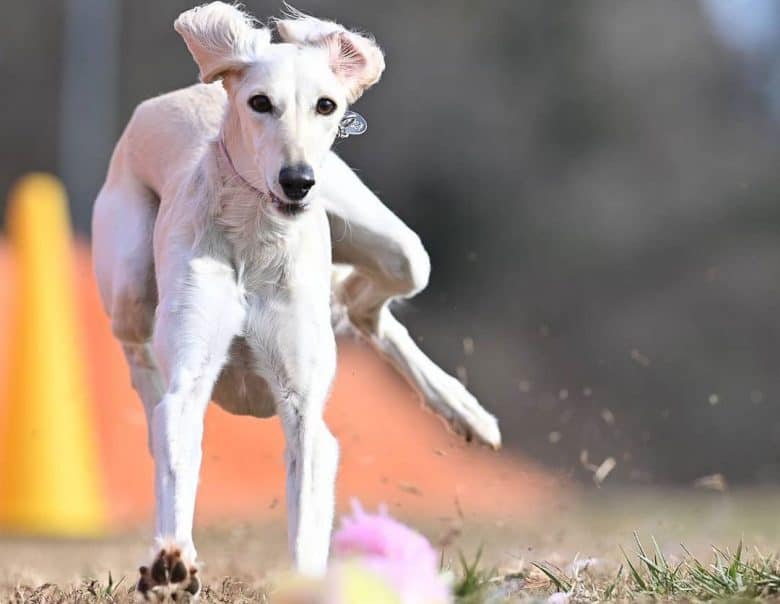
First and foremost, your dog has to practice or train. He has to be registered with appropriate breed clubs, and your dog will also need to be at least one year of age.
What should I bring the first time I take my hound to a trial?
When you go to a trial, you’ll want to bring all the things we listed for observing an event, such as water, a leash, etc. However, now that he’s competing, there will be more to bring along.
Items for a day with your dog competing:
- All items listed in the observing an event section above.
- Your dog’s registration information.
- A slip lead and coursing blanket. Note that clubs are required to have these on hand at every event, so if you’re new to the sport of lure coursing, you can use the ones provided. If your dog takes to the sport and continues, you may want to get your own.
- A muzzle may not be required, but some competitions do use them, and it will be utilized if your dog has shown aggression.
What is the proper lure coursing etiquette?
Lure coursing events require that both you and your dog follow a polite and courteous etiquette. These events are typically held on privately owned land, which means respecting the property is of the utmost importance.
You’ll be expected to clean up after your dog, park in designated areas, and avoid areas that are out of bounds from the competition site.
During the competition, you’ll want to keep your dog on a short leash, and if necessary, away from the match when he’s overly excited.
It’s expected that you won’t interfere with any other competitor or hound and be polite with everyone at the event. People attending these trials have paid money to be there, and some have traveled far to compete.
Are these events appropriate places for young children?
No, they aren’t. These events can last all day, and young children would likely get bored.
Sites for these events don’t offer anyone to look after unsupervised children, and given the etiquette already discussed, kids can be an issue.
Some trials may even tell you outright not to bring your kids. These should be attended by adults and teens who understand the appropriate etiquette.
Plus, there will be numerous large dogs around, and you never know how well-suited they are to being around little ones.
Are these events appropriate places for unentered dogs?
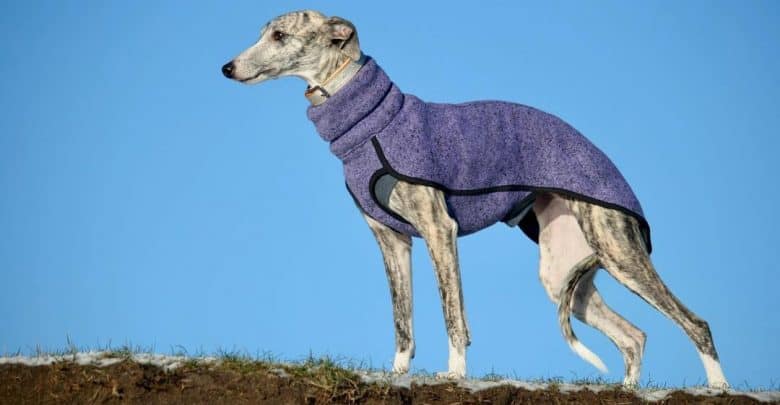
These trials can be attended with dogs that are not entered in the competition, but keep a close eye on them. Have him on a short leash and away from the competition.
It’s possible that your dog could get too happy by watching the other dogs and the lure, making him interfere in the trial.
Never let your dog run loose at an event. If he interferes in any way, the dog owner could be fined. It will all come down to a well-behaved pooch and an understanding owner.
How long do lure coursing trials last?
It will depend on how many dogs are running in trials that day. Some may only last 4 or 5 hours, but if many dogs are running that day, it could very well last until sundown.
What sort of weather is encountered at lure coursing trials?
Lure Coursing trials are held in any weather. Rain, snow, sunshine, it often doesn’t matter. These trials can be canceled if the weather’s too harsh, but your dog could run whether it’s rainy or snowy.
Be updated with the weather reports and prepare yourself and your dog appropriately.
Lure Coursing Handler Responsibilities
Handler responsibilities are minimal but essential. You’ll need to hold your dog back to prevent a false start in the competition, and your dog needs to respond to your recall once the trial has ended.
Anything beyond that is merely keeping up with the desired etiquette.
Lure Coursing Health Concerns
Trials are held in a controlled environment, but given that your dog will be running at high speeds while making sharp turns, injuries are possible.
The sport puts a strain on both muscles and joints, and toenail injuries are common.
If you have any concerns, consult your veterinarian.
How do you train for lure coursing?
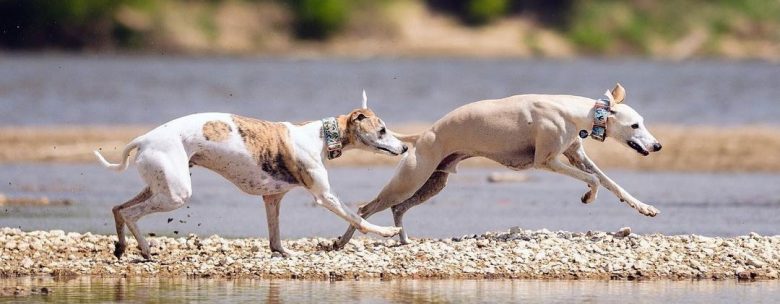
Firstly, you should understand that lure coursing is about your dog having a fun way to run out some energy. Winning is great, but the fun comes first.
Before you train your dog for lure coursing, make sure he’s interested. A flirt pole is a good test as it can simulate the fun of chasing something. If your pooch is enjoying the toy, then he may just be a true lure courser.
Don’t forget to ensure your dog has the stamina and endurance for the sport.
Lure Coursing Gear & Supplies
The primary gear you’ll need for lure coursing is a slip lead and coursing blanket.
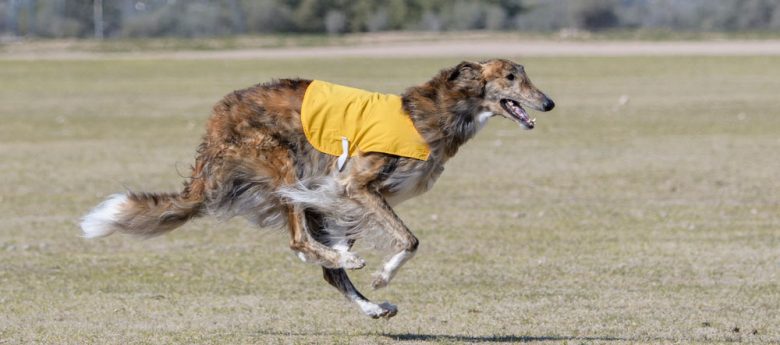
A slip lead is an easy-on, easy-off style of leash that can be used to let your dog loose in competition quickly. A coursing blanket is draped or worn like a shirt on the dog when they run in the competition.
How to Make Your A DIY Lure Course
You can make your own lure course with a plastic bag and fishing line. Just attach the plastic bag, or possibly a small toy your dog loves, to the fishing line, and then have your pup chase it.
You’ll act as the lure operator by pulling the line, let your dog go after, and grab it. Let him play with it for a moment, and then repeat.
Take this opportunity to develop calls to let your dog know when it’s time to chase, as well as when it is time to come back. It will help him learn obedience for competition.
How to Avoid Lure Coursing Injuries
The first step is ensuring your dog has the overall ability to take part in trials. You’ll also want to keep your dog’s nails trimmed, as nail injuries are common, and use Vetrap bandaging on dewclaws if your dog has them.
On the day of the competition, you’ll want to monitor your dog’s food and water intake. Cutting down the amount of food before a trial and waiting a few hours after a trial can prevent conditions like bloat.
Is Lure Coursing for you and your dog?
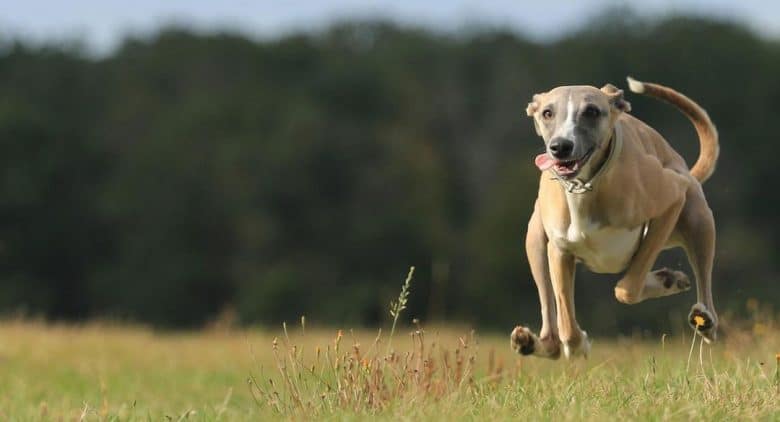
If your dog loves chasing after things, and you have the time to dedicate to it, lure coursing may well be for the both of you.
For your dog, he’ll get exercise, fun, training, and socialization. And you’ll get the pleasure of spending time with your dog while watching him have a blast.
If you’ve got an energetic sighthound at home, it may just be worth a look. Would you and your dog join lure coursing? Share your story with us by commenting below.

Cess is the Head of Content Writing at K9 Web and a passionate dog care expert with over 5 years of experience in the Pet Industry. With a background in animal science, dog training, and behavior consulting, her hands-on experience and extensive knowledge make her a trusted source for dog owners.
When not writing or leading the K9 Web content team, Cess can be found volunteering at local shelters and participating in dog-related events.