Cardigan Welsh Corgis, also known as Cardigans, CWCs, or Cardis, are one of two types of purebred Corgi dogs.
These adorable, spunky little dogs are much loved throughout the world and can be the perfect addition to your family.
Keep reading to discover all you need to know about Cardigan Welsh Corgis, including how long they live, how much exercise they need, and their grooming needs.
Quick Navigation
- 1 Where did the Cardigan Welsh Corgi originate?
- 2 What does a Cardigan Welsh Corgi look like?
- 3 Are Cardigan Welsh Corgis good with kids?
- 4 How to take care of your Cardigan Welsh Corgi dogs
- 5 Cardigan Welsh Corgi health issues
- 6 How much is a Cardigan Welsh Corgi puppy?
- 7 What’s the difference between a Pembroke and Cardigan Welsh Corgi?
- 8 Who should get a Cardigan Welsh Corgi dog?
- 9 Further reading: Cardigan Welsh Corgi mixes
- 10 Reference
Where did the Cardigan Welsh Corgi originate?
Named after the medieval kingdom of Cardiganshire in Wales, Cardigan Welsh Corgis have a history that dates back over 3,000 years.
This makes them one of the oldest herding dog breeds and one of the oldest breeds of dog in the British Isles.
Their Corgi name means dwarf dog, and these adorable dogs are believed to be the descendants of the Teckel family of dogs, which also gave birth to the Basset Hound and Dachshund breeds.

Brought to Wales from central Europe by Celtic tribes, Cardigan Welsh Corgis became treasured as guardian and cattle dogs, vermin exterminators, and loveable companions.
While they may have been initially brought to Wales by the Celts around 1,200 BC, these working dogs were so prized for their abilities to look after and herd cattle.
That is why the Welsh laws once protected them, issuing penalties for anyone who tried to steal or hurt a Cardigan.
One tale even gives this dog an ethereal quality, painting them as the canine companions of fairies who used to ride their Corgis into battle on moonlit nights.
Lucky humans then acquired these dogs from their fairies.
While Cardigan Welsh Corgis have been shown in English dog shows from around 1919, their modern-day history is linked to a dog named Bob Llwyd who lived in the 1920s.
A red and white dog, Bob Llwyd inspired the breed standard, and the English Cardigan Welsh Corgi Association was founded in 1926.
Bob Llwyd was the father of Ch. Golden Arrow who went on to become the first Corgi champion dog in 1931.
In the same year, a pair of Cardigan Welsh Corgis were also imported to the United States by a lady named Mrs. B.P. Bole.
Mrs. B.P. Bole’s dogs included Cardigan breeding female Cassie, who presented a unique white and brindle marking.
One of Cassie’s Cardigan Welsh Corgi puppies became the first breed champion in the United States.
Today the annual breed championships held by the Cardigan Welsh Corgi Club of America, Inc. are named after that dog and known as the Megan Competition.
While today recognized as an official American Kennel Club breed in the herding group and as a separate breed by the United Kennel Club, it wasn’t until 1934 that two distinct varieties of Corgi breeds were recognized.
Until that year, both Cardigan Welsh Corgis and Pembroke Welsh Corgis were listed as one breed and were often interbred.
In 1935 the Cardigan Welsh Corgi Club of America was founded and today, the group is responsible for maintaining the official AKC breed standard.
What does a Cardigan Welsh Corgi look like?

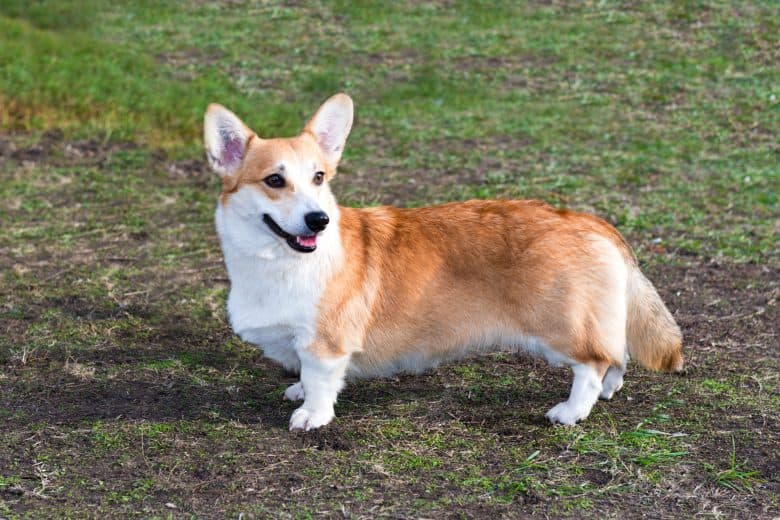
Known as the yard-long dog, Cardigan Welsh Corgis are characterized by their long, low slung body, short legs, and their long tail, which resembles the sleeves of a Cardigan jersey.
These dogs are different from the Pembroke Welsh Corgi variant in that they are slightly larger and heavier set with a more prominent face and head and rounded ears.
Size: How big does a Cardigan Welsh Corgi get?
Cardigan Welsh Corgis typically weigh between 25 and 38 pounds (11 and 17 kg) with females coming in at the lighter end of the scale between 25 and 34 pounds (11 and 15 kg).
Male Cardigans weigh in between 30 and 38 pounds (14 and 17 kg). These dogs stand about 10 to 12 inches (25 to 30 cm) tall at their shoulder.
Due to their small size and stature, Cardigan Welsh Corgis will be just as happy in a city apartment as they are on a country farm, provided they are given the daily exercise they need.
What kind of coat do Cardigan Corgis have?
Cardigan Corgis have a medium-length water-resistant double coat. They have a short undercoat covered by a long, thick top layer designed to withstand harsh Welsh winters.
The length of a Cardigan’s fur will vary slightly. Some dogs have a soft, fluffy coat, and while cute, they’re not desirable as their hair does little to protect this small dog against extreme weather conditions.
Some CWCs have a fairy saddle on their backs. This is a patch where the hair differs in length and direction, with the marking alluding back to that Welsh tale where the fairies rode these dogs into battle.
Most Cardigan Welsh Corgis will have white markings on the tip of their tail and their belly, muzzle, chest, neck, and legs. Some may have a white blaze on their head, while tan and brindle points are also common.
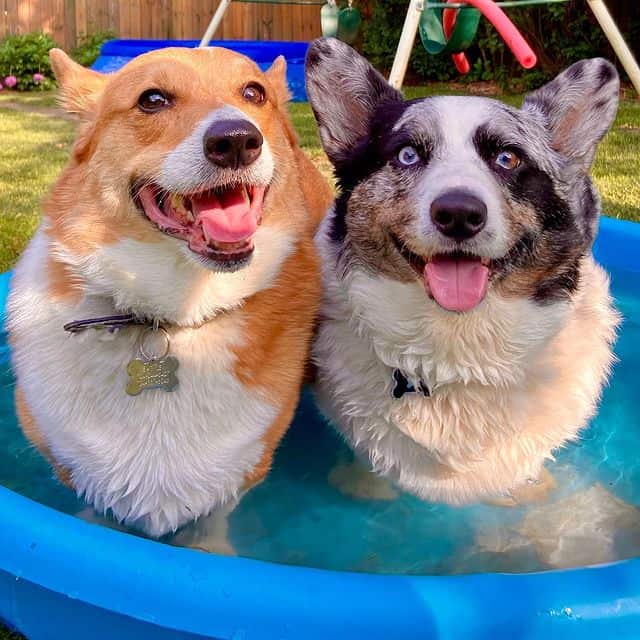
And Cardigan Welsh Corgis come in a variety of colors. Those include all shades of red, sable, tan, brindle and black. Blue merle is a unique shade for this breed.
Have a look at a red-colored Cardigan Welsh Corgi playing with a blue merle variety in this adorable video:
Are Cardigan Welsh Corgis good with kids?
Sensitive and affectionate, the Cardigan Welsh Corgi is a friendly, sensible breed that can be the perfect companion for your family.
These small dogs are sturdy enough to play with children, and as a highly people orientated breed, Cardigans thrive on human interaction, having a particular affinity for younger generations.
To be warned, however, as a herding breed, these dogs do tend to nip at the heels of children when playing due to those strong herding instincts.
While Cardigans tend to get along well with other family pets, they can be wary of and even aggressive to strange dogs. Getting another dog they can play with; particularly a Corgi, will help in this regard.
These dogs can also get quickly bored when left alone for long periods and are prone to separation anxiety.
As a result of all of the above, your Cardigan Welsh Corgi will need to be trained and socialized early to prevent bad habits, such as nipping, from developing, preferably before the age of four months.
The good thing is that as a highly intelligent breed, Cardigan Welsh Corgis are easily trainable.
Due to this trainability and the fact that they are so willing to work, you often find Cardigans living on horse farms where they can assist horse owners with trailers’ loading.
That said, they can be independent and stubborn and may put their twist on your demands. Housetraining, in particular, can be difficult with this breed, and crate training may be necessary for your Cardi.
Cardigans are also very vocal, territorial dogs. Their alert nature will cause them to bark at anything that looks, sounds, or smells unusual.
And while this makes for an excellent watchdog, without proper training, you could end up with a dog that just barks at anything and everything.
How to take care of your Cardigan Welsh Corgi dogs
Cardigan Welsh Corgis are an even-tempered, hardy breed that can adapt well to a range of environments.
Much of what goes into caring for your Cardigan is common sense, and with daily care, exercise, and grooming routine, your Cardigan Welsh Corgi is bound to live a long, happy and healthy life.
One thing to bear in mind is that despite having a thick double weather-proof coat, Cardigan Welsh Corgis can withstand most weather conditions.
However, these dogs are not destined for life outdoors due to their need to be around people.
Exercising your Cardigan Welsh Corgi
Despite their small size, Cardigan Welsh Corgis have high energy levels and need a fair amount of daily exercise.
The Cardigan Welsh Corgi’s exercise needs can be met with a long daily walk of around forty-five minutes to one hour with some energetic play sessions thrown in as well.
That said, your Cardi will be happiest when giving a task to do. These dogs love an excellent herding session or competing in dog sports such as agility.
Just be sure not to overdo it at first or try an exercise regime not suited to dogs with short legs, such as bouldering or cycling, where this breed simply won’t be able to keep up.
Do Cardigan Welsh corgis shed?
The dense double coat of the Cardigan Welsh Corgi does shed heavily.
Although this breed will shed continuously throughout the year, you can expect two heavy shedding periods with the seasons’ changing when Corgis blow their coat.
As a result, be prepared to brush this breed of dog often.
A weekly brush is essential most of the year, while the shedding season may require that this routine is upped to daily brushing. Warm baths will also help to remove the excess coat from your Corgi.
Along with grooming your Cardigan’s coat, also be sure to brush your dog’s teeth at least twice a week to prevent the build-up of tartar and bacteria, helping to prevent dental disease and bad breath.
Also, check your Cardigan Welsh Corgi’s ears weekly for any signs of infection, such as redness or foul odors.
Ears can be cleaned with a damp cloth, making sure to wipe the outer ear and not insert anything into the ear canal.
Nails should also be trimmed once or twice a month if they don’t wear down naturally to prevent tears.
As Cardigan Welsh Corgis need a significant amount of grooming, it’s a good idea to get your dog used to a routine when they are still a puppy.
While grooming your Cardigan Welsh Corgi puppy, be sure to open their mouth and handle their paws, so they become accustomed to this.
And reward them with praise and cuddles, thus making the experience a positive one.
How much should I feed my Cardigan Welsh Corgi?
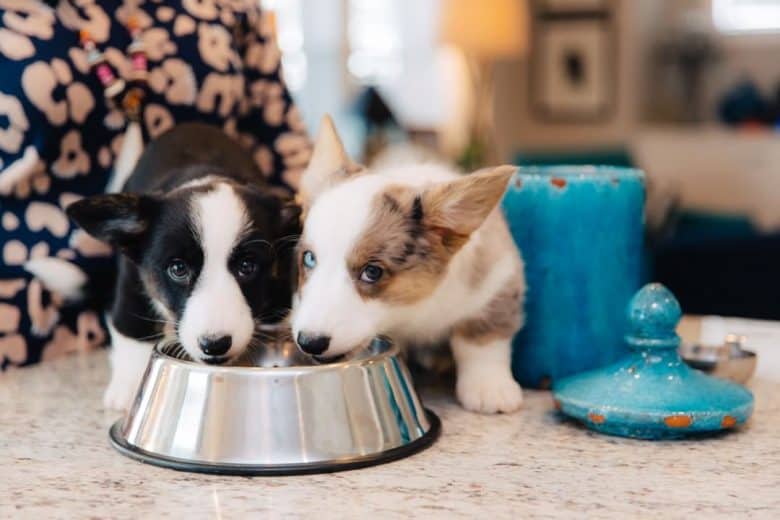
Cardigan Welsh Corgis have an affinity to overeat due to their sheer love of food.
Thus be sure to stick to the recommended daily allowance for a breed of this size, which is between one and one and a half cups of dry dog food.
This dog food should be of high-quality and can be split between two meal times.
Be sure not to leave food unattended and give your dog too many treats or human food, as this could lead to your Cardigan Welsh Corgi becoming obese.
If you think your dog is getting fat, you can see if you can feel his ribs. You should be able to feel the ribs slightly but without pressing too hard. If you can’t, your dog needs more exercise and less food.
Don’t miss: Best Dog Food for Corgis
Cardigan Welsh Corgi health issues
Cardigan Welsh Corgis are generally healthy dogs with a life expectancy of between 12 and 16 years. During your dog’s life span, they may be susceptible to some of the more common health problems that plague this breed.
This includes mobility issues that affect the spine.
Due to their long backs and low slung stature Cardigan Welsh Corgis are prone to spinal ruptures, and you will need to keep an eye on this breed when they go up and down stairs or try to climb onto furniture.
Also, be sure not to pick up your Cardi without supporting both the bum and the front legs.
Some of the diseases that can include mobility in Cardigan Welsh Corgis include degenerative myelopathy and hip and elbow dysplasia.
Also, Corgis are more likely than other breeds of dogs to have eye problems.
This includes progressive retinal atrophy (pra), an inherited disease that causes the retina’s deterioration and can ultimately cause night-blindness or total blindness.
Several other inherited eye diseases in Cardigan Welsh Corgis are expected.
These include cataracts, which mainly affect older dogs, Glaucoma which can lead to rapid blindness.
Distichiasis, a painful condition which is caused by hairs on the inside of the eyelid, primary lens luxation, which occurs when fibers that hold the eye break and persistent pupillary membrane.
Dental diseases are also common in many dogs, affecting 80% of all dogs under two, with Cardigan Welsh Corgis being particularly susceptible.
Untreated dental disease can lead to a variety of more severe conditions such as damage to the heart, kidneys, joints, or liver.
Also, Cardigan Welsh Corgis are known to inherit deafness while kidney or bladder stones are more common in this breed than others.
When purchasing a purebred Cardigan Welsh Corgi puppy, your dog should come with health clearances for hip dysplasia from the Orthopedic Foundation for Animals
And a DNA test for progressive retinal atrophy from the Canine Eye Registry Foundation.
How much is a Cardigan Welsh Corgi puppy?
Cardigan Welsh Corgi puppies cost between $1,200 and $1,800, with the average dog costing around $1,500.

In addition to merely buying a Corgi puppy, you also need to consider other costs such as purchasing bedding, toys, a lead and collar, and monthly food and paying for vaccinations, vet visits, and pet health insurance.
Don’t miss: The Best Corgi Names for your Furry Friend
Finding a reputable Cardigan Welsh Corgi breeder
When looking to buy a Cardigan Welsh Corgi, be sure to never get your dog from a puppy mill or pet store.
Look for reputable breeders that know how to care for this breed and are willing to let you see the environment in which the parent dogs are raised.
Backyard breeders should also be avoided due to the difficulty that Corgis have giving birth.
Due to this breed’s broad head and small pelvis, caesareans are often required, and a reputable breeder will understand their parent dogs’ health requirements.
Here are some Cardigan Welsh Corgi breeders to start your search:
- Aelwyd Cardigan Welsh Corgis, Tucson, Texas
- Davenitch Cardigans, Andalusia, Alabama
- Doxford Kennel, Geneseo, Illinois
Rescue / For Adoption
Some people will buy a Cardigan Welsh Corgi without having a good knowledge of what goes into looking for one of these puppies, or unfortunately, due to various circumstances, families of Cardis can no longer keep them.
In these instances, you may be lucky enough to find a Cardigan in need of a new home.
Here are some specific Corgi rescue groups you can look at when trying to find a Cardigan Welsh Corgi up for adoption:
- Cardigan Welsh Corgi National Rescue Trust, Nationwide
- East Coast Corgi Rescue, Washington DC
- Southeast Corgi Rescue, NC, SC, and GA
What’s the difference between a Pembroke and Cardigan Welsh Corgi?
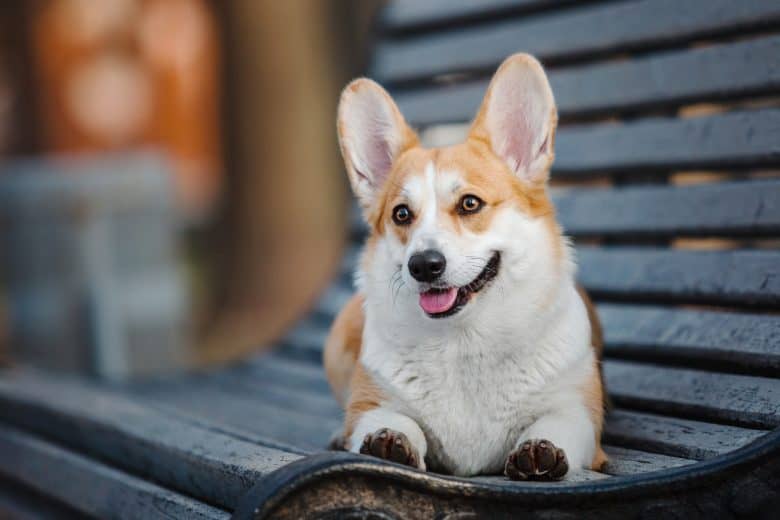
While initially recognized as one breed, it is now known that Cardigan Welsh Corgis and Pembroke Welsh Corgis have different histories and characteristics.
Pembroke Welsh Corgis are believed to have originated from Spitz-type dogs and brought to Wales either by Vikings or the Flemish.
Pembroke Welsh Corgis are smaller in size and lighter in weight than Cardigans with shorter legs while their head shape also varies slightly, being more triangular with pointed ears.
However, the main difference between the two dogs lies in their tails, with Cardigans having long tails and Pembrokes having a short tail or hardly any tail at all.
Although both breeds have similar personalities, Cardigan Welsh Corgis can be a bit more territorial and less sociable than their more well-known Pembroke counterparts.
Who should get a Cardigan Welsh Corgi dog?
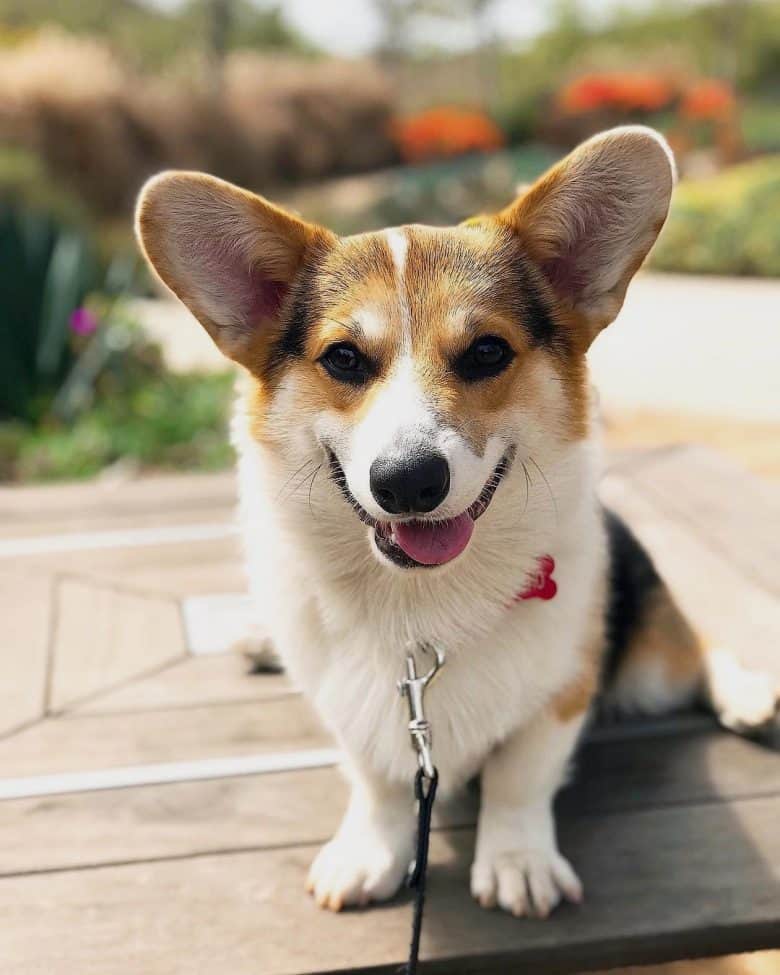
While Cardigan Welsh Corgis make for fantastic family dogs and are well suited to a range of environments, including apartment living, these dogs do require daily walks, lots of activity and sufficient mental stimulation.
You will also need to show the Cardigan strong leadership if you want to prevent this dog from becoming willful and stubborn and developing a range of bad habits. Comment with your Cardigan stories below.
Further reading: Cardigan Welsh Corgi mixes
- Corgi Husky Mix, aka the Horgi
- Corgi German Shepherd Mix
- Corgi Alaskan Malamute Mix
- Australian Shepherd Corgi mix, aka the Auggie or Corgherd
Reference
- https://www.cardiganwelshcorgiassoc.co.uk/
- http://images.akc.org/pdf/breeds/standards/Cardigan_Welsh_Corgi.pdf

Cess is the Head of Content Writing at K9 Web and a passionate dog care expert with over 5 years of experience in the Pet Industry. With a background in animal science, dog training, and behavior consulting, her hands-on experience and extensive knowledge make her a trusted source for dog owners.
When not writing or leading the K9 Web content team, Cess can be found volunteering at local shelters and participating in dog-related events.