Sometimes called Heirer, the Harrier Hound is an active dog bred for hunting and long pursuits. As a pack-oriented canine, this is a perfect companion for families or households who are always on the go.
Interested in this fit, outgoing, and good-natured dog breed? Keep reading to get to know the rare and loveable Harrier dog.
Origin: What breed of dog is a Harrier?
This fido’s name came from their long history of hunting hares in the 1200s when the English started developing the breed.
That’s why they were also referred to as Harehounds. Eventually, they ventured into chasing other critters, too, like foxes.
Like its other cousins, the Bloodhound, Greyhound, Fox Terrier, Talbot Hound, and Basset Hound, Harriers also have an excellent sniffer.
Fun fact: It is believed that the harrier type of dogs may have been brought by Normans to England when they invaded in 1066.
The Penistone pack is the first known pack of Harriers that existed in Britain in 1260, and for at least half a millennium, the line continued. We can thank Elias de Midhope for developing the pack’s descendants.
Harrier packs were popular first in England in medieval times, and later in colonial times in the United States.
Although the American Kennel Club (AKC) recognizes the Harrier hound, the English Kennel Club hasn’t since 1971, even if the breed came from England.
It is thought that it’s because owners of English Harriers prefer to hunt with them on fields than show them in rings.
What does a Harrier look like?
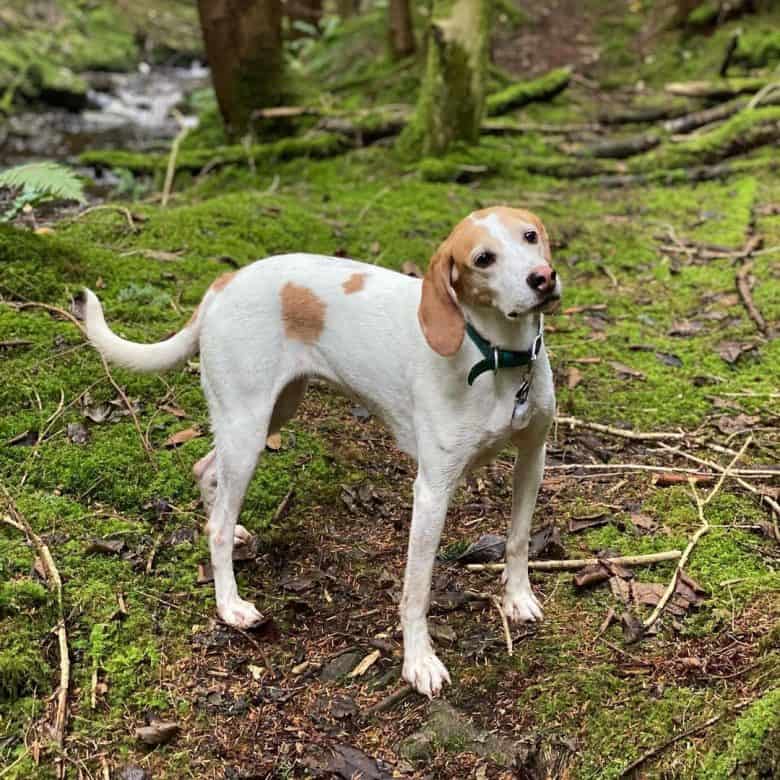
Harriers are sturdy, well-balanced dogs, which enables them to hunt. Like most scent hounds, they have large bones for their size. Harriers have floppy ears on their pronounced heads, set with alert and dark hazel eyes or brown eyes.
For keeping scents, Harriers have a wide nose with prominent nostrils. They have square jaws, muscular necks and bodies, and level toplines. Their tail stands upright to help their human hunting companions know their location.
The forequarters should have sloping shoulders above straight, bony legs. Their hindquarters should be proportionate and level with defined muscles.
Harriers VS. Other hounds breeds
The Harrier breed shares its ancestors with the English Foxhound and the Beagle, though its characteristics set them apart.
Each is also bred to hunt different games. Harriers are larger, more energetic, and not as needy as Beagles.
If you’re wondering whether your dog is a Beagle or a Harrier, their energy levels are telling. The Harrier can endure far more exercise and activity.
Compared with English Foxhounds, Harriers are smaller in size as a result of selective breeding.
Size: How big is a Harrier dog?
Harriers are considered as the smaller version of the English Foxhound.
According to their AKC breed standard, they have a height of 19 to 21 inches (48 to 53 cm) and weigh between 45 and 60 lbs (25 and 27 kgs). But an inch shorter or taller is acceptable.
Harrier puppies reach their full-grown size at twelve months old.
Despite being medium-sized dogs, their temperament and energy level makes them unsuitable pets for apartment-dwellers. So we’d recommend them to a home with a yard.
If a Harrier lives in a house with limited space, it’s crucial that it gets daily exercise.
What type of coat do Harriers have?
Harriers have a short coat that’s dense and fine, making it look shiny, with softer, loose hair on their feet.
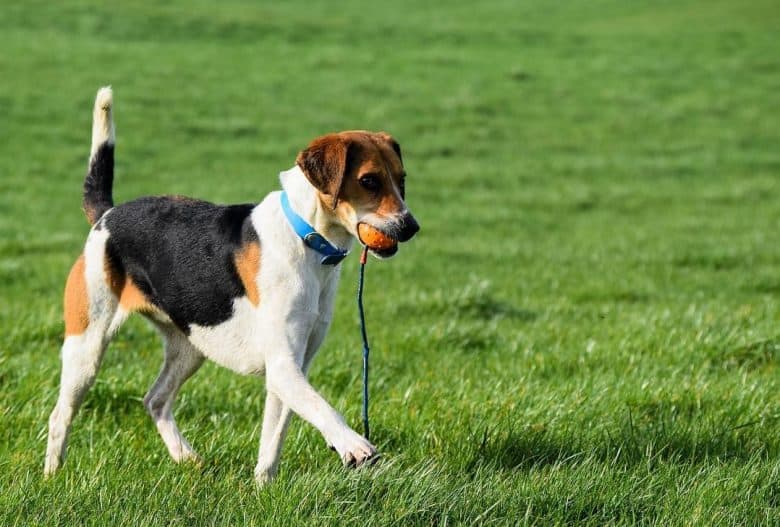
They come in many different coat colors, but they’re commonly seen with tricolor fur — tan heads, black saddles, and white undersides and paws.
Some are more lemon and white than tan, while others appear to be more red and white. Though uncommon, there are cream Harriers with markings that can be sable, gray, pied, brindle, or brown-colored.
You can watch this video of a Harrier dog being judged at a Westminster Kennel Club Dog Show to see what they actually look like:
Temperament: Do Harrier dogs make good family pets?
If you’re looking for a family-friendly pet that’s good with kids, the Harrier dog is one to consider. They’re amiable canines that will greet their humans’ guests, but they’re also alert and wary of strangers.
And though they’re competent watchdogs, we can’t say the same about being a good guard dog.
When it comes to other pets such as cats, they can get along well with them. NOT with smaller animals, though. Due to their background, they have a strong prey drive and may go after your hamster, mice, or bird.
As a pack dog, they won’t have any issue with living and playing with other dogs, even without early socialization!
So if you have a home filled with canine pets and active humans, the Harrier will be glad to be part of the fam and sit on your lap or side each night.
Do Harrier dogs bark a lot?
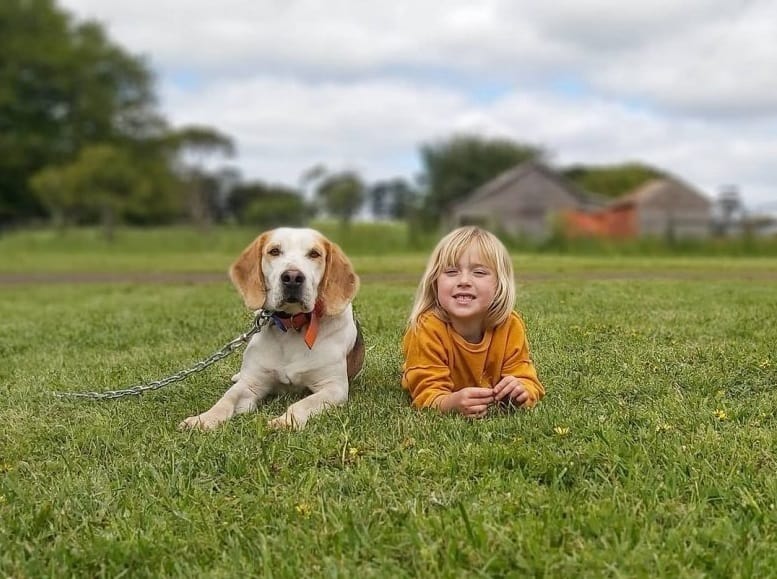
Your Harrier dog can be that independent pooch for a moderate length of time. Leaving him alone for long periods, like more than 4 or 5 hours, then that’s a different discussion.
If he gets lonely or bored, whining, howling, and a little bit of barking will occur. Expect a prolonged bark called baying.
So you may have no problem with your Harehound being aggressive, but you will when it comes to separation anxiety.
Don’t test your Harrier, though, because if it becomes a thing, he will think of ways to entertain himself by setting mischief on your stuff. You’ll also have a willful and stubborn pet.
But like with any intelligent breed, you can easily train your Harrier. Just show him the do’s and don’ts, as well as your daily routine, and implement them consistently along with positive reinforcement.
The best time to start all kinds of training is during their puppyhood stage. Puppy training is a great way for dog owners to instill specific rules and commands that their pooch has to master.
How to take care of your Harrier
Other than their exercise needs, we can say that Harriers are low maintenance dogs to have.
And unlike other breeds, this fido will do fine living in anywhere that experiences four seasons. That doesn’t mean they should be left to live outside. All pets should be treated as a family member and live indoors.
What else will a Harrier need from its owner?
Get ready for the highly active Harrier
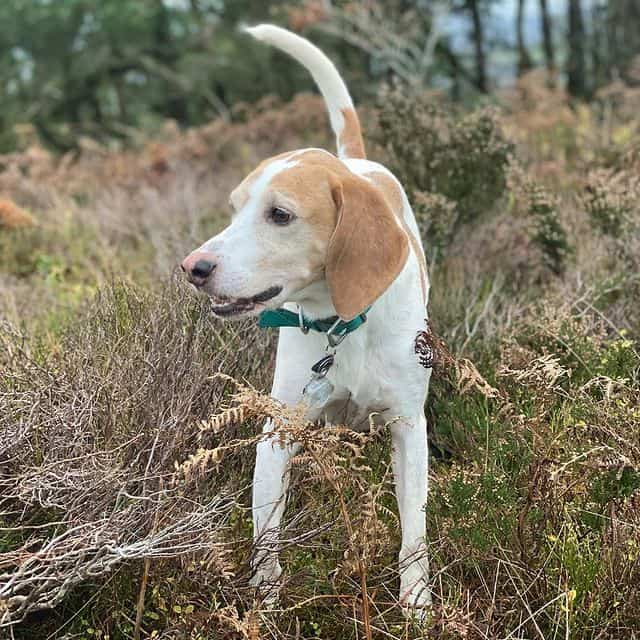
This scenthound is an energetic dog that requires 40 to 90 minutes of exercise every day. With a lot of stamina, this breed is a great companion for hikers and joggers!
We mentioned earlier that it’s best for a Harrier dog to live in a house with a backyard, but we want to emphasize that they like to dig and run.
As hunting dogs, they can’t help but follow a scent or pursue a game whenever they can.
Underground electric fences might be a solution, but this purebred has a high pain threshold, so a little shock will not make them stop from investigating or chasing what they want.
What more when they’re outside! Keep your Harehound on a harness and leash to keep your scenting pack hound from running away.
You may think exercise is just to help your pet stay in shape and avoid destructive behaviors from developing, but it’s also to let himself get tired. If he’s living a sedentary lifestyle, expect more naughty acts from your hound.
Grooming: Do Harrier Dogs shed?
Harriers are moderate shedders, so they aren’t hypoallergenic. But because it’s easy to groom their coat, weekly brushing using a hound mitt or a rubber curry brush would do the trick in keeping dead hair off your furniture and clothes.
Baths should only be given when necessary. If your pup has been out and about, a wipedown with a damp cloth should do the trick in removing loose hair and dirt.
Floppy ears block air circulation, so check and clean them once a week. Use a cotton ball and a dog ear cleaner, then gently wipe his ears to avoid wax buildup and infection. Then wipe it dry.
If slobbery dogs are a no-no for you, then the Harrier is a good bet for a pet. They’re not prone to drooling, so you can rest easy knowing you won’t be the victim of many sloppy kisses and shoes.
For the best oral hygiene, brush your Harrier’s teeth at least twice a week with a toothbrush and toothpaste designed for dogs to keep your Harrier’s teeth and gums healthy.
Feeding your Harrier dog
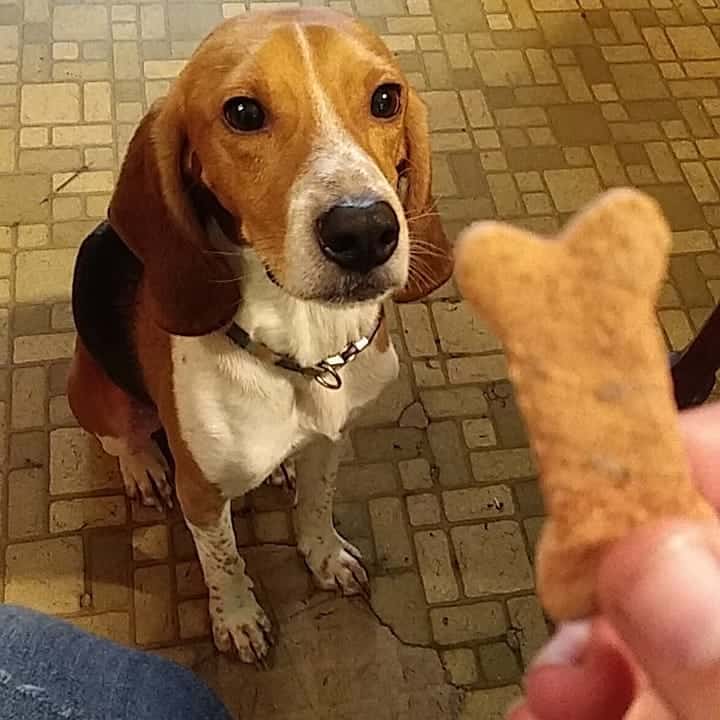
This Harehound requires 1.5 to 2.5 cups of high-quality dry dog food, but puppies can consume up to 4 cups.
How much you feed your pet should depend on his age, weight, activity level, and health. But you should also divide his food accordingly.
For Harrier adults, two meals a day is sufficient, while Harrier puppies should have three meals.
Remember that this breed is known to have a strong, muscular build. If your scenthound is looking stout, he’s probably having too much nom noms and less workout.
Free-feeding is also not a good idea because it’s one of the reasons why dogs get overweight or experience bloat.
Health: How long do Harrier hounds live?
Harriers have an average lifespan of 12 to 15 years. And like other dog breeds, they also suffer from numerous health problems.
A common illness they may have is canine hip dysplasia, where the thigh bone doesn’t fit the hip joint. This can either develop or be inherited.
That’s why a pup’s parents should be cleared of this disease by the Orthopedic Foundation for Animals (OFA).
And puppies shouldn’t be allowed to run for long periods on hard surfaces until their bones are fully developed. Falling or jumping from high places like the stairs can also cause injuries.
It’s also best that its parents have health clearances for elbow dysplasia, Von Willebrand’s disease, thrombopathia, and hypothyroidism.
A breeder’s breeding stock should also be cleared of eye problems from the Canine Eye Registry Foundation (CERF).
Other health issues that Harrier dogs may have are epilepsy, hound ataxia, anal furunculosis, and perianal fistula.
If a Harrier wouldn’t die of old age, it can either be due to a preexisting health issue or cancer.
How much do Harrier puppies cost?
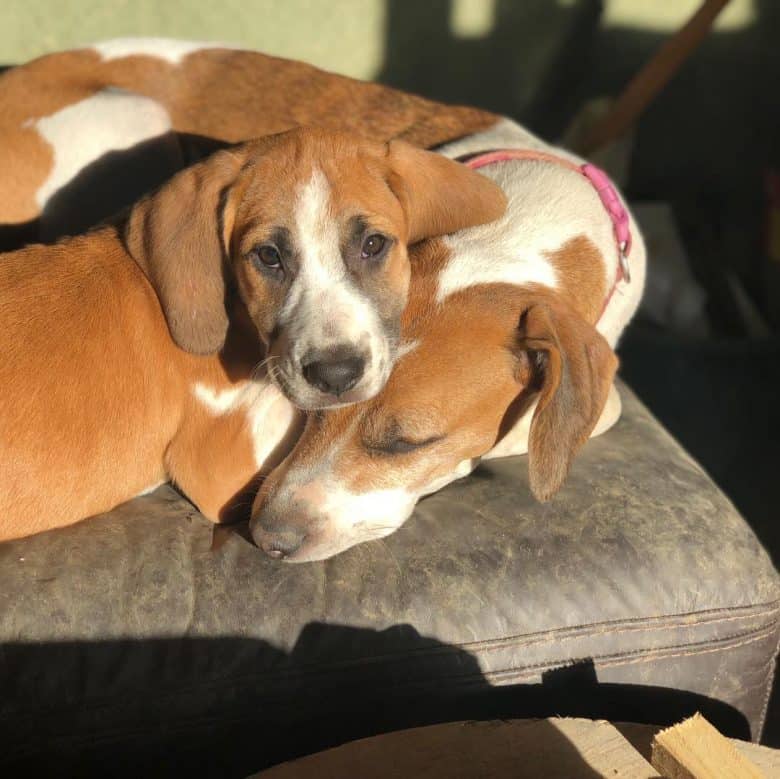
Purebred Harrier puppies can have a price range of $1,000 to $2,500 each. Although their cost can be affected by many factors such as the breeder’s location and popularity, their bloodline, and even their gender and coat color.
But what’s most considered here is that they’re one of the rarest breeds.
Ever since they were imported in the U.S. since the 1700s, Harriers have always been rare.
And even if they’re quite popular outside America, specifically with hunters in Ireland, there’s only a number of them.
With that said, be careful where you purchase a Harrier puppy. Avoid pet stores, puppy mills, and backyard breeders by researching and knowing the right questions to ask before signing any contract.
Registered Harrier breeders online
Once you’re confident that you can raise and care for a Harrier puppy, you can start browsing what’s available online.
Besides the AKC Marketplace, we also found Blythmoor Harriers located in Oregon.
We also want to add that when dealing with puppy sellers, they should conform with the Harrier Club of America’s code of ethics.
Harrier dogs for adoption
It may be challenging to find a Harrier puppy for sale, but another option is to look at shelters or rescue organizations.
You may find puppies, but most of the time, it’s adult dogs craving for a new home. If you want to save a life and plenty of bucks, adopting will be your best bet.
Take a look at these Harriers that need rescuing or rehoming. Some of them also cater to Harrier mixes or other hounds:
- Pet Rescue by Judy (Sanford, FL)
- Giles Animal Rescue (Pearisburg, VA)
You can also check out Harrier Club of America to see if they have any available Harriers to adopt. If you’re mostly on Facebook, visit the Rescue Me! Harrier Rescue page.
Other hound dogs like the Harrier
Feeling like the Hare Hound is a bit much? Whether you’re concerned about size, personality, grooming, or energy level, there’s bound to be a hound that will bay its way to your heart.
Here are some other hound breeds you might like:
- American Foxhound
- Bluetick Coonhound
- Hamiltonstovare
Pros & Cons: Is a Harrier dog right for me?
Harriers aren’t the best choice for first-time dog owners because they require plenty of exercise, attention, and time.
This rare breed will thrive if it’s with a family that’s always on the move and looking for new adventures.
They’re brave, independent, loyal, smart, and capable companions for those looking for a hound dog as a hunting buddy or a pet.
Did the Harrier dog impress you? What do you think of this once in a blue moon pooch? Share your thoughts with us by leaving a comment below.