Health Care Issues
Author
Cindy Moore,
cindy@k9web.com
Copyright 1995-1997.
Table of Contents
Considerable information herein is summarized from Carlson & Giffin,
authors of a home veterinarian handbook. I would like to thank them
for their informative and accessible information. Any mistakes made
in the summaries are my responsibility and not Carlson & Giffin's.
I believe that I am within copyright laws by using summarizations
(no direct quoting, except for the toxic plants section), my own
organization of the material, and precise acknowledgement where relevant.
This article is presented for informative purposes only, and should
NOT be used to "replace" normal veterinary care. Rather, the
information included is intended to allow you
- to be aware of potential problems,
- to be able to prevent some of these problems, and
- to know when to take your dog in and what to tell your vet.
Your dog cannot tell you when it feels sick. You need to be familiar
with its normal behavior -- any sudden change may be a signal that
something is wrong. Behavior includes physical and social behavior;
changes in either can signal trouble.
If you familiarize yourself with basic dog care issues, symptoms to
look for, and a few emergency care treatments, you can go a long way
toward keeping your dog healthy. Never attempt to replace vet care
with your own (unless, of course, you are a vet); rather, try to be
knowledgeable enough to be able to give your vet intelligent
information about your dog's condition.
You should know some emergency care for your dog. This is beyond the
scope of the FAQ, as you really need pictures or demonstrations.
Check a home-vet book and ask your vet about them. Some of these include:
- mouth-to-mouth resuscitation
- CPR
- temporary bandages and splints
- inducing vomiting
- a good antiseptic for minor cuts, scrapes, etc.;
povidone iodine and similar antiseptic cleansers are recommended
There are a number of good books that cover basic care for dogs.
These include:
Miller, Harry. The Common Sense Book of Puppy and Dog Care. Bantam
Books, Third Edition (revised) (1987). ISBN: 0-553-27789-8 (paperback).
Includes a section on practical home care, listing major symptoms
you should be alert for, and listing general criteria by which you can
determine a dog's overall healthiness. Discusses major diseases and
problems, gives sketches on what may be wrong given certain symptoms.
Taylor, David. You and Your Dog. Alfred A. Knopf, New York (1991).
ISBN:0-394-72983-8 (trade paperback).
Taylor gives flow-chart questions to consider when deciding if
symptoms are serious or not. Not as comprehensive as other care
books, but a good start in understanding what you need to look for
when your dog seems off. Includes illustrations of many procedures,
such as teeth cleaning and nail trimming. Informative discussion of
reproductive system, grooming, and dog anatomy.
An *excellent* resource that details all aspects of health issues for
dogs, and one that every conscientious dog owner should have is:
Carlson, Delbert G., DVM, and James M. Giffin, MD. Dog Owners's
Home Veterinary Handbook. Howell Book House, Macmillan Publishing
Company, 866 Third Avenue, New York, NY 10022 USA (1980). ISBN:
0-87605-764-4 (hardcover).
This comprehensive book is a complete guide to health care of dogs.
It lets you know when you can treat the dog, or when you need to
take it to the vet post-haste. It lists symptoms so that you may
inform your vet of relevant information about its condition. The
arrangement of the material facilitates rapid reference.
Illustration of key procedures (pilling, taking pulse/temperature,
etc). Lists poisonous substances, including houseplants.
A must have home veterinarian handbood.
There are many devices to aid in administering medicine. In particular,
pill plungers are effective and available by mail order. A syringe with
no needle is good for liquids. Ask your vet for some other ideas.
Pills
(summarized from Carlson & Giffin)
Open your dog's mouth and drop the pill down as far back as you can,
on top of and in the center of the tongue. Close the dogs mouth and
hold it shut while stroking the throat until your dog swallows. If it
licks its nose, chances are that it swallowed the pill. Giving it a
treat afterwards helps insure that the pill is swallowed.
You can try hiding the pills in a treat, say cheese or peanut butter.
Pill plungers work well, also.
Liquids
(summarized from Carlson & Giffin)
Tilt the chin up at 45 degrees, and place the neck of the bottle into
the cheek pouch, between the molar teeth and the cheek. Seal the lips
around it with your fingers and pour in the liquid. Large amounts can
be given this way. Hold the muzzle firmly while the dog swallows.
Bottles, syringes and eyedroppers can be used. Your vet can help you
out here.
Eyedrops
If you must administer eyedrops to your dog and it resists, try
the following trick: stand behind your dog and hold the eye open to
administer the drops. You don't appear as dominating this way.
Dogs can get allergies just like people do. However, symptoms involve
skin problems rather than respiratory distress. Check the skin
problems section over for possible clues toward allergies. A common
culprit is fleas, but dogs can be allergic to many other things,
including some types of food commonly found in dog food.
A good way to have your dog's allergies tested is with an ELISA test.
Your vet should know about this test and be able to have it
done at your request.
Although aging is irreversible, some of the infirmities of an older
dog may in fact be due to disease and therefore correctable or
preventable. It is important for any dog over six years of age to be
examined thoroughly every six months.
In particular, you want regular blood work done on your dog. For
example if kidney function declines, you want to know so that you can
switch to kidney-sensitive diets.
A recently published book is
Hampton, John K. Jr., PhD, and Suzanne Hampton, PhD. Senior Years:
Understanding your Dog's Aging Process. Howell Book House. 1993.
ISBN: 0-87605-734-2.
Behavioral changes
(summarized from Carlson & Giffin)
Older dogs are more complacent, less energetic and curious. They may
be forgetful, and sleep more. Crankiness and irritability are common.
They are less tolerant of changes in the environment; in particular
you may wish to have someone come by and check the dog at home rather
than kennel it when you leave on vacation. Older dogs in hospitals
and kennels go off their feed, become overanxious, and bark frequently.
Physical changes
(summarized from Carlson & Giffin)
Loss of muscular tone and lessened activity may result in the neck and
body becoming more bulky, but the legs more thin. Resistance to cold
is impaired and older dogs should always have a warm and draft-free
bed. Arthritic dogs may need a padded surface on which to sleep.
Moderate exercise helps keep the joints supple, and should be
encouraged, but not beyond its ability to do so. Also, some
conditions, such as heart trouble, may necessitate restraining it from
exercise. Toe nails will require more frequent trimming. Stiffening
joints may make it more difficult for the dog to keep its genital and
anal areas clean. The skin may dry out and require some care to keep
it clean and less dry.
Loss of hearing and sight may occur. Tooth and gum disease is fairly
common. Kidney failure and disease is more common (look for increased
thirst and other symptoms of kidney failure). Incontinence (mostly in
older spayed females, treatable with estrogen) may appear.
An older dog needs less calories; the food must be of high quality so
that it still gets the nutrition it needs with fewer calories.
Geriatric Vestibular Disorder
Common in older dogs, apparently something happens neurologically in
the connection between the brain and the inner ear (sometimes
infection, sometimes inflammation). Very little is actually known
about it, but it does tend to subside after about a day or so.
Unfortunately, the dog is generally unable to eat or drink, as it is
completely disoriented.
Dogs rarely show any enduring effects from such an episode other than
sometimes their head leaning or tilting to one side.
You may need to bathe your dog on occasion. The main thing to
remember is that dogs' skin is more delicate than humans. It is much
more prone to drying out when you wash it. Human based shampoos are
formulated to remove all the oils. You need to get one formulated for
dogs that will remove dirt but not the essential oils for the coat.
Dogs that are frequently bathed may require some supplements (such as
Linatone or vegetable oil) to keep their skin and coat healthy.
A condition called impetigo may result from not rinsing all the soap
out. Other general problems, such as fleas that prefer dried-out
skin, may occur.
Procedure
(summarized from Carlson & Giffin)
First, groom your pet to rid its coat of any mats or knots. Bathing
will not remove these and in fact will worsen them. Plug its ears
with cotton to prevent water in the ears. To prevent soap-burn in the
eye, smear the eye area with a little vaseline, or administer a drop
of mineral oil in each eye.
Wet your dog thoroughly. Using a nozzle and spray is much easier.
Using a shampoo formulated for dogs (the pH balance of human shampoos
is wrong), lather and rinse its head carefully, keeping soap and water
out of its eyes and ears. Lather and rinse the rest of its body.
Relather and rinse any other areas that had stubborn stains.
Rinse your dog *thoroughly*, and then rinse it again, even beyond when
you think you've got all the soap out. Try adding Alpha-Keri bath oil
(one teaspoonful per quart water) to the final rinse for coat luster.
Do NOT use vinegar, lemon, or bleach rinses; they are acidic and will
damage the dog's coat and skin.
Dry your dog gently with towels, and keep it indoors until it is
completely dry to avoid chilling.
Dry shampoos
Dogs with very oily coats may benefit from "dry-cleaning" in between
baths. Calcium carbonate, talcum/baby powder, Fuller's earth, and
cornstarch are all effective. They can be used frequently without
fear of removing essential oils or damaging the coat and skin.
Apply the powder, then brush out, against the lay of the hair, from
the bottom up (toes to head) with a soft bristle brush. Then brush
the whole dog normally to get all the powder out.
Tar
Do not use petroleum solvents, which are extremely harmful, to remove
the tar from your pet's skin. Instead, trim away excess coat
containing tar where possible. Soak remaining tarry parts in
vegetable oil overnight and then give your dog a complete bath.
Sap
Sap (especially pine tree sap) often must simply be trimmed off.
However, some people have had success with Murphy's Oil Soap.
Owners that practice good dental care with their dog will reap
many benefits in the long run.
Typical problems
The most common cause of bad breath is excessive calculus
and plaque deposits on the teeth. Bacteria live and feed in
the plaque and produce gum and bone infection, pain, and
bad breath.
Calculus is a crusty collection of food particles, minerals, and
bacteria that forms at the teeth-gum borders.
Plaque formation eventually leads to gum disease, mouth odors,
receding gums and bone destruction and infection. The rate at which
plaque forms in your dog's mouth is mainly due to genetic
predisposition, but can be slowed by daily oral hygiene using
antiplaque liquid or gel and/or pastes and regular professional
cleaning and polishing.
Pyorrhea (inflamed and infected gums) of the teeth is often the cause
of kidney infections and endocarditis in older dogs. The pressure on
the gums and infection of the teeth is quite painful to your dog.
Preventive steps
An antiplaque liquid or gel (Chlorhexidine) can be applied to the gum
tissue with a cotton ball or swab. As an alternative, a soft bristle
toothbrush or finger brush can be used with a non-foaming enzymatic
toothpaste manufactured for dogs.
Treatments should be done daily or at least every other day, depending
on the current problems. Only a few areas are particularly
susceptible to plaque and calculus formation. The areas of greatest
concern are the canines and upper back molars (side facing cheeks).
Chlorhexidine penetrates gum tissue and prevents bacterial
growth, plaque build-up, gingivitis, and bad breath. In addition
to the canines and molars, look at the front incisor teeth and brush
away any accumulation of hair and food at the gum line if present.
To remove existing calculus deposits, your dog will require short
general anesthesia and your dog's teeth will be cleaned with dental
instruments along with an ultra-sonic machine that vibrates the
calculus off the surface of the teeth. Calculus from under the gum
tissue is carefully removed using a hand scaler. Finally, the teeth
are polished to reduce purchase for new deposits. This can often be
done when the dog is under anasthetic for other reasons, such as
neutering.
Cavities, etc
Dogs do not commonly get cavities. When they do occur, it is more
often at the root of the tooth rather than at the crown. Cavities can
lead to root abscesses.
Abscessed roots often cause a swelling just below the animal's
eye. Generally, tooth extractions are needed at this point.
Zoonotic diseases are those that can be transmitted from animals to people.
(summarized from Carlson & Giffin)
Any worm infestation has the potential of causing problems in humans.
Standard hygienic precautions will avoid most of these. Things to
watch for: babies getting infected when playing near or on
contaminated soil or feces, working in the garden without gloves.
Rabies, toxoplasmosis, brucellosis, and tetanus (lockjaw) can all
affect both dogs and humans. Again, simple hygienic precautions will
avoid most problems.
Your dog's ears should be clean, slighly pink-gray and have no odor.
Problems with the ear to watch for include:
- Red, irritated skin
- Dirt or wax build up
- "Coffee grounds" (rare)
- Discharge
- Foul odor
- Frequent head shaking, or scratching/pawing at ear(s).
The most common problems with ears are ear infections (yeast or
bacterial). Ear mites are actaully pretty uncommon in dogs.
In any case, any of the above symptoms are grounds for having the vet
check your dog's ears out.
Ear mites are treated with medication. Sometimes a reapplication is
needed. Some people have gotten rid of light infestations by cleaning
the ear out and then coating lightly with baby oil or mineral oil.
Ear infections are a little harder to treat, usually requiring daily
ear drops for a week or so, weekly drops for some time after that.
Some dogs prone to ear infections need to have ear drops on a regular
basis. Drop-eared dogs are a bit more prone to ear infections, as
prick ears normally allow more air circulation.
An easy home remedy to *prevent* ear infections (will not cure an
existing one) is:
2 Tablespoons Boric Acid
4 oz Rubbing Alcohol
1 Tablespoon Glycerine
Shake well. Put 1 small eyedropperfull in each ear. Rub it around
first, and then let the dog shake. Do this once a week and you
shouldn't see any ear infections. It works by raising the pH level
slightly inside the ear, making it less hospitable to bacteria.
To clean out an ear that's simply dirty (some buildup of dirt and wax
is normal, but excessive ear wax may indicate that something else is
wrong), take a cotton ball, dip in hydrogen peroxide if you like
(squeeze excess out) and wipe the dog's ear out. The canal is rather
deep, so you will not injure your dog so long as you only use your finger
to probe the canal. Clean all around the little
crevices as best as you can. Use another cotton ball for the other ear.
Be sure to dry the ears out thoroughly.
There are many dog food formulations out there, ranging from
inexpensive grocery-brands to expensive premium food. You should find
out what suits your dog best: while many dogs have done just fine on
dog chow, others do much better with other foods such as Nature's
Recipe, Iams, Pro-Plan, etc.
The theory behind the more expensive foods is that they are more
digestible and contain less "bulk" and "fill." Hence, your dog will
eat less in volume (and thus the extra cost of the food is somewhat
offset) and excrete small and firm stools. You may need to experiment
to find out how your dog does on different brands. Dogs vary in their
individual reactions.
Food should be fed once or twice a day. Put the food down and take it
up again after ten to twenty minutes regardless of whether your dog
has finished eating it. This discourages "picky eating" and lets you
be certain of exactly how much food your dog is eating. Frequently, a
problem is first indicated when your dog's feeding goes off, so
scheduled feeding like this (rather than free feeding) will tip you
off to potential problems right away.
The larger or younger your dog is, the better multiple daily feedings
are; simply divide up each day's portion into individual feedings.
Fresh water should always be available, and changed at least once a
day.
Many dogs appreciate vegetables. In particular if your dog is fond of
munching on the grass, you can often alleviate this by feeding
vegetables to your dog. Stick with fresh, raw foods: carrots,
broccoli and cauliflower stems, apple cores, etc are popular. Stay
away from potatoes and onions.
Feeding your dog "people food," i.e., table scraps and such is a poor
idea. First, you may encourage your dog to make a pest of itself when
you are eating. Second, feeding a dog table scraps is likely to
result in an overweight dog. Third, if your dog develops the habit of
gulping down any food it can get, it may seriously poison or distress
itself someday.
For a dog that gulps the food down so rapidly that gas is a result,
you can slow down the rate of eating by putting large, clean rocks
(3-4" diameter) in the dish along with the food.
Cooking food for one's own dog is a trend that is increasingly popular.
It is controversial, with some adherents claiming every kind of benefit
possible
and detractors pointing out problems. Whatever position one takes on
this concept, it's clear that for the dog owner who wishes to proceed
with, thorough research must be done. Tracy Landauer has kindly supplied
a good overview. Please note that improper attention to the nutritional
requirements of your dog will make him quite sick. This is
not something to undertake lightly or on a whim:
For anyone considering switching over to a raw diet, do your homework
first; don't just jump in blindly.
All of the books below should be available at either Amazon.com or
Direct Book Services. Most folks start with the Pitcairn book. The
first Billinghurst book spawned the unfortunate acronym, BARF (Bones And
Raw Foods). Kymythy's book is also very easy to comprehend and use -
she even includes charts and blank grocery lists. Goldstein's book is
an excellent read.
- Complete Guide to Natural Health for Dogs and Cats, by Dr. Richard
Pitcairn, DVM
- The Holistic Guide for a Healthy Dog, by Wendy Volhard
- Reigning Cats and Dogs, by Pat McKay
- Give Your Dog a Bone, by Ian Billinghurst (Australian vet)
- Grow Your Pups on Bones, Billinghurst
- The Natural Remedybook for Cats and Dogs, by Diane Stein
- The Complete Herbal Handbook for Dogs and Cats, by Juliette de
Baircli Levy
- The Ultimate Diet, by Kymythy Schultze
- The Nature of Animal Healing, by Martin Goldstein, DVM
Wellpet is an email listserv dedicated to natural pet care and diets;
warning, it's a high-traffic list, but for starters, their web site has
a lot of the basics and great FAQs. Their web site would be the best
place to get basic info about feeding raw and why. It's an inexact
science, be warned. Subscription info there too.
See
http://www.listservice.net/wellpet/welcome.htm.
There's also a discussion group on OneList called rawdiets, and another
email list called K9 Cuisine.
The most common occurrence of incontinence is in the older spayed
bitch. Most often this is due to a hormonal imbalance and as such is
easily treated in one of two drugs. The traditional way is with doses
of DES (estrogen). Typically, the dosage is varied until the
incontinence stops, and often the dosage can be later reduced
altogether. Another method of treatment is with phenylpropanolamine
(PPA, brand name Dexatrim) which tightens all the muscles.
DES replaces the hormones, restoring the hormonal balance. PPA works
independently of the hormones and as such, may introduce new problems.
Both drugs are known to cause problems and side effects, although
typically, the level of dosage that DES is administered at for
incontinence will not cause problems. At high dosages, DES is thought
to be linked with breast cancer and obesity. Since PPA tightens
all muscles in the body, it can potentially cause serious side
effects, especially with the heart. There is speculation that PPA is
often prescribed at dosages too high for dogs. In humans, PPA is not
advised when thyroid levels are low; this might also be a problem with
dogs.
Which drug is safer for your particular spayed bitch depends on the
particular dog and her particular veterinary history. What's best for
one dog might be bad for another, depending on what other
veterinary conditions or susceptibilities she has.
If you are not planning to breed your pet or put it to stud service,
or your dog's breeding days are over, you will want to neuter it.
There are a number of health benefits associated with neutering, for
either sex.
Technically, the general term for either sex is neutering; bitches are
spayed and dogs are castrated. However, general usage is that bitches
are spayed or neutered and dogs are neutered.
Neutering is *not* a solution to behavioral problems; training is. However
with some dogs it can alleviate some factors that make it more difficult
to train. But you cannot expect to neuter your dog and have it turn into
an angel without any work.
Tip: let your dog eliminate before taking it in and again after
getting it back. Many dogs, especially crate-trained dogs, will
not eliminate in the vet's kennels during their stay.
Dogs are castrated. A general anesthetic is administered, the
testicles are removed (oriectomy) and several stitches are used to
close it up. The scrotum will shrink and soon disappear after
castration. You will want to neuter the dog around six months
of age, although dogs can be neutered at any time after this.
For example stud dogs are typically neutered after they are too
old to breed, and they suffer no ill effects. Some clinics may use a local
anesthetic instead.
Bitches are spayed; this is an ovario-hysterectomy (uterus and ovaries
are removed). She must be put under general anesthesia. A large
patch of fur will be shaved (to prevent later irritation of the
incision) off the lower abdomen. You may have to take your bitch back
in to remove the stitches. From a health point of view, the earlier
the bitch is spayed, the better. Ideally, she should be spayed before
her first heat, this reduces the risk of reproductive and related
cancer (e.g., breast cancer) later in life considerably; not to
mention guaranteeing no unwanted puppies. The most dramatic rise in
risk of cancer occurs after the second heat or two years of age,
whichever comes first before spaying. After that, while the risk is
high, it does not rise further.
You will need to watch to make sure your dog does not try to pull out
its stitches, and consult your vet if it does. You might, in
persistent cases, need to get an Elizabethan collar to prevent the
animal from reaching the stitches. Puffiness, redness, or oozing
around the stitches should be also reported to the vet. Some stitches
"dissolve" on their own; others require a return to the vet for
removal.
For further information on how neutering may affect your dog, see the
section on neutering in Assorted Topics.
The cost can vary widely, depending on where you get it done. There
are many pet-adoption places that will offer low-cost or even free
neutering services, sometimes as a condition of adoption. Local
animal clinics will often offer low-cost neutering. Be aware that
spaying will always cost more than castrating at any given place since
spaying is a more complex operation. Vets almost always charge more
than clinics, partly because of overhead, but also because they often
keep the animal overnight for observation and will do free followup on
any later complications. Larger animals will cost more than smaller ones.
Pet Assistance has a program to help you locate low-cost neutering.
There may be an 800 number, but the San Diego number is 619-697-7387.
They can refer you to a veterinarian in your area who will perform
low-cost spaying or neutering. Other low cost/coupon assistance:
1-800-321-PETS; Pet Savers Foundation at 1-800-248-SPAY. Most vets
honor these coupons.
There is an extensive discussion on the effect neutering has on a
dog's behavior in the Assorted Topics chapter of the FAQ. In summary,
no one really knows, and for every example presented, a counter-example
can be made.
Dogs are not as good as people in shedding excess heat. You should
take general care during hot and summer weather that your dog does not
get too hot. Make sure shade and water is available and that there is
some fresh air. DO NOT LEAVE YOUR DOG IN A CAR on a hot day! Cars
heat up much more quickly than you think and that one inch or so of
open window will not help. If you park in the shade, the sun may move
more quickly than you think. A water-filled pump sprayer can help
keep your dog cool. But your best bet is to prevent overheating.
Heatstroke is indicated by some or more of the following symptoms:
- rapid or heavy breathing
- bright red tongue
- thick saliva
- vomiting
- bloody diarrhea
- unsteadiness
- hot, dry nose
- legs, ears hot to touch
- extreme: glassy-eyed, grey lips
Wet the dog down gradually using cool, not cold water. Get it out of
direct sunlight. Give it a little cool water to drink at a time.
Cold compresses to the belly and groin helps. Get the dog to the vet.
A dog that has had heatstroke before can be prone to getting it again.
Puberty
Bitches
In general, a bitch can start her first estrus, or "heat" between the
ages of 6 months to 18 months. If you know when her dam first went
into heat, that will give you a good indication of what to expect with
your puppy. It is often felt that the larger breeds take longer to
enter heat than the smaller ones felt, but familial patterns, if known,
are a more reliable indicator.
The first signs of estrus include: a small amount of clear discharge,
a modest swelling of the vulva (the external genital fold), and
increased licking of the area. Some bitches have a shortened
attention span. This period can last from 4 to 14 days. Other dogs
will show an interest in licking the area (as opposed to just smelling
it) as well.
The next stage includes bloody discharge, which can be anything from a
few spots of blood to leaving a trail behind as they go, and increased
swelling of the vulva. The nipples will enlargen somewhat. This
period can last anywhere from 4-14 days as well. At the end of this
stage, the vulva is at maximal size.
At this point the bitch is fertile and ready to be bred, and will
accept male dogs. This stage lasts for several days. After the first
heat cycle, the bitch's vulva and nipples will shrink down, but not to
the puppy size that they were before.
However, there is much individual variation. Some bitches can show
little or no sign of being in season throughout much of their estrus
cycle. Some will always accept male dogs (even when they are not yet
fertile) and others never accept them.
Spaying is generally done when the bitch is not in season. The
increased vascularity (higher blood flow) in the organs makes the
operation more risky. In addition, such an operation would alter
the balance of hormones in the dog's body rather abruptly, a potential
source of problems. However, it can be done, and often is if the
bitch winds up unintentionally pregnant, for example.
Dogs
Male puppies are born with undescended testicles, just like human
males. Somewhere between 4 months to a year, the testicles will
descend, although you should be able to feel the testicles from about
7 weeks onward. At about this time the levels of testosterone are
peaking. An intact male dog between 10 and 12 months of age has
about five times the testosterone level he will have in his final
adult intensity, if he is not neutered!
Male puppies will urinate like female puppies (by squatting) until
about the time their testicles descend, and then will generally start
to urinate standing up. Initial confusion is normal at this stage: be
prepared for the puppy to raise the wrong leg, try to raise both legs,
try to walk at the same time, or even try to use people as a "post"!
You can encourage him to restrict his marking by praising him when he
marks an acceptable item and scolding him when he is not. Discourage
him from marking when you are on a walk; get him to mark around your
yard as much as possible. (Marking, as opposed to urinating, is when
only a small amount of urine is deposited.) Neutering early may or
may not affect this behavior.
If a dog has only one testicle, he is monorchid. If he has one
undescended testicle, he is cryptorchid (unilateral); two undescended
and he is cryptorchid (bilateral). Popular but incorrect usage calls
the dog with one undescended testicle monorchid and two undescended
cryptorchid. Granted, you may not be able to tell whether a dog is
monorchid or has unlateral cryporchidsm without exploratory surgery.
Undescended testicles often become cancerous and should be removed.
Furthermore, such dogs should not be bred since the condition is
hereditary.
From a MedLine search:
TI: Questions and answers on the effects of surgically neutering dogs
and
cats.
AU: Johnston-SD
SO: J-Am-Vet-Med-Assoc. 1991 Apr 1; 198(7): 1206-14
TI: Effects of neutering and spaying on the behavior of dogs and cats:
questions and answers about practical concerns.
AU: Hart-BL
SO: J-Am-Vet-Med-Assoc. 1991 Apr 1; 198(7): 1204-5
TI: Gonadectomy in immature dogs: effects on skeletal, physical, and
behavioral development.
AU: Salmeri-KR; Bloomberg-MS; Scruggs-SL; Shille-V
SO: J-Am-Vet-Med-Assoc. 1991 Apr 1; 198(7): 1193-203
TI: Implications of early neutering in the dog and cat.
AU: Stubbs-WP; Bloomberg-MS
SO: Semin-Vet-Med-Surg-Small-Anim. 1995 Feb; 10(1): 8-12
Remember that a dog's skin is composed of only one layer, so it is much
more delicate than a human's skin, which has three layers. A dog's skin
depends on the hair and oils on it to keep it in good condition.
Some preventive steps:
- Keep your dog properly fed to prevent dry skin
- When bathing your dog, use dog-formulated shampoo to prevent dry skin
- Groom your dog regularly; some problems are caused by matted hair
providing breeding grounds for a variety of skin diseases, regular
grooming also helps keep you aware of any incipient problems
- Keep your dog flea and parasite free
- Check your dog regularly for foxtails, burrs, and other sharp
objects it may pick up when outside
Relieving dry skin
Some things to try:
- Shampoos with lanolin
- A good soak in cool water
- Non-drying shampoo: eg, Hy-Lyt EFA is non-allergenic
- Medicated shampoos may help with allergy-induced problems
- Avon's Skin-So-Soft(tm) added to the rinse water
Allergies followed by staph infections
Once a dog has an allergic reaction, it is quite common to have a
secondary staph infection. Many vets aren't familiar with this. The
staph infection may stay around long after the allergy is gone.
A vet that specializes in dermatology can be of great help in dealing
with skin problems. See if your vet can refer you to such a person.
Some studies on primrose and fish oil in helping relieve or cure
secondary infections from allergies are documented in DM, March 1992.
More information may also be obtained from writing to the RVC
Dermatology Dept, Royal College St, London. NW1.
Summary table
It is beyond the scope of this FAQ to examine any of these skin
problems in great detail, but here is a summary table of possible
problems. Summarized from the summary tables in Carlson & Giffin,
pages 67-69.
Itchy Skin Disorders
Name Symptoms
-----------------------------------------------------------------------------
Scabies | *intense* itching, small red spots, typical crusty ear tips
------------+----------------------------------------------------------------
Walking | puppies 2-12wks, dry flakes move from head to neck to back,
Dandruff | mild itchiness
------------+----------------------------------------------------------------
Fleas | itching/scratching on back, tail, hindquarters
------------+----------------------------------------------------------------
Lice | on poorly kept/matted coat dogs, uncommon, may have bald spots
------------+----------------------------------------------------------------
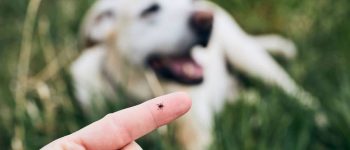
Ticks | irritation at site of bite, often beneath ear flaps or thin skin
------------+----------------------------------------------------------------
Damp Hay | severe itch from worm larvae, contacted from damp marsh hay
Itch | (regional)
------------+----------------------------------------------------------------
Inhalation | severe itch, face rubbing, licking paws, seasonal
Allergy | also regional
------------+----------------------------------------------------------------
Flea Allergy| scratching continues after fleas killed, pimple rash
Dermatitis |
------------+----------------------------------------------------------------
Contact | itching/irritation at site of contact
Dermatitis |
------------+----------------------------------------------------------------
Allergic | repeated or continuous contact (eg flea collar),
Contact Derm. rash may spread
------------+----------------------------------------------------------------
Lick sores | "boredom sores", licking starts at wrists/ankles
-----------------------------------------------------------------------------
Hormone-related Hair Loss or Poor Hair Growth
Name Symptoms
-----------------------------------------------------------------------------
Thyroid | loss of hair
Deficiency | (see Canine Ailments)
------------+----------------------------------------------------------------
Cortisone | hair loss in symmetrical pattern, esp. trunk, skin is thin
Excess | may also be from steroid treatments
------------+----------------------------------------------------------------
Estrogen | greasy hair, hair loss in flanks/abdomen, wax in ears, loss of
excess | hair around genitals, enlargened nipples, dry skin, brittle hair
------------+----------------------------------------------------------------
Estrogen | scanty hair growth, smooth soft skin
deficiency |
------------+----------------------------------------------------------------
Acanthosis | hair loss in armpit folds, black thick greasy rancid skin
Nigrans |
------------+----------------------------------------------------------------
Seborrhea | "dandruff", hair/skin oily, yellow brown scales on skin,
| resembles ringworm
-----------------------------------------------------------------------------
Other Hair Loss, etc
Name Symptoms
-----------------------------------------------------------------------------
Collie Nose | sunburn on lightly pigmented nose, loss of hair next to nose
------------+----------------------------------------------------------------
Ringworm | scaly/crusty/red circular patches .5-2in diameter w/hair loss
| in center and red margin at edge (not from a worm)
------------+----------------------------------------------------------------
Demodectic | hair loss around eyelids, mouth, front leg, young dogs
mange #1 |
------------+----------------------------------------------------------------
Demodectic | progression of #1, patches enlarge & coalesce, pyoderma
mange #2 | complications, affects all ages
------------+----------------------------------------------------------------
Calluses, | gray/hairless/wrinkled skin over elbow, pressure points
elbow sores |
-----------------------------------------------------------------------------
With Pus Drainage (Pyoderma)
Name Symptoms
-----------------------------------------------------------------------------
Puppy | impetigo: pus filled blisters, crusty hairless skin
Dermatitis | on abdomen, groin; acne: purple-red bumps on chin, lower lip
------------+----------------------------------------------------------------
Hair pore | pimple-like bumps on back, sometimes draining sinus,
infection | hair loss
------------+----------------------------------------------------------------
Skin Wrinkle| inflamed skin, foul odor in lip fold, facial fold,
Infection | vulvar fold, tail fold
------------+----------------------------------------------------------------
Hot Spots | in heavy coated dogs, painful inflamed patches of skin with
| a wet, pus covered surface from which hair is lost
------------+----------------------------------------------------------------
Cellulitis | painful hot inflamed skin (wound infections, foreign bodies,
| breaks in skin)
------------+----------------------------------------------------------------
Abscesses | pockets of pus beneath the skin, swells, comes to a head & drains
------------+----------------------------------------------------------------
Puppy | under 4mos, sudden painful swelling of lips, eyelids,
Strangles | ears and face, draining sores, crusts, and sinus tracts
| (prompt vet attention required, do not pop "acne")
-----------------------------------------------------------------------------
Lumps or Bumps on/beneath Skin
(all lumps should be checked by vet even if not apparently painful)
Name Symptoms
-----------------------------------------------------------------------------
Papillomas, | anywhere, including mouth, not painful
Warts | can look like chewing gum stuck to skin
------------+----------------------------------------------------------------
Hematomas | (bruises) - esp. on ears, from trauma
------------+----------------------------------------------------------------
Tender Knots| esp. at site of shot or vaccination, painful
------------+----------------------------------------------------------------
Cysts | smooth lumps beneath skin, slow growth, possible cheesy
| discharge, possible infection, otherwise not painful
------------+----------------------------------------------------------------
Possibly | rapid growth, hard & fixed to surrounding tissue,
cancerous | any lump from a bone, starts to bleed, a mole that spreads or
lump | ulcerates, open sores that do not heal (only way to tell for
| sure is a biopsy)
-----------------------------------------------------------------------------
Diagnosing
Skin problems are not easy to diagnose and cure, but there is a lot of
research going on. Something that can help is to keep a diary for the
dog. Every day, record what the dog ate, what the weather was like,
whether it is itching or not, and anything else that might be relevant
(visitors, for instance, when it is bathed, and so forth). It's
sometimes hard to recall all the variables that might be affecting the
dog, but if you keep a diary, sometimes patterns become very clear.
Normal temperature range for a dog is 100 to 103 degrees Fahrenheit.
Because dogs regulate their temperature less efficiently than people
do, there is more variation in "normal" temperature. Your dog's
temperature will be higher just after exercise, on a hot day, while
snuggled under a blanket, etc.
Dogs' temperatures are normally taken rectally. Try a digital read-out
rectal thermometer, available at any drug store. Put a little
Vaseline or KY Jelly on the tip, insert gently into the rectum (not
too far), and hold for a minute or so. The digital model has a beeper
that goes off when "done." The thermometer is easy to clean with soap
& water or wipe with alcohol.
Most dogs need to have nails trimmed at some point. While the vet
will often clip them for you, many dogs need their nails trimmed more
often than that to prevent injuries and other problems associated
with overgrown nails.
A tip: Look for illustrations of dog nails. Most dog care books will
have one. Cardinal (a dog products vendor) provides a small poster
that illustrates not only normal nail clipping but also how to
gradually work back the length of nails that have grown too long and
is quite informative.
Clipping
Use nail clippers available at pet stores. Look for the guillotine
type (don't use the human variety, this will crush and injure your
dog's nail) and get blade replacements as the sharper the blade is the
easier this procedure is. There is another kind that looks like
scissors with hooked tips that are also good, and may be easier to
handle (however, the blades cannot be replaced on this type).
Before cutting the nails, examine them carefully. If the nails are
are white, the difference between the nail and the pink quick is easy
to see (use good lighting). If the nails are dark, it will be much
harder to tell where the quick is, in which case you must take care.
If your dog resists having its nails trimmed, try trimming them while
you sit on a couch with the dog on its back in your lap. By putting
the dog on its back, you make the nails accessible and put the dog in
a submissive position where they are less apt to fight. As with many
things, this is easiest if you start while your dog is still a pup.
If the cutter is sharp, the nails won't crack if you cut at right
angles to the nail. that is, hold it so that the blades are on the
top and bottom of the nail, not to the sides of the nail.
Do not cut below the quick. It will be painful to your dog and bleed
everywhere. When in doubt, trim less of the nail. It will just mean
trimming more often. Clip the portion above the quick for each nail
and don't forget the dewclaws. Keep a styptic pencil on hand to
staunch any blood flow. Flour or cornstarch will help in a pinch.
Dewclaws are a "fifth" toe, positioned as a "thumb" to the rest of the
nails and they do not touch the ground. Not all dogs have them, and
they may be found on the front legs only or on all four legs. Many
dogs have their dewclaws removed when they are puppies to prevent
infection resulting from easily injured dewclaws. Some adult dogs
that regularly tear their dewclaws should have them removed. While
they take longer to heal than three-day old puppies that have had
theirs removed do, the pain of periodically tearing them and going in
to the vet to have them bandaged back up makes the surgery worth
while.
Grinding
The nail grinder avoids the potential problems of cutting the quick, nails
cracking, and sharp edges afterwards. The nails can also be thinned,
allowing the quick to recede, resulting in shorter nails and a tighter
paw.
RC Steele and other mail-order companies sell them for about $45.
One model is the Oster Pet Nail Groomer, Model 129, with two speeds.
Some dogs may be spooked by the noise. It may help to watch someone
who knows how to use it first.
Filing
You can use a wood rasp and file your dog's nails down. Also, if you
clip them, using a plain file afterwards helps smooth the edges down
and keep them neat. You can use "people files" or purchase files
shaped for this purpose.
Regularly scheduled shots
An indispensable part of keeping your dog healthy is to keep its
vaccinations up-to-date. A table, lifted from Carlson & Giffin, shows
all the major vaccinations (at minimum) that a dog in the US should
have. Conditions in your area may necessitate additional shots; ask
your vet about them as they may not always be routinely included in
normal shot programs. DHLPP is a combination shot: Distemper,
(Canine) Hepatitis, Leptospirosis, (Canine) Parainfluenza, (Canine)
Parvovirus.
Age Vaccine Recommended
--------------------------------------------------------------
5-8 wks | Distemper - measles - CPI
------------------+-------------------------------------------
14-16 wks | DHLPP, Rabies
------------------+-------------------------------------------
12 mos & annually | DHLPP
------------------+-------------------------------------------
12 mos & | Rabies
3 yr intervals |
--------------------------------------------------------------
Vaccination failure
Vaccinations may fail under the following conditions:
- vaccinations are improperly administered (should always be by or
supervised by a vet)
- the dog has some innate inability to respond
- the dog has already been exposed to the disease in question
- the puppy is too young for the vaccination to "take"
Other vaccines
Not an exhaustive list: Other vaccines and preventives should also
be given such as heartworm, Lyme disease, etc, when needed. Heartworm
prevention should begin around 5 months, but then it depends on where
you live. Those living in warmer, damper areas with higher
concentration of heartworm may want to start earlier. Lyme disease
vaccine instructions recommend giving it around 12 weeks; Bordatella
vaccines (for Kennel cough) around 6 months or earlier depending on risk.
Vaccine overload?
Be sure your dog is safe and vaccinated against everything you think
the dog may be exposed to, however, don't overload its system! You
can do more harm than good by vaccinating your dog for everything all
at once than if you stagger the vaccinations and let the individual
immunities build up gradually.
For some interesting material on new suggested vaccination protocols,
see:
http://www.cvmbs.colostate.edu/vth/savp2.html.
Up-to-date on shots?
Do you know what it means when your vet tells you your dog has ALL its
shots? Chances are, your dog isn't. Stay informed and read up in
some of the dog literature about what types of vaccinations your dog
should have. Then make sure your vet has administered vaccines for the
appropriate things -- it's up to YOU to make sure your dog has *all*
its shots, not your vet.
For an interesting article on vaccinations, see the May 1992 issue
of Dog World. Another thoughtful article by Christine Wilford, DVM
is in Gazette, January 1994.
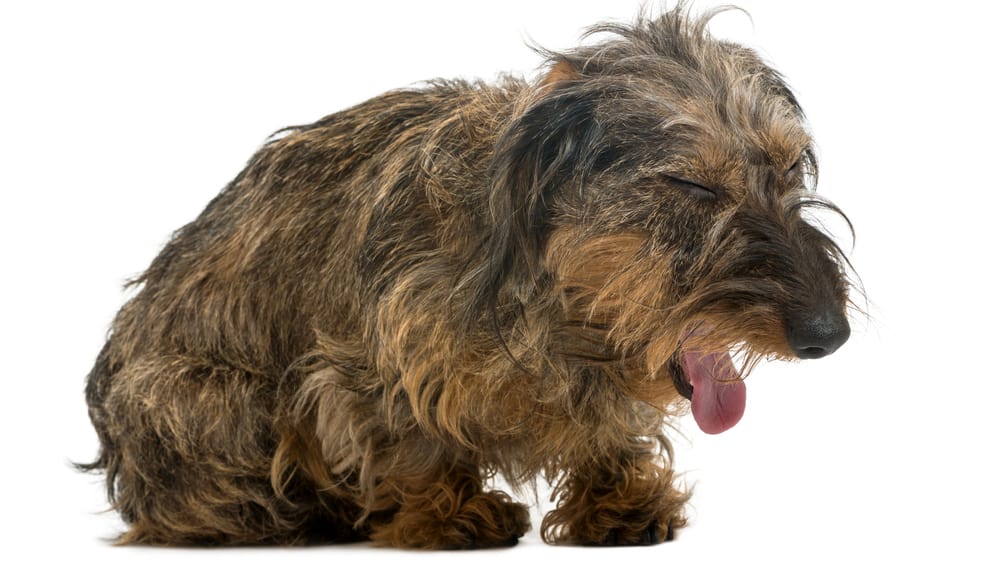
One of the most common and non-specific symptoms that a dog can have.
You must look at how and what it is vomiting. If your dog vomits once
or twice and then seems its normal self, it is probably not serious.
Non-serious causes
(summarized from Carlson & Giffin)
Most commonly: overeating. Animals that gulp their food and
immediately exercise (esp. puppies) are likely to vomit. This is not
serious. Feeding in smaller portions more often helps eliminate this
problem. In particular, if the vomit looks like a solid tube of
partially or non digested food, your dog ate too fast.
Note that eating grass or other indigestible material is also a common
cause of vomiting.
Types of vomiting
(summarized from Carlson & Giffin)
- Repeated vomiting:
- Its last meal is first vomited. Then a clear,
frothy liquid. This suggests a stomach irritant. Grass, spoiled
food, other indigestibles, and certain infectious illnesses (such as
gastroenteritis) all cause irritation of the stomach lining.
- Sporadic vomiting:
- The dog vomits off and on, but not continuously.
No relationship to meals, poor appetite. Haggard appearance and
listlessness may indicate an internal organ disorder, a chronic
illness, a heavy worm infestation, or diabetes. A thorough checkup is
called for.
- Vomiting blood:
- Fresh blood indicates a break in the mucus lining
somewhere between the mouth and the upper small bowel. Common causes
are foreign bodies, tumors and ulcers. Material which looks like
coffee grounds is old, partly digested blood -- the problem is
somewhere in the stomach or duodenum. Vomiting blood is always
serious and requires a trip to the vet.
- Fecal vomiting:
- If the vomit is foul and smells like feces, there is
an obstruction somewhere in the intestinal tract. Blunt or
penetrating abdominal trauma is another cause. The dog will become
rapidly dehydrated with this type of vomiting and requires vet
attention.
- Projectile vomiting:
- The vomit is forcefully expelled, sometimes for a
distance of several feet. It is indicative of complete blockage in
the upper gastrointestinal tract. Foreign bodies, hairballs, duodenal
ulcers, tumors and strictures are possible causes. Intracranial
pressure can also cause projectile vomiting, causes can be brain
tumor, encephalitis, and blood clots. Take the dog to the vet.
- Vomiting foreign objects:
- Includes bone splinters, rubber balls,
(pieces of) toys, sticks and stones. Sometimes worms. You may want
to have the vet check your pet for any other foreign objects, although
not all of these will show up readily on x-ray scans.
- Emotional or Stress vomiting:
- Sometimes excited or upset dogs vomit. Remove the
dog from the source of distress. If it is something it will encounter
often, you will have to train the dog to remain calm around the
source.
- Motion sickness:
- Vomits in the car. Most dogs will outgrow this
problem. Check with your vet if it does not. See Carsickness in
Assorted Topics for further comments.
Summary
Worm Symptoms
-----------------------------------------------------------------------------
roundworms | pot belly, dull coat, vomiting, diarrhea, loss of weight
------------+----------------------------------------------------------------
hookworms | anemia, diarrhea, bloody stools (esp. puppies)
------------+----------------------------------------------------------------
tapeworms | "rice" on anal area or in stools, possible diarrhea/vomiting
------------+----------------------------------------------------------------
whipworms | loss of weight, some diarrhea, difficult to detect
------------+----------------------------------------------------------------
threadworms | profuse watery diarrhea, lung infection symptoms (esp. puppies)
-----------------------------------------------------------------------------
Preventing worms
(summarized from Carlson & Giffin.)
The best way to deal with worms, of course, is to make use of
worm prevention techniques.
Most worms have a lifecycle that makes it easy to reinfest dogs
because only part of that lifecycle is on the dog. Steps you can take
to control worms in general:
- If you have a kennel, do not use dirt. A water tight surface that
can be hosed down is best; gravel works also. Remove stools from
pens daily.
- Lawns should be kept short and watered only when necessary.
Remove stools from the yard daily.
- Control fleas, lice, and rodents, as all these pests can be
intermediate hosts for tapeworms.
- Do not let your dog roam, as it may ingest tainted meat. Any meat
fed to your dog must be thoroughly cooked.
Puppies
Most puppies have worms, as some immunity to worms only comes after
six months of ages and the mother will infect them with her dormant
worm larvae. Puppies should be wormed at 2-3 weeks and again at 4-6
weeks. You should be especially vigilant for worms while your puppy
is still growing; a bad case of worms can seriously interfere with its
development. Bring fresh fecal samples in regularly to the vet for
analysis.
Health Care Issues FAQ
Cindy Moore,
cindy@k9web.com
Hosted by
generic cialis sample
viagra low cost
non prescription levitra
usa generic cialis
cialis 20mg australia
canadian pharmacies c 20
overnight delivery levitra
buy cheap lexapro online online
cheapest generic levitra
generic viagra from india
cheapest generic cialis india
mail order lexapro
buying viagra on line
lexapro supplements
insurance criteria for levitra